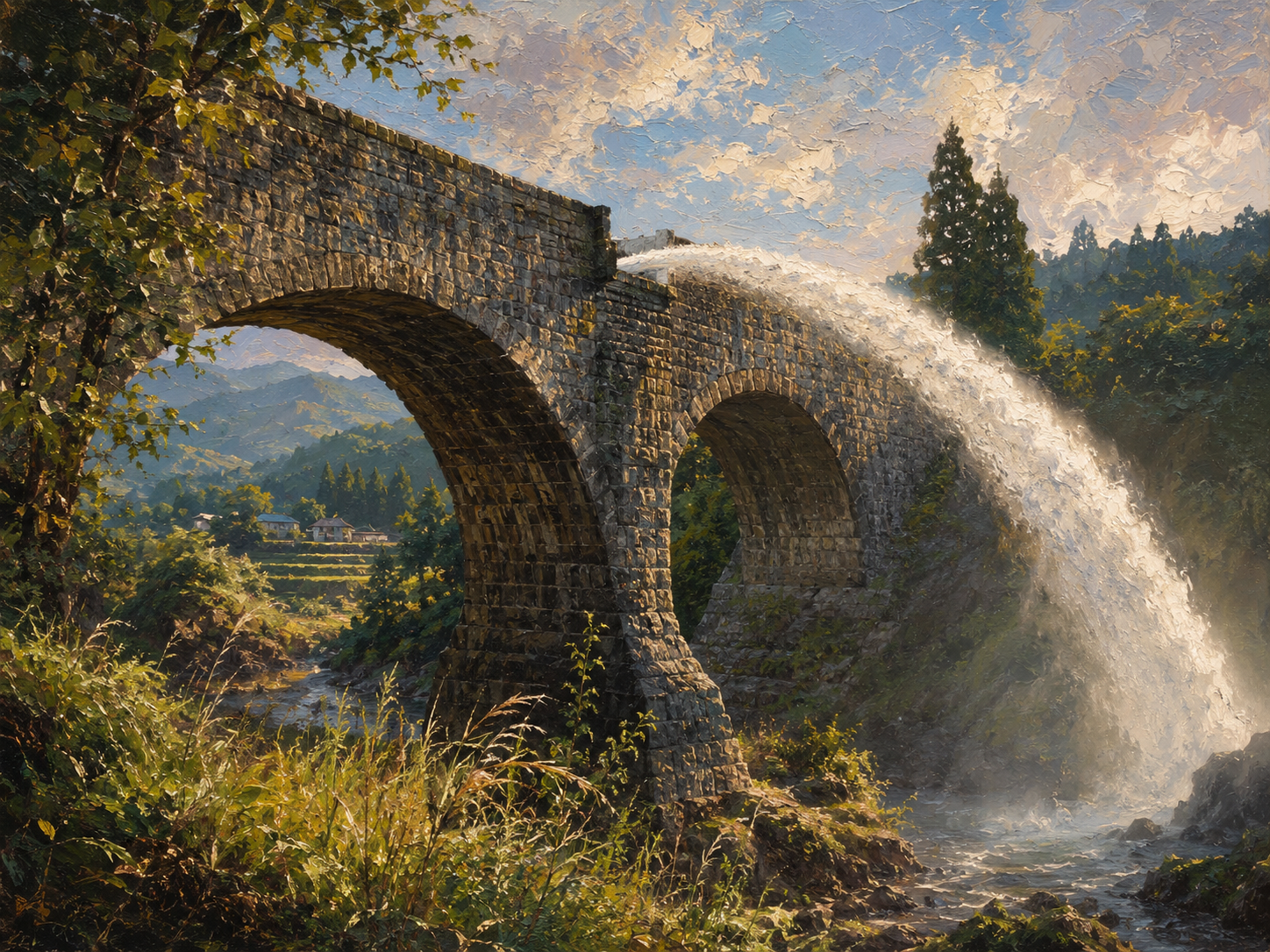
Arc of the Water's Blessing
Critique
1. Introduction This painting depicts a majestic stone arch bridge set against a lush, rural landscape in Japan. The work captures a powerful moment of water being discharged from the bridge, creating a dramatic waterfall that plunges into the river below. The composition highlights the grandeur of historic civil engineering and its integration with the natural environment. Bathed in golden sunlight, the scene evokes a sense of timelessness and the enduring strength of traditional infrastructure. 2. Description The central focus is a massive stone bridge with two prominent arches, constructed from meticulously laid blocks. From the top of the bridge, a thick stream of white water gushes out, catching the light as it cascades downward. In the background, rolling green mountains and terraced fields suggest a secluded agricultural valley. Small traditional houses are nestled among the trees in the distance under a bright, cloud-filled sky. The foreground is filled with tall grasses and wild plants, rendered with expressive, energetic brushstrokes. 3. Analysis The artist employs a rich impasto technique, particularly in the sky and the stone surfaces, giving the painting a heavy, tactile quality. There is a compelling contrast between the solid, unyielding texture of the masonry and the fluid, translucent movement of the falling water. Light is the primary organizing element, with warm highlights illuminating the right side of the bridge and the mist of the waterfall. The perspective is angled to emphasize the height and weight of the structure against the soft, receding mountains. 4. Interpretation and Evaluation The painting successfully conveys the harmony between human ingenuity and the natural world. The discharge of water serves as a dynamic focal point, representing the vital connection between the bridge’s function and the surrounding farmland. Technical execution is superb, especially in the rendering of light reflecting off the water’s spray and the weathered stone. The work evaluates the bridge not just as a functional object, but as a monument that enhances the inherent beauty of the landscape. 5. Conclusion Through its vibrant colors and powerful imagery, the painting offers an inspiring vision of rural grandeur. The initial focus on the bridge’s massive form eventually shifts to an appreciation of the life-giving water it carries. This progression highlights the symbiotic relationship between human labor and environmental resources. The artist has created a masterful tribute to a specific cultural landmark, balancing architectural precision with the wild energy of nature.
Same Subcategory
 Whispers of the Crystal Stream
Similar Artworks
 Whispers of the Emerald Stream
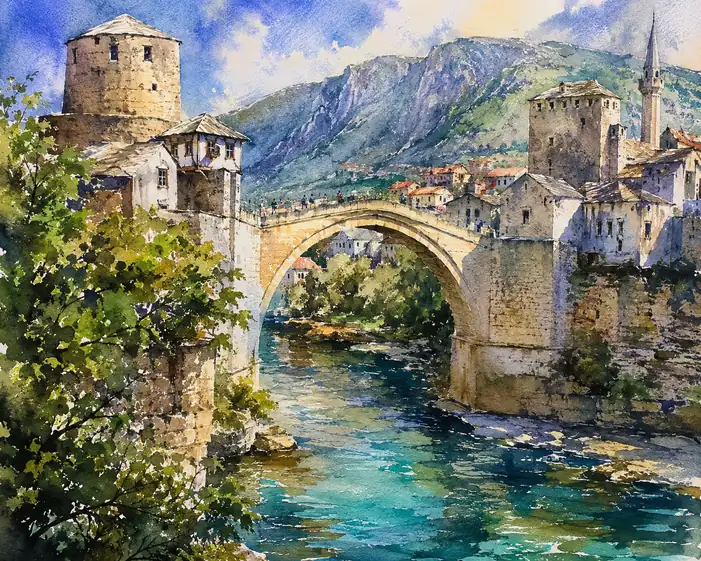 Gentle Ripples Under Stari Most
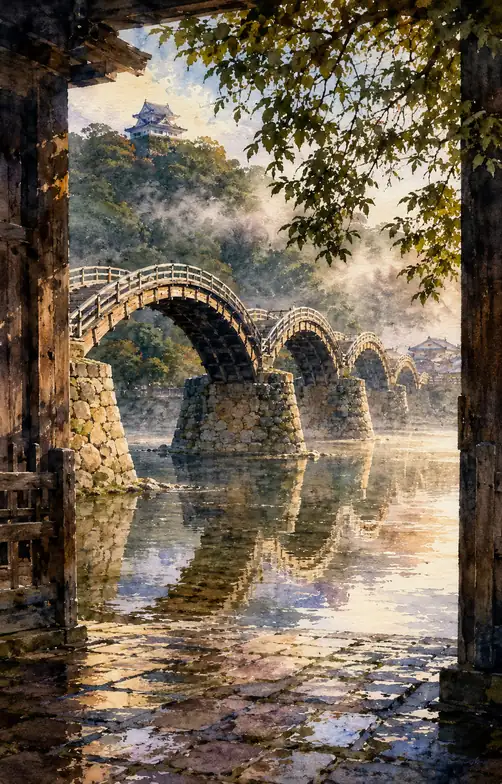 Arches Returning Through Water
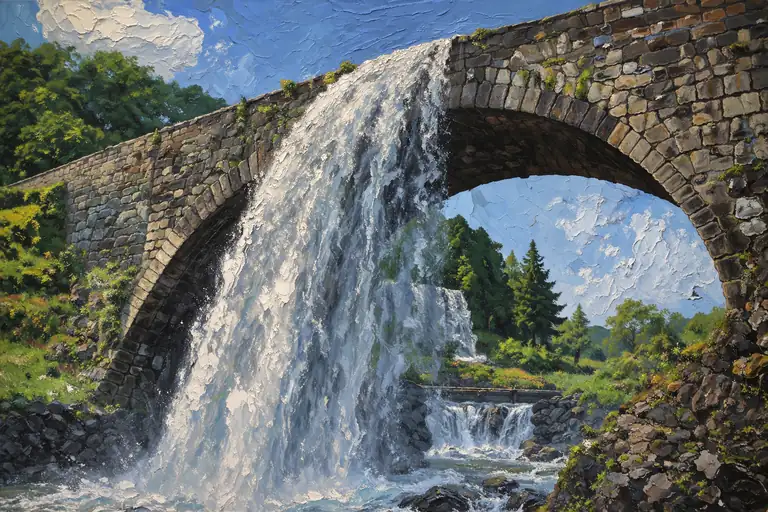 The Silver Cascade of the Arching Stone
 Beyond the Golden Arch
 Arc of the Ancient Flow
 Eternal Peace in the Golden Glow
 Beyond the Silent Stone
 Memories of Light Upon the Water
 Spring's Reflection on the Arched Heritage