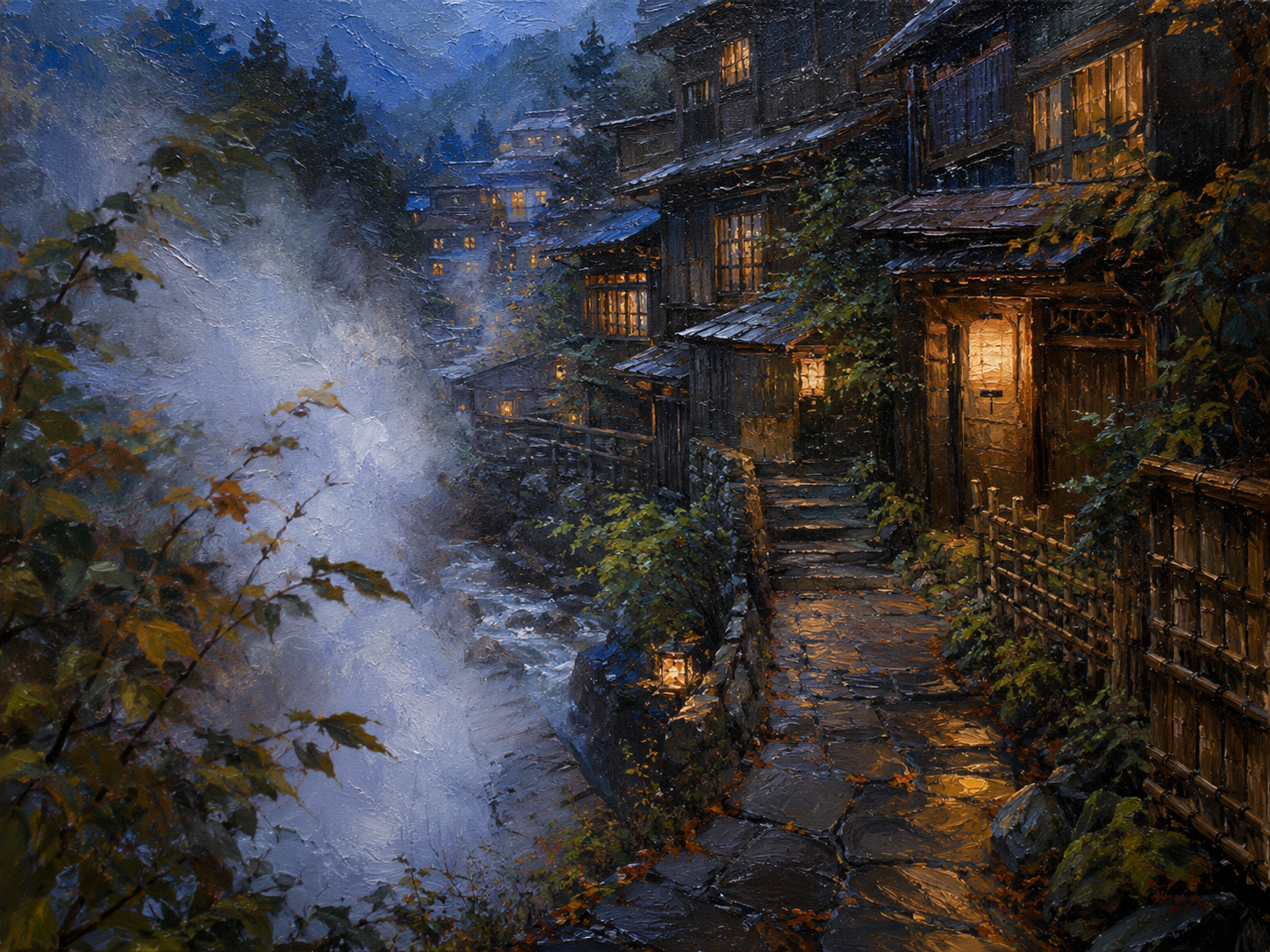
Golden Echoes in the Ravine
Critique
1. Introduction This painting presents an atmospheric night scene of a traditional Japanese hot spring town. It captures the charm of historic architecture interacting with mist and water. The artist employs a rich, textured technique to evoke warmth amidst the cool evening. This work serves as a nostalgic exploration of cultural heritage and the peaceful coexistence of human settlement within a rugged landscape. 2. Description The scene is dominated by multi-story wooden buildings lining a narrow stone path. To the left, a river flows through the ravine, shrouded in thick white steam rising into the dark air. Windows and lanterns glow with a soft amber light, suggesting a welcoming interior life. A stone walkway in the foreground reflects the warm radiance of lamps. Autumnal foliage frames the left side, adding a seasonal context to the quiet village. 3. Analysis The artist utilizes a strong color contrast between deep indigo night tones and vibrant oranges of the interior lights. The application of paint features visible impasto strokes, giving the wooden textures and stone path a palpable physical presence. Light is handled with care, manifesting as a soft diffusion through the steam and sharp reflections on wet surfaces. The winding path and receding buildings create a perspective that draws the viewer deep into the village. 4. Interpretation and Evaluation The painting successfully conveys nostalgia and comfort through its masterful use of light and shadow. The steam rising from the river acts as an ethereal veil, separating the mundane world from this dreamlike enclave. Technical execution is exceptional, particularly in capturing the translucency of mist against solid architectural forms. The work evaluates the enduring beauty of traditional aesthetics, finding a quiet dignity in the way these structures cling to the mountainside. 5. Conclusion Through its evocative atmosphere, the painting offers a compelling vision of a quiet moment in a secluded town. The initial impression of dark wilderness is replaced by the enduring warmth found within the human-made structures. This transition underscores the central theme of sanctuary and repose. The artist balances the chaotic movement of mist with the stable geometry of village buildings.
Same Subcategory
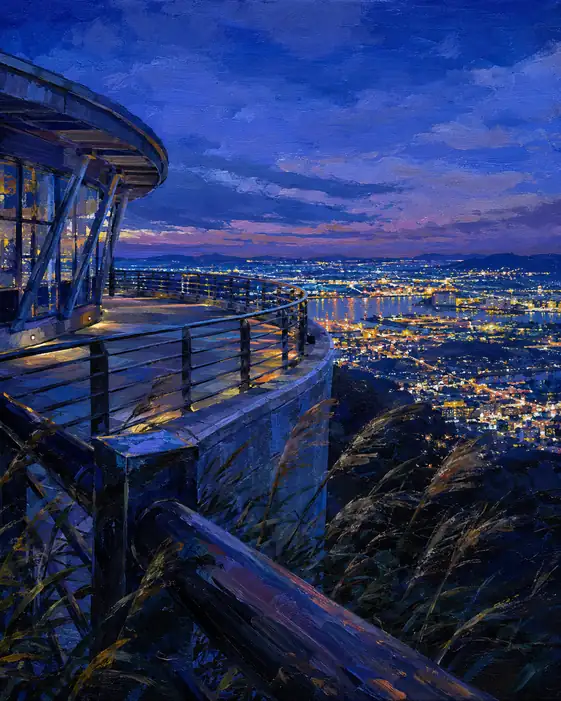 Nocturne of the Glimmering City
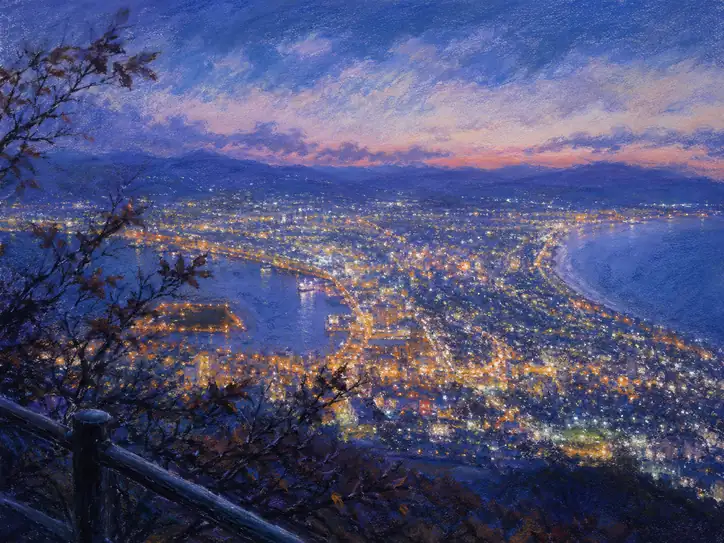 The City's Jeweled Islet
Similar Artworks
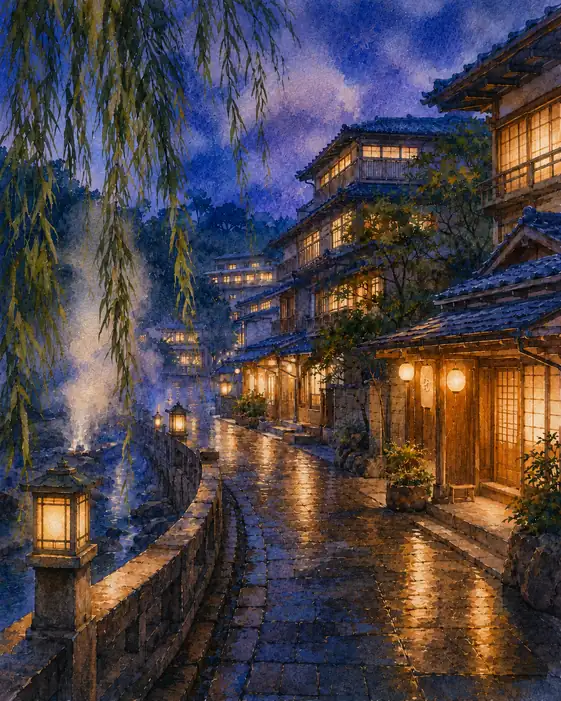 A Lullaby of Lanterns and Willow Whispers
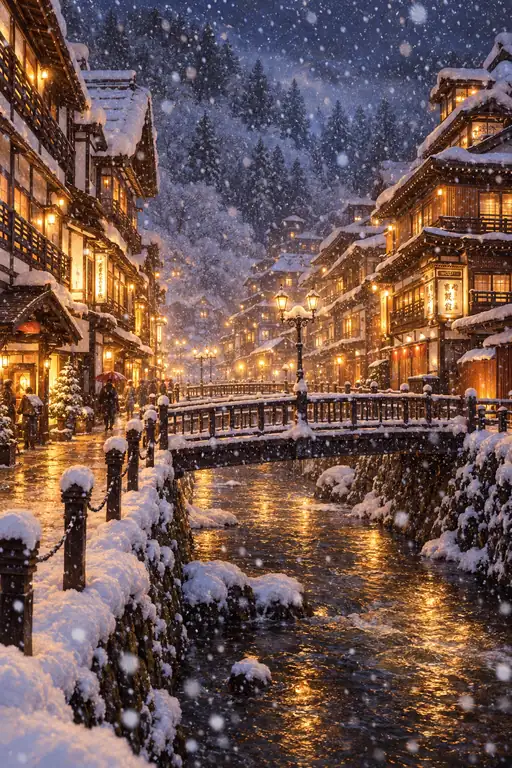 Snowfall upon the Historic Bridge and Bathhouse
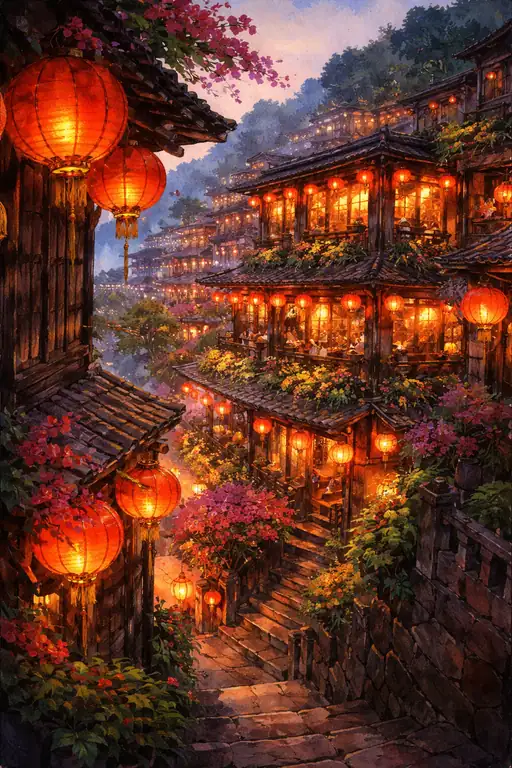 The Festive Glow of the Tiered Village
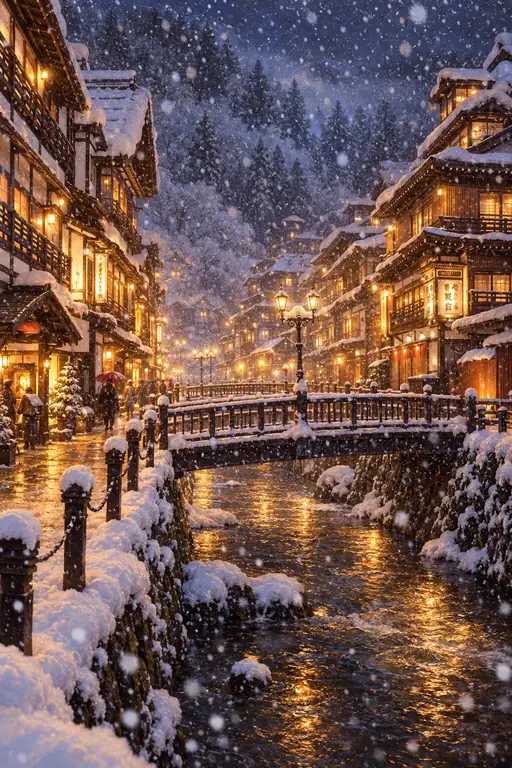 Golden Reflections upon the Snowy River Way
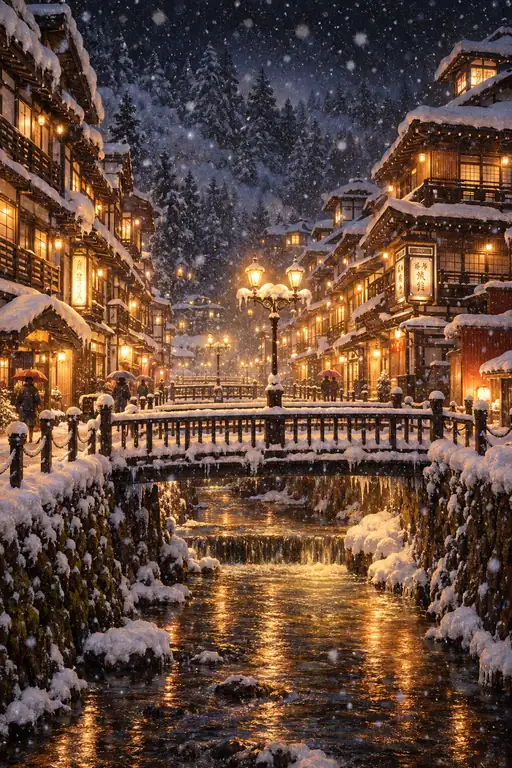 Snowfall Nocturne in the Historic Onsen Town
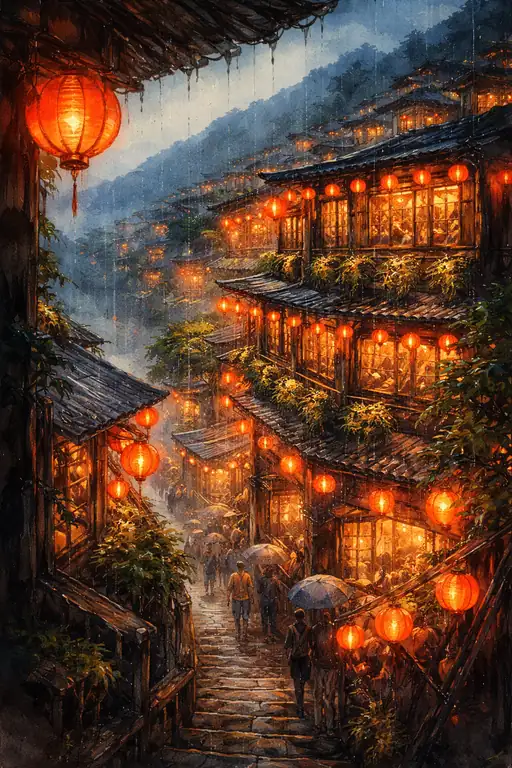 Warmth in the Rain-Swept Stairs
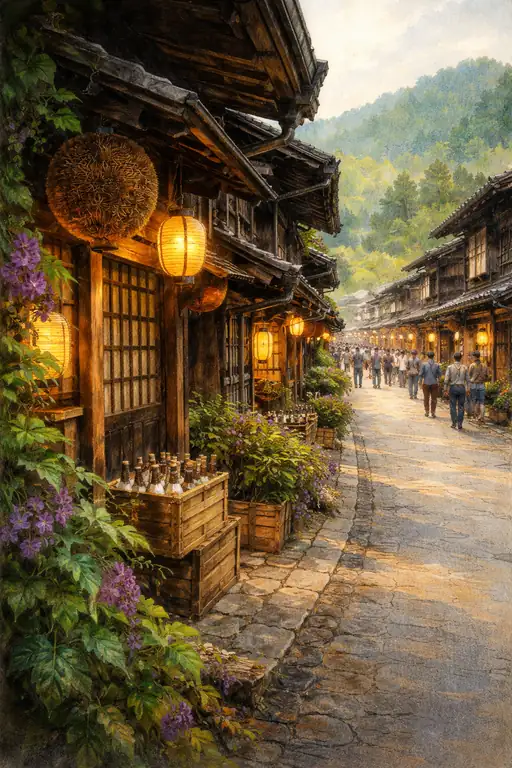 Dusk Awakens the Lantern's Memory
 The Warmth of the Misty Sanctuary
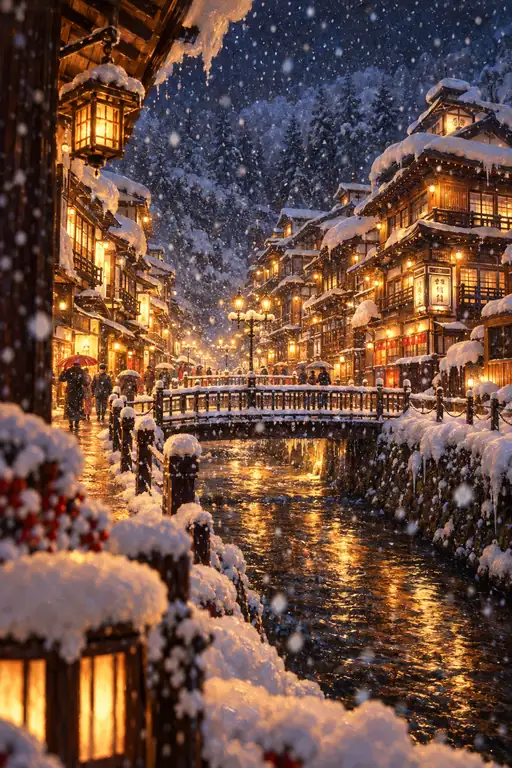 Lantern Glow and Crimson Berries in the Snow
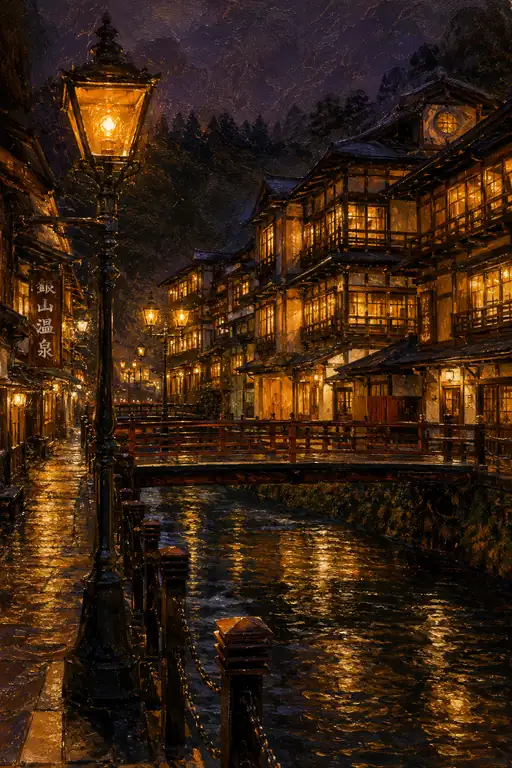 Golden Glow of the Nostalgic Night