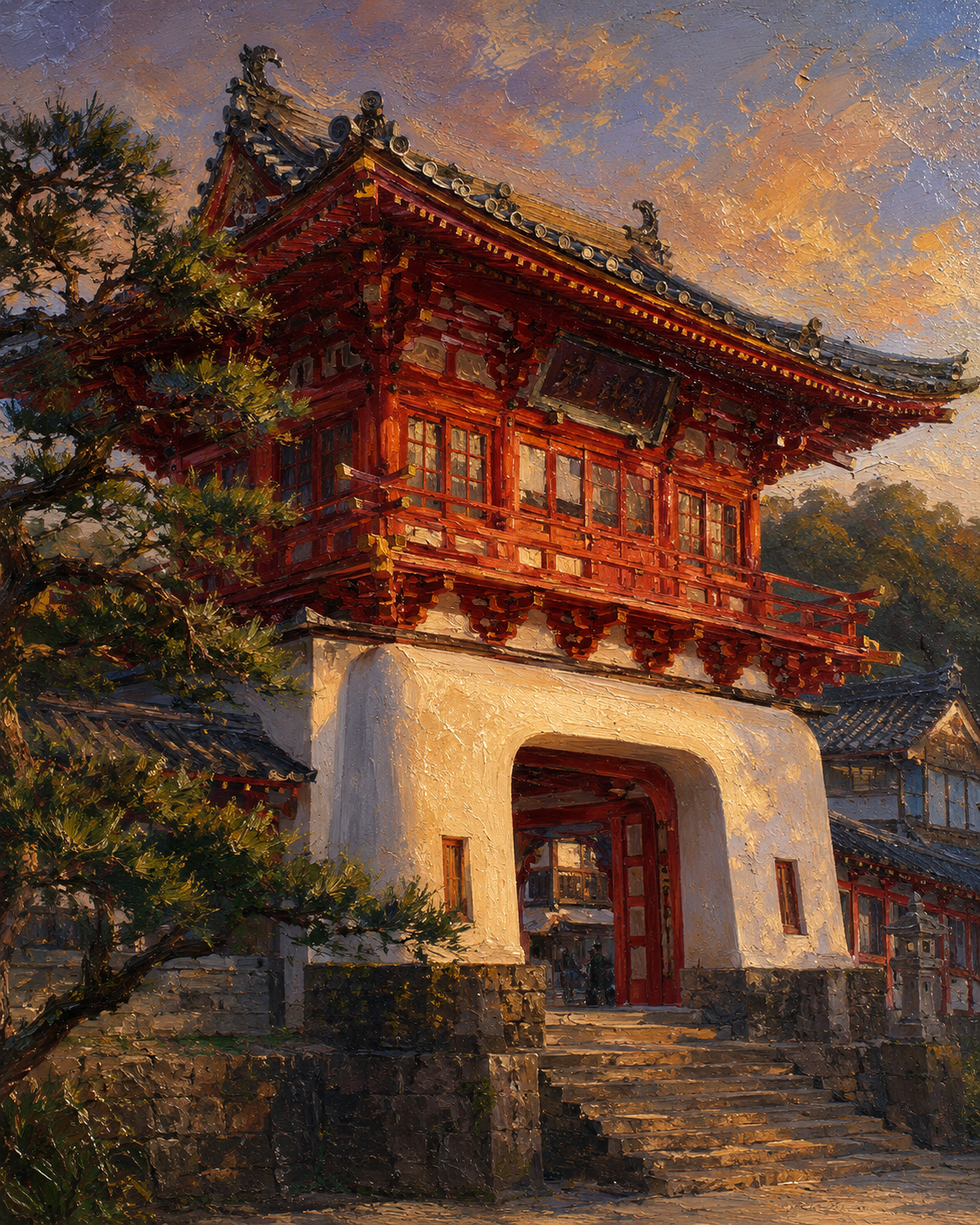
Beacon of the Sunset Roumon
Critique
1. Introduction This vibrant oil painting presents a majestic view of a grand red shrine gate, or "roumon," during a golden sunset. The composition centers on the two-story wooden structure, which stands as a powerful symbol of historic Japanese architecture and spiritual welcoming. By capturing the warm, directional light of the evening sun as it strikes the building’s surfaces, the artwork creates a sense of timelessness and grandeur. It serves as a visual testament to the enduring beauty of traditional construction and its place within the community. 2. Description In the immediate foreground, dark stone steps and a textured stone base lead the viewer toward the massive arched entrance of the gate. A dark pine tree on the left frames the scene, its needles casting fine shadows. The roumon itself is brilliantly detailed, featuring a vibrant red-lacquered upper floor with ornate windows and a heavy, tiled roof with decorative end tiles. The lower part is made of solid white plaster, brilliantly illuminated by the golden rays of the sun. In the background, other traditional buildings and a forested hill are visible under a luminous sky. 3. Analysis The artist employs a sophisticated impasto technique, particularly in the rendering of the plaster and the stone, where the thick paint creates a tactile sense of volume. The color palette is dominated by the striking contrast between the intense red of the woodwork and the warm, glowing white of the base. Directional lighting is used effectively to create deep shadows and bright highlights, emphasizing the three-dimensional form of the structure. The composition uses a slightly low angle, which enhances the monumental feel of the gateway. 4. Interpretation and Evaluation The work evokes a sense of historical continuity and the warmth of a community landmark. The choice of the sunset hour heightens the sense of welcome and the transition between day and night. Technical precision is evident in the handling of the architectural details and the complex textures of wood, stone, and needles. This painting is highly evaluated for its ability to combine technical accuracy with an expressive and atmospheric style that brings a historic site to life. 5. Conclusion Through its masterful treatment of light and architectural form, the painting transforms a traditional gateway into a narrative of enduring heritage. The initial impression of grand scale evolves into a deeper appreciation for the intricate craftsmanship and the soft play of light across the surfaces. The artwork successfully blends a classic subject with a dynamic and textured technique, showcasing the artist’s sensitivity to atmosphere. It ultimately offers the viewer a sense of stability and a renewed appreciation for the iconic structures of Japan.
Same Subcategory
 Eternity in the Moss-Covered Hall
 Echoes of Eternity by the Eternal River
Similar Artworks
 Gold Dwells in the Forest's Silence
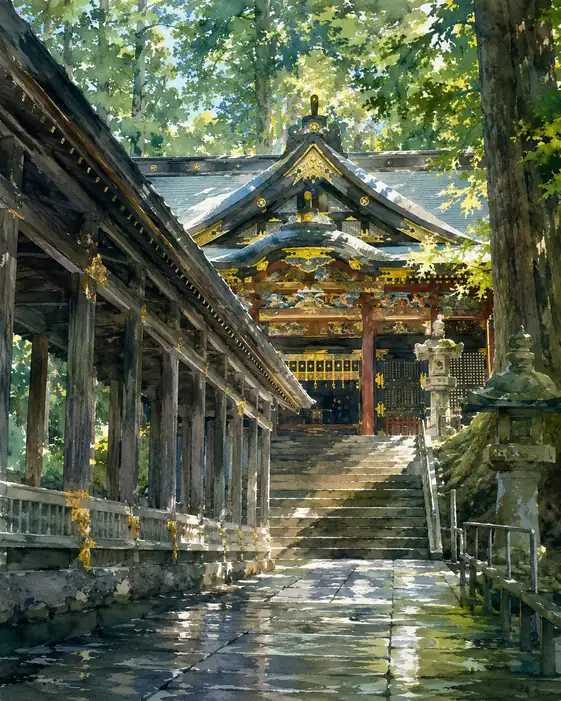 Sunbreaks Toward the Gilded Sanctuary
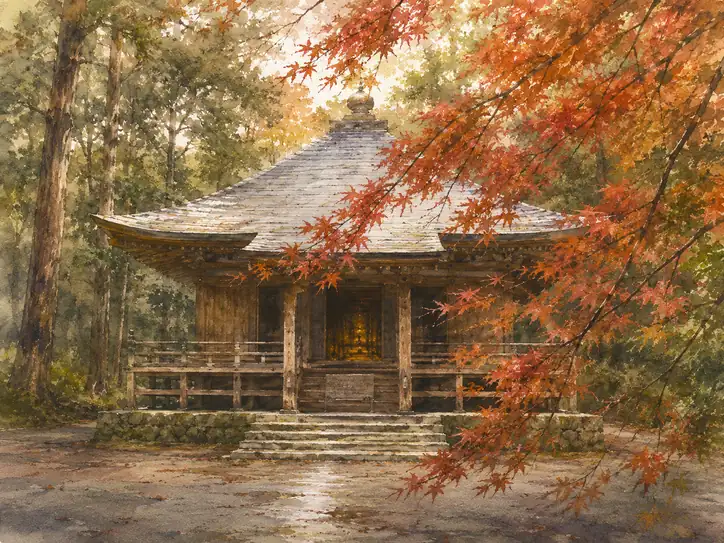 Golden Glow in the Maple Shadows
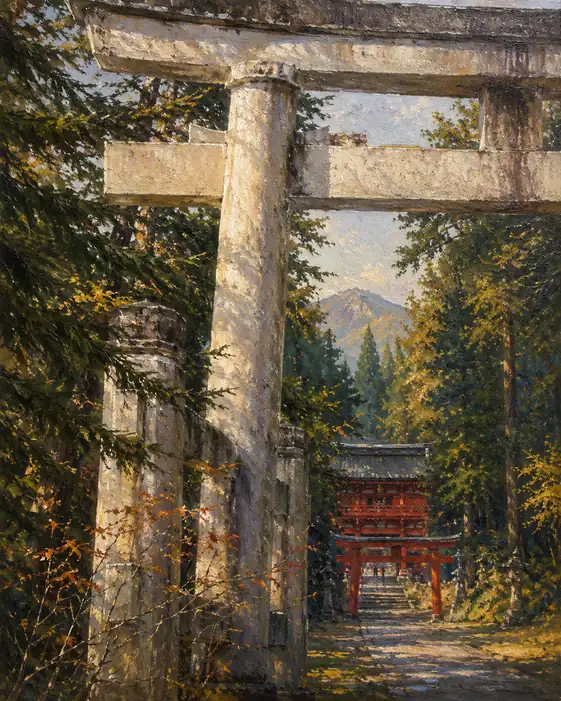 Passage Through the Sacred Shadows
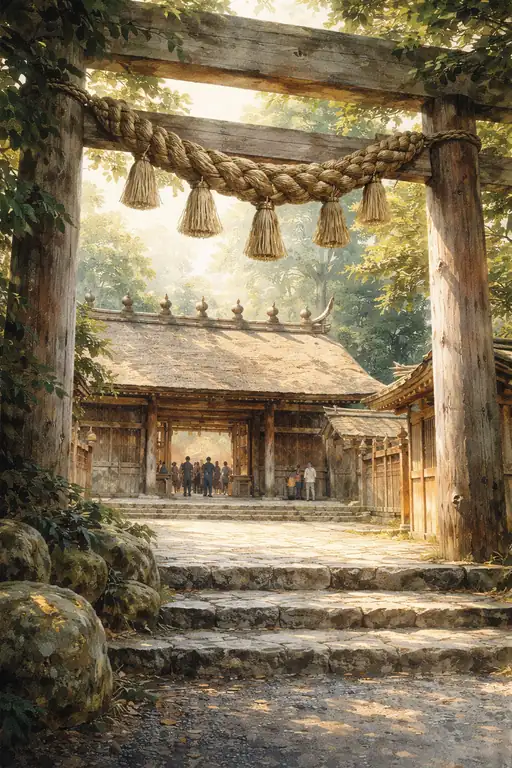 Awakening the Sacred Path
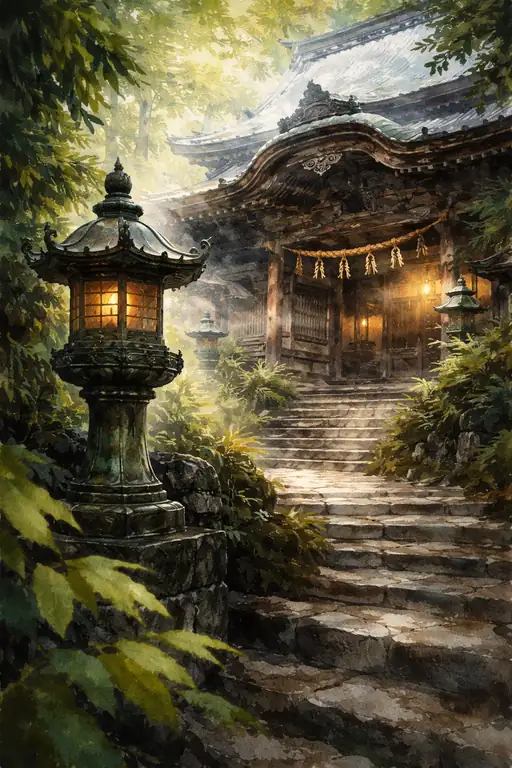 Sanctuary of the Silent Forest
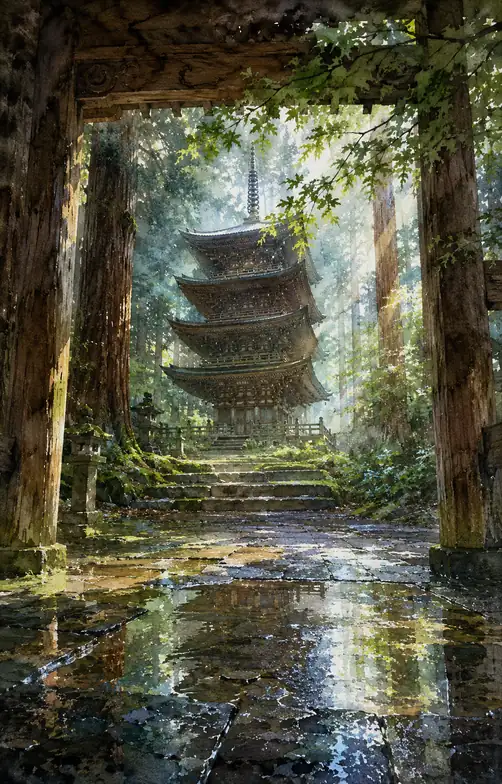 Beyond the Gate, a Tower of Light
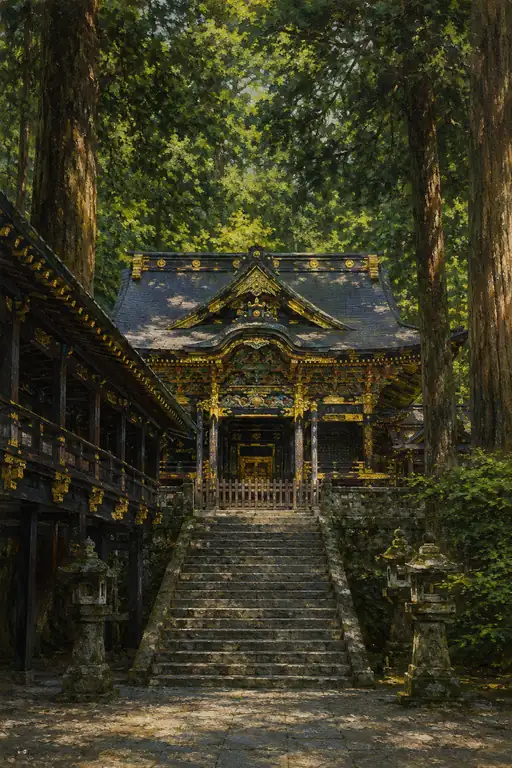 Sanctuary of Gold and Moss
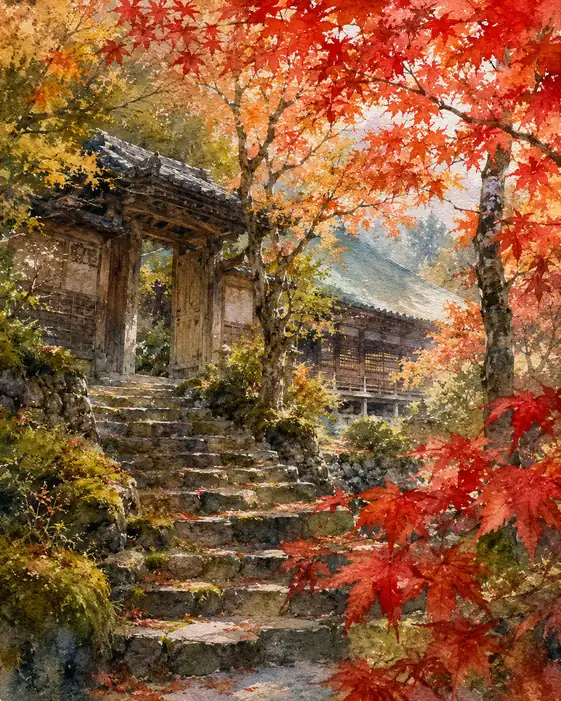 The Crimson Threshold of Silence
 Eternal Prayer in the Vermilion Woods