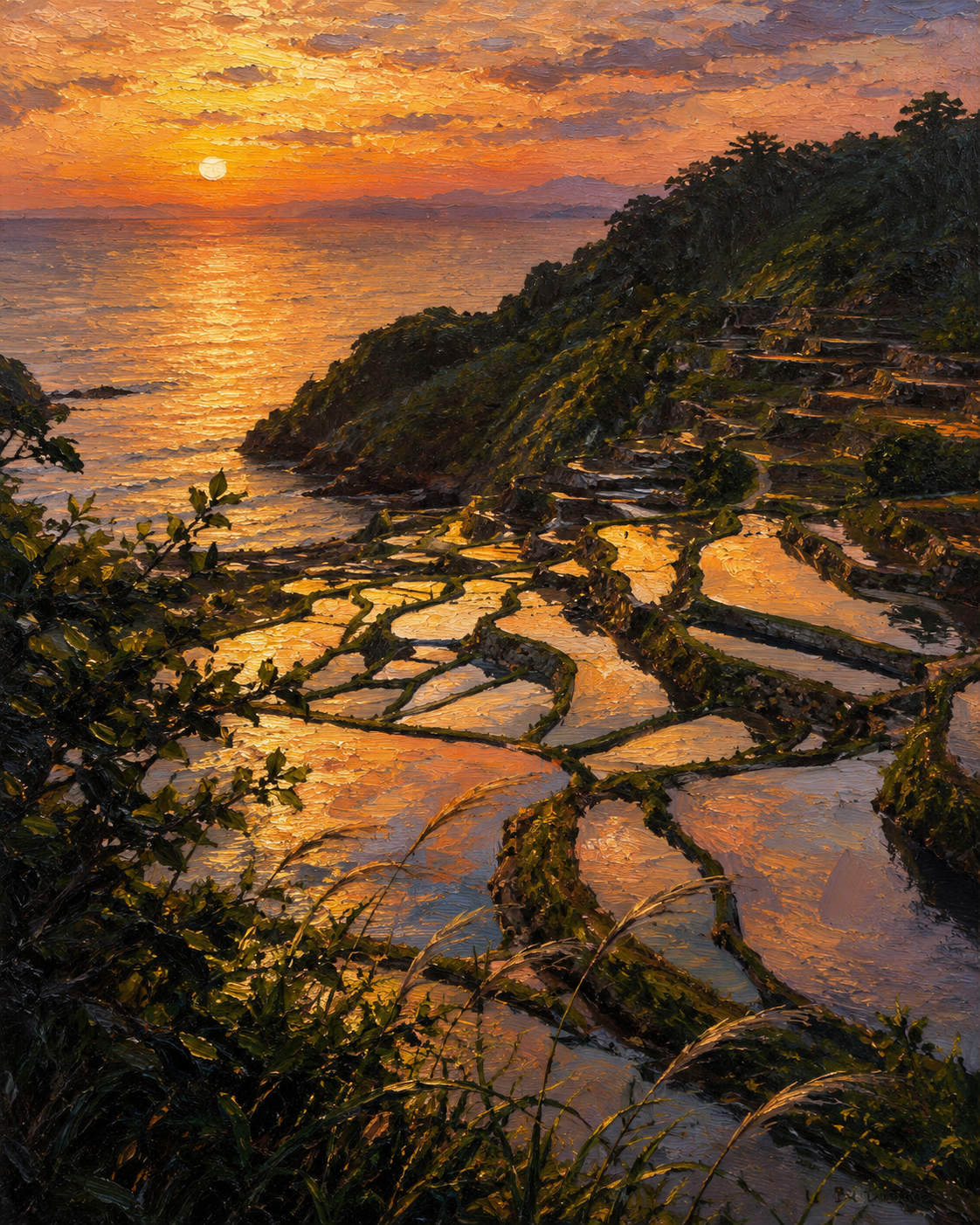
The Golden Pulse of the Land
Critique
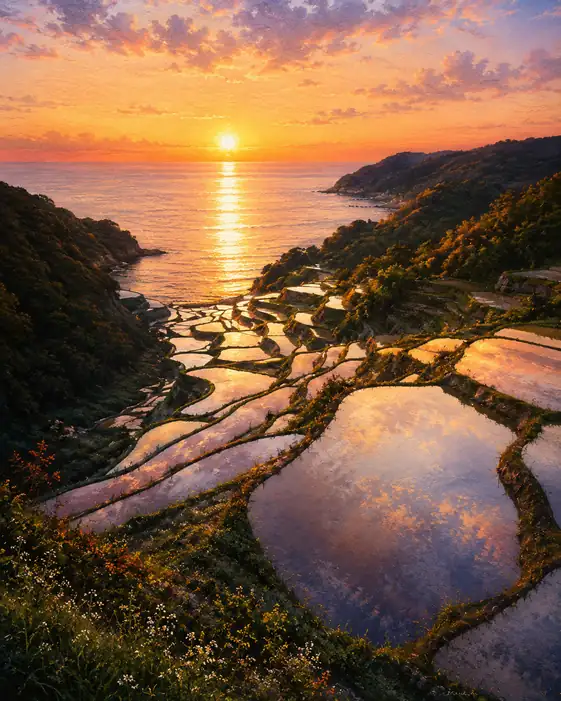
1. Introduction This vibrant oil painting captures the breathtaking scenery of terraced rice paddies, or "tanada," along the coast at sunset. The composition follows the winding, organic shapes of the water-filled fields as they cascade down a hillside toward the distant ocean. By focusing on the dramatic interplay between the golden evening light and the rural landscape, the artwork celebrates the enduring beauty of traditional Japanese agriculture. It serves as a visual meditation on the harmony between human labor and the natural environment. 2. Description In the immediate foreground, dark vegetation and blades of susuki grass frame the view, adding a sense of seasonal atmosphere. The middle ground is dominated by the intricate network of rice terraces, their water surfaces brilliantly reflecting the oranges and golds of the sky. The ridges of the paddies are rendered with thick, dark lines that emphasize their complex geometry. In the background, the sea meets the horizon under a radiant sun, while a rugged, forested hill rises on the left, casting a long shadow over the coastal landscape. 3. Analysis The artist demonstrates exceptional mastery of the impasto technique, using heavily textured brushstrokes to convey the depth and liquidity of the water and the roughness of the earth. The color palette is centered on an intense juxtaposition of fiery oranges and deep, earthy greens, creating a powerful sense of atmospheric heat. Strong perspective is achieved through the receding layers of the terraces, which lead the viewer’s eye directly toward the glowing sun. The use of light is masterful, with the reflections on the paddies acting as leading lines within the composition. 4. Interpretation and Evaluation The work captures the spiritual resonance of the "tanada" landscape, which is often regarded as a symbol of the Japanese heartland. The choice of the sunset hour heightens the sense of peace and the completion of a day’s labor. Technical precision is evident in the handling of the complex reflections and the bold, expressive application of paint. This painting is highly evaluated for its emotional depth and its ability to transform a familiar agricultural scene into a majestic and poetic visual experience. 5. Conclusion Through its sophisticated treatment of light and color, the painting transforms a coastal rice field into a narrative of stillness and gratitude. The initial impression of vibrant color settles into a deeper appreciation for the ancient rhythms of rural life and the land. The artwork successfully blends a traditional cultural motif with a dynamic and modern technique, showcasing the artist’s unique vision. It ultimately offers the viewer a moment of respite and a renewed perspective on the enduring allure of Japan’s rural heritage.
Same Subcategory
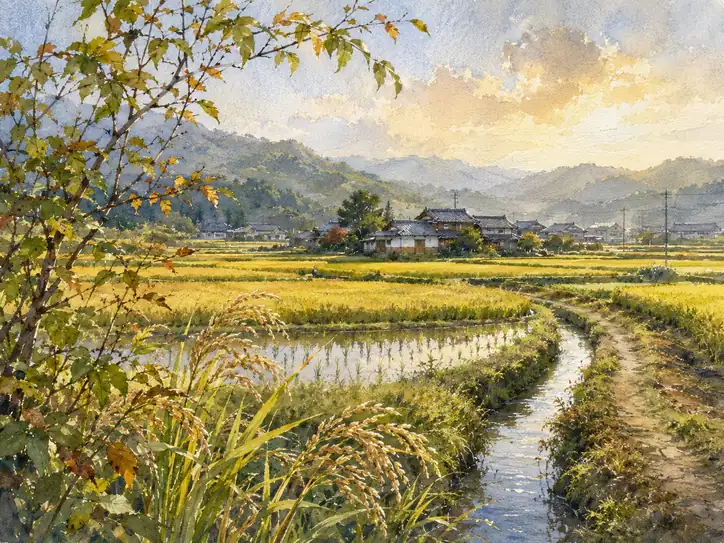 Returning Home to the Golden Light
 The Sun's Harvest in the Valley
Similar Artworks
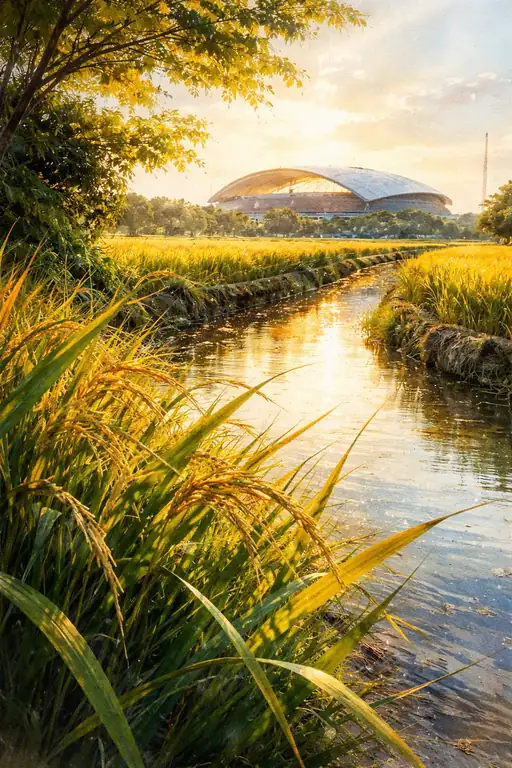 Woven Earth: Tracks to the Future
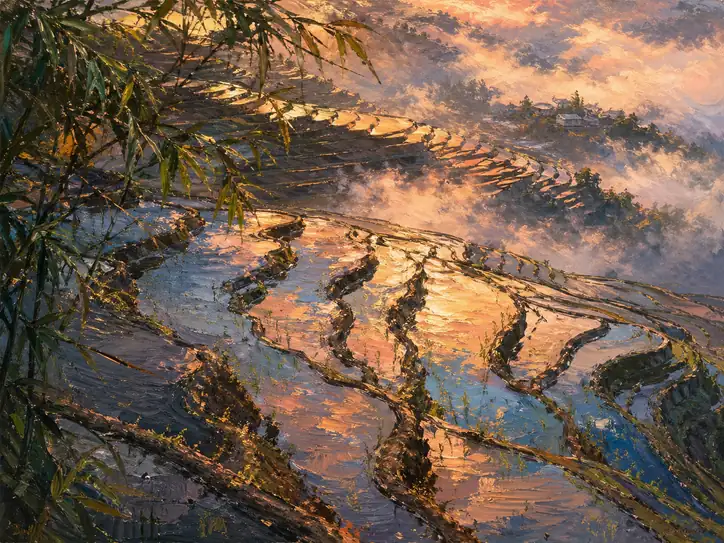 Mirror of the Golden Terraces
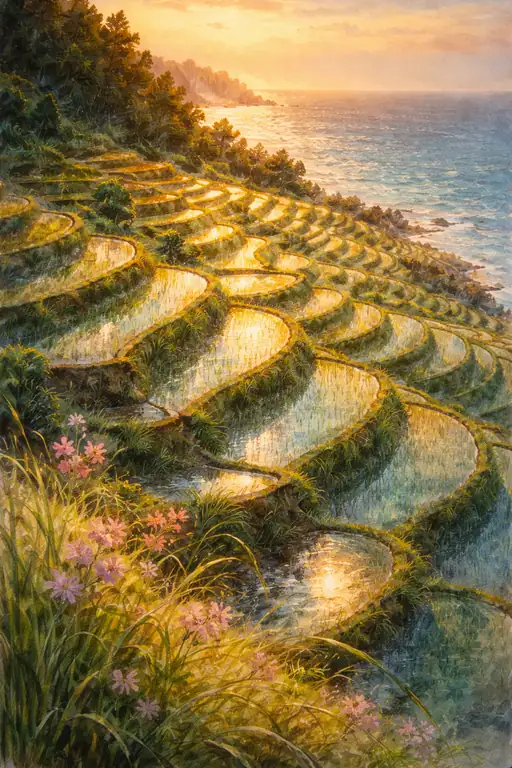 Golden Terraces: The Sunset's Embrace
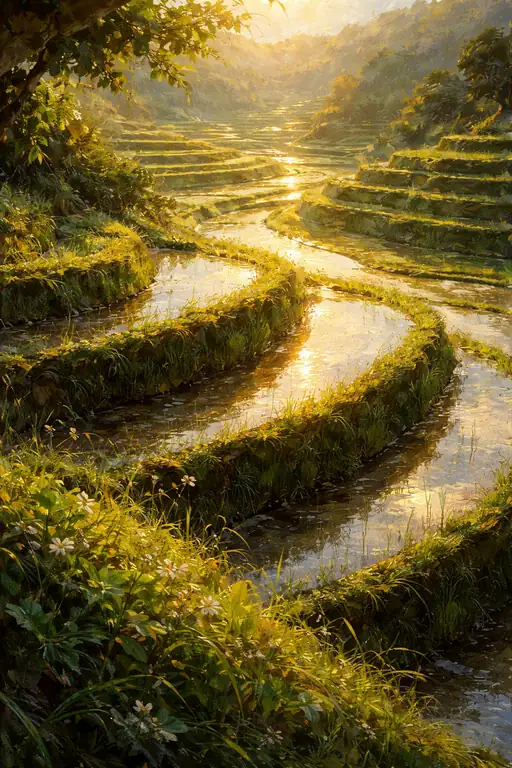 Echoes of Light on the Terraces
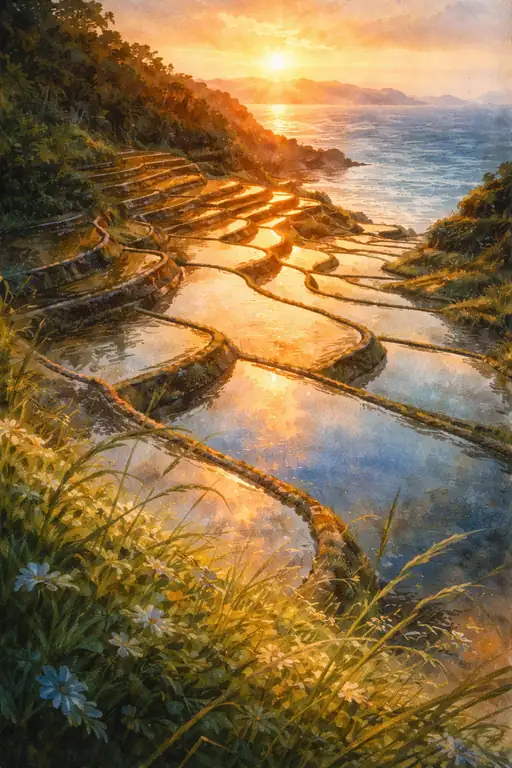 The Golden Mirror of the Hills
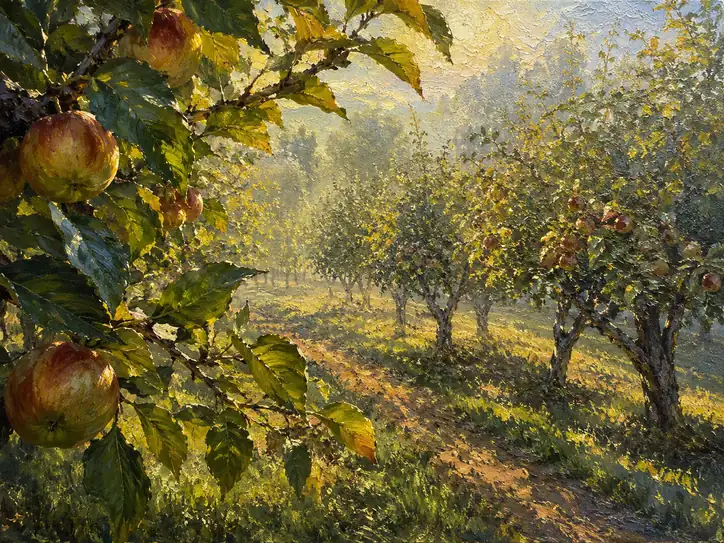 Jewels of the Sunlit Orchard
 The Golden Mirrors of the Silent Hill
 Two Hundred Eighty-Three Skies Asleep in the Cove
 Symphony of the Golden Wind
 The Quiet Mirror of the Earth