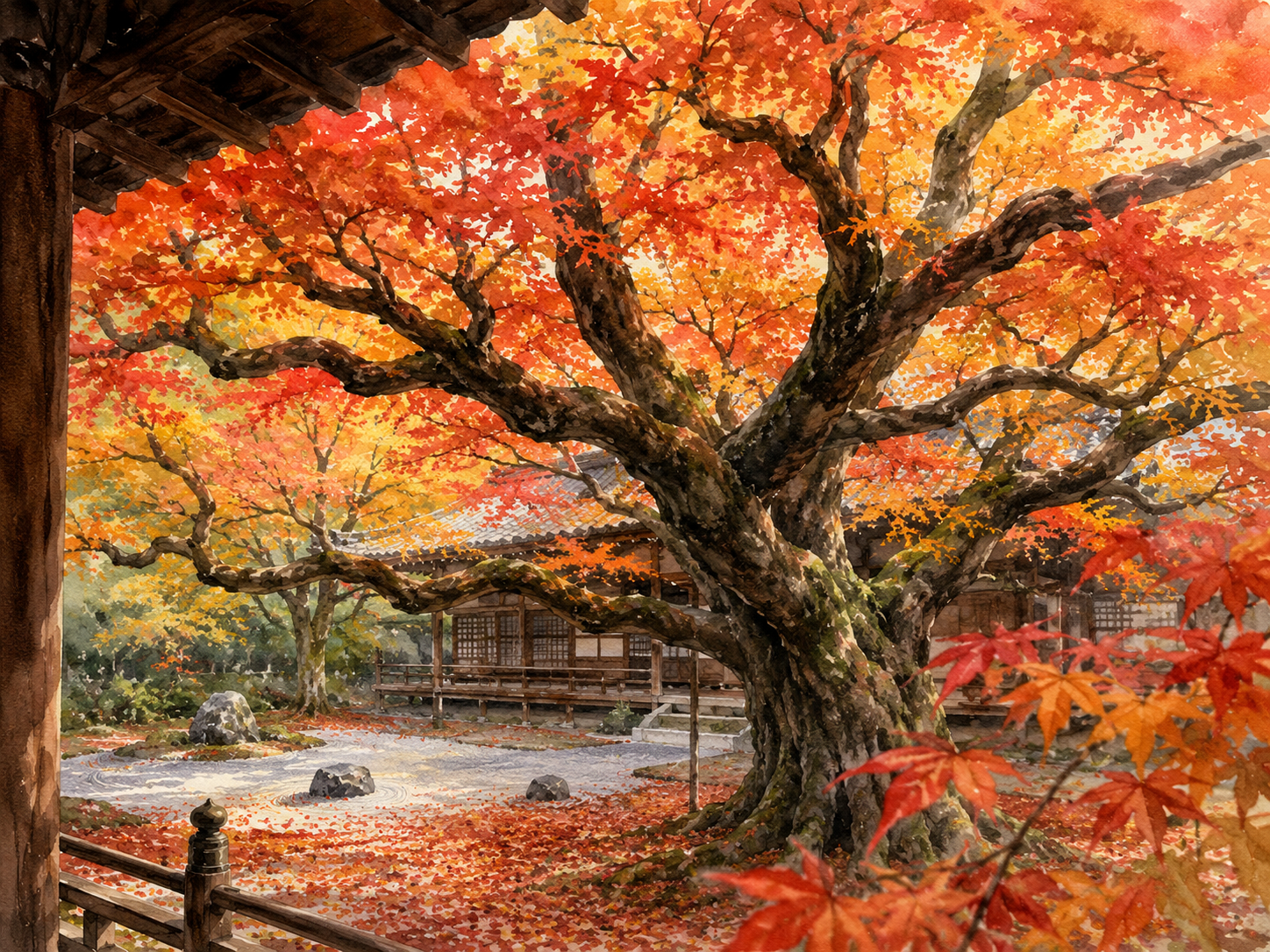
Ember of the Zen Garden
Critique
1. Introduction This watercolor painting presents a majestic and breathtaking view of a massive maple tree in full autumn brilliance within a traditional temple garden. The composition is dominated by the sprawling, gnarled branches of the ancient tree, covered in a canopy of vibrant red and orange leaves. By capturing the peak of the seasonal transition, the artwork celebrates the transient yet recurring beauty of nature. It serves as a visual testament to the splendor of autumn in Japan, where the landscape is transformed into a rich tapestry of color. 2. Description In the immediate foreground, dark wooden beams of a temple structure and a railing frame the view, while a few delicate maple leaves hang closely from the upper right. The middle ground is dominated by the grand maple tree, its thick, textured trunk and expansive branches reaching across the entire width of the frame. Below the tree, a Zen rock garden with raked gravel is partially covered by a carpet of fallen crimson leaves. In the background, a traditional temple building with shoji screens and a tiled roof is softly nestled behind the foliage, creating a sense of layered depth. 3. Analysis The artist demonstrates exceptional skill in the handling of color, using a brilliant range of reds, oranges, and yellows that seem to glow with internal light. Wet-on-wet techniques are used for the soft, blurred background foliage, while sharp, precise brushwork defines the individual leaves and the rugged texture of the tree's bark. The composition is masterfully balanced, with the heavy forms of the tree offset by the quiet, open space of the rock garden below. The contrast between the dark architectural elements and the fiery foliage enhances the overall vibrancy of the scene. 4. Interpretation and Evaluation The work captures the essence of "koyo," the seasonal appreciation of autumn leaves, emphasizing the cycle of life and the beauty of change. The presence of the Zen garden suggests a space of quiet reflection and the philosophical concept of beauty in transience. Technical mastery is evident in the artist's ability to manage such a complex and saturated palette without overwhelming the viewer. This painting is highly evaluated for its technical precision and its ability to evoke a deep sense of seasonal wonder and peace. 5. Conclusion Through its sophisticated treatment of light and organic forms, the painting transforms a classic temple scene into a vibrant celebration of the natural world. The initial impression of overwhelming color gradually gives way to an appreciation for the intricate details of the tree’s structure and the garden’s layout. The artwork successfully blends traditional subject matter with a modern, expressive watercolor technique. It ultimately offers the viewer a moment of profound beauty and a renewed appreciation for the enduring charm of the Japanese autumn landscape.
Same Subcategory
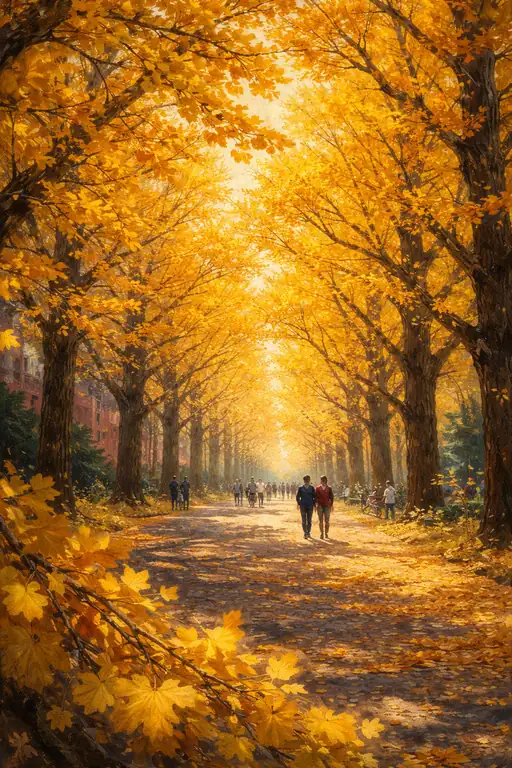 Walking the Golden Canopy
 The Soft Footsteps of Autumn
Similar Artworks
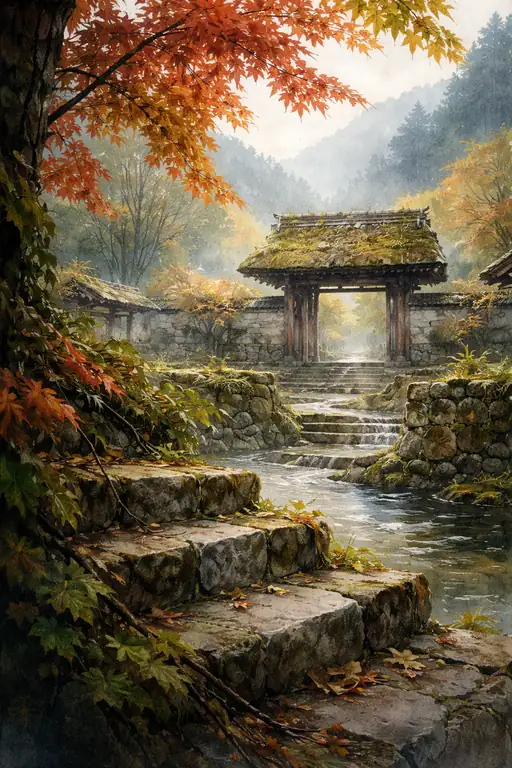 Whispers of Autumn: The Mossy Gate in the Mist
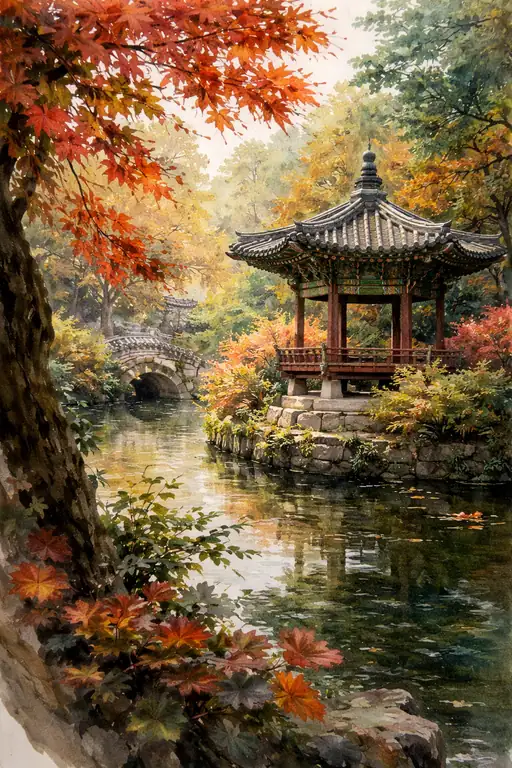 Crimson Leaves Reflected in Autumn's Mirror
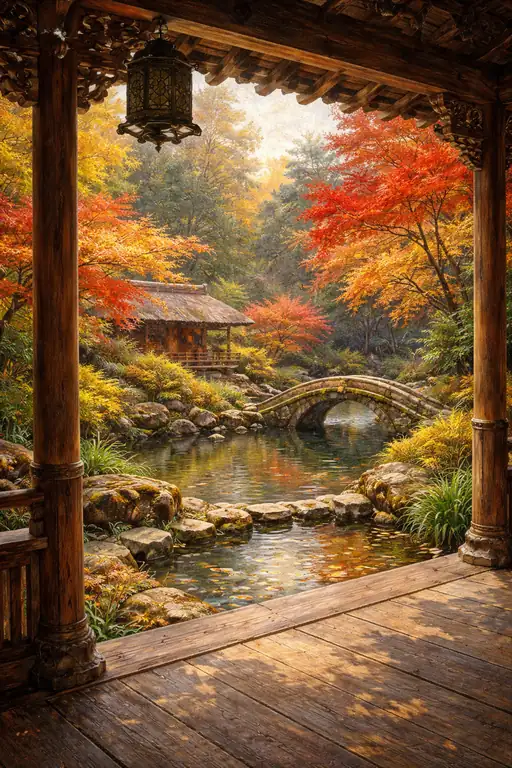 Crimson Reflections
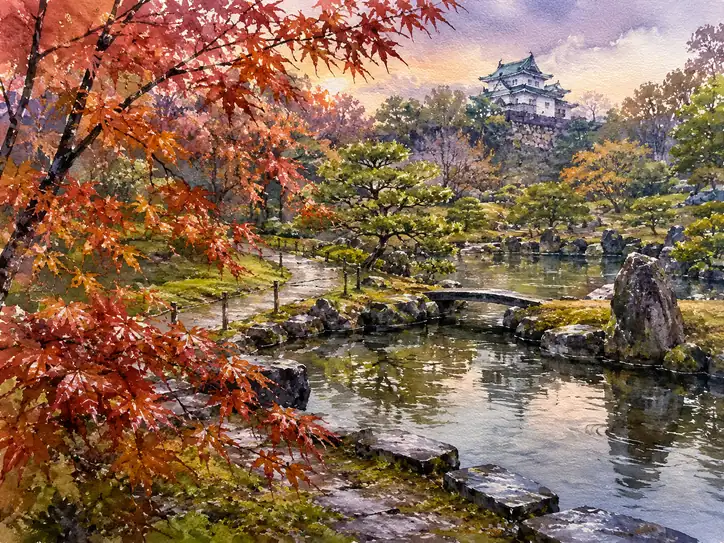 Ephemeral Fire of the Autumn Court
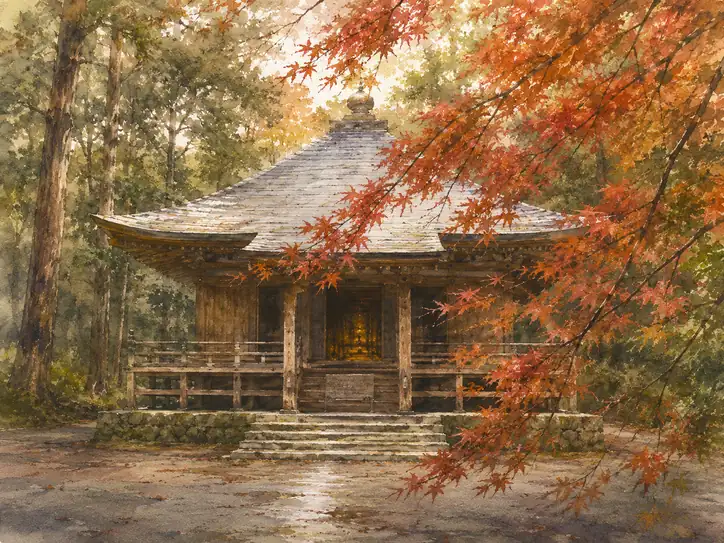 Golden Glow in the Maple Shadows
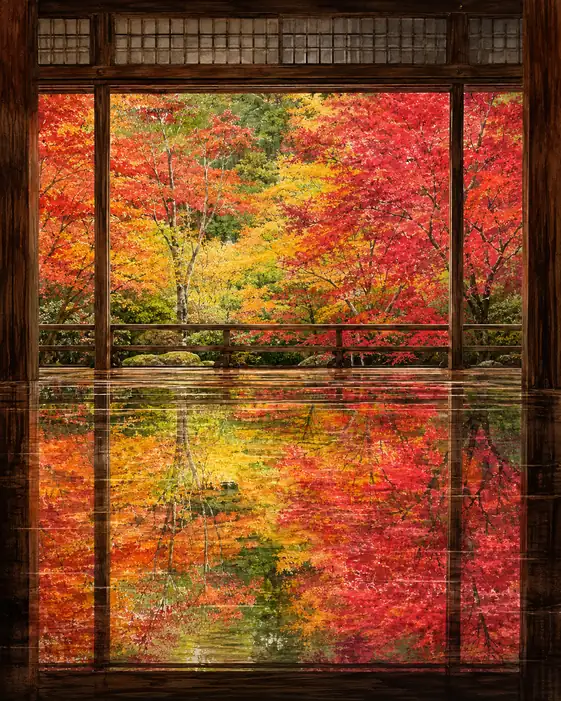 Autumn Waits behind the Quiet Frame
 The Season Enters Without a Sound
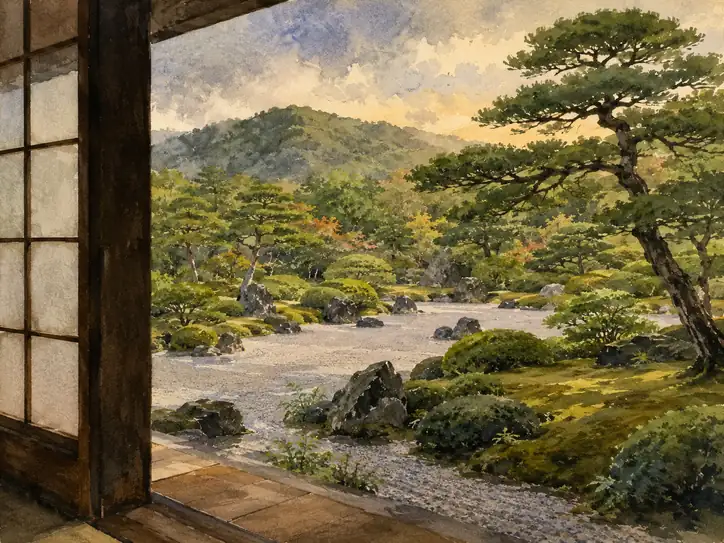 The Silent Threshold: A Window into Zen
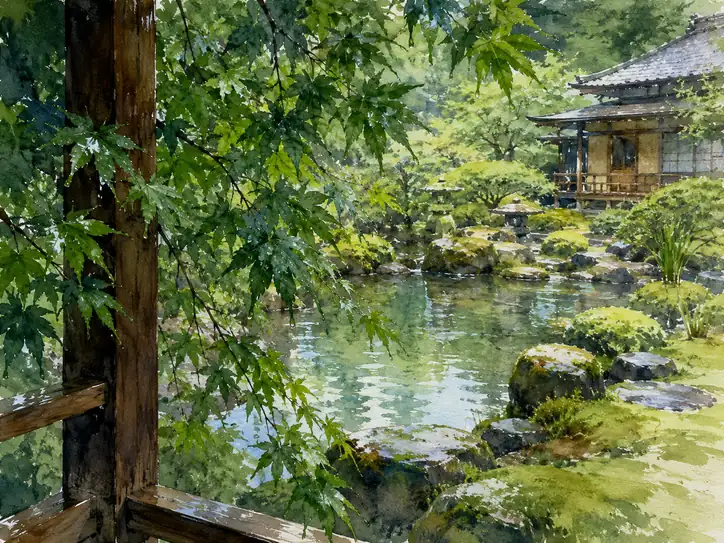 Whispers of the Summer Rain
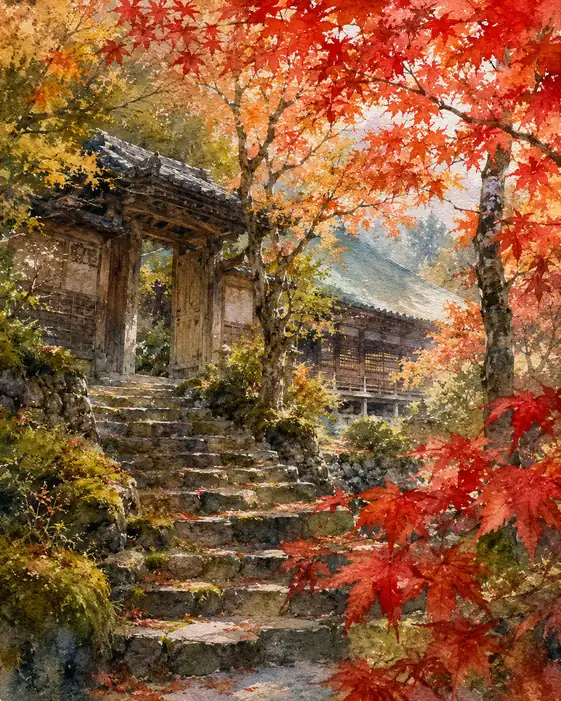 The Crimson Threshold of Silence