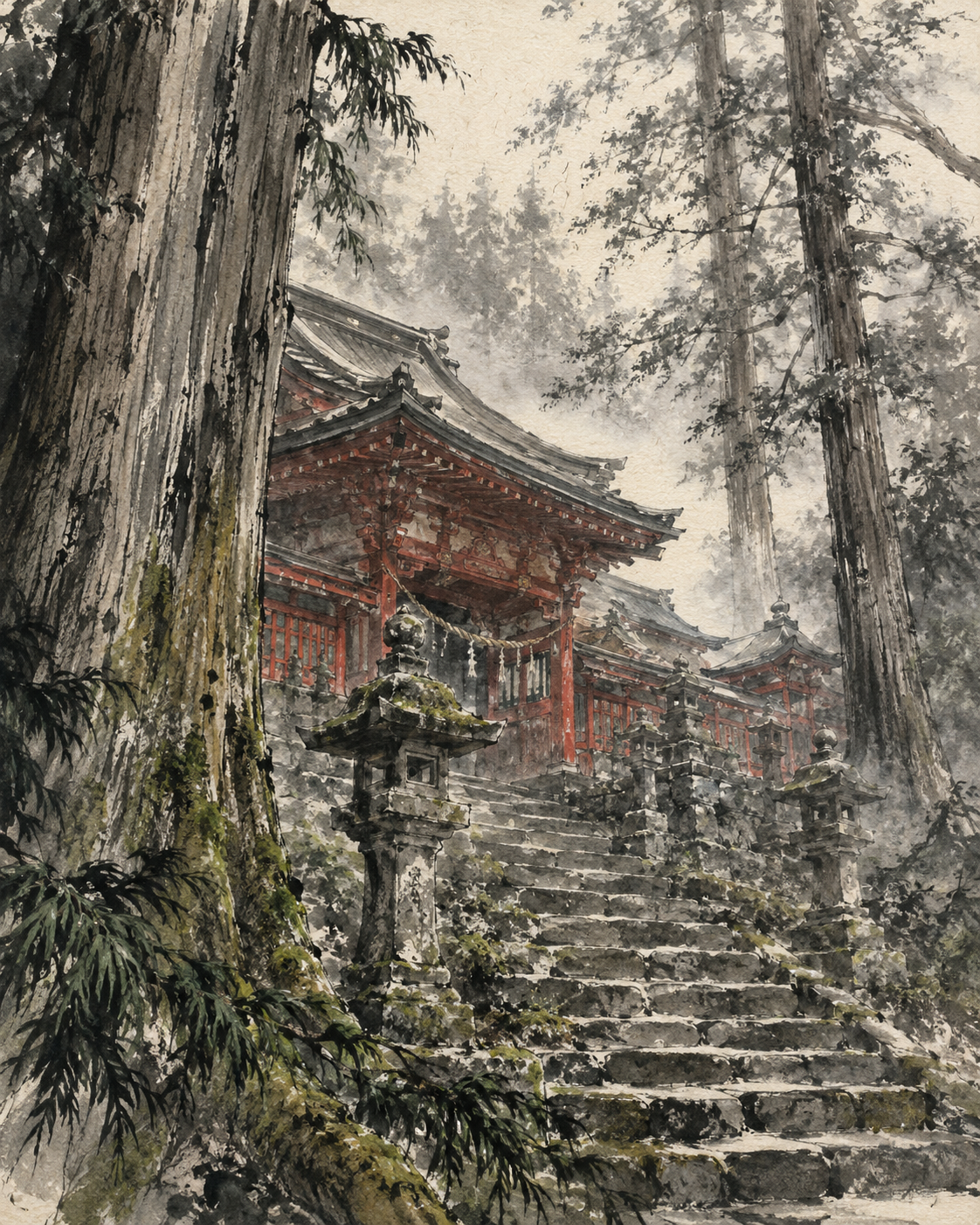
Threshold of the Ancient Silence
Critique
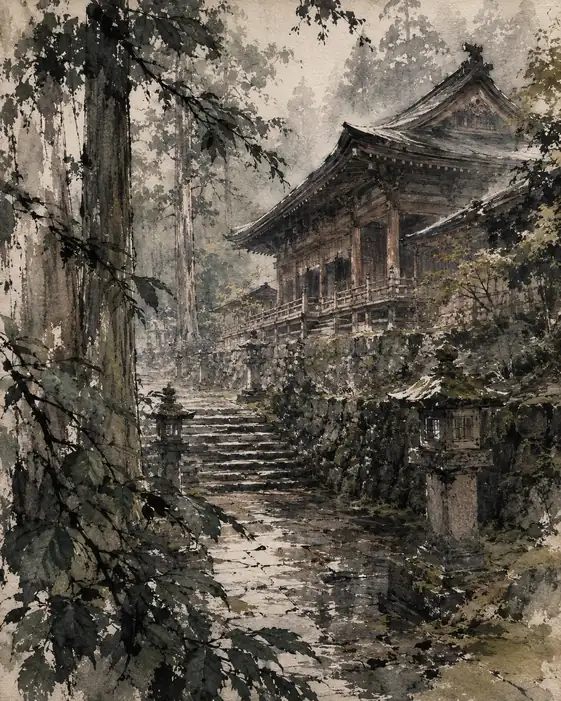
1. Introduction This watercolor painting depicts a serene and ancient mountain shrine enveloped in a thick, ethereal mist. The composition is structured around a steep stone staircase that leads the viewer’s eye upward through a dense forest of towering cedar trees. By situating the viewer at the base of the stairs, the artwork establishes a sense of reverence and anticipation. It captures the spiritual essence of the Japanese landscape, where nature and the sacred are inextricably linked. 2. Description In the foreground, a massive, textured cedar tree stands prominently, its lower branches framing the left side of the scene. A moss-covered stone lantern sits at the foot of a series of weathered stone steps that climb toward the center of the image. The middle ground features several more lanterns and a traditional red-lacquered shrine building, which partially emerges from the fog. In the background, the silhouettes of distant trees are softened by the heavy atmosphere, creating a deep sense of spatial layering. 3. Analysis The artist utilizes an ink-wash technique inspired by traditional sumi-e, combined with delicate watercolor washes to achieve the misty effect. The palette is dominated by monochromatic greys and blacks, with the muted red of the shrine providing a focal point of color. Fine brushwork is employed to render the bark of the trees and the moss on the stones, contrasting with the soft, blurred edges of the background. The use of atmospheric perspective effectively conveys the scale and depth of the mountain environment. 4. Interpretation and Evaluation The work evokes a powerful sense of silence and spiritual depth, characteristic of sacred spaces in high-altitude forests. The presence of the mist suggests a threshold between the mundane world and the divine realm of the mountain. Technical mastery is evident in the handling of transparency and the balance between detailed forms and suggestive voids. This painting is highly evaluated for its ability to transport the viewer into a space of quiet contemplation and for its refined execution. 5. Conclusion Through its sophisticated interplay of light and shadow, the painting transforms a simple mountain path into a profound visual experience. The initial impression of a cold, foggy day gradually gives way to an appreciation for the enduring presence of the ancient trees and shrine. The artwork successfully bridges the gap between traditional aesthetics and a contemporary watercolor sensibility. It ultimately offers a timeless reflection on the relationship between humanity, nature, and the spiritual world.
Same Subcategory
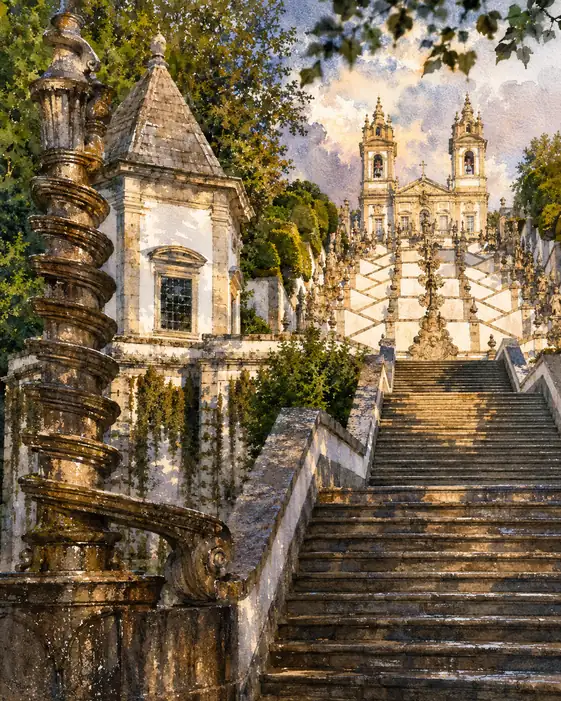 The Radiant Ascent: A Symphony in Stone
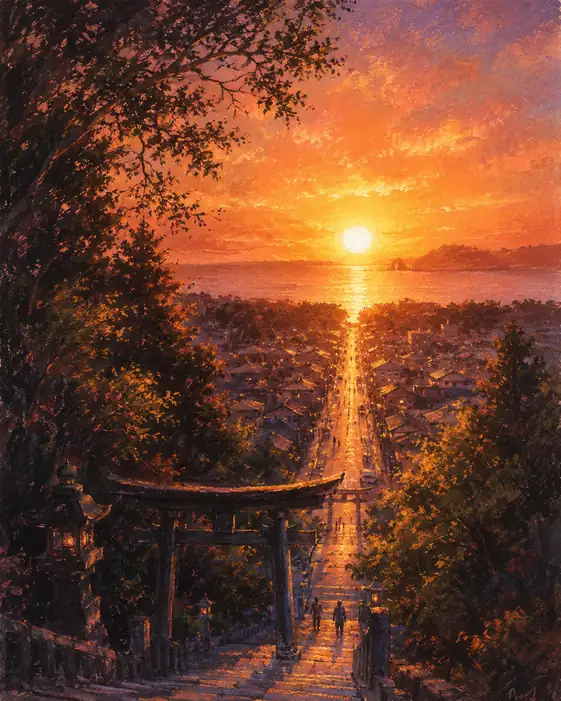 Avenue of Golden Divinity
Similar Artworks
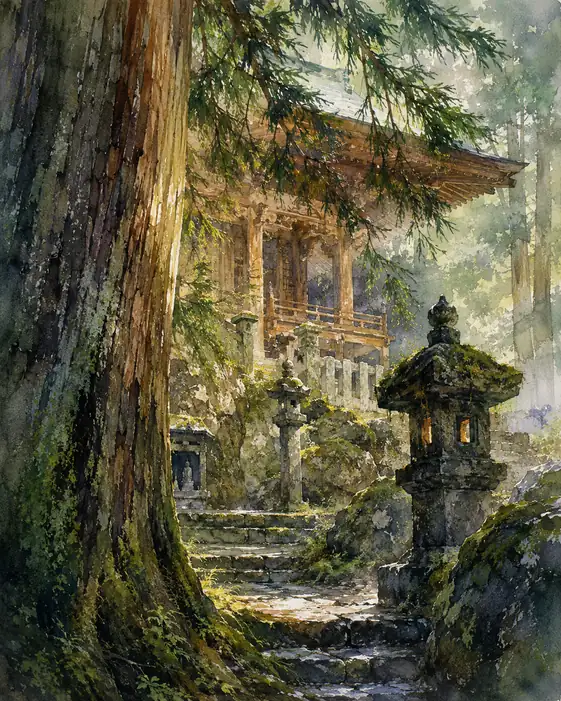 Sanctuary of the Ancient Cedars
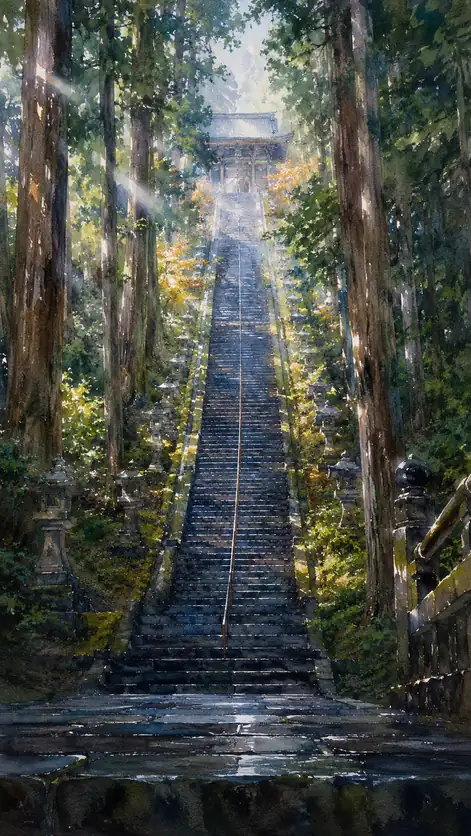 The Stairway between Two Silences
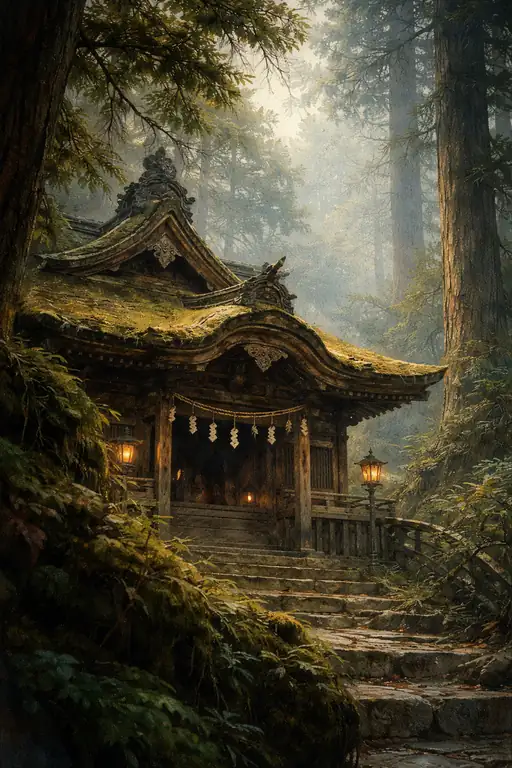 Sanctuary in the Shadows
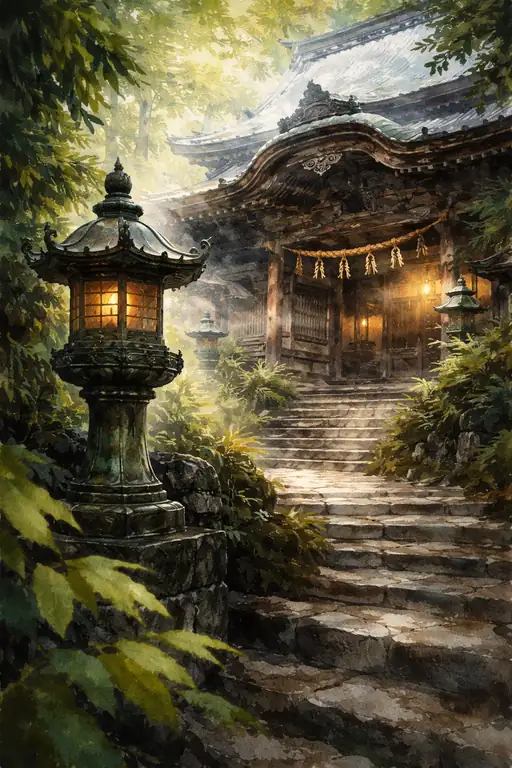 Sanctuary of the Silent Forest
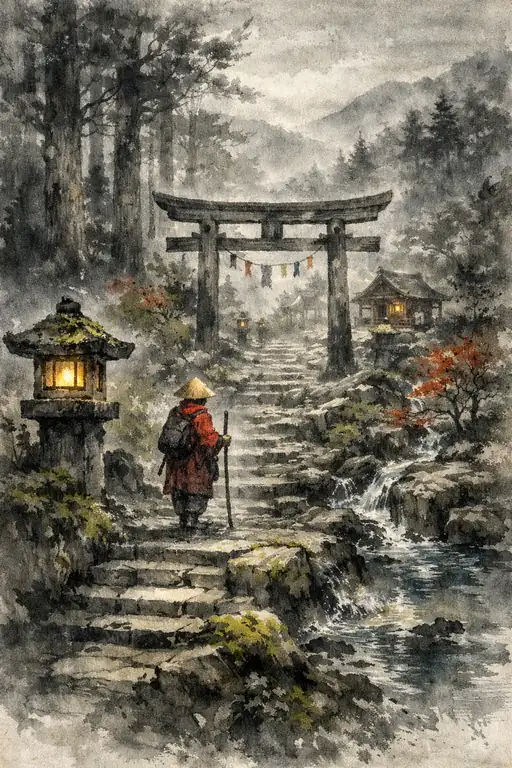 The Pilgrim’s Crimson Steps
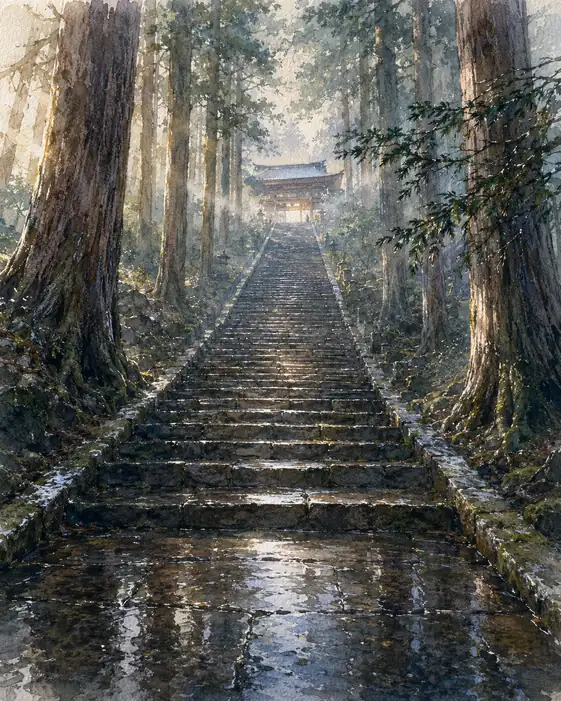 Steps Rising through Cedar Silence
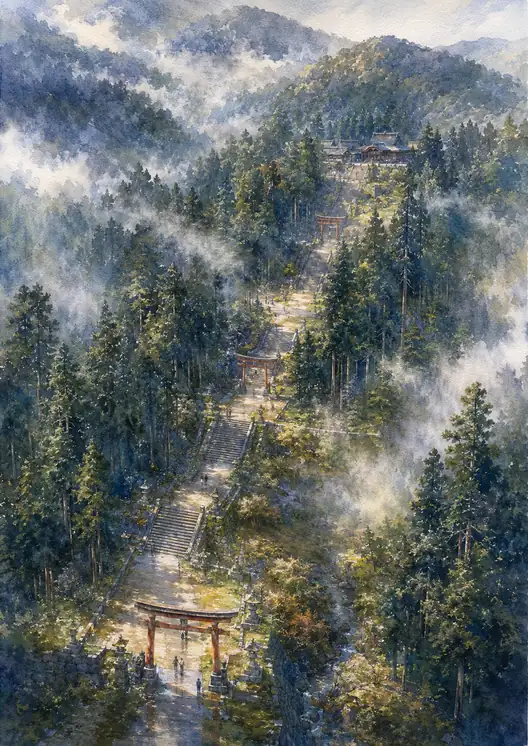 Silent Steps through the Sacred Forest
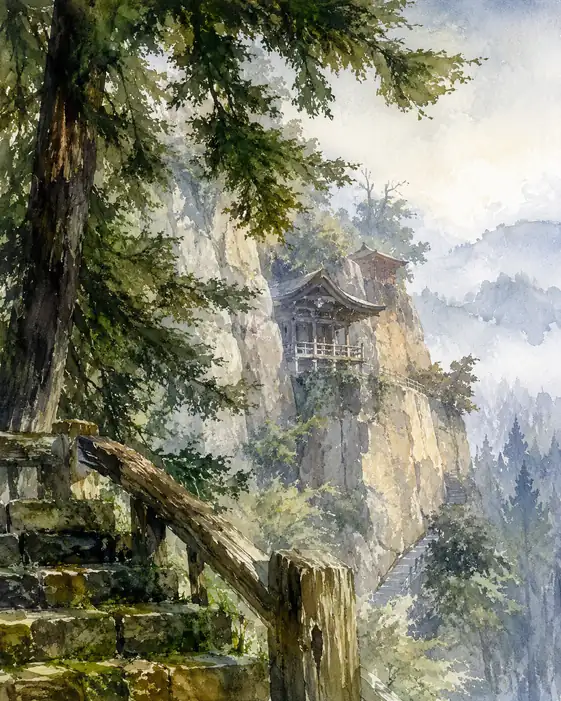 Where Prayers Melt into the Mist
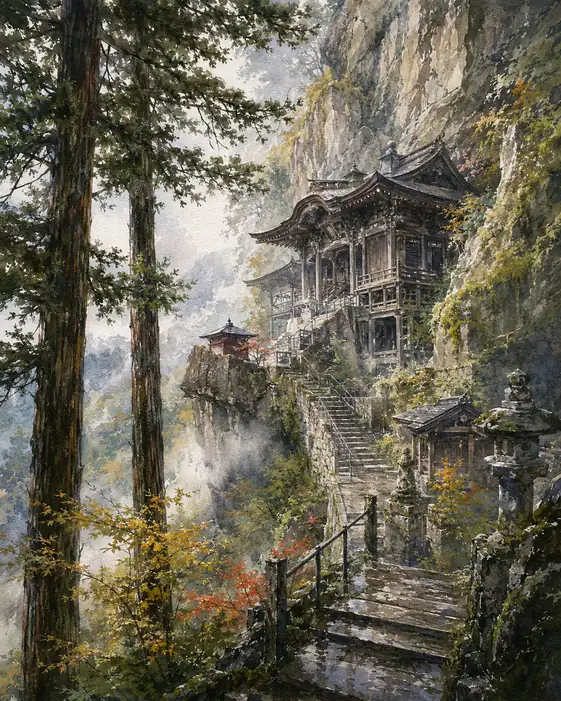 Prayer in the Mountain Mist
 The Sanctuary of Eternal Stillness