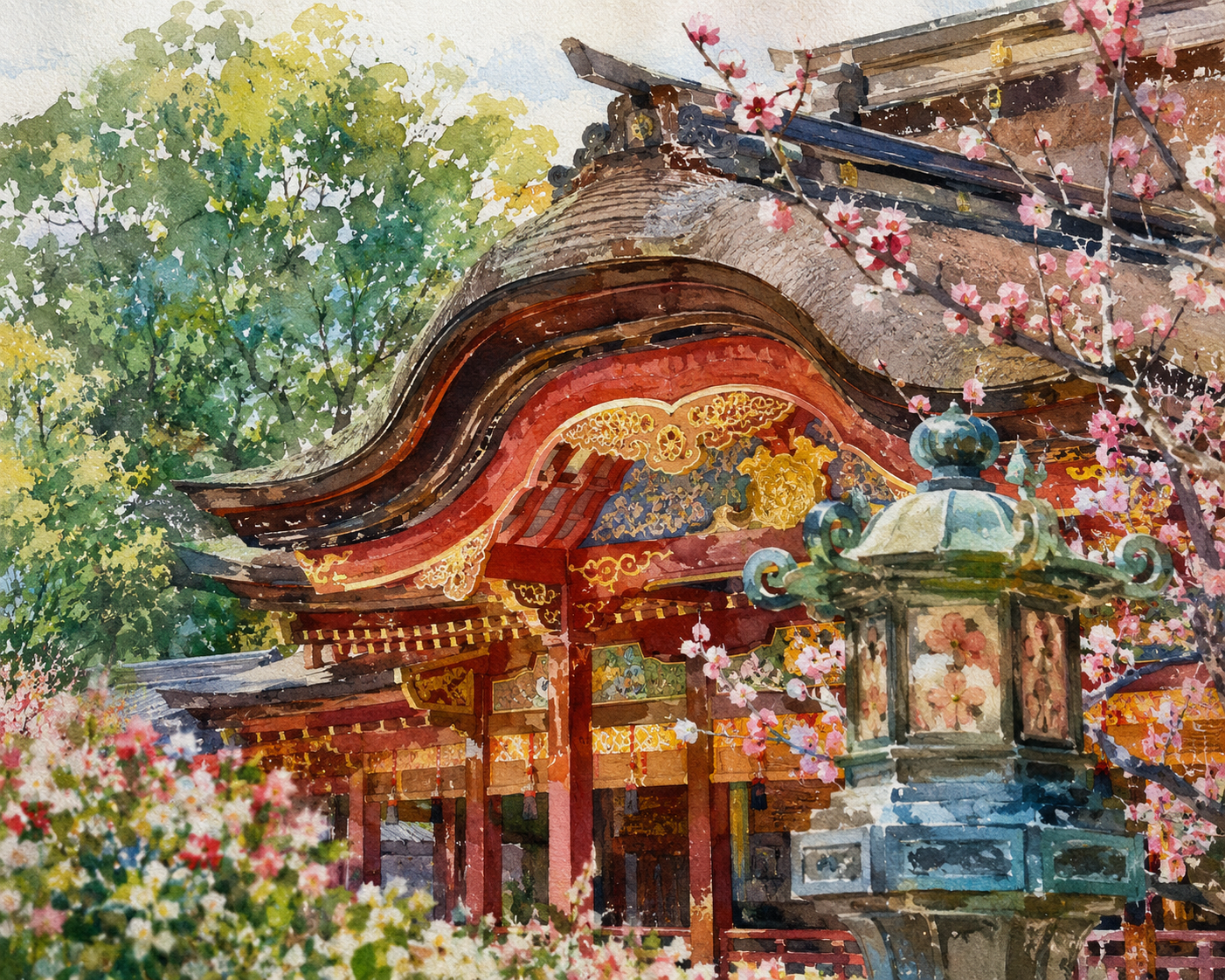
Longing for the Capital, Plum Blossoms Open in Dazaifu
Critique
1. Introduction This delicate watercolor painting depicts a serene Japanese shrine during the spring season, framed by vibrant cherry blossoms and lush greenery. The composition focuses on the intricate architectural details of a vermilion-colored pavilion and a traditional stone lantern. It successfully captures the aesthetic of "wabi-sabi," emphasizing the harmony between man-made structures and the natural world in a sacred space. 2. Description In the foreground, a weathered stone lantern stands on the right, partially obscured by pink blossoms. The center is dominated by the ornate, curved roof of a shrine building, featuring dark thatch and brilliant red beams decorated with gold patterns. On the left, a dense cluster of green leaves and white flowers provides a refreshing contrast to the warm tones of the architecture. 3. Analysis The artist utilizes the transparency of watercolors to create soft, bleeding edges and a luminous quality throughout the piece. The color palette is rich and varied, combining the deep reds of the shrine with the delicate pinks of the blossoms and the earthy grays of the stone. Shadows are rendered with cool purples and blues, giving the scene a sense of depth and atmospheric perspective without heavy lines. 4. Interpretation and Evaluation The work excels in its ability to convey a sense of spiritual tranquility and the fleeting beauty of nature. The juxtaposition of the permanent stone lantern with the ephemeral blossoms creates a powerful symbolic narrative. The technical execution of the complex roof structure and the dappled sunlight filtering through the trees demonstrates a high level of skill in managing the watercolor medium. 5. Conclusion This painting is a masterful exploration of traditional Japanese beauty, characterized by its balanced composition and evocative use of color. While it initially appears as a classic landscape study, the attention to textural details reveals a deeper reverence for the subject matter. Ultimately, the work serves as a beautiful tribute to the enduring spiritual and aesthetic traditions of Japan during the height of spring.
Same Subcategory
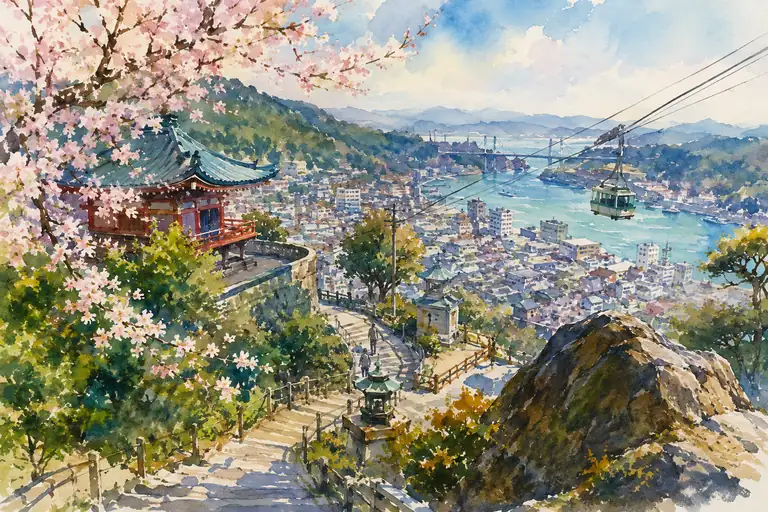 Spring's Ascent: Cherry Blossoms Over the Harbor City
 Where Sakura Whispers to Ancient Stones
Similar Artworks
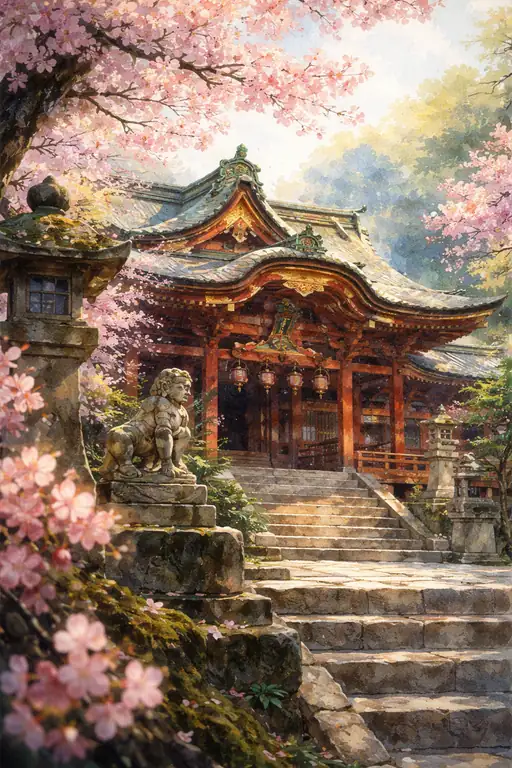 Whispers of the Spring Sanctuary
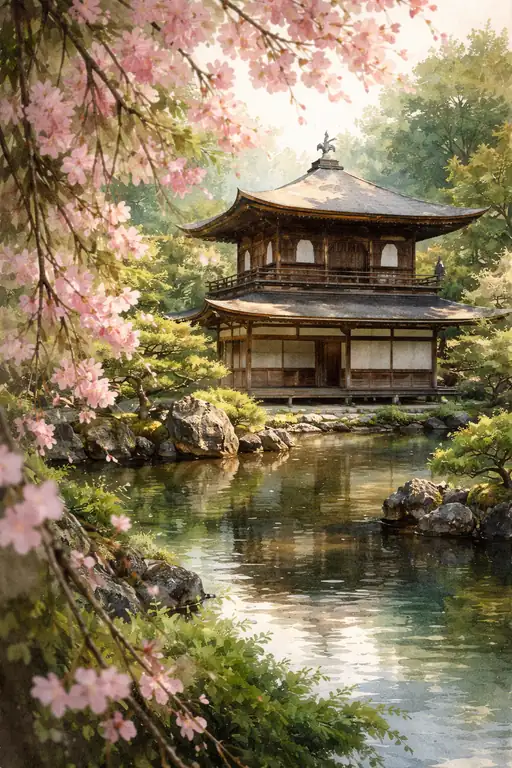 Spring's Gilded Reflection
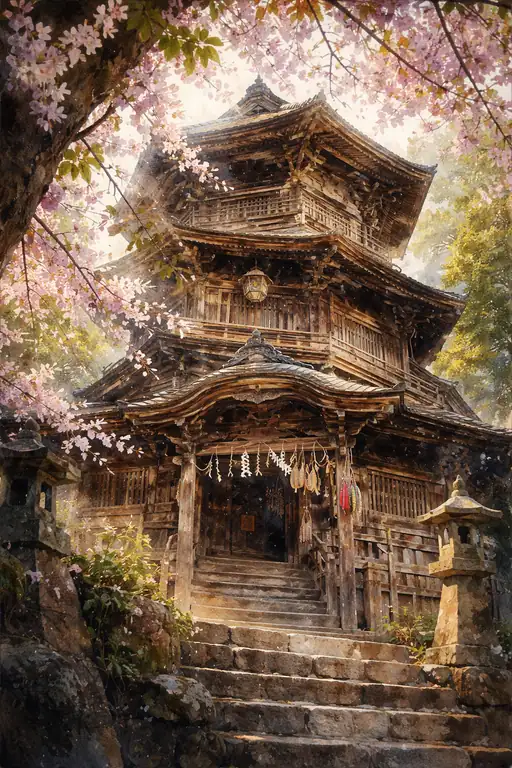 Spring's Quiet Benediction
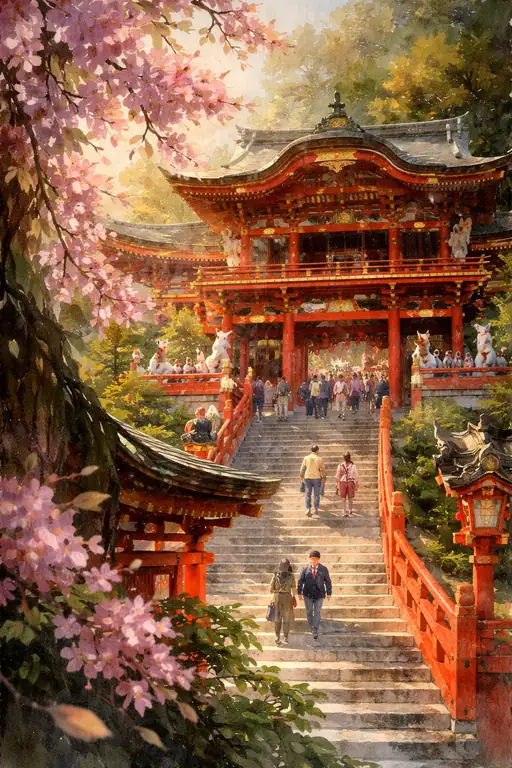 Vermillion Steps to the Spring Heavens
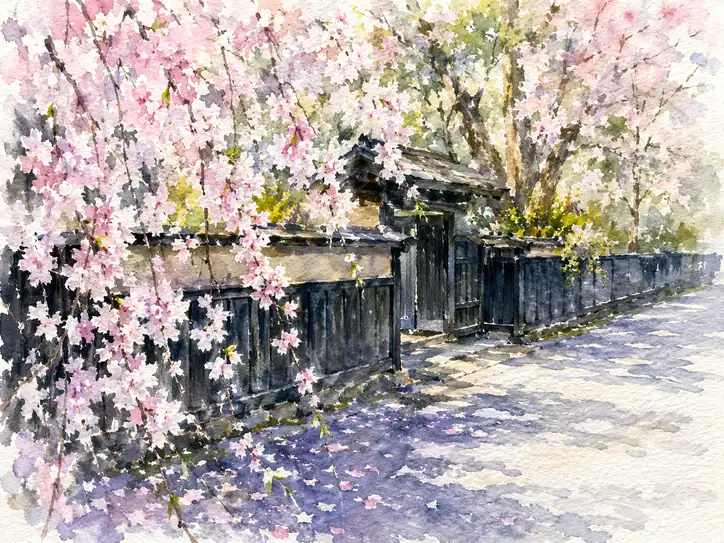 Whispers of the Weeping Spring
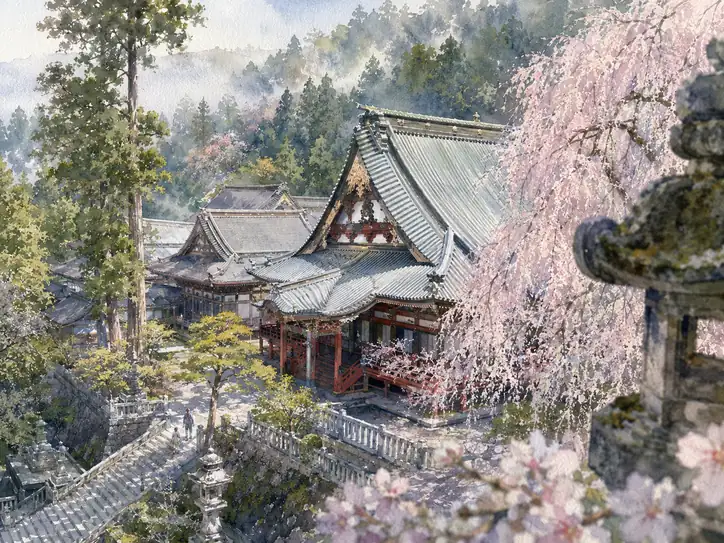 Whispers of the Weeping Sakura
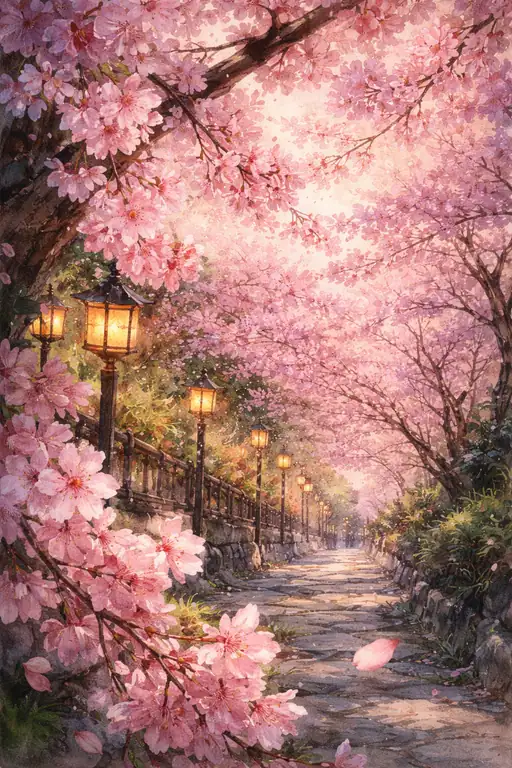 Lanterns and Falling Petals in the Spring Dusk
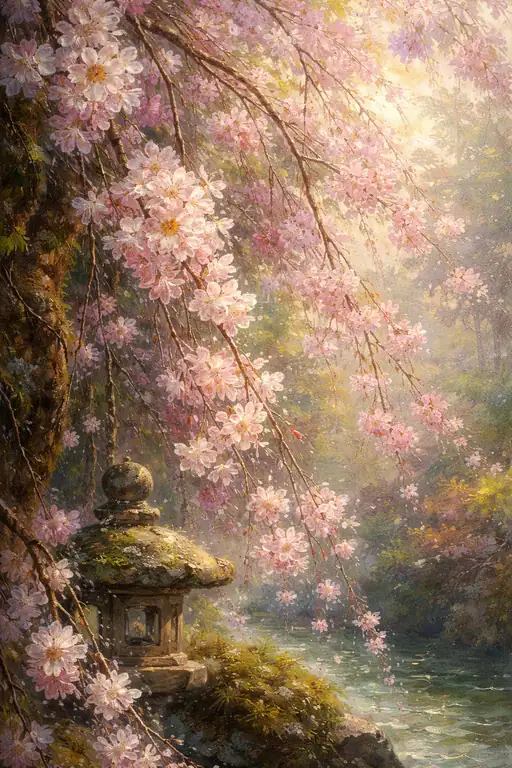 Cherry Blossom Rain Falling on the Lantern
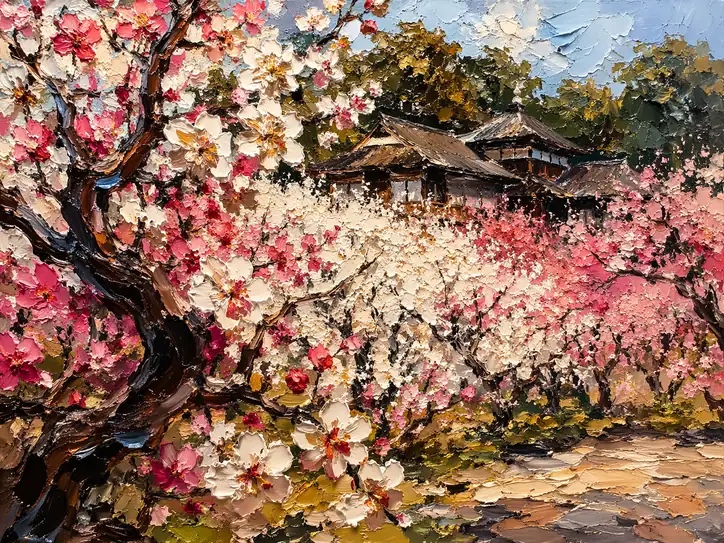 Eternal Bloom in a Fleeting Spring
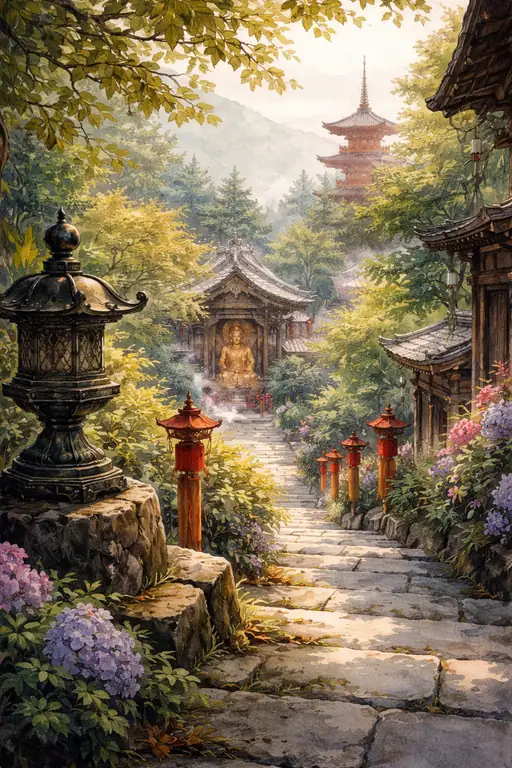 A Journey Toward the Light