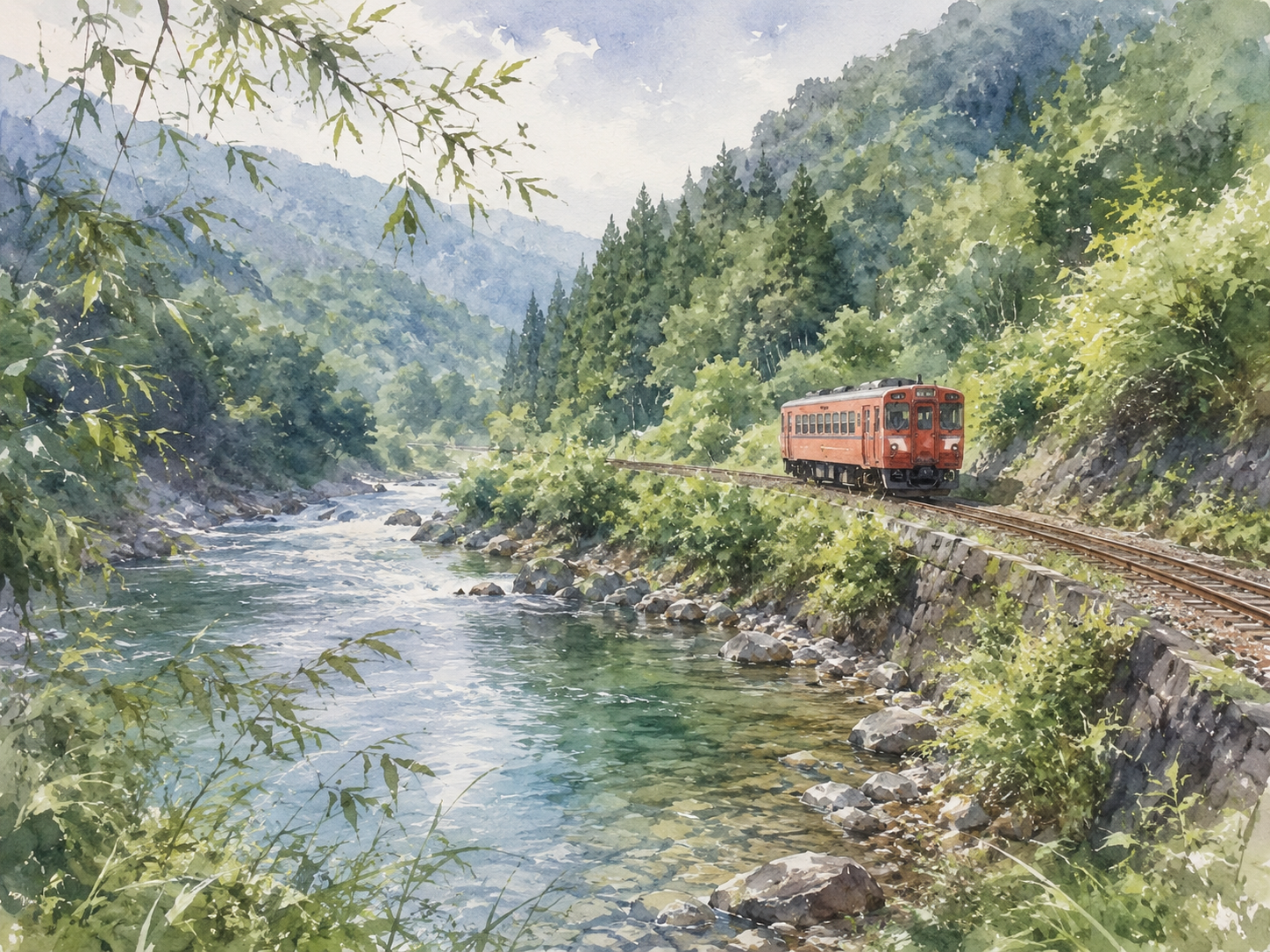
A Crimson Pulse Through the Emerald Gorge
Critique
1. Introduction This watercolor painting depicts a vibrant red diesel train navigating a winding track alongside a clear, rushing mountain river. The scene is set in a lush, verdant valley where steep slopes covered in dense forests frame the composition, creating a sense of isolation and harmony between technology and nature. The artwork captures a moment of quiet transit, where the mechanical presence of the train contrasts with the timeless, organic flow of the water and the surrounding wilderness. 2. Description The train, painted in a distinctive shade of vermillion, is the focal point, positioned on a curved track that hugs the rocky hillside on the right. To the left, a river with varying shades of blue and emerald green flows toward the viewer, its surface broken by white foam and crystalline ripples over a bed of smooth river stones. The far background reveals distant mountains obscured by a soft, atmospheric haze, while the foreground is framed by delicate, overhanging branches with bamboo-like leaves, adding a sense of depth and intimacy to the panoramic view. 3. Analysis The artist utilizes a delicate balance of wet-on-wet and wet-on-dry watercolor techniques to achieve the varied textures of the scene. The forest is rendered with layers of stippled greens and deep shadows, suggesting a complex ecosystem, while the river's transparency is conveyed through translucent washes and careful highlights. The use of perspective is effective, with the receding lines of the railway tracks and the diminishing scale of the trees guiding the eye into the deep valley. The bright red of the train acts as a powerful chromatic accent, pulling the viewer's attention toward the center of the diagonal composition. 4. Interpretation and Evaluation The work can be interpreted as an exploration of the theme of journeying through the natural world, emphasizing the peaceful coexistence of human infrastructure and the environment. The choice of a traditional-style train evokes a sense of nostalgia, perhaps referencing the remote railway lines of rural Japan. Evaluatively, the painting shows high proficiency in rendering natural elements, particularly the clear water and the complex foliage. The composition is well-balanced, using the natural curve of the river and tracks to create a dynamic yet stable image that successfully communicates the serene beauty of the location. 5. Conclusion In conclusion, this painting is a evocative portrayal of a scenic railway journey, masterfully executed with a keen eye for light and atmosphere. The contrast between the vivid train and the muted, natural tones of the valley creates a compelling visual narrative that celebrates both the engineering of travel and the splendor of the outdoors. It invites the viewer to imagine the sounds of the rushing water and the steady hum of the engine, providing a holistic and immersive experience of a quiet moment in the mountains.
Same Subcategory
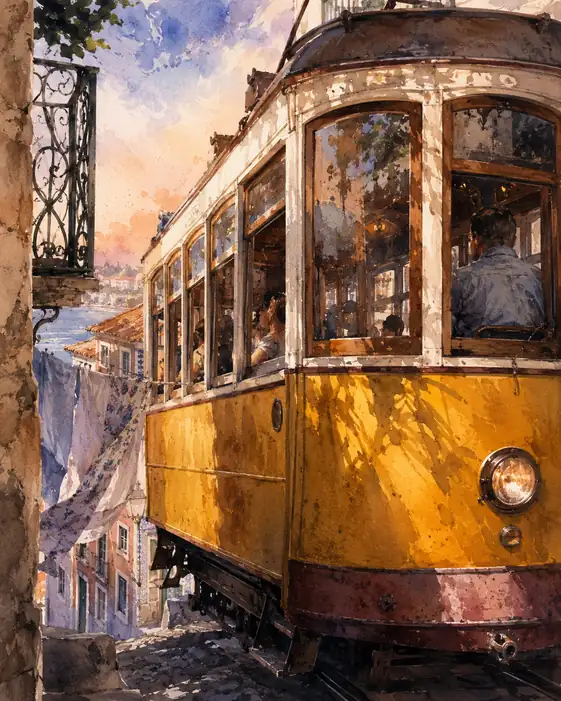 The Golden Rhythm of the City
 Crimson Echoes through the Misty Gorge
Similar Artworks
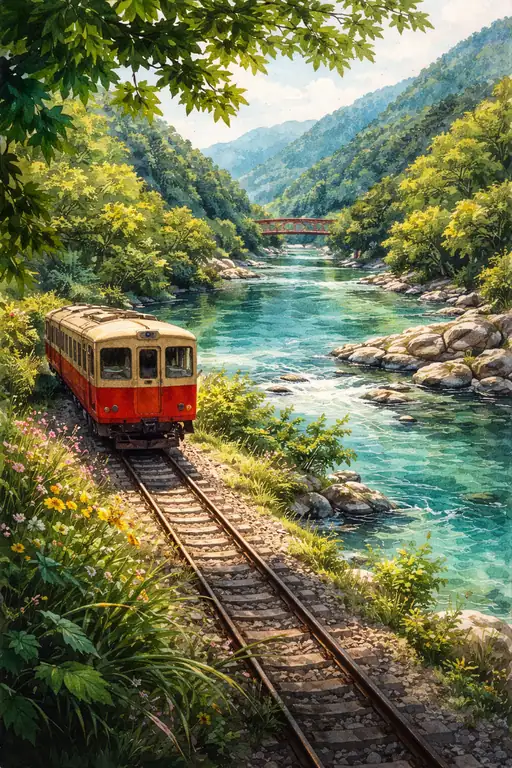 Echoes of the Green Gorge
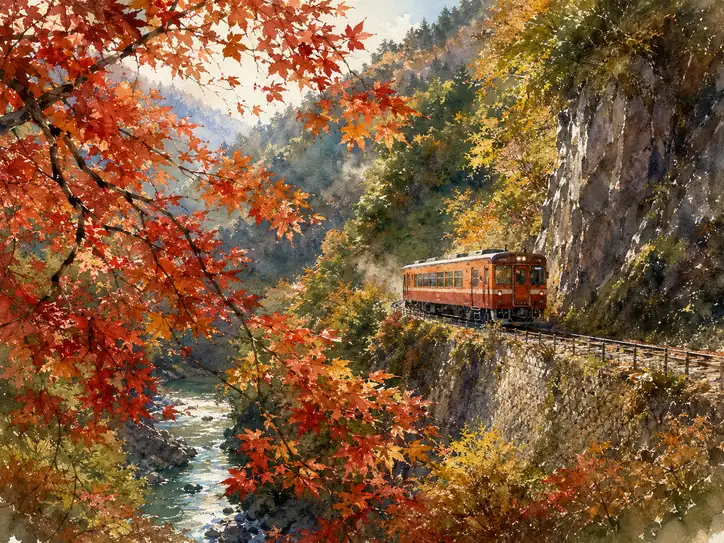 Nostalgia in Red: The Mountain Train’s Journey
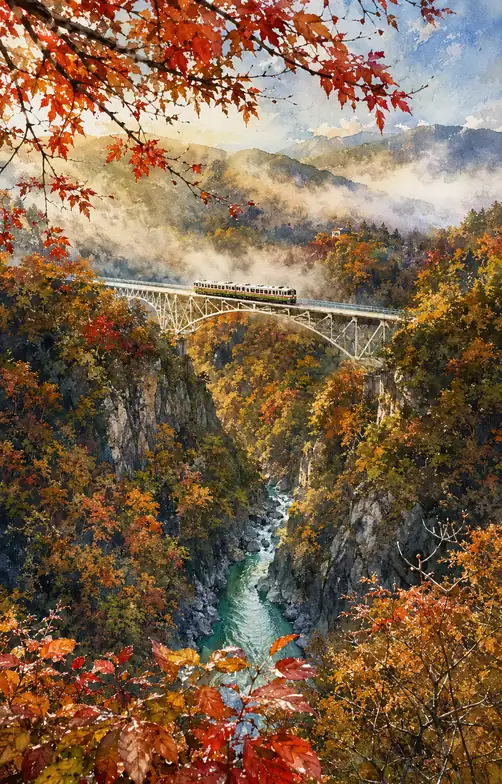 The Valley Remembers Our Passing
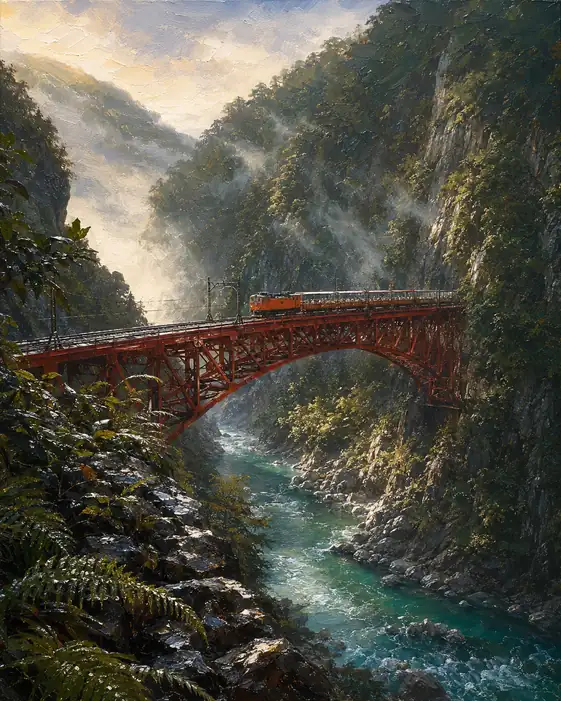 The Red Journey Across Green Silence
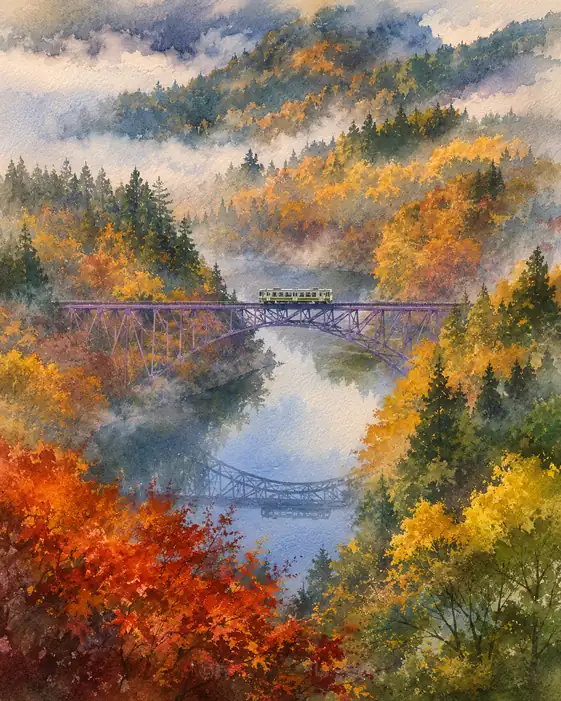 The Journey Autumn Refused to Forget
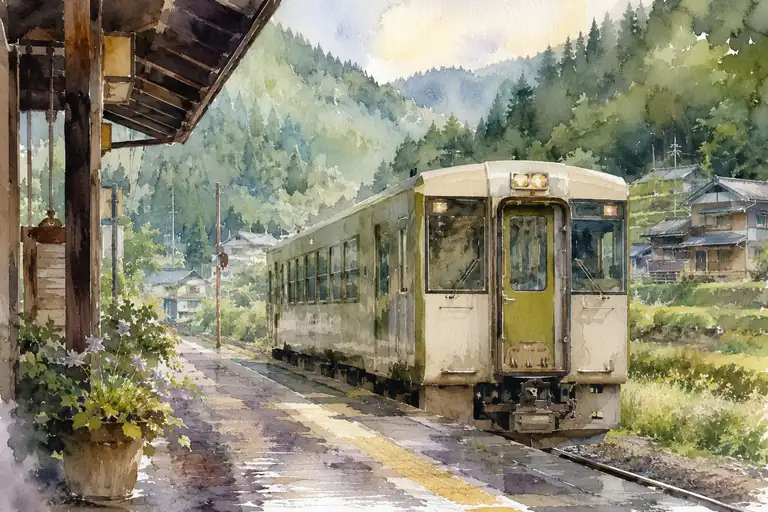 A Quiet Pause in the Rain-Washed Hills
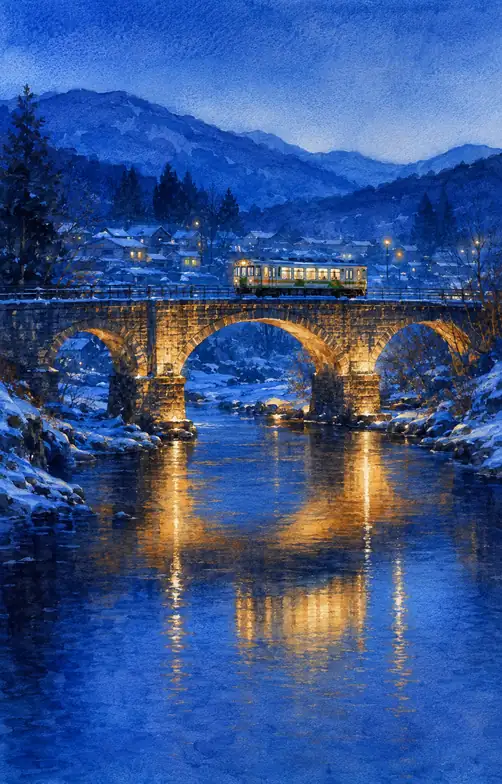 A Warm Window Crossing Winter
 Breath of the Emerald Canyon
 The Golden Journey Through Silent Mists
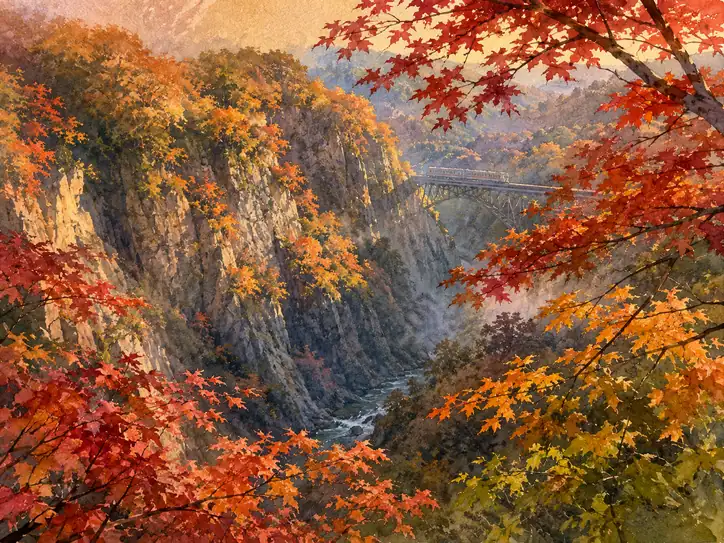 Autumn Echoes over the Iron Bridge