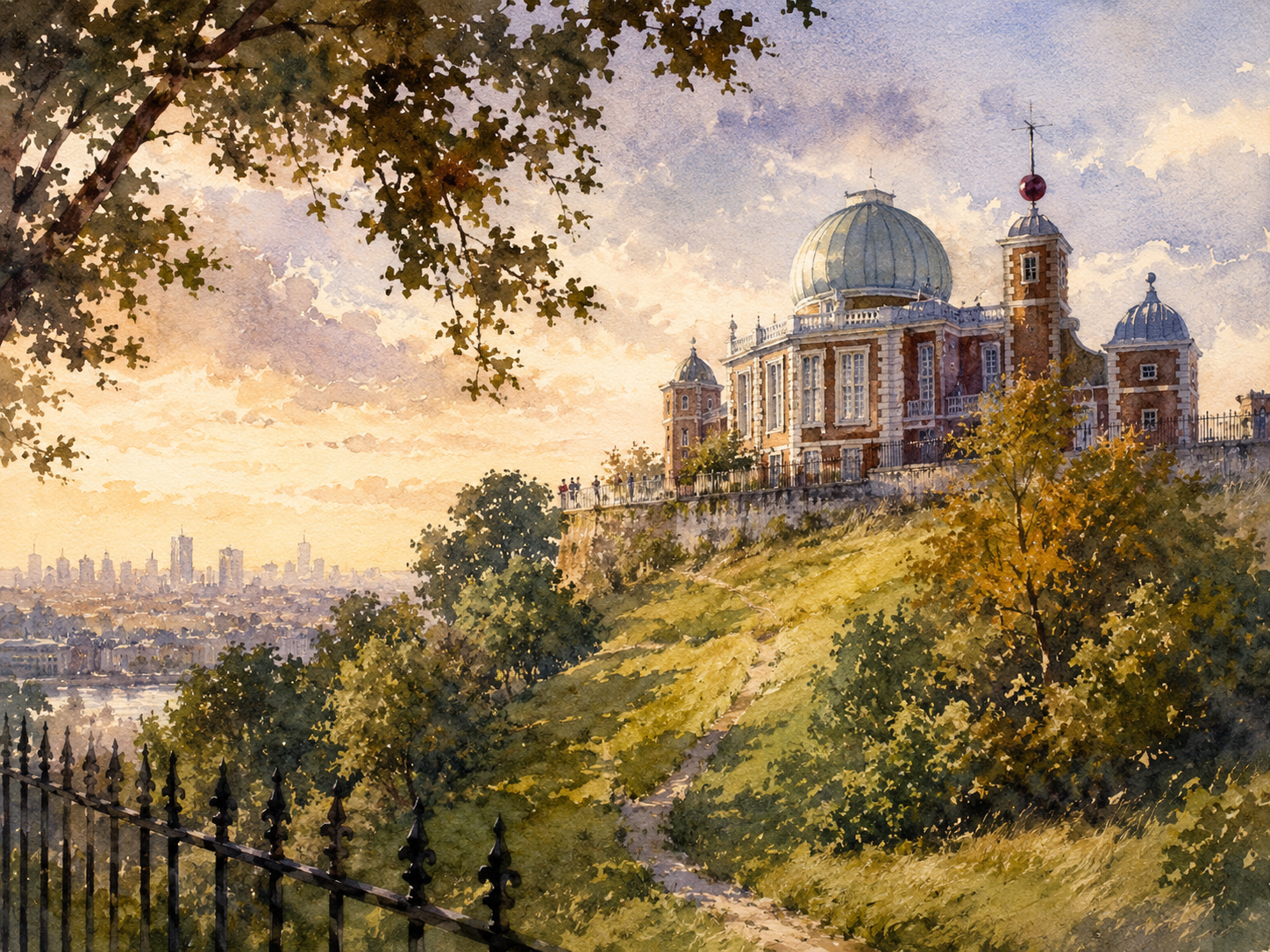
Where Time Meets the Horizon
Critique
1. Introduction This evocative watercolor painting depicts a historic observatory situated atop a hill, bathed in the radiant golden light of dawn or dusk. The domed architecture, standing prominently against a luminous sky, serves as a majestic symbol of scientific pursuit and the observation of time. By skillfully guiding the viewer's eye from the lush foreground to the distant urban skyline, the artist creates a powerful dialogue between historical continuity and modern civilization. 2. Description The upper right portion of the canvas is occupied by a red-brick observatory featuring intricate architectural details and a distinctive verdigris dome. A gentle path winds its way up the grassy slope, which is covered with trees and shrubbery displaying early autumnal hues. In the far distance on the left, the hazy silhouette of a contemporary city with skyscrapers provides a stark contrast to the classical structure in the foreground. Overhanging branches frame the scene from the top and left, focusing attention on the dramatic cloud formations filled with scattered light. 3. Analysis Technically, the artist employs backlighting to create a unified atmosphere and a profound sense of depth. The sky is rendered with delicate layers of watercolor, capturing the way light permeates and diffuses through the clouds. There is a deliberate tension between the meticulous rendering of the brickwork and the more fluid, impressionistic treatment of the surrounding foliage. Furthermore, the wrought-iron fence in the lower left establishes a boundary that positions the viewer as a quiet observer of this grand vista. 4. Interpretation and Evaluation The work can be interpreted as a reflection on humanity's enduring quest to understand the universe and the timelessness of the natural world. The observatory represents the accumulation of knowledge over centuries, while the distant city signifies the results of that progress. The composition is particularly successful in its layering of space—foreground, middle ground, and background—which allows the observer to feel the vastness of the atmosphere and the scale of the environment. 5. Conclusion While the painting adheres to the traditions of landscape art, its treatment of light reveals a sophisticated modern sensibility. The harmony achieved between history and modernity, as well as nature and architecture, offers a space for deep contemplation and serenity. This work transcends a mere depiction of a specific site, serving instead as a universal reminder of the profound beauty and expansiveness of our world.
Same Subcategory
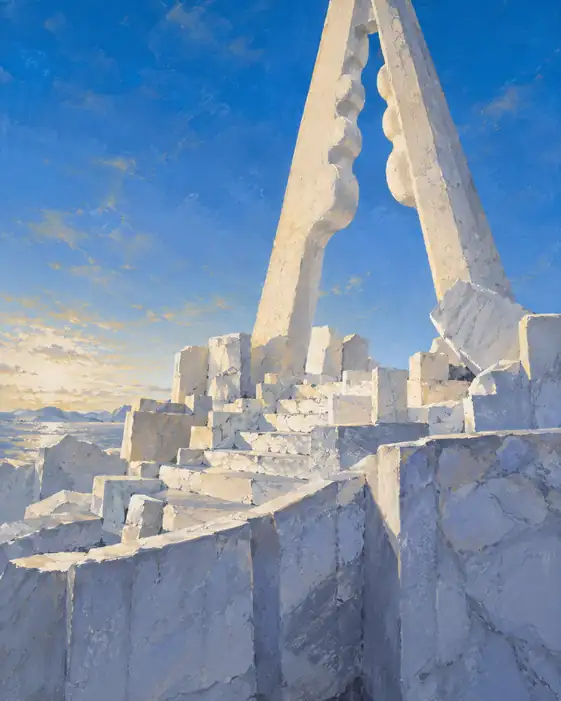 The Threshold Where My Soul Meets the Sky
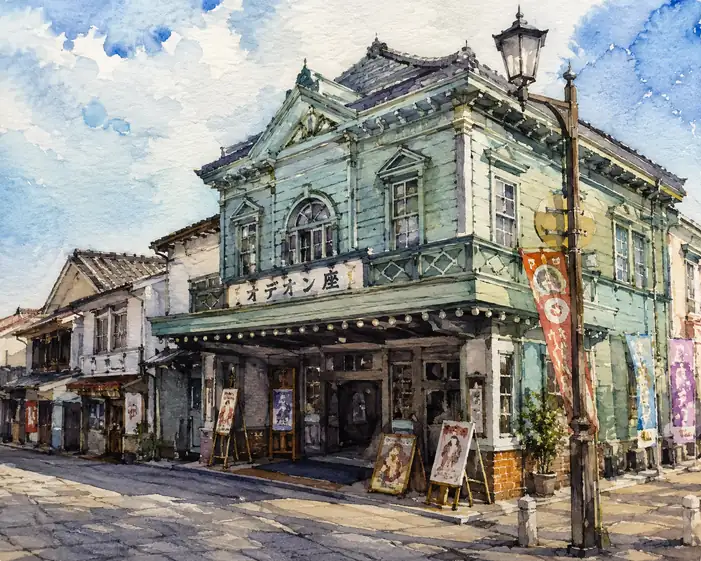 Echoes of the Gilded Stage
Similar Artworks
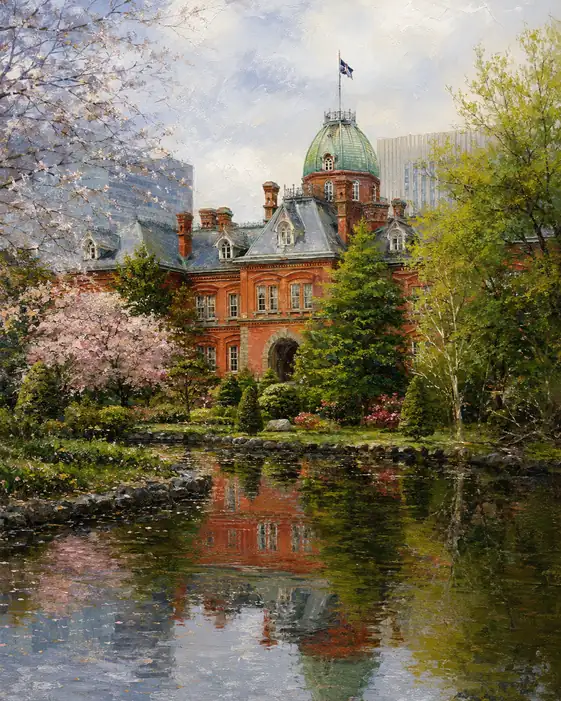 Spring Remembers in Brick and Water
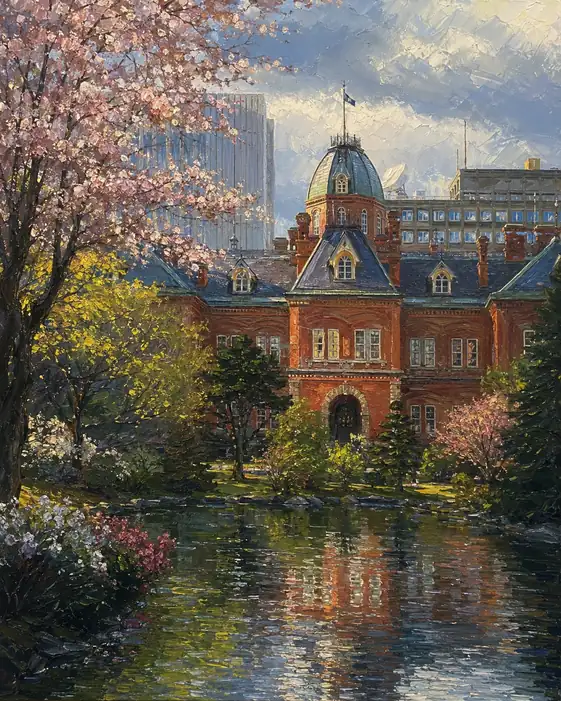 Spring Keeps the Old City in Red Brick
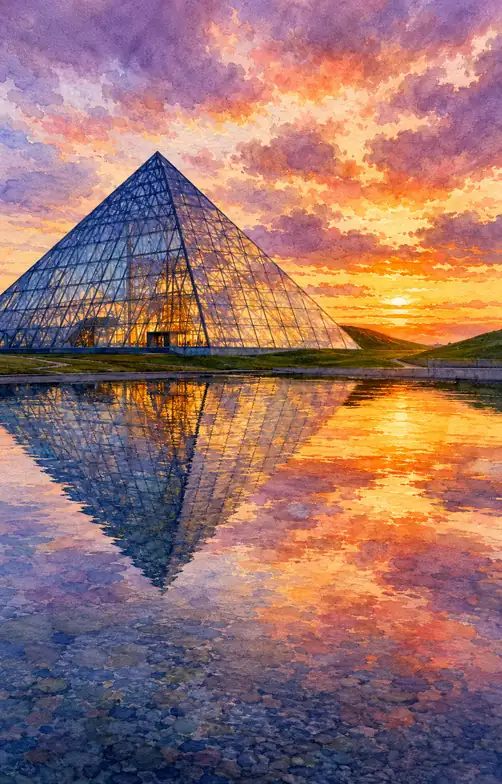 The Sky Enters the Glass and Doubles
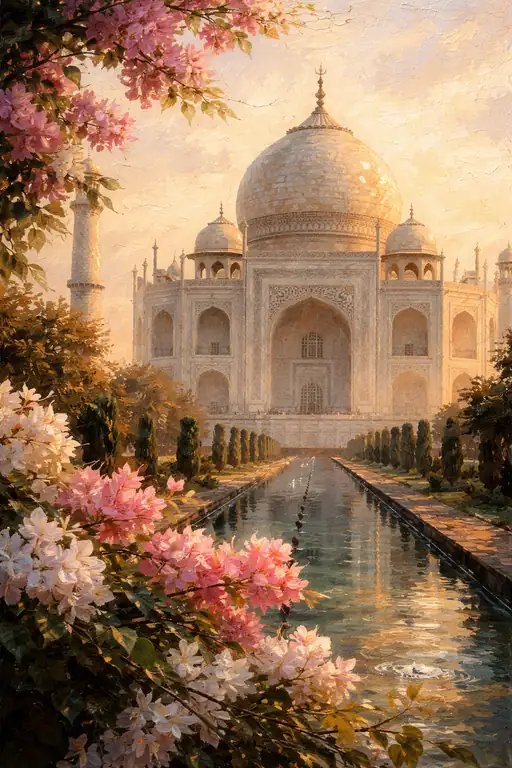 Golden Dawn Over the Marble Dream
 Echoes of a Forgotten Age
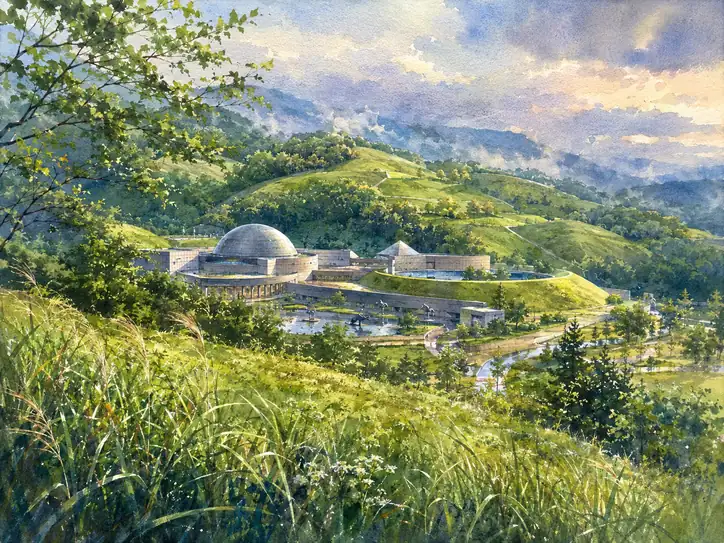 Where the Earth Whispers Wisdom
 The Guardian's Golden Solitude
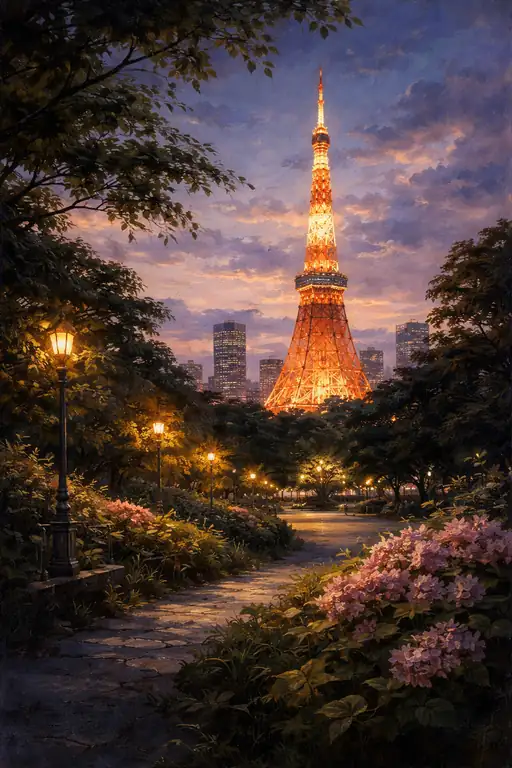 Twilight's Glowing Labyrinth
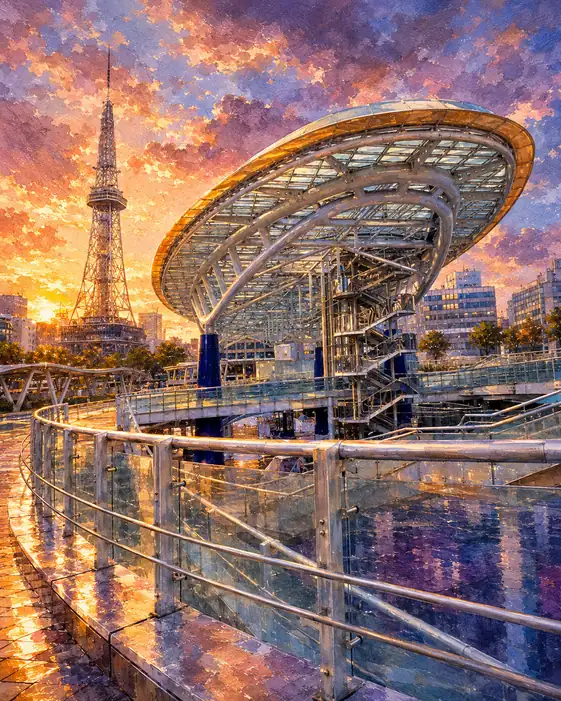 A Future Forged in Sunset Fire
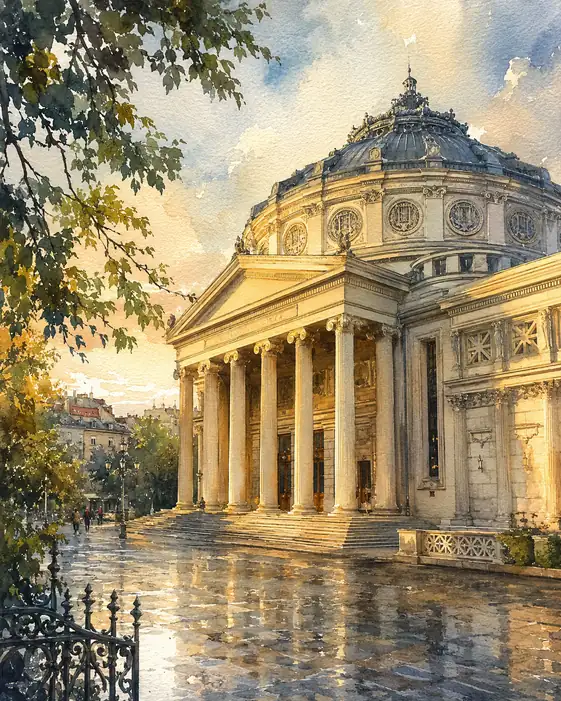 Golden Reverie of the Athenaeum