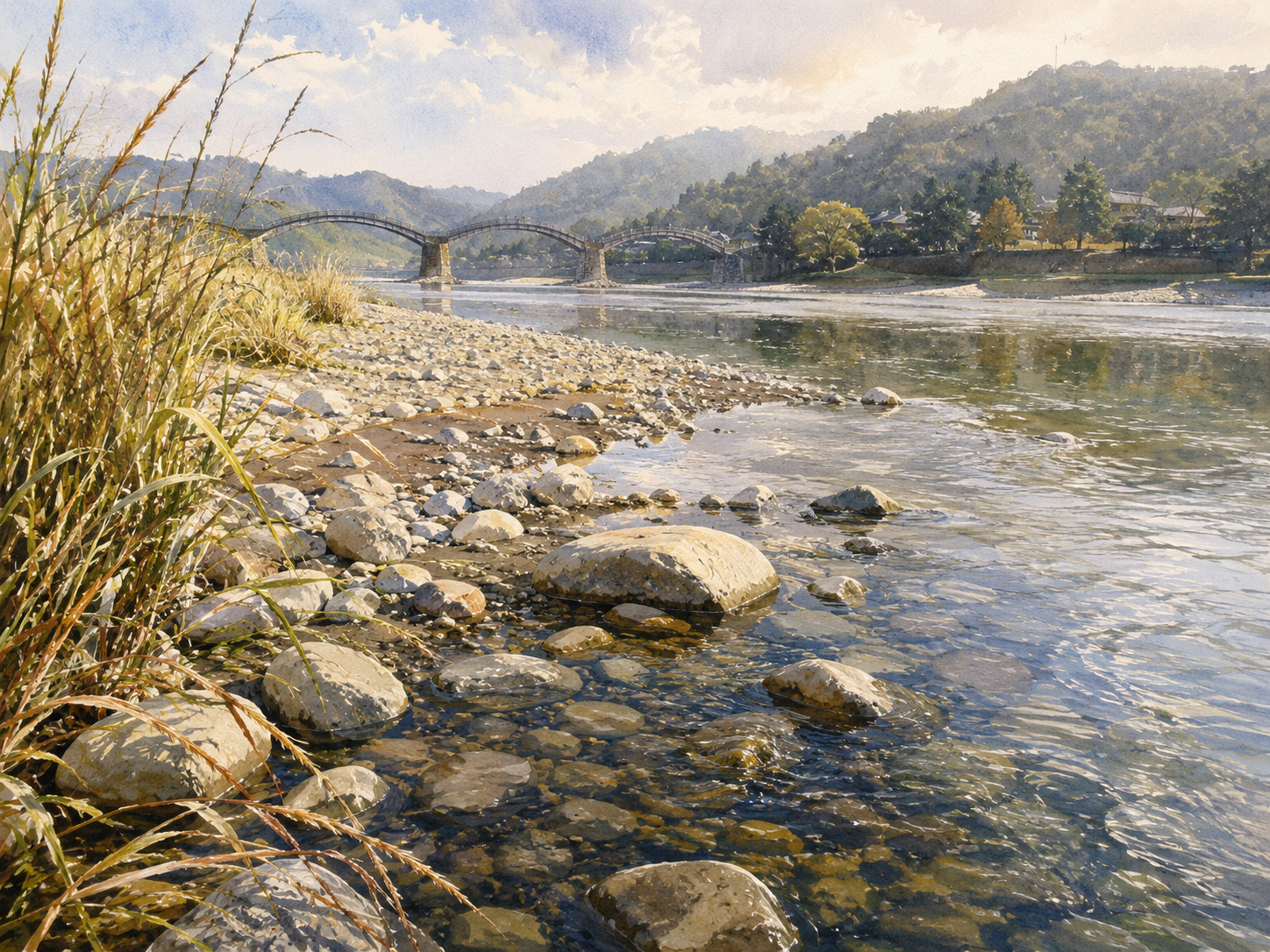
Whispers of the Eternal Bridge
Critique
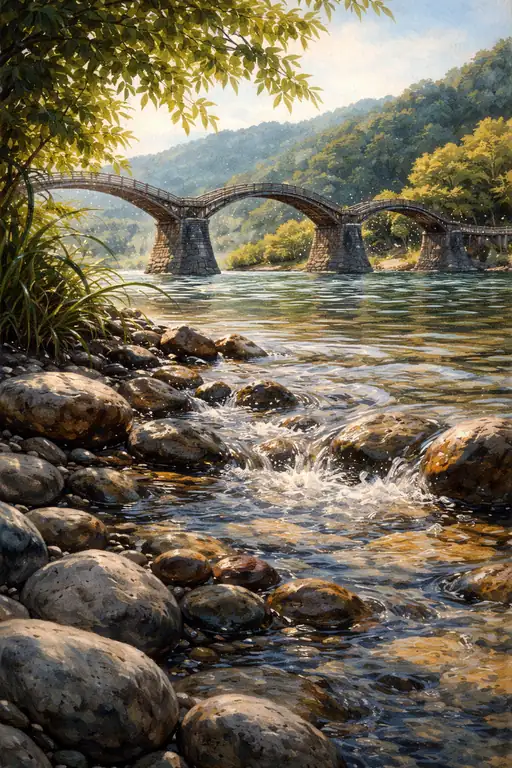
1. Introduction This watercolor painting depicts a serene landscape featuring a famous multi-arched wooden bridge spanning a wide, clear river. The scene is set on a bright day, capturing the intricate relationship between traditional architecture and the natural river environment. The work demonstrates a high level of detail, particularly in the rendering of water and rocky riverbanks, using the transparency of the medium to its full potential. 2. Description The composition is dominated by a rocky shoreline in the foreground, where large, smooth stones are partially submerged in the transparent water. Tall grasses sway on the left bank, their stalks catching the sunlight. In the middle ground, the iconic bridge with five distinct wooden arches connects the two shores. The far bank is lined with lush green trees and traditional Japanese-style buildings nestled against a backdrop of rolling, forested hills. The sky is a pale blue, filled with soft, white clouds that suggest a clear, pleasant atmosphere. 3. Analysis The artist uses a low-angle perspective, placing the viewer close to the water's surface to emphasize the clarity and depth of the river. The leading lines created by the shoreline and the repetitive arches of the bridge draw the eye across the horizontal expanse of the scene. Texture is meticulously rendered, from the individual pebbles beneath the water to the delicate blades of grass. The use of light is consistent, with subtle reflections on the river's surface and soft shadows that define the contours of the hills and the structure of the bridge. 4. Interpretation and Evaluation The painting successfully conveys a sense of tranquility and the enduring beauty of a cultural landmark. The technical precision in handling the various elements—water, stone, wood, and foliage—is exceptional for the watercolor medium. There is a palpable sense of place, evoking the historical and natural significance of the site. The balance between the detailed foreground and the softer, atmospheric distant hills creates a convincing sense of spatial depth and realism. It is a highly accomplished work that celebrates Japanese landscape aesthetics. 5. Conclusion This work is a masterful example of landscape painting that combines technical rigor with a sensitive observation of nature. The clarity of the water and the detailed rendering of the environment provide a rich visual experience. The final impression is one of harmonious coexistence between human ingenuity and the natural world, captured in a moment of brilliant clarity.
Same Subcategory
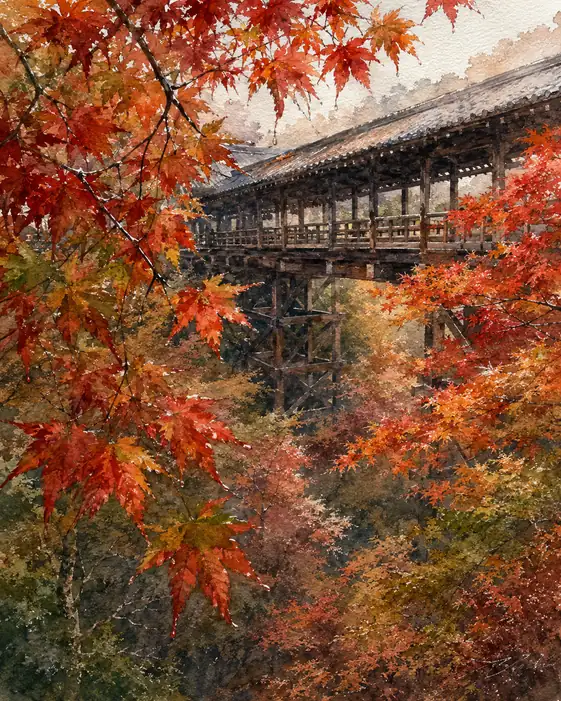 Autumn's Crimson Whisper
Similar Artworks
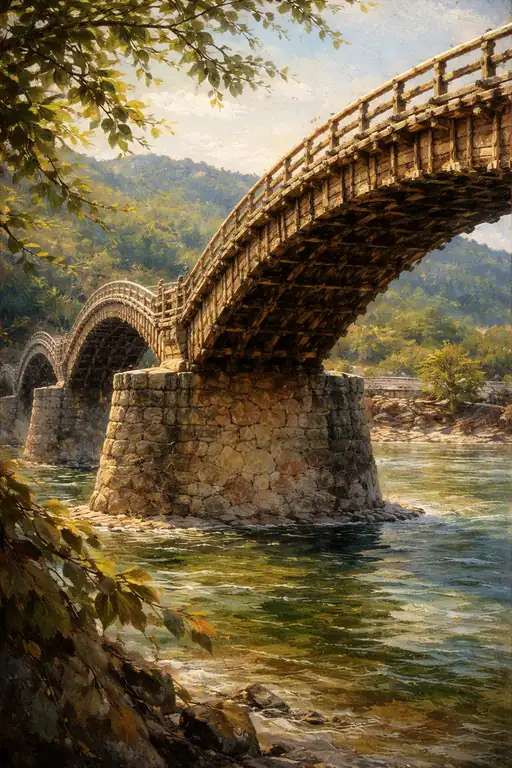 Echoes of the Wooden Arch
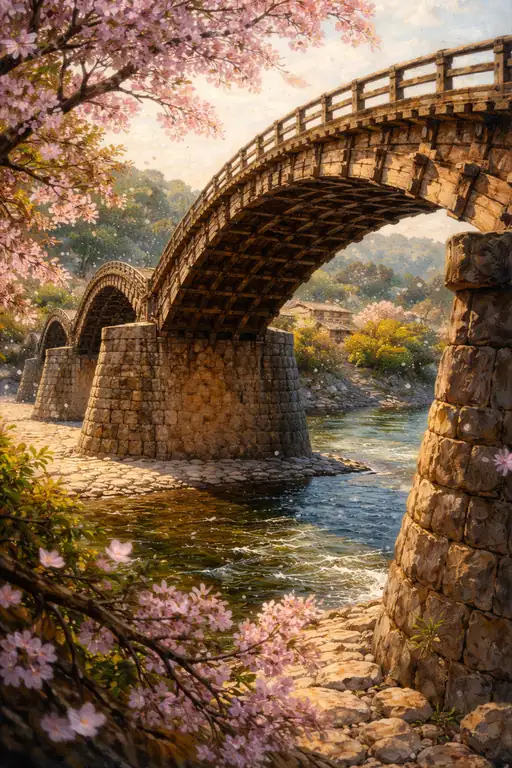 Spring's Reflection on the Arched Heritage
 Bridge to the Heart of Autumn
 The Arching Flow of Time
 Harmony Across the Gentle Current
 Where the Arches Hold the Dawn
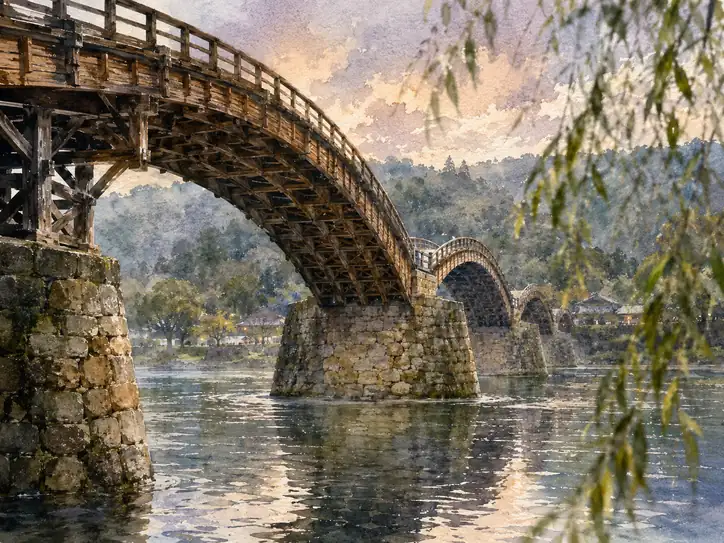 A Path Woven in Wood and Twilight
 Silence Across the Crystal Flow
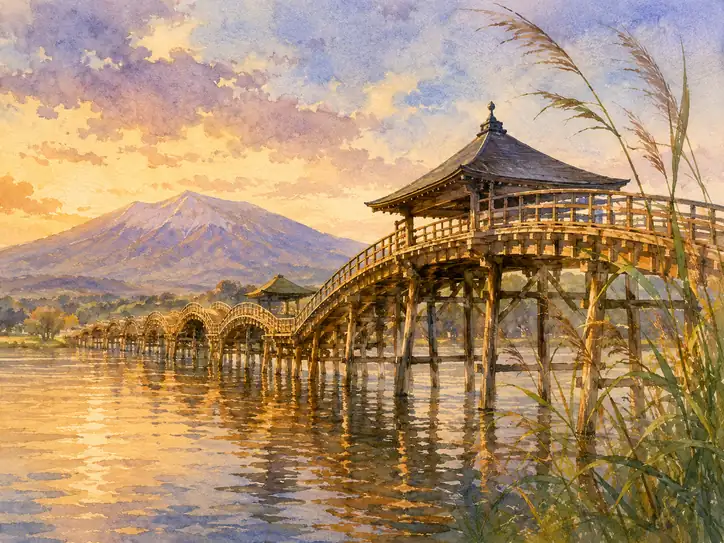 Bridging the Golden Silence
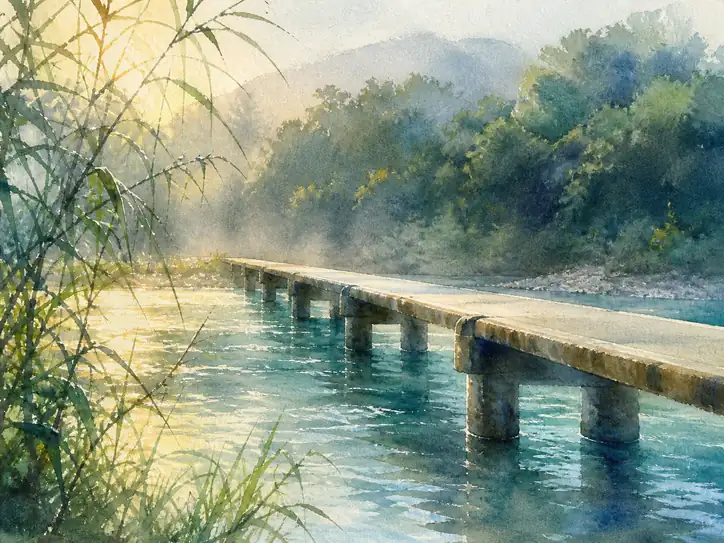 The Luminous Bridge over Morning Mist