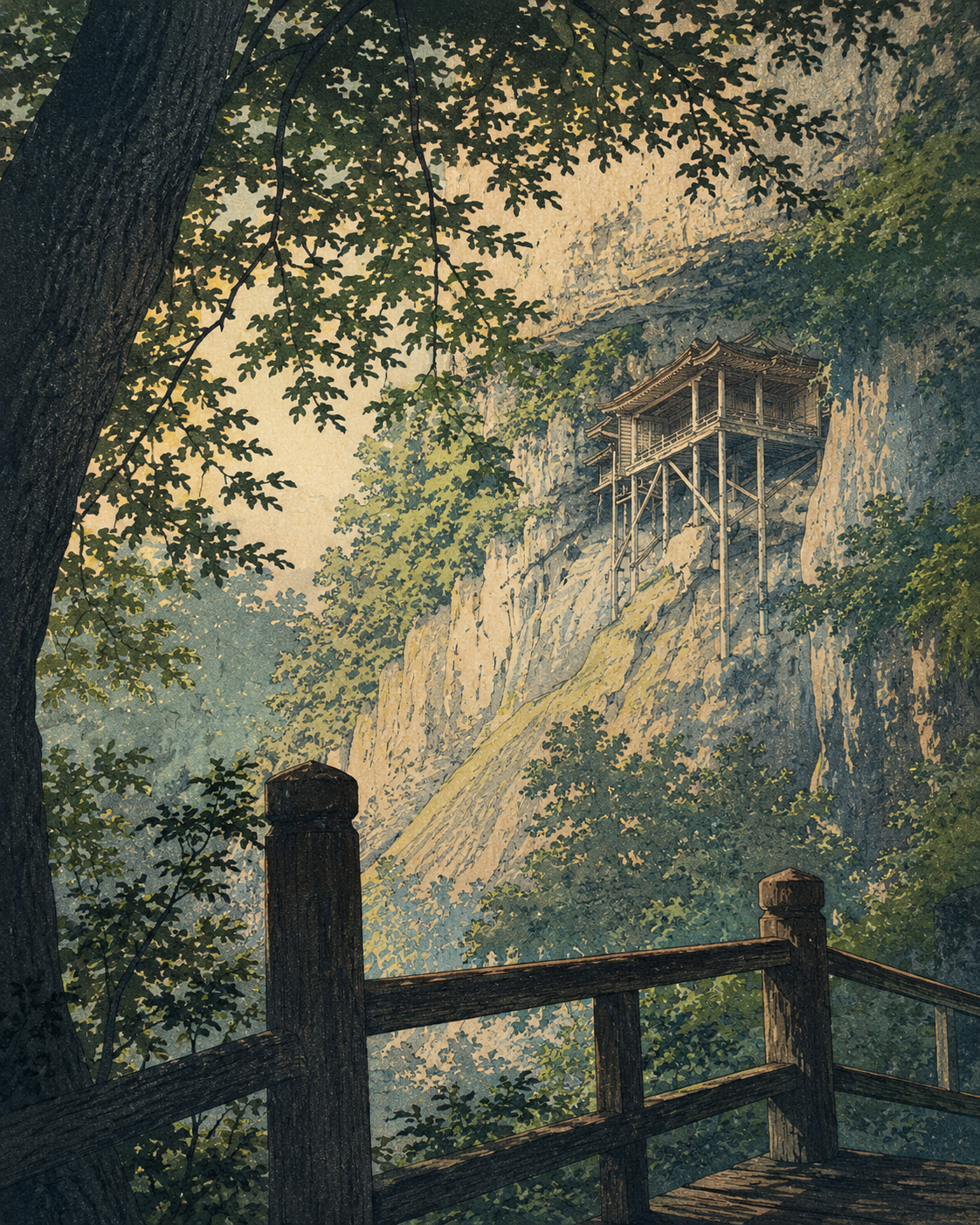
Sanctuary Suspended in the Silent Heights
Critique
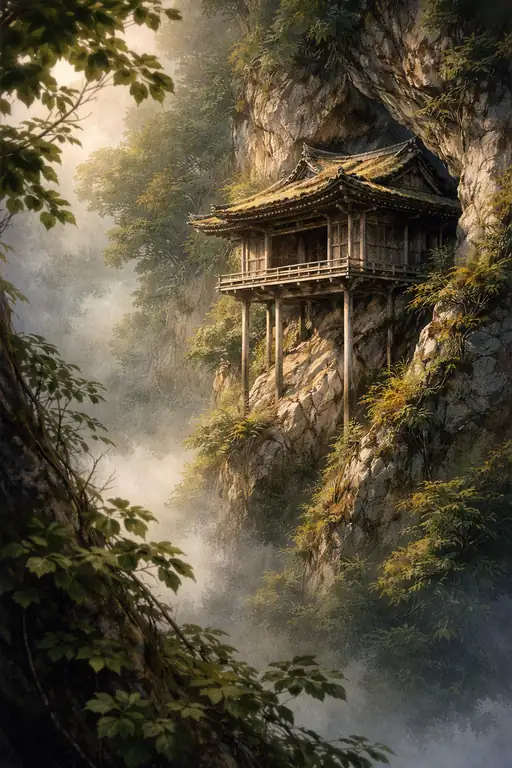
1. Introduction This artwork is a woodblock-style print that captures a profound sense of serenity, featuring a temple built directly into a sheer cliffside. Reminiscent of the Shin-hanga movement, the piece utilizes delicate outlines and atmospheric coloring to evoke a nostalgic yet vivid landscape. It portrays a harmonious coexistence between the ruggedness of nature and the sacred spaces established by human devotion. This work stands as a sophisticated fusion of traditional Japanese aesthetics and modern spatial representation. 2. Description In the immediate foreground, a dark, vertical tree trunk and a wooden railing frame the left side and bottom of the composition. Looking deeper into the scene, one encounters a towering, pale grey cliff face where an intricate wooden structure sits on tall stilts. This architectural feat is nestled within a natural indentation of the rock, surrounded by lush, verdant foliage. A soft, warm light filters down from the upper reaches of the cliff, illuminating the rock surface against a pale yellow sky. 3. Analysis The vertical composition masterfully emphasizes the height of the cliff and the precarious isolation of the temple. By keeping the foreground elements in deep shadow, the artist directs the viewer’s focus toward the sunlit middle ground, creating a dramatic sense of depth. The use of "bokashi" (color graduation) in the sky and rock faces effectively conveys atmospheric moisture and distance. Furthermore, the interplay between the organic forms of the leaves and the geometric lines of the temple demonstrates high technical skill. 4. Interpretation and Evaluation The piece symbolizes the spiritual essence of mountain worship, where nature itself is seen as divine. The temple's solitary presence evokes feelings of both awe and tranquility, inviting the viewer into a space of quiet contemplation. The technical execution is exceptional, particularly in the rendering of the complex stilt architecture and the varied textures of the stone and trees. This work succeeds in using traditional printmaking vocabulary to express a timeless, poetic longing for the sublime. 5. Conclusion In summary, the painting is a remarkable achievement in both composition and color design, successfully reimagining a classic Japanese vista. While the initial attraction lies in the unusual architecture, closer inspection reveals a depth of light and texture that is truly captivating. It captures a moment where time seems to stand still, allowing the viewer to hear the whispers of the forest. Ultimately, it is a highly finished work that resonates with cultural depth and artistic integrity.
Same Subcategory
 Where the Autumn Wind Rests
Similar Artworks
 The Sacred Stillness of the Rock
 Echoes from the Ancient Heights
 Sanctuary of the Ancient Cedars
 Echoes from the Sacred Void
 Heaven's Silver Threads, a Prayer in Vermilion
 Sanctuary Above the Clouds
 Boardwalk to the Water Sanctuary
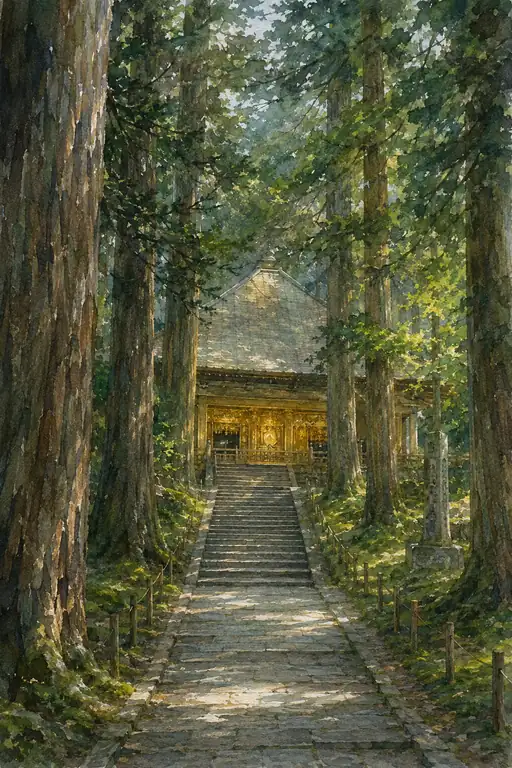 A Sanctuary of Golden Silence
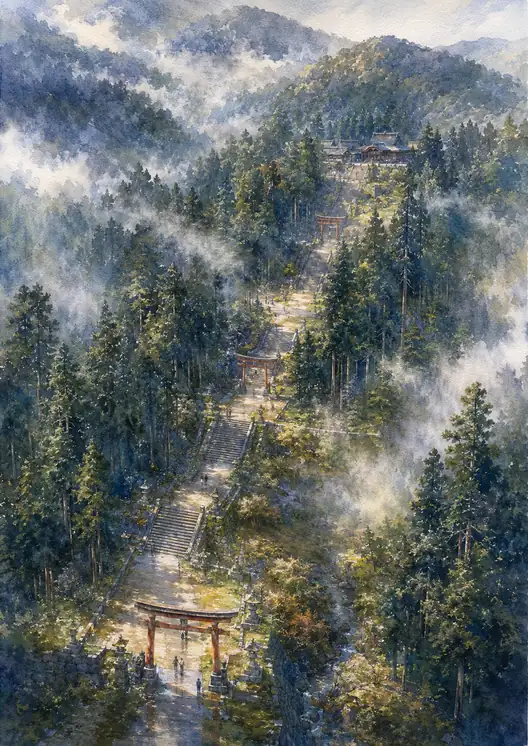 Silent Steps through the Sacred Forest
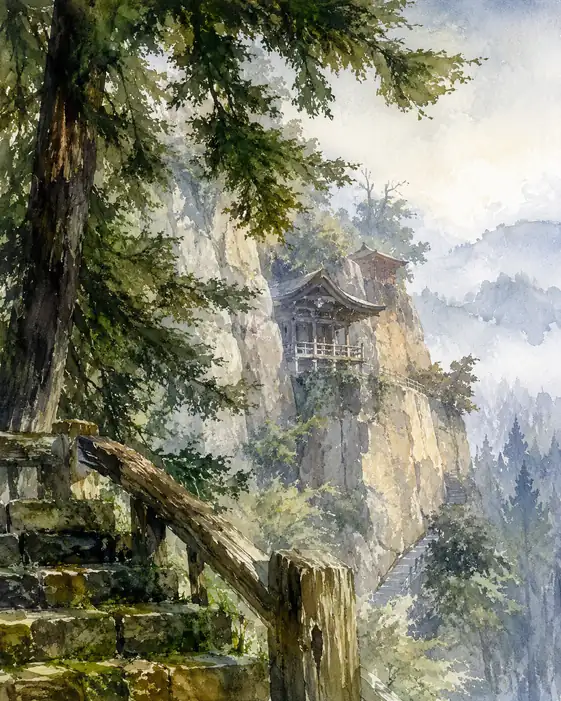 Where Prayers Melt into the Mist