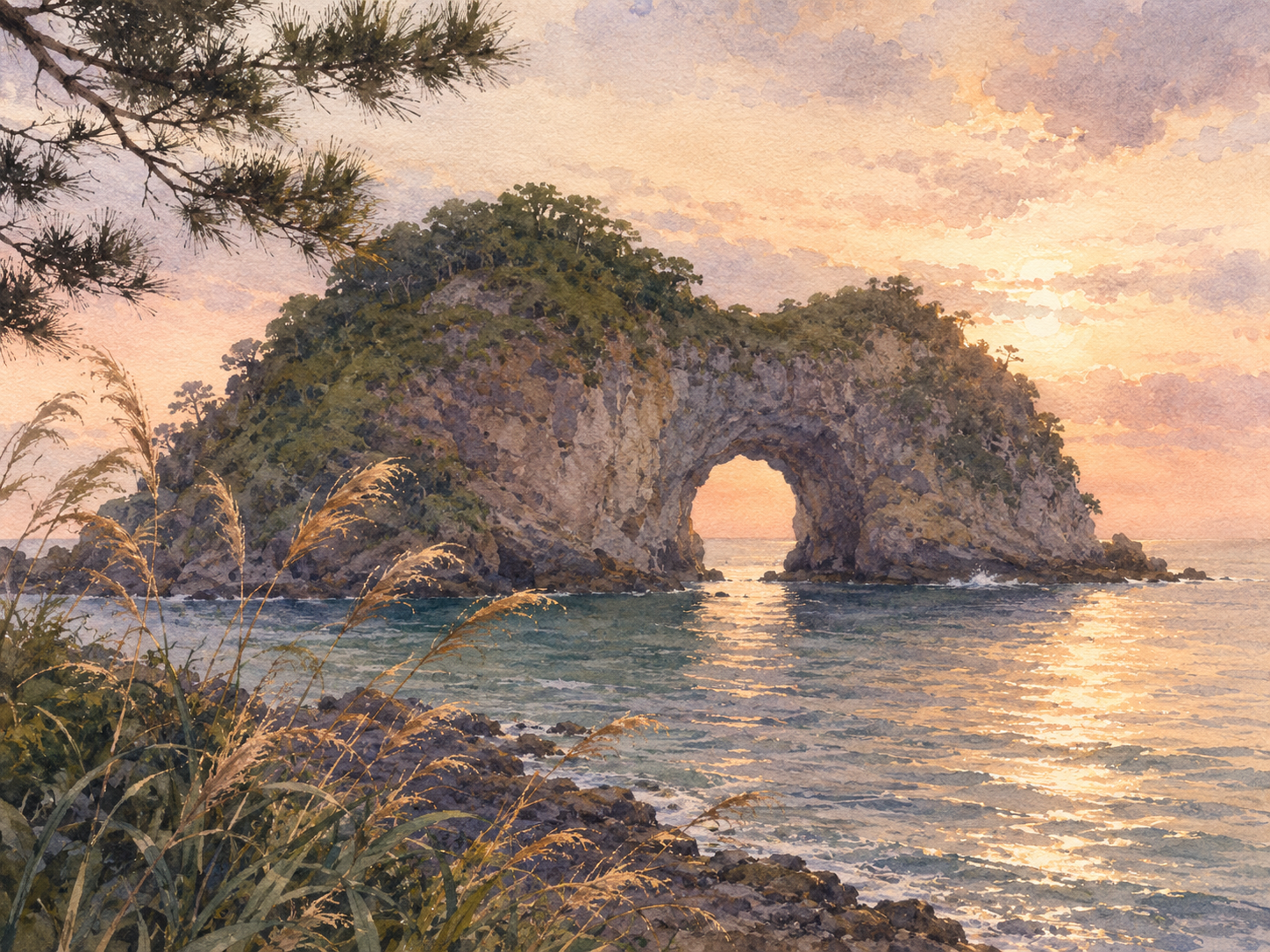
The Sun's Eye on the Sea
Critique
1. Introduction This landscape painting captures a small island featuring a prominent natural sea arch, set against the backdrop of a setting sun. The central rock formation, sculpted by waves over millennia, stands as a symbol of nature's artistry, with golden light pouring through its cavity to create a mystical radiance. Utilizing transparent watercolor techniques, the artist blends the tranquility of a coastal scene with the fleeting beauty of twilight. The composition invites viewers to immerse themselves in a peaceful moment, accompanied by the gentle sound of the waves. 2. Description The island in the center is characterized by rugged rock faces covered in greenery, casting a powerful silhouette against the sunset. Through the circular arch, the horizon and evening sky are visible, while a path of sunlight reflects across the water's surface. In the upper left, pine branches are delicately rendered, emphasizing the traditional beauty of the landscape. The foreground consists of a rocky shore and wind-swept grasses, meticulously depicting the spatial continuity from the immediate surroundings to the distant horizon. 3. Analysis The color palette balances soft oranges in the sky and sea with deep greens of the island and pine trees, each enhancing the other's vibrancy. The brushwork is detailed in the depiction of rock textures, while the sky and clouds use blending to convey atmospheric humidity. Notably, the light reflecting off the ripples in the water is captured with fine touches, imbuing the scene with a shimmering sense of life. The tonal contrast is managed by making the central arch the brightest point, guiding the gaze toward the primary subject. 4. Interpretation and Evaluation This work is a recreation of a classic vista, realized through a modern interpretation of light and exceptional skill. The composition, which treats the arch as a "window" to the sunset, expresses a deep longing for those miraculous moments created by nature's chance. The traditional framing technique of viewing the scene through pine branches provides stability and a sense of familiarity. The artist's ability to harmonize the heavy weight of the rocks and the ephemeral lightness of the sun is highly commendable. 5. Conclusion In conclusion, the painting is a lyrical coastal scene where natural form and light converge perfectly. While initially captivated by the striking central arch, the viewer gradually discovers the detailed beauty of the pine branches and foreground grasses, becoming drawn into the rich narrative. By elevating a momentary flash of light into an eternal object of beauty, the work offers the viewer a sense of peace and a dialogue with nature. Ultimately, the sunset-lit silhouette of the island powerfully communicates the universal appeal of this landscape.
Same Subcategory
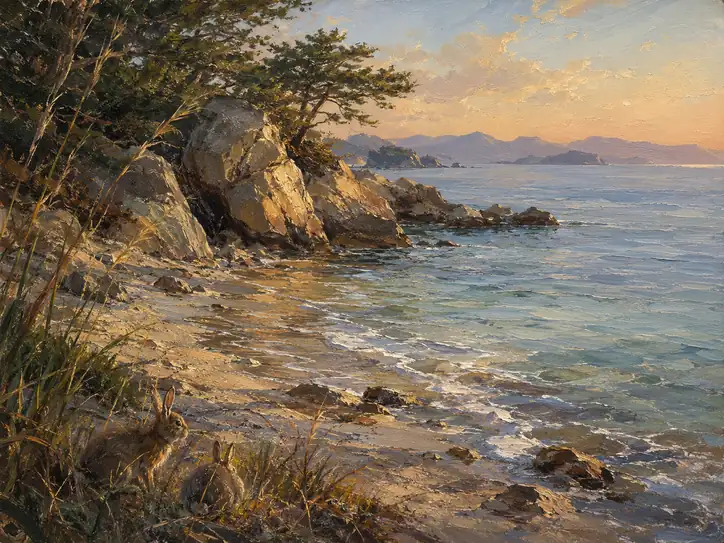 Golden Sanctuary by the Sea
Similar Artworks
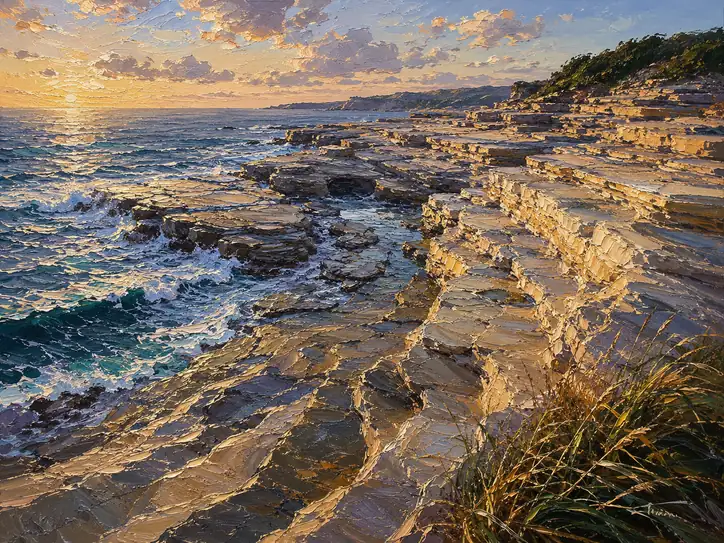 Golden Pulse of the Ancient Shore
 I Learned to Bend from the Sea
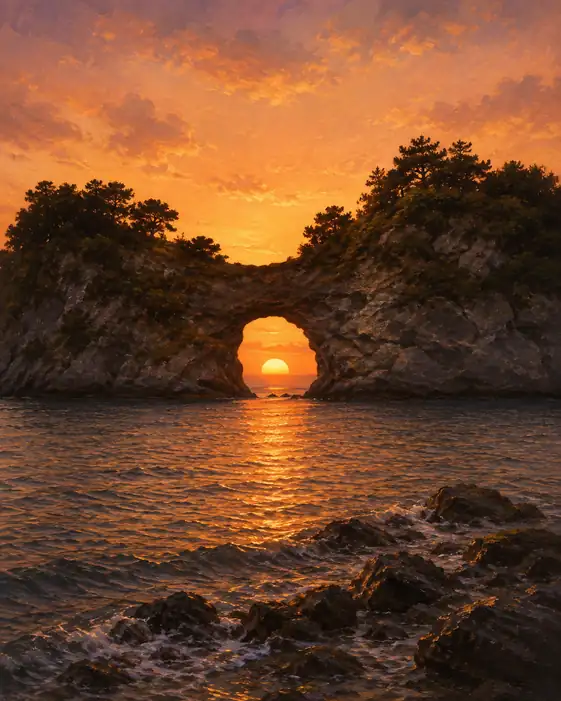 Sunset within the Great Sea Arch
 Crashing Waves and the Sunset Arch
 Sunset Gateway and the Golden Sea Path
 When the Sunset Dwells in Engetsu
 I Remain Where the Sea Changes
 The Sea Keeps a Door for the Sun
 The Sun Passes Through Stone
 The Eternal Walls of Light