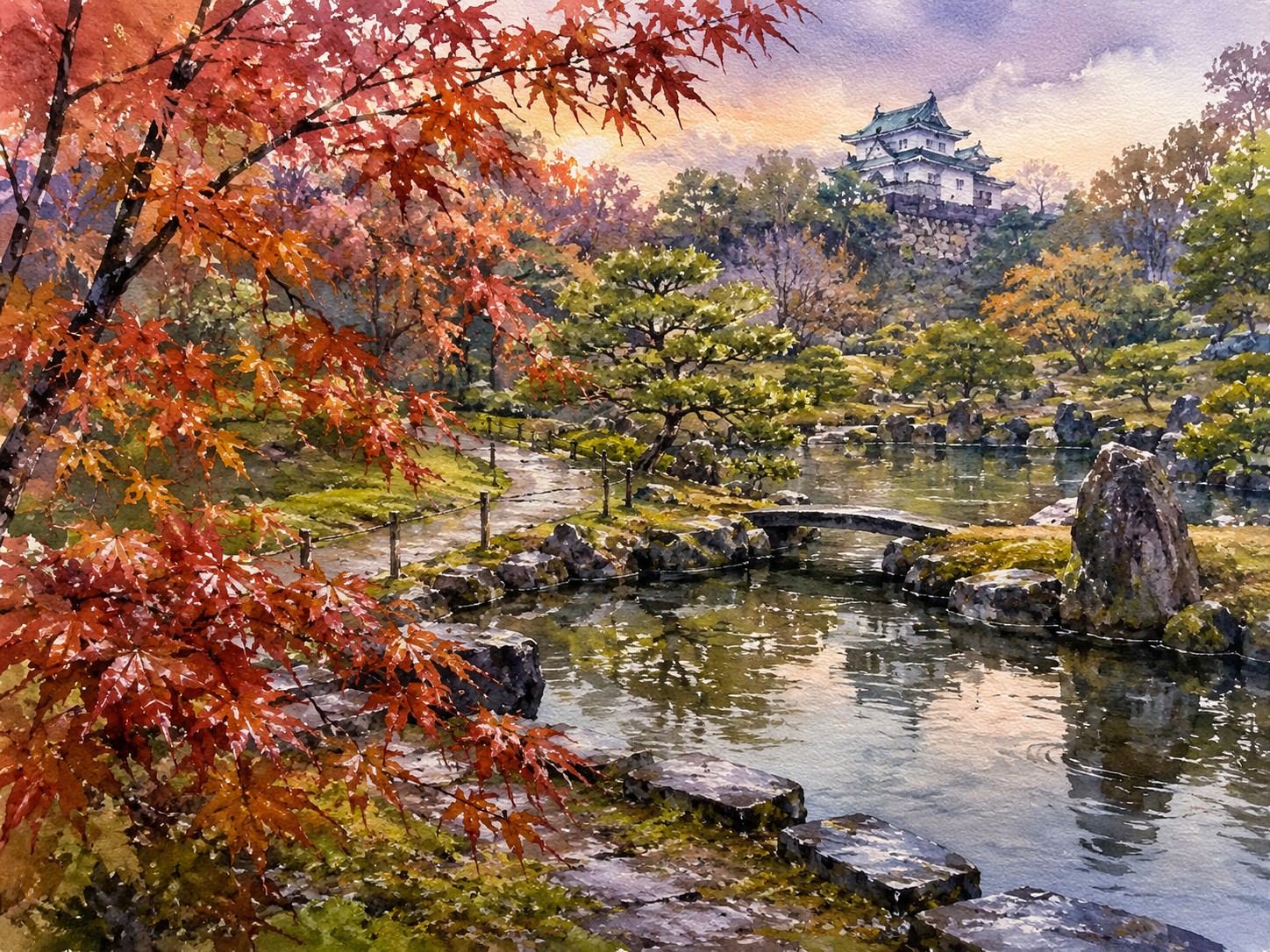
Ephemeral Fire of the Autumn Court
Critique
1. Introduction This vibrant watercolor painting captures the essence of a traditional Japanese garden during the peak of autumn. The scene features a harmonious blend of natural elements and historical architecture, with a majestic castle presiding over a landscape of fiery foliage and tranquil waters. The artist utilizes the transparency and fluidity of the watercolor medium to evoke a sense of luminous seasonal beauty. 2. Description In the foreground, a maple tree with brilliant red and orange leaves frames the left side of the composition, its branches extending over a mossy stone path. A serene pond occupies the middle ground, dotted with large, weathered rocks and a small arched stone bridge. In the distant background, a white Japanese castle with a green-tiled roof stands atop a high stone base, silhouetted against a dramatic sky filled with soft purples, oranges, and warm whites. 3. Analysis The composition is expertly structured, using the vibrant maple leaves as a repoussoir to lead the viewer's eye into the depth of the garden. The winding path and the reflective surface of the pond create a visual journey toward the distant castle. The color palette is exceptionally rich, balancing the intense warm tones of the autumn leaves with the cool greens of the trees and the ethereal violets of the evening sky. Detailed brushwork is evident in the individual leaves and the textured surfaces of the rocks. 4. Interpretation and Evaluation This work successfully conveys the aesthetic concept of "mono no aware," the poignant beauty of the ephemeral. The contrast between the enduring stone walls of the castle and the fleeting brilliance of the autumn foliage creates a profound narrative of time and change. The technical execution is superb, particularly in the handling of light and reflections within the water, which add a layer of stillness and contemplation to the overall scene. 5. Conclusion The painting stands as a masterfully executed tribute to the seasonal transformation of the Japanese landscape. Through its sophisticated use of color and composition, it invites the viewer into a space of quiet reflection and aesthetic delight. Initially striking for its vivid coloration, the work ultimately reveals a deep sensitivity to the subtle interplay between nature and the built environment.
Same Subcategory
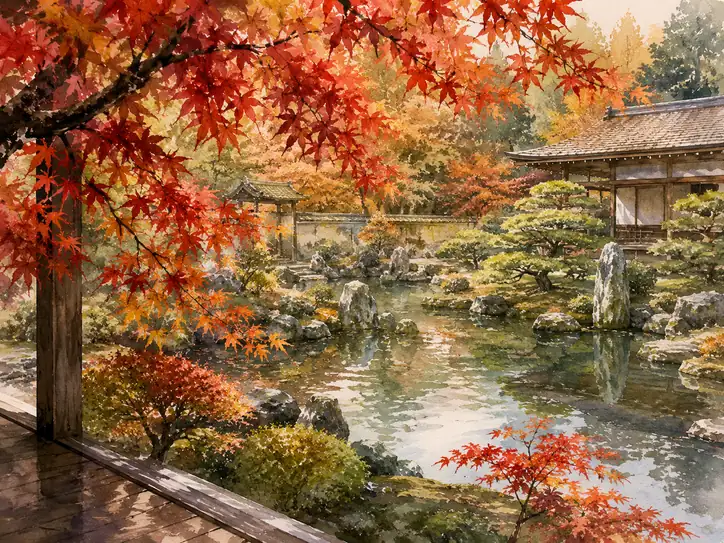 Autumn Whispers from the Veranda
 Where Autumn Stands Still
Similar Artworks
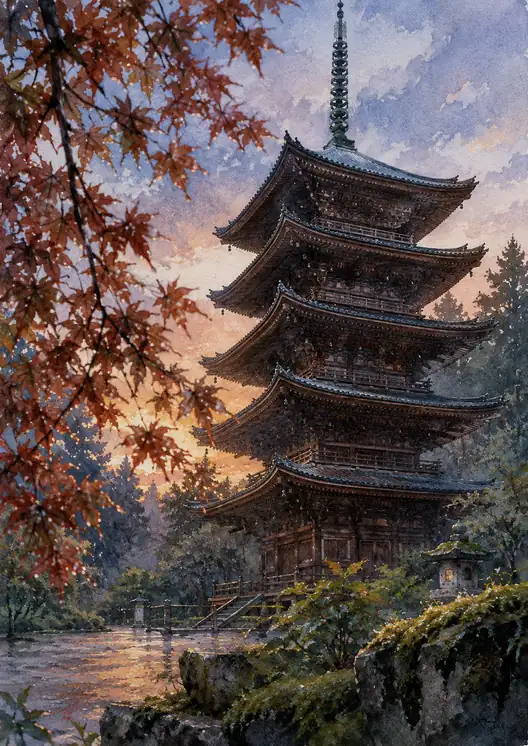 Autumn twilight, the Pagoda’s Silent Prayer
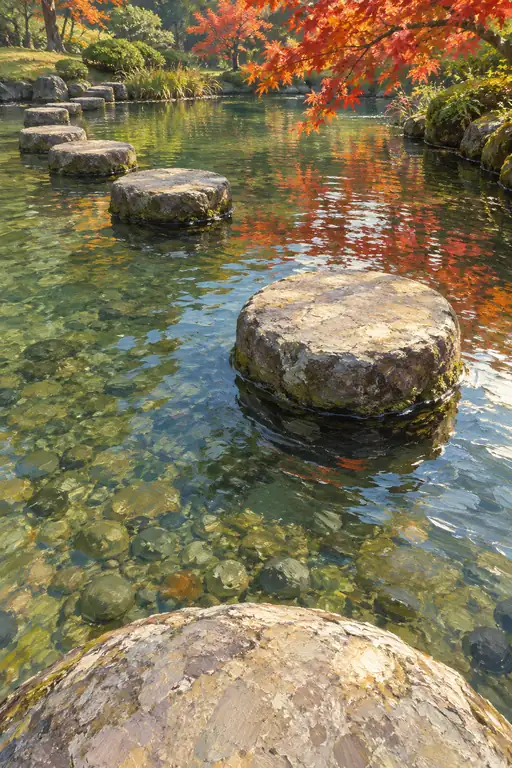 Steps Across the Amber Current
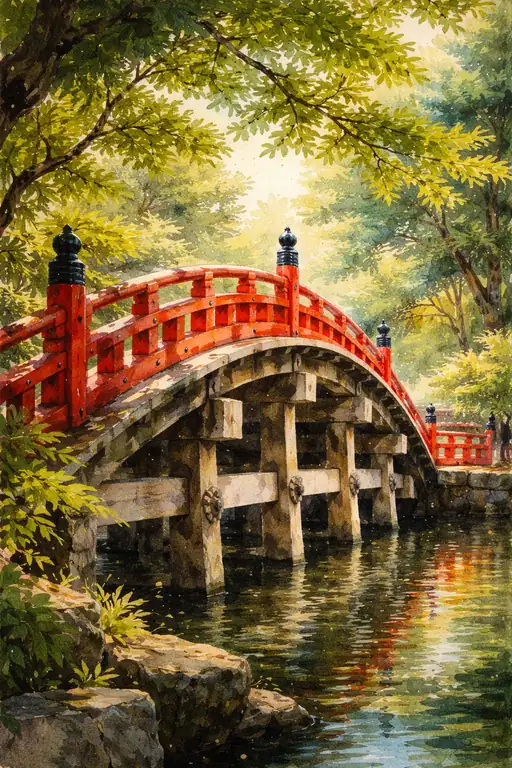 Crimson Arch Through the Sunlit Verdure
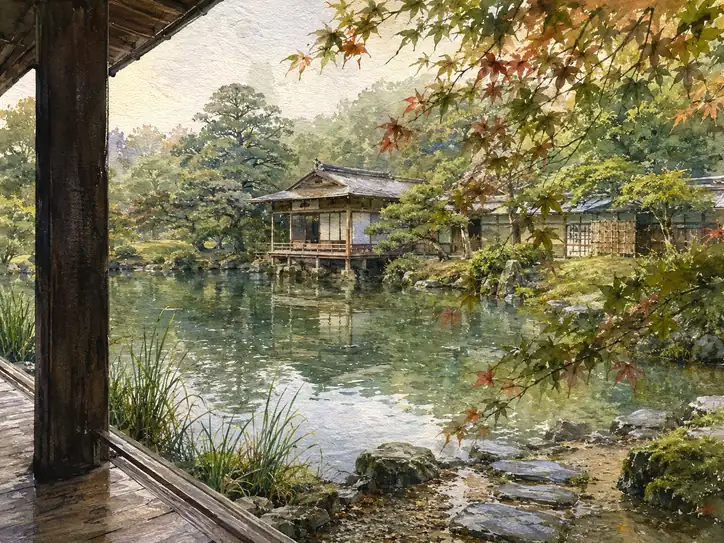 Autumn Whispers in the Water's Mirror
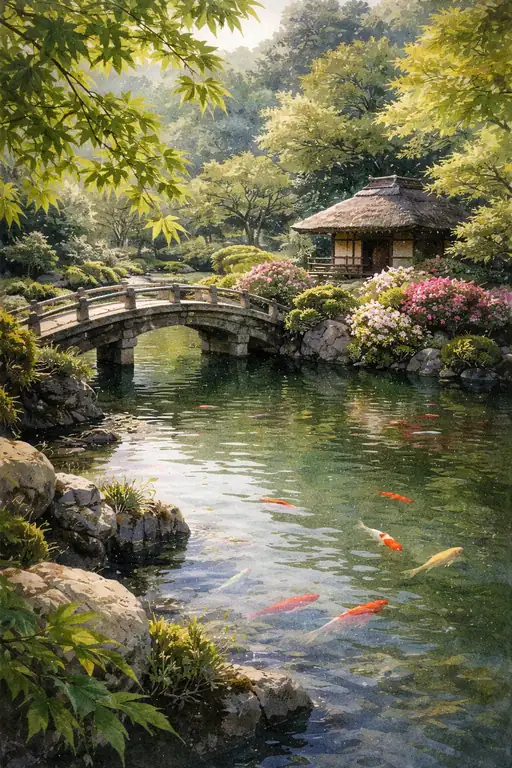 Harmony in the Sunlit Ripples
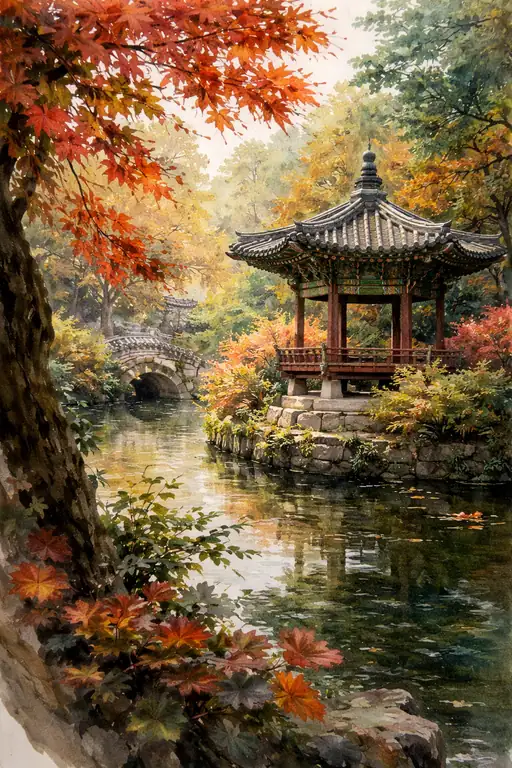 Crimson Leaves Reflected in Autumn's Mirror
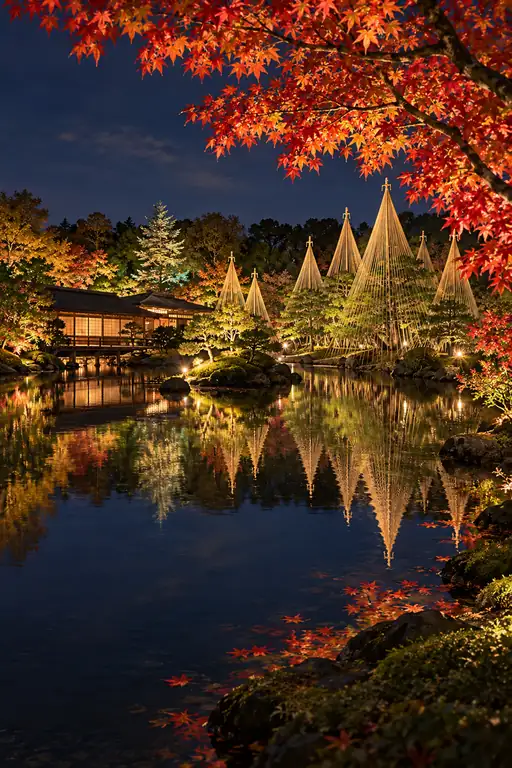 From This Shore of Remembering
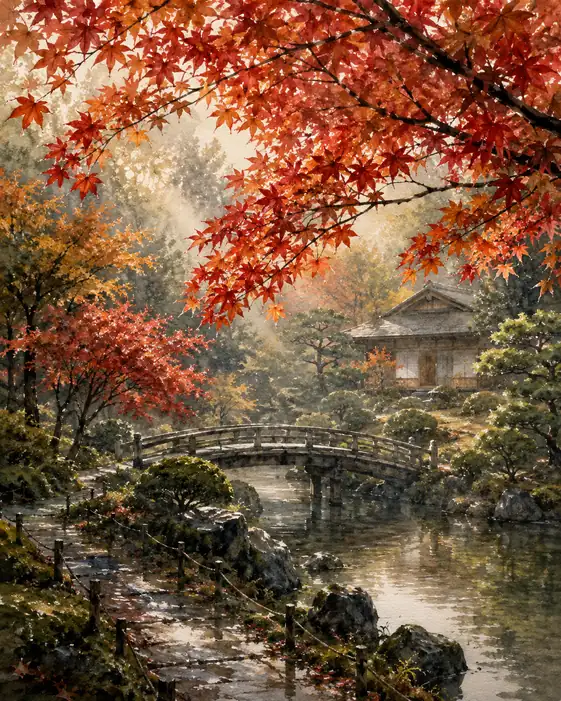 Autumn Crosses the Small Stone Bridge
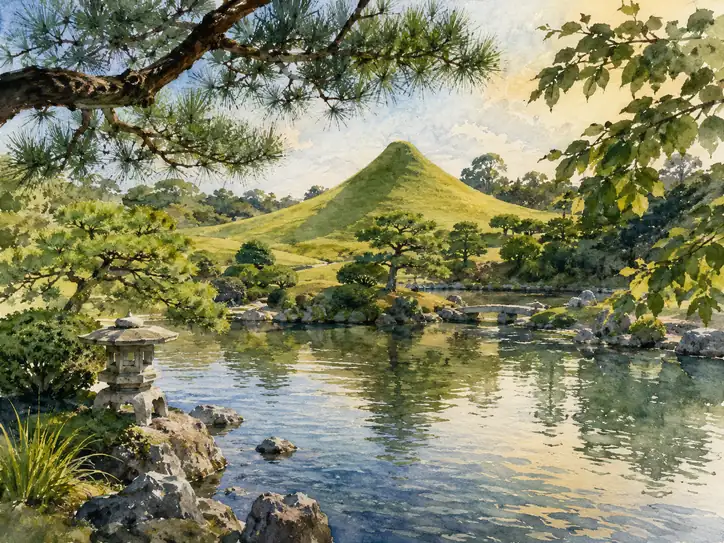 Tranquil Pulse of the Water Garden
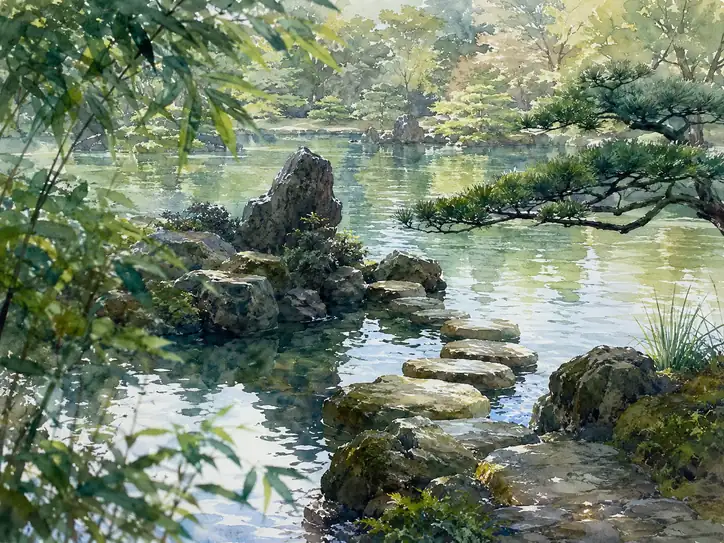 Path of Silent Stones