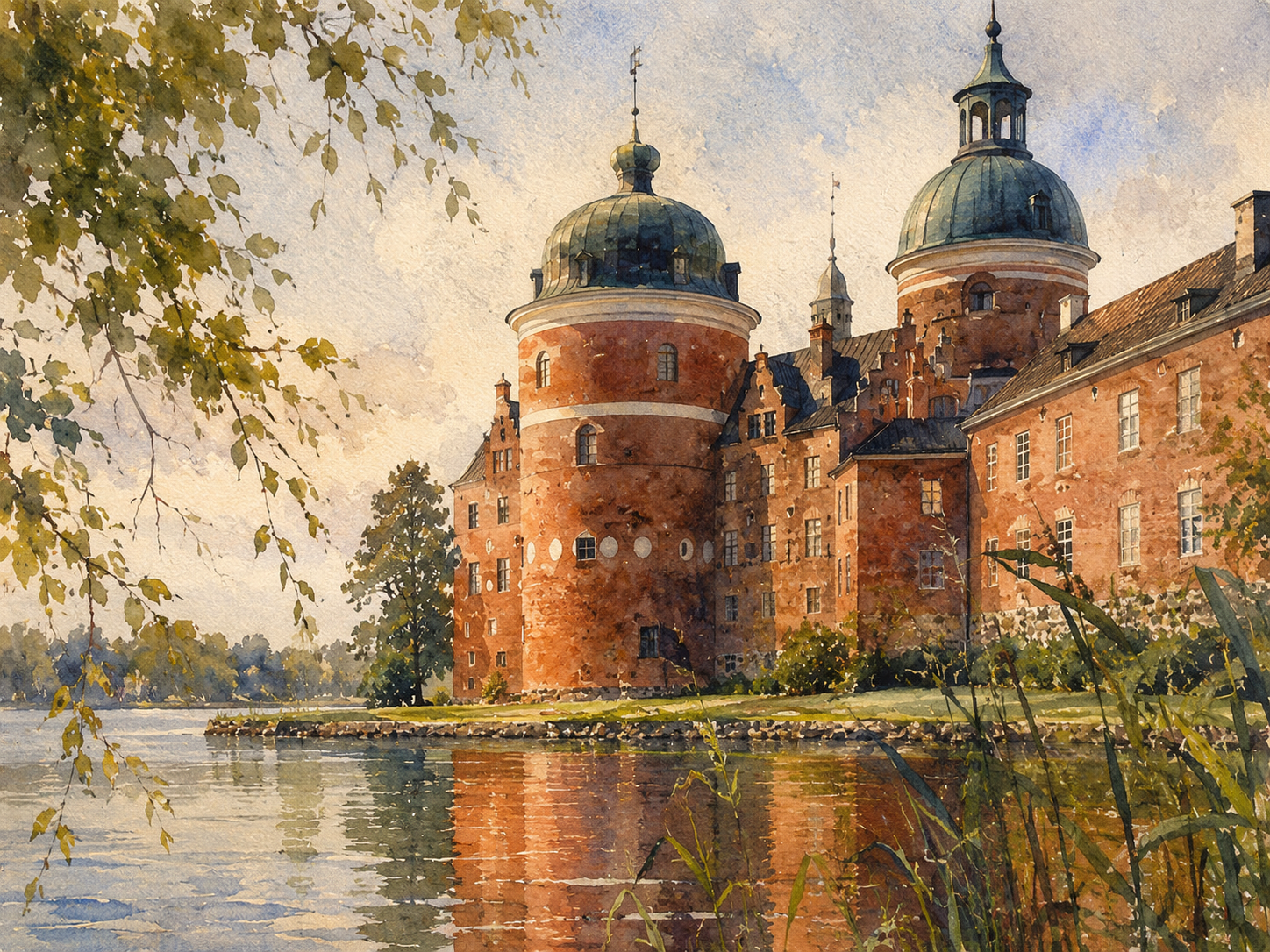
Echoes on the Mirror Lake
Critique
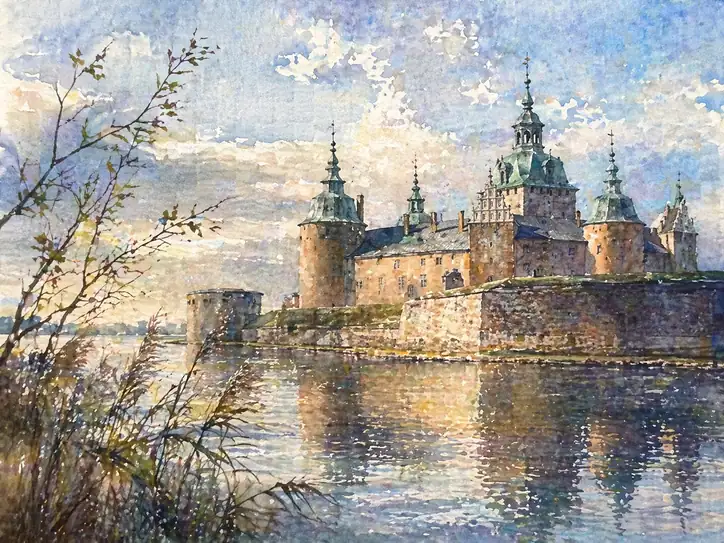
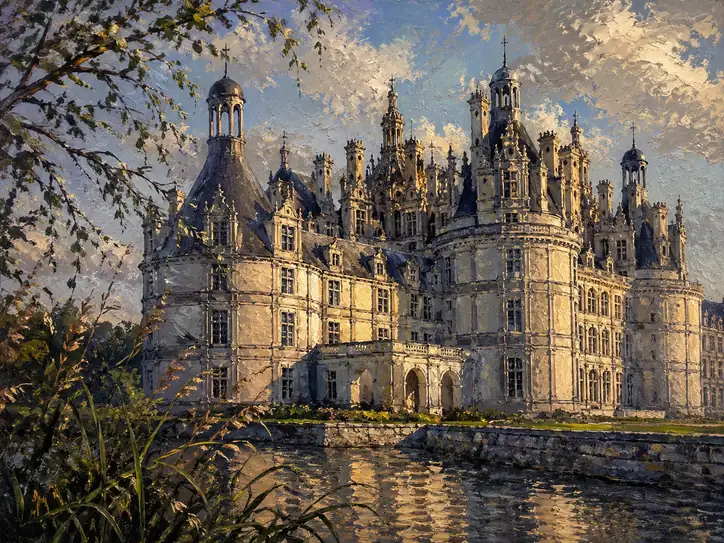
1. Introduction This watercolor painting presents a serene and majestic view of a large, red-brick castle situated on the edge of a calm lake. The composition is horizontally oriented, allowing for a wide-angle perspective that encompasses the grand architecture, the shimmering water, and the lush vegetation that frames the scene. The work captures a moment of quiet historical dignity, bathed in a soft, natural light that emphasizes the harmonious relationship between the man-made structure and its idyllic natural environment. 2. Description The central focus of the piece is the castle's complex facade, featuring multiple round towers topped with elegant, oxidized green copper domes and delicate spires. The warm, reddish-brown tones of the brick walls show varied textures and patterns, suggesting the building's age and historical character. In the foreground, the glassy surface of the lake perfectly reflects the castle’s form, while a leafy branch hangs gracefully from the top left and tall grasses sprout from the bottom right, creating a sense of being present within the landscape. 3. Analysis The artist utilizes the unique qualities of watercolor to achieve a remarkable balance of precision and fluidity. The light source, appearing to come from the left, creates subtle highlights and shadows that define the cylindrical volumes of the towers and the planar surfaces of the walls. The treatment of the water is particularly effective, with soft, horizontal strokes capturing the gentle ripples and the colorful reflections of the sky and architecture. The contrast between the solid, detailed masonry and the light, airy foliage provides a rich visual variety. 4. Interpretation and Evaluation The painting can be interpreted as a tribute to the enduring presence of history and the beauty of architectural heritage. By framing the castle with natural elements, the artist highlights the integration of the fortress into its surroundings, suggesting a sense of peace and permanence. The technical execution is exceptional, demonstrating a high level of control over the medium to render complex details without sacrificing the overall atmospheric quality. The composition is expertly balanced, leading the viewer’s eye smoothly from the framing elements to the central architectural marvel. 5. Conclusion Upon initial viewing, the scene offers a postcard-perfect vista of a historical landmark, yet a closer inspection reveals a profound depth of color and a meticulous attention to detail. The artist’s ability to convey the specific texture of weathered brick and the transparency of water is highly commendable. Ultimately, the work stands as a beautiful and evocative study of light, form, and history, providing the viewer with a sense of calm and a renewed appreciation for the timeless elegance of classic European architecture.
Same Subcategory
 Sentinel of the Golden Twilight
 Eternal Gaze in the Amber Sunset
Similar Artworks
 Swans Before the Castle
 Serenity of the Spire
 Archway to the Glimmering Horizon
 Gentle Companions in the Castle Shadow
 The Golden Mirage of the Sleeping Lake
 The Quiet Rest of the Lake Fortress
 Castle of Whispering Waters
 Serene Lake and the Medieval Castle
 A Castle's Dream Upon the River
 Mirror of a Vanished Romance