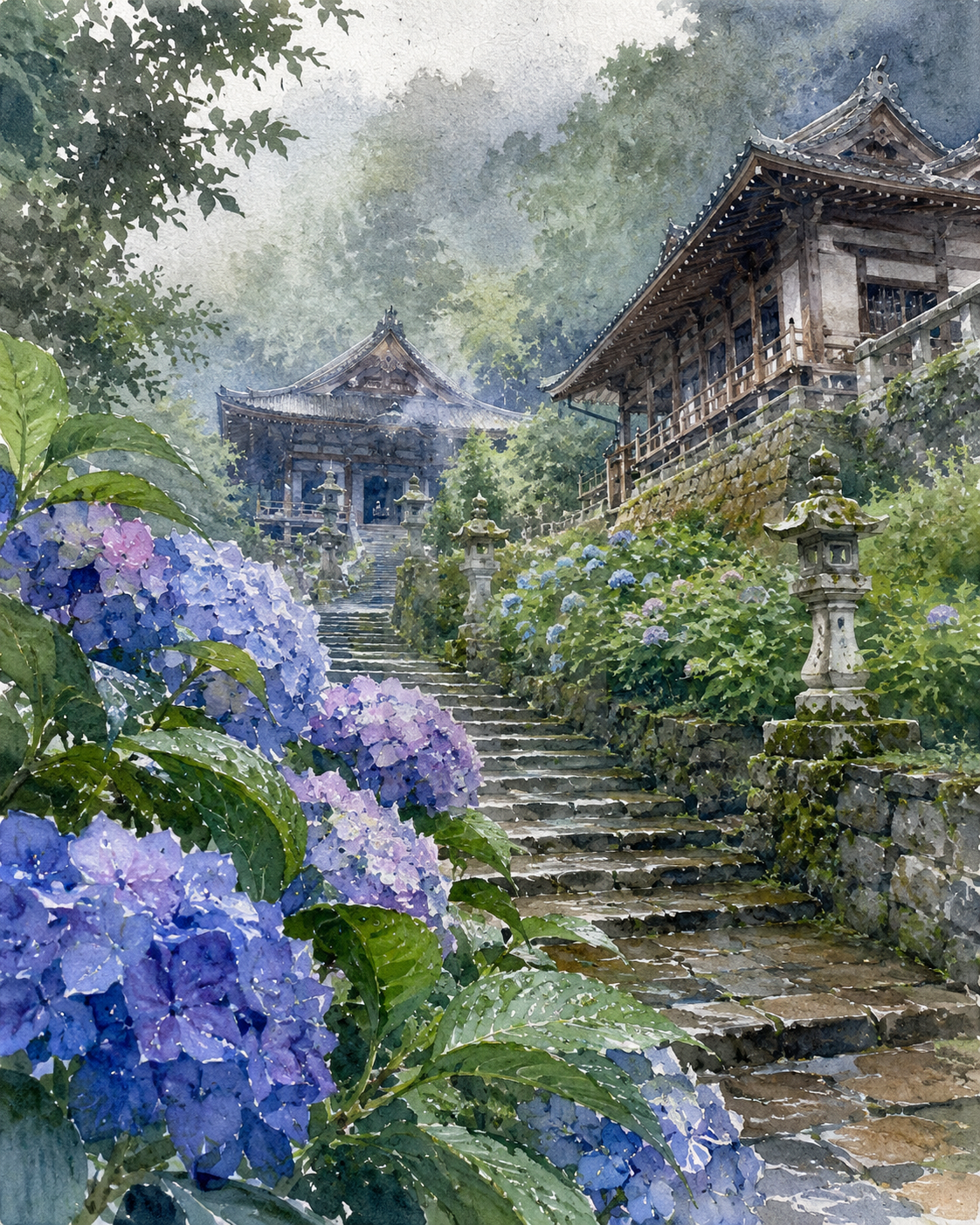
Lullaby in the Azure Rain
Critique
1. Introduction This watercolor painting presents a poetic scene of a traditional temple staircase adorned with lush hydrangeas during a misty rainy season. The vertical composition emphasizes the steepness of the ascent and the layering of the architecture against the hillside. The artwork masterfully captures the unique atmosphere of a damp, overcast day in a sacred garden, inviting the viewer into a space of quiet contemplation. 2. Description The foreground features large, vibrant blue and purple hydrangeas, their petals appearing heavy with moisture and rendered with a blend of soft and sharp edges. A weathered stone staircase winds upward, flanked by traditional stone lanterns and moss-covered walls. In the mid-ground and background, wooden temple buildings with intricate rooflines emerge from a dense, ethereal mist that obscures the surrounding forest. 3. Analysis The artist utilizes a cool-toned color palette, dominated by blues, purples, and deep greens, which effectively conveys the feeling of a rain-soaked environment. A wet-on-wet technique is employed in the background to create the soft, diffused appearance of the fog, providing a stark contrast to the more defined textures of the stone and flowers in the front. The placement of the lanterns creates a rhythmic progression that guides the eye through the composition. 4. Interpretation and Evaluation The work successfully evokes the nostalgic and somewhat melancholic beauty associated with the Japanese rainy season. The technical ability to represent the transparency of the mist and the reflective quality of the wet stone is particularly impressive. The painting demonstrates a profound understanding of atmospheric perspective, creating a sense of deep, receding space despite the obscured background. 5. Conclusion This piece stands as a refined example of how watercolor can be used to translate complex atmospheric conditions into a cohesive visual experience. The harmony between the organic forms of the hydrangeas and the structured lines of the temple architecture results in a balanced and evocative narrative. Ultimately, the image provides a lasting sense of serenity and the timeless allure of nature’s seasonal cycles.
Same Subcategory
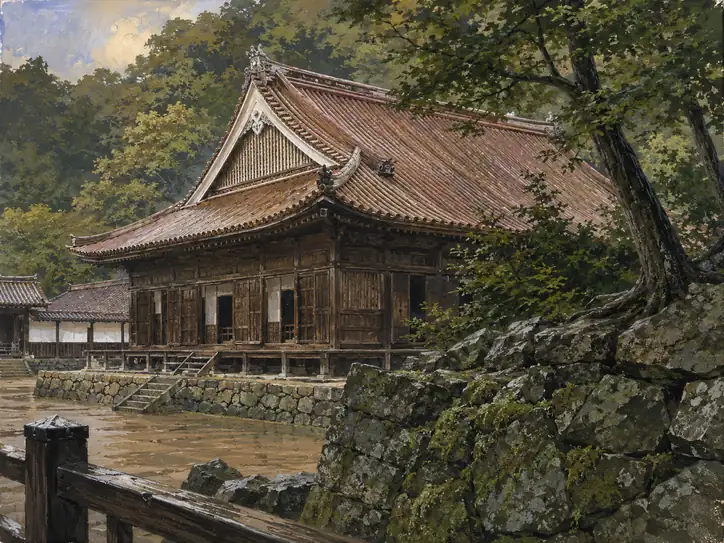 Eternity in the Moss-Covered Hall
Similar Artworks
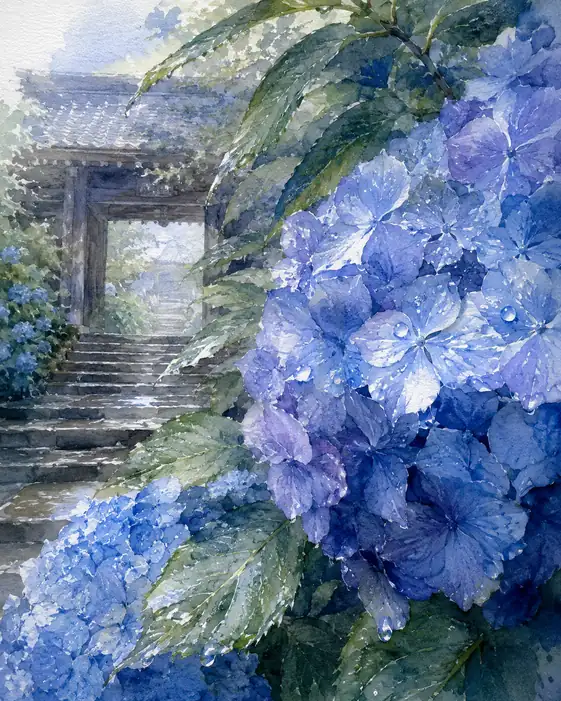 Floral Ephemera: Hydrangeas at the Temple Gate
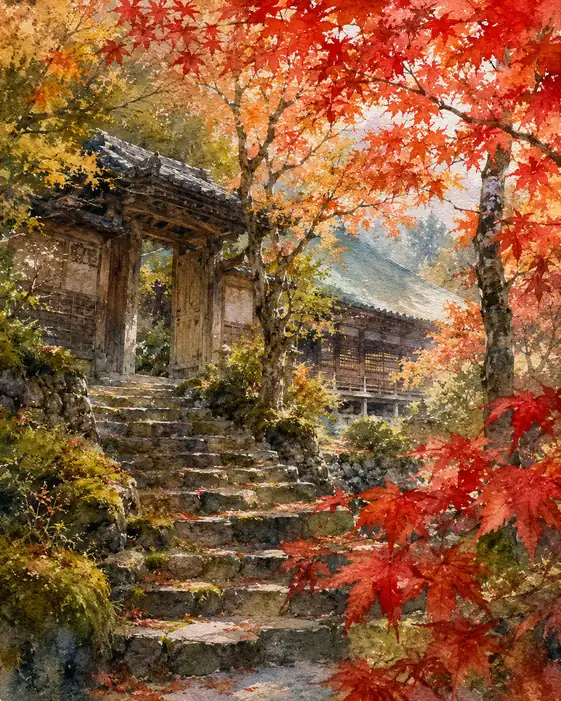 The Crimson Threshold of Silence
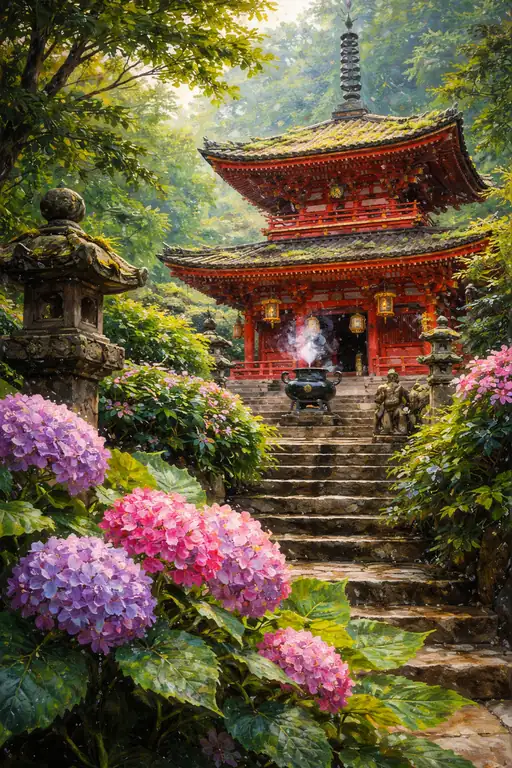 Rain's Blessing on the Vermilion Sanctuary
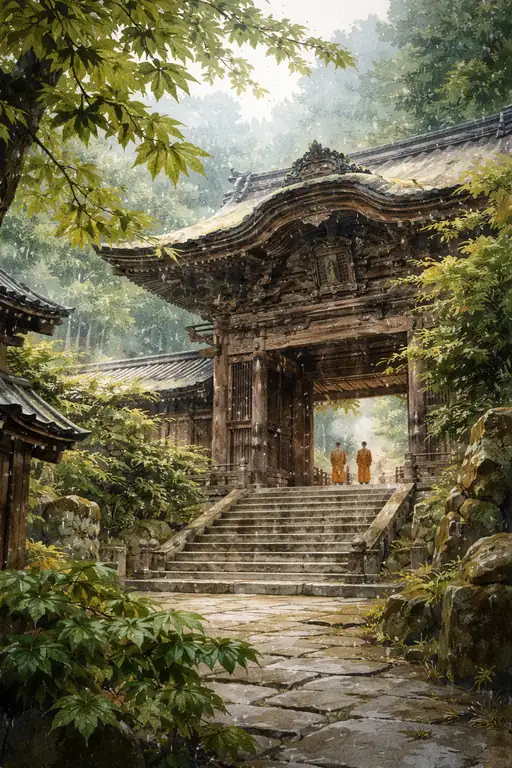 Rain's Serenade in the Sacred Grove
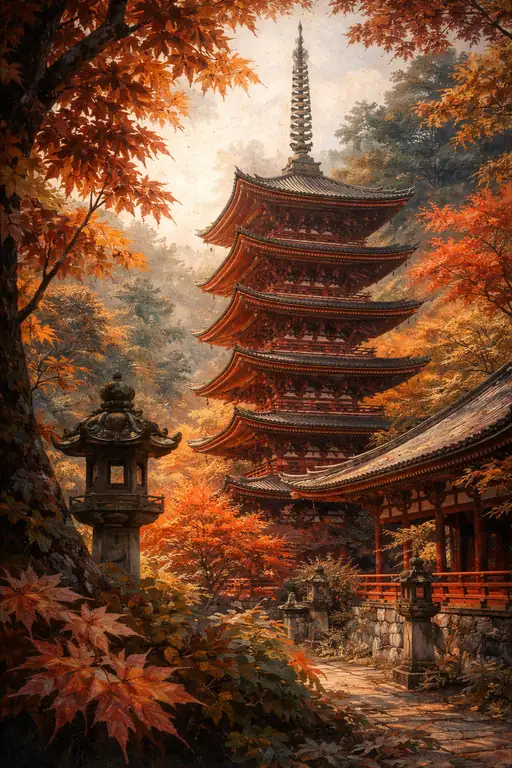 Autumn's Golden Reverie
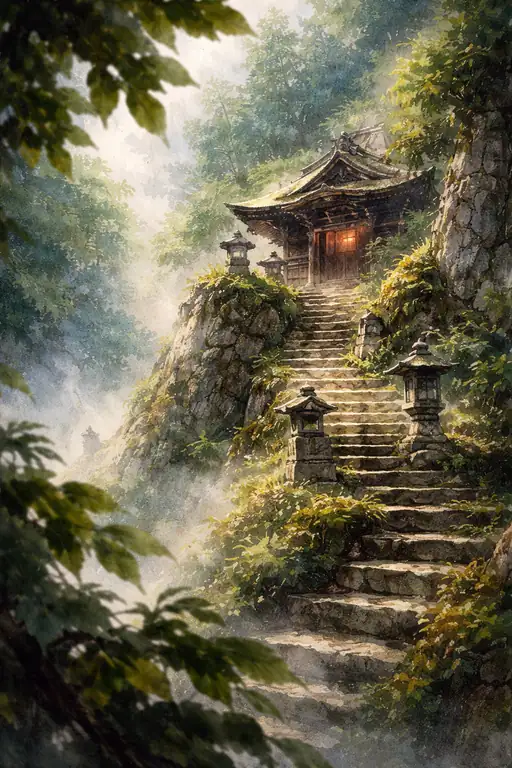 One Step Closer to the Divine
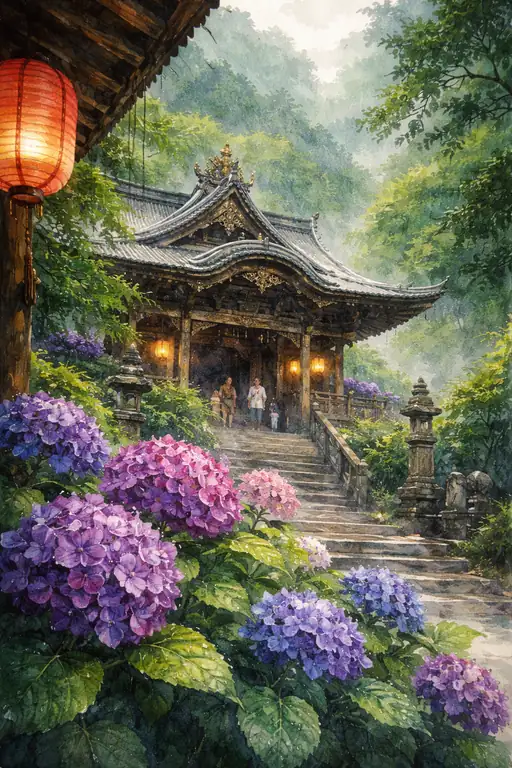 Hydrangea Steps to Tranquility
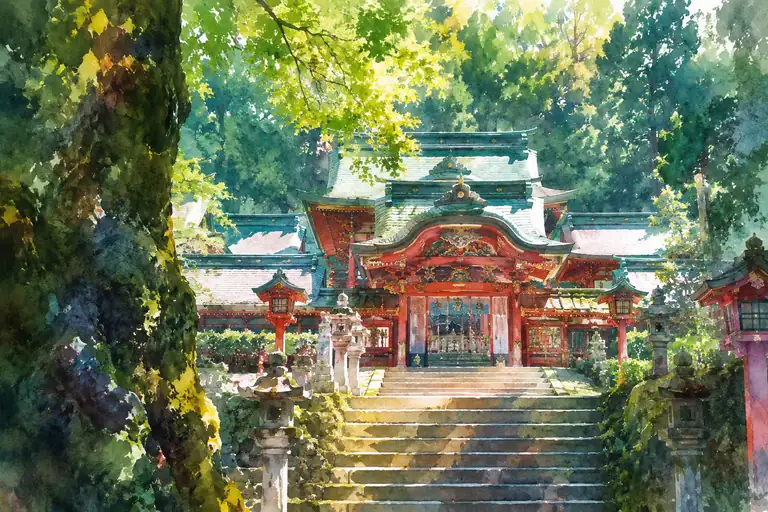 Sunlight on the Sacred Path
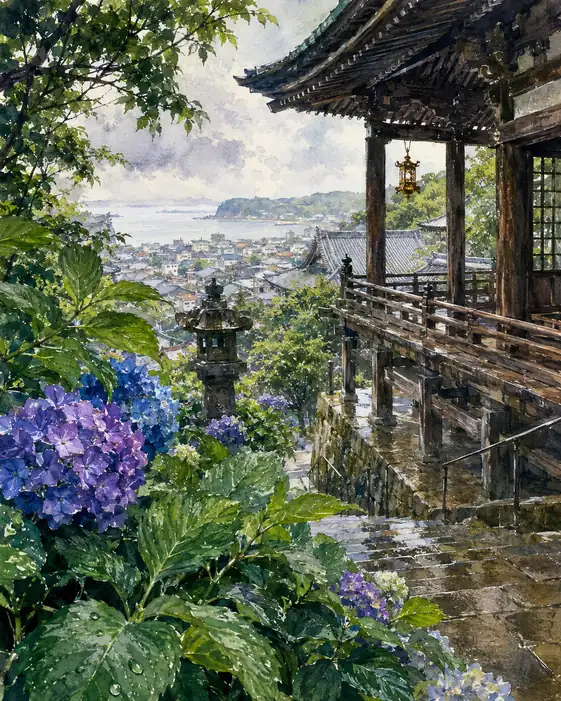 Hydrangeas at the Temple Overlook: A Watercolor Dream of Onomichi
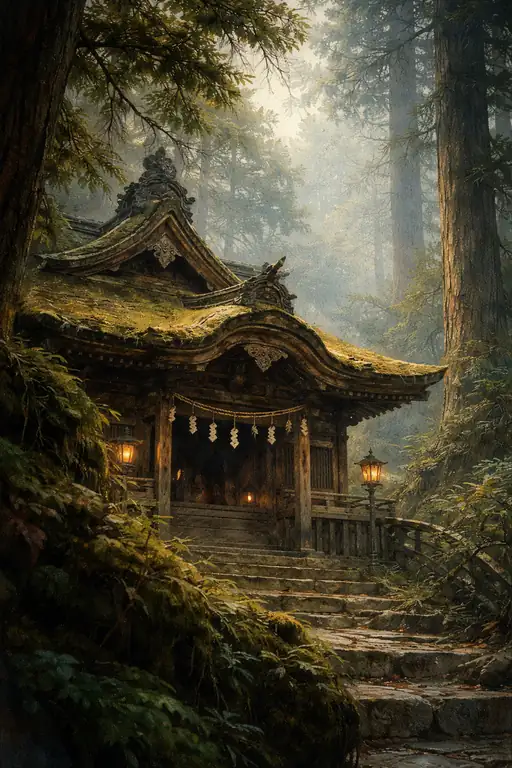 Sanctuary in the Shadows