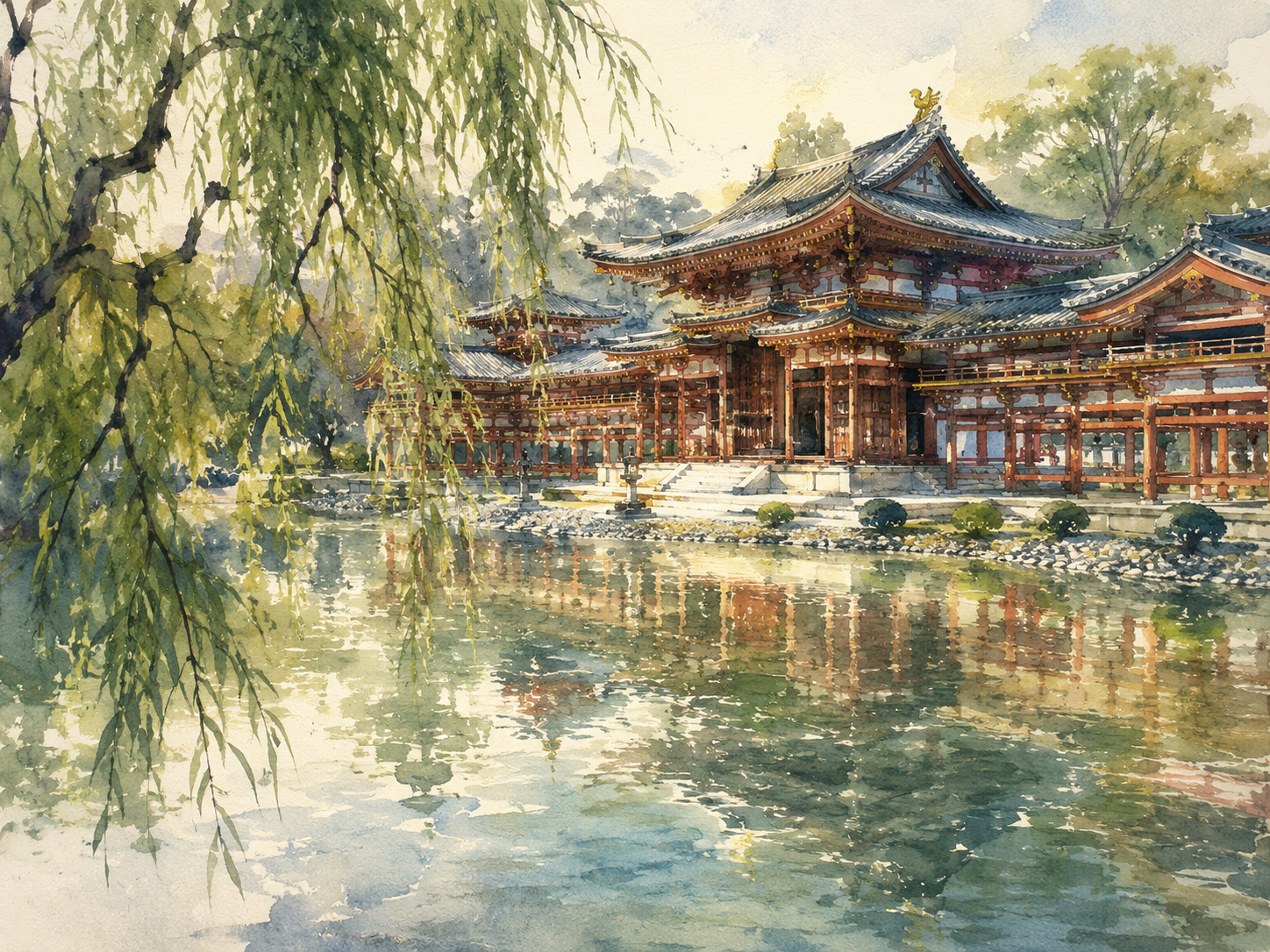
Mirror of the Celestial Paradise
Critique
1. Introduction This watercolor painting depicts a magnificent Buddhist temple situated gracefully beside a tranquil pond. The architecture, reminiscent of the Phoenix Hall, is reflected with clarity in the still water, creating a symmetrical harmony. A weeping willow overhanging from the left adds a delicate touch to the structured lines of the temple. The work blends historical grandeur with the ethereal qualities of the watercolor medium. 2. Description The central structure features multi-tiered roofs and elegant corridors that extend like wings on either side. The vibrant vermilion of the columns and the golden ornaments contrast sharply with the lush green background. In the foreground, the pond captures the intricate architectural reflections amidst gentle ripples. The willow branches on the left are rendered with rhythmic strokes that frame the entire scene. 3. Analysis The color palette relies on the contrast between the warm reds of the temple and the cool greens of nature, providing visual balance. By utilizing the transparency of the medium, the artist conveys a sense of luminous air and shimmering water. The composition centers the symmetry of the building while introducing an asymmetrical element through the willow, guiding the eye through the spatial depth. 4. Interpretation and Evaluation This piece successfully captures the spiritual serenity of a site designed to represent a celestial paradise. It achieves a compelling balance between the rigorous architectural detail and the fluid, atmospheric rendering of the environment. The depiction of light filtering through the leaves creates a poignant sense of a specific moment. The artist's ability to evoke a humid, serene atmosphere is particularly commendable. 5. Conclusion The perspective from behind the willow branches invites the viewer to linger at the water's edge, fostering peaceful contemplation. Initial admiration for the architectural precision soon gives way to an appreciation for the harmonious integration of all elements. Ultimately, the painting stands as a refined celebration of cultural heritage and natural beauty, executed with sensitivity and technical mastery.
Same Subcategory
 Sanctuary of the Eternal Smile
Similar Artworks
 Golden Radiance on the Sacred Tide
 Ripples of Eternal Gold
 Timeless Serenity of the Floating Pavilion
 Ancient Peace, Divine Companions
 Path Across the Sacred Waters
 Gold Learning to Become Water
 Shadows of the Sacred Path
 The Vermilion Sanctuary of Twilight Waters
 Sacred Resonance in the Morning Mist
 Reflection of the Silent Pagoda