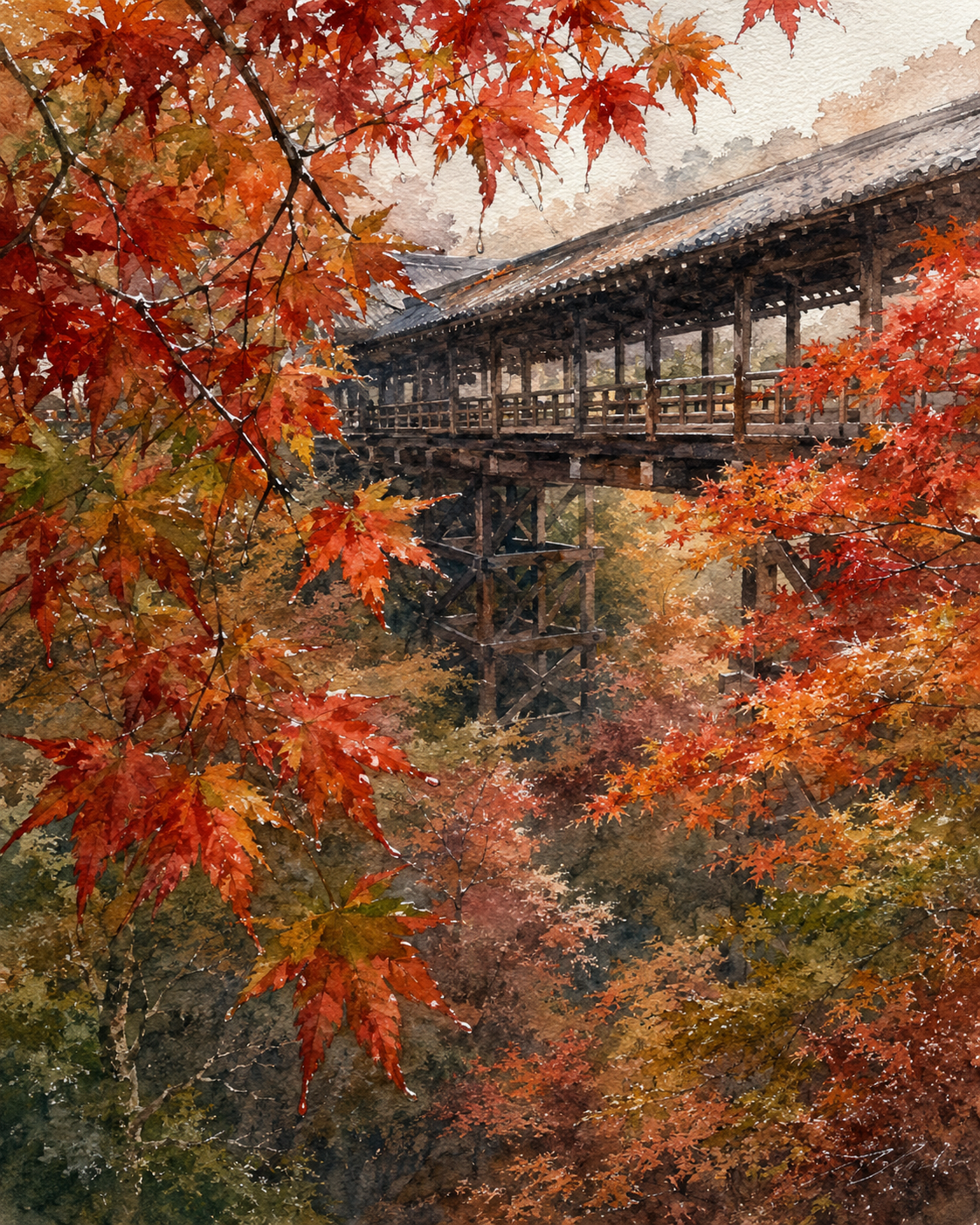
Autumn's Crimson Whisper
Critique
1. Introduction This artwork is a watercolor painting that captures a quintessential autumn scene in a traditional Japanese setting. The composition focuses on a weathered wooden bridge that spans across a valley filled with dense foliage. The primary subject is the transition of nature, specifically the vibrant change of maple leaves during the fall season. This piece exemplifies the delicate balance between architectural structure and organic forms, rendered with a sensitive touch. 2. Description The painting features a covered wooden bridge, constructed with intricate scaffolding, extending diagonally from the upper right background toward the center. In the immediate foreground on the left, large maple leaves in various stages of crimson and orange dominate the view, some appearing to have crystalline droplets on their surfaces. The valley below is a tapestry of warm autumn hues, including deep reds, ochres, and muted greens. The background is softly blurred, suggesting a misty or humid atmosphere that envelops the distant trees. 3. Analysis The artist utilizes the transparency and fluid nature of watercolor to create a rich, layered effect in the foliage. The composition relies on a strong diagonal line formed by the bridge, which provides depth and leads the viewer's eye into the scene. The foreground leaves act as a framing device, creating a scene of intimacy and three-dimensionality. Color theory is applied through the use of analogous warm tones, while the dark browns of the bridge provide a necessary structural anchor. 4. Interpretation and Evaluation This work demonstrates a high level of technical proficiency in watercolor, particularly in the rendering of light and texture. The inclusion of what appears to be rain or dew adds a temporal dimension, suggesting a specific moment in time and enhancing the atmospheric quality. The contrast between the rigid, man-made bridge and the soft, fleeting beauty of the autumn leaves invites reflection on the relationship between humanity and nature. The overall execution is both technically sound and emotionally resonant. 5. Conclusion Initially, the painting draws attention through its striking use of color and detailed foreground. Upon closer inspection, the structural complexity of the bridge and the subtle atmospheric effects reveal a deeper level of artistic intent. The piece successfully summarizes the evocative beauty of a Japanese autumn through a harmonious blend of subject matter and technique. It remains a compelling example of how traditional themes can be revitalized through a mastery of the watercolor medium.
Same Subcategory
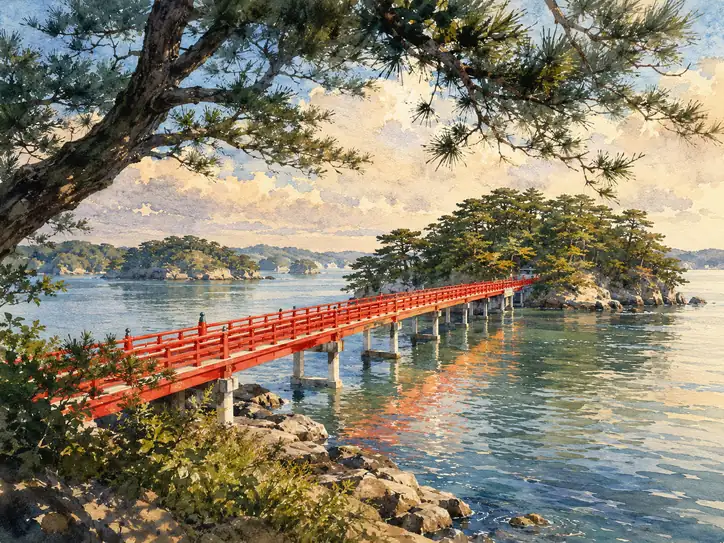 The Vermilion Path Joining Pine and Island
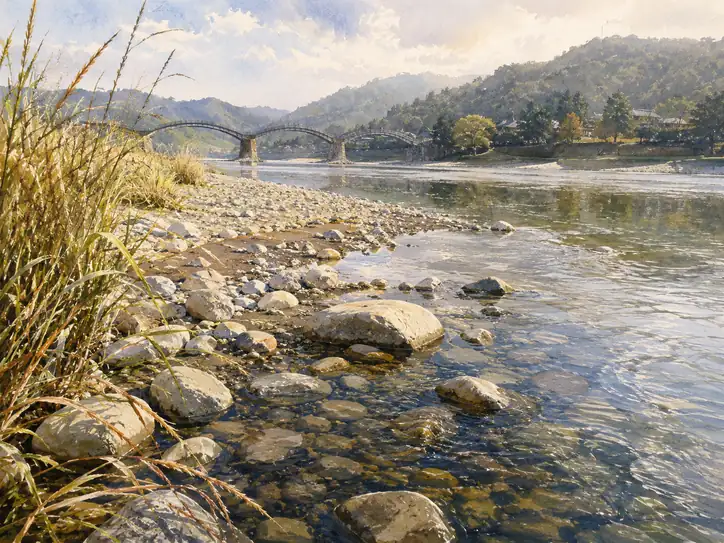 Whispers of the Eternal Bridge
Similar Artworks
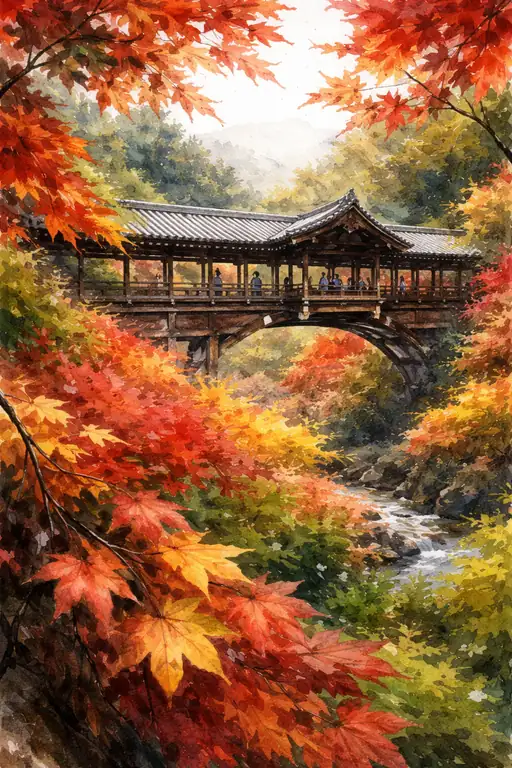 A Journey Through the Crimson Canopy
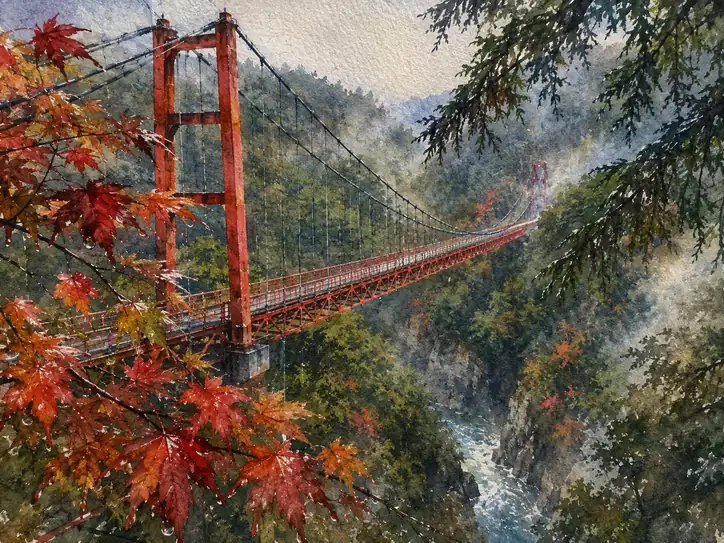 Echoes in Vermilion: A Bridge Through the Mist
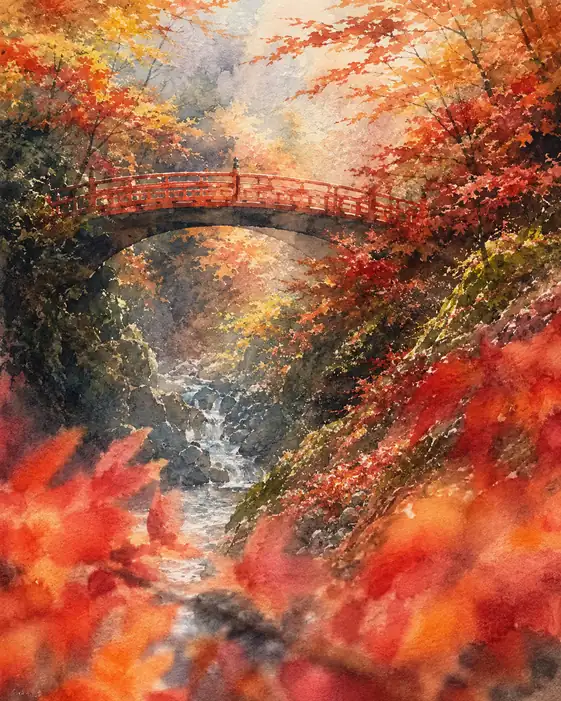 Autumn Burns Beneath the Bridge
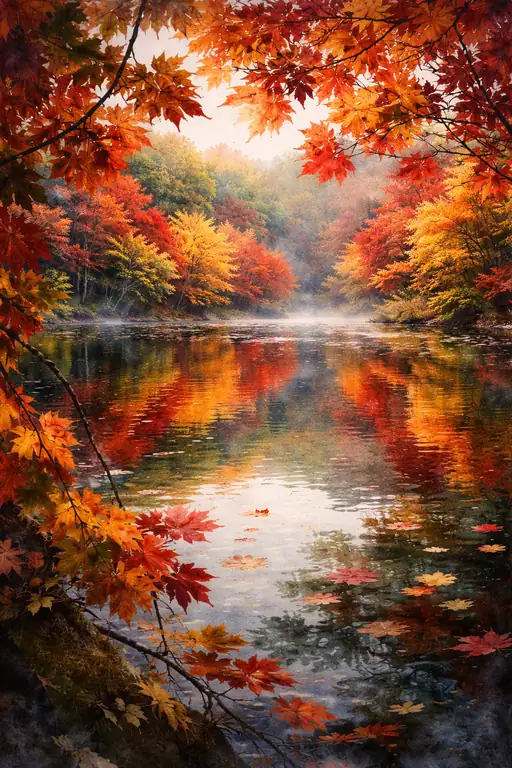 A Crimson Canopy Burning in the Water Mirror
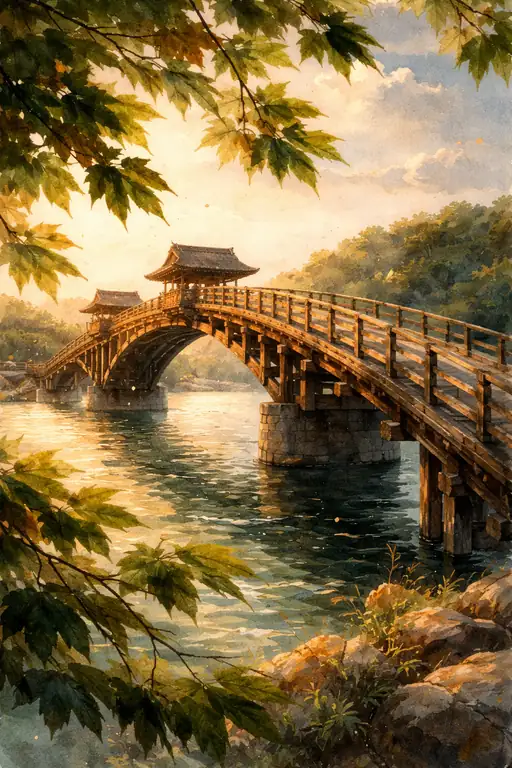 Harmony Across the Gentle Current
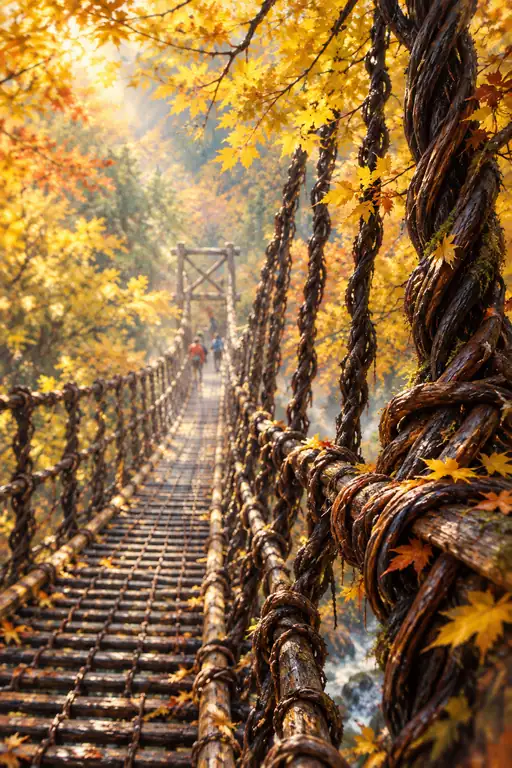 Woven Crossing in Autumn's Canopy
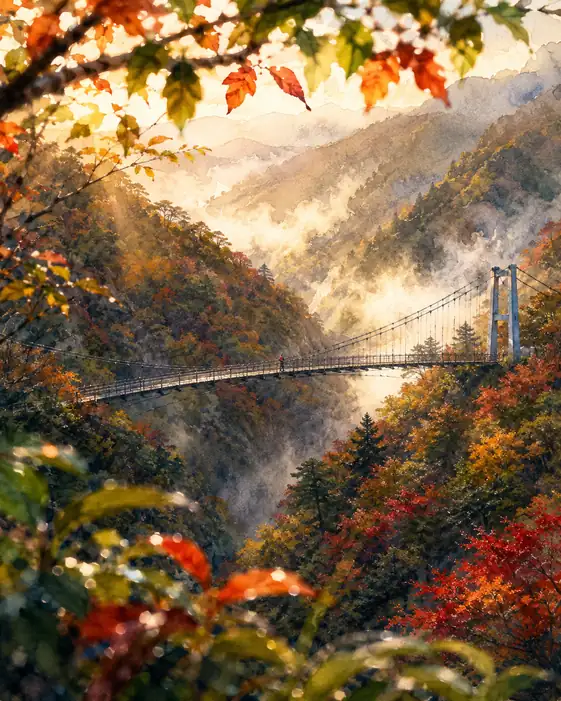 One Footstep Across the Autumn Sky
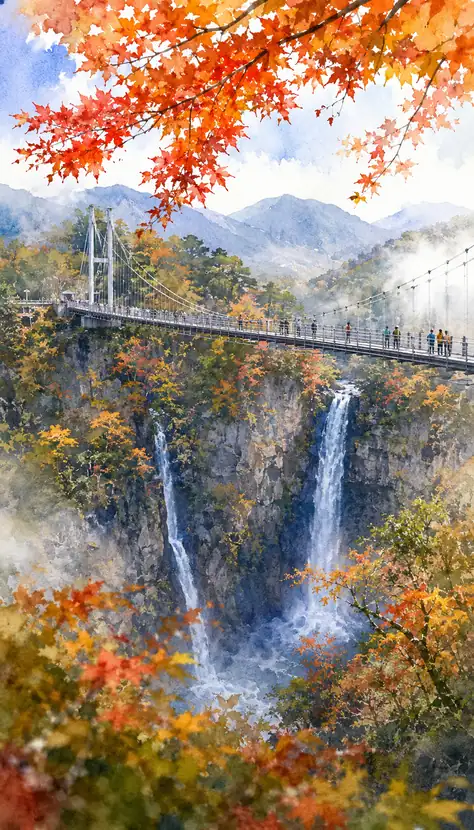 Across the Gorge, Autumn Calls
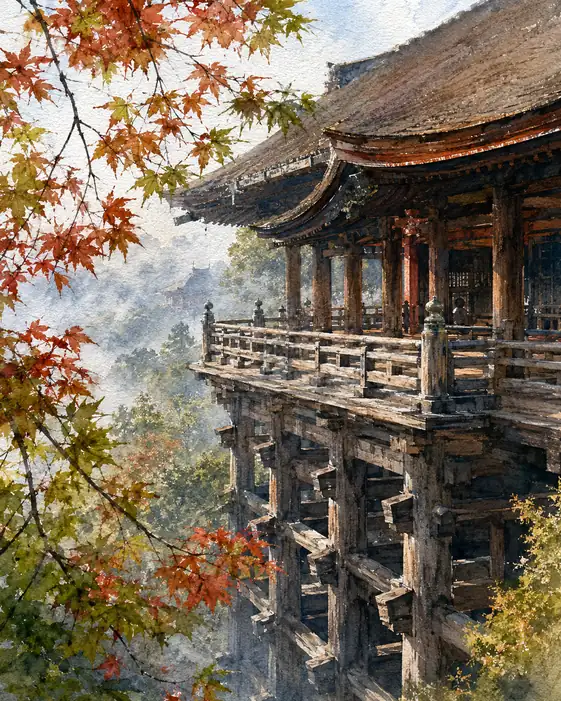 Suspended in the Autumn Mist
 Suspended Over the Golden Sea