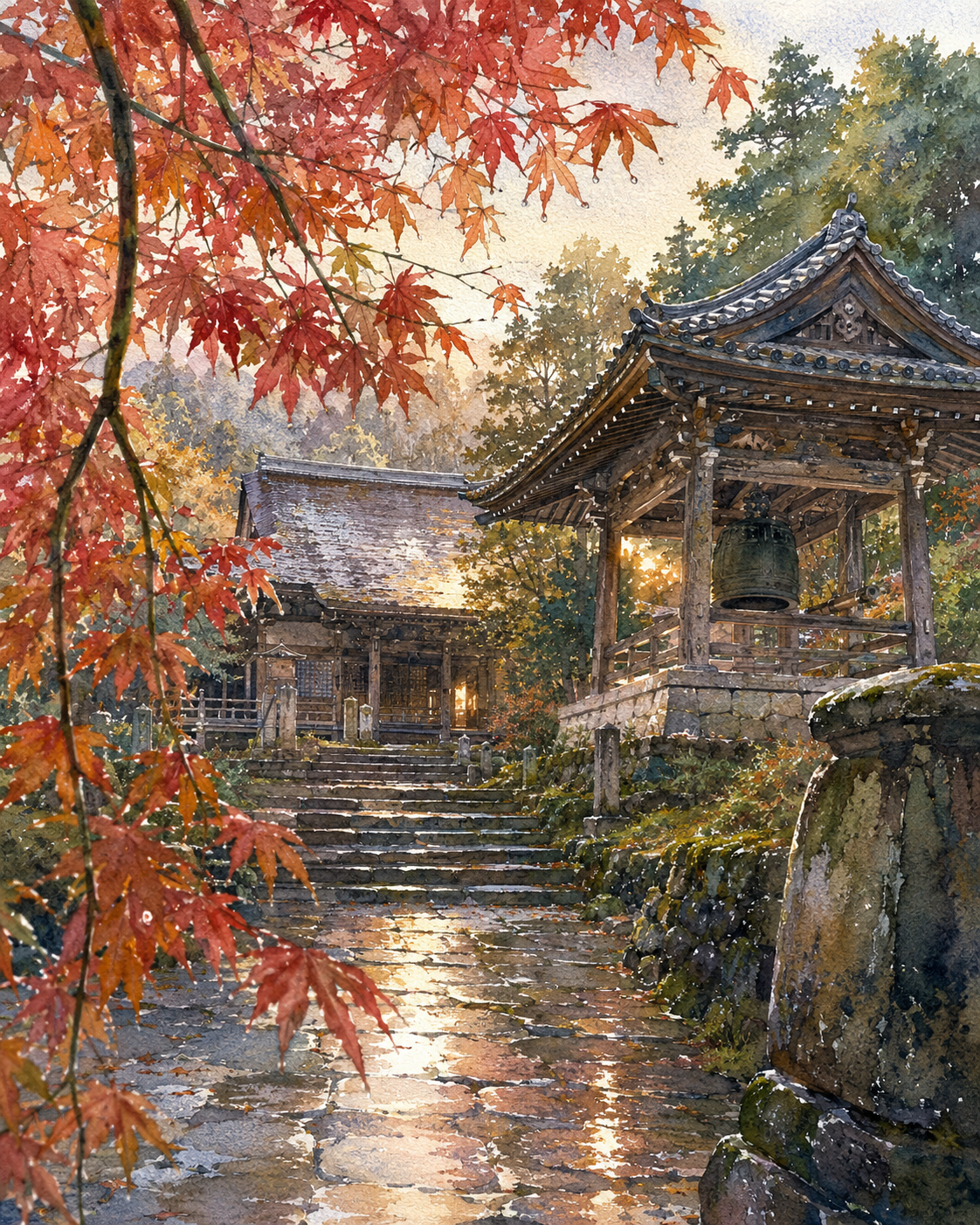
The Golden Echo of Autumn's Heart
Critique
1. Introduction This evocative vertical watercolor painting captures the radiant beauty of a Japanese temple during the peak of the autumn season. The composition is brilliantly framed by a branch of fiery red maple leaves in the foreground, which provides a striking contrast to the mossy stones and weathered timber of the sacred architecture. Through its masterful handling of light and texture, the artwork transports the viewer to a moment of quiet reflection, where the golden glow of the setting sun illuminates the spiritual heart of the forest. 2. Description The scene unfolds along a glistening stone path, its wet surfaces catching the warm, low-angled light of the late afternoon. To the right, an open-sided bell tower houses a massive bronze bell, its dark metallic surface reflecting the surrounding greenery. In the center, a series of stone steps leads toward the main temple hall, which stands as a dignified anchor amidst the vibrant foliage. The background is a tapestry of evergreen and deciduous trees, their leaves transitioning through various stages of autumnal transformation under a soft, hazy sky. 3. Analysis Technically, the artist excels in the depiction of luminosity, particularly in the way the sunlight filters through the trees and dances across the damp pavement. The use of saturated reds and oranges for the maple leaves creates a powerful visual focal point, while the more subdued greys and browns of the stonework provide a grounded, earthy foundation. The delicate application of watercolor washes in the background suggests depth and atmosphere, whereas the foreground elements are rendered with sharp, decisive brushwork that emphasizes the physical reality of the textures. 4. Interpretation and Evaluation The work can be interpreted as a celebration of "aki no hi," the fleeting yet intense beauty of an autumn day. The presence of the large bell, a symbol of mindfulness and the passage of time, reinforces the theme of transience that is central to Japanese aesthetics. Evaluation-wise, the painting is an exceptional success; the artist’s ability to balance the complex architectural details with the organic fluidity of the natural surroundings is remarkable. The vertical format effectively captures the upward reach of the trees and the spiritual elevation associated with the temple grounds. 5. Conclusion In conclusion, this watercolor is a profound tribute to the seasonal harmony of Japan. It succeeds not only as a technical showcase of the medium’s transparency and brilliance but also as a sensory poem that evokes the crisp air and peaceful silence of a mountain sanctuary. By capturing the interplay between the enduring strength of the temple and the ephemeral brilliance of the autumn leaves, the artist has created a timeless piece that resonates with a deep sense of peace and cultural appreciation.
Same Subcategory
 The Sanctuary of Eternal Stillness
Similar Artworks
 Autumn Encircles the House of Silence
 Golden Glow in the Maple Shadows
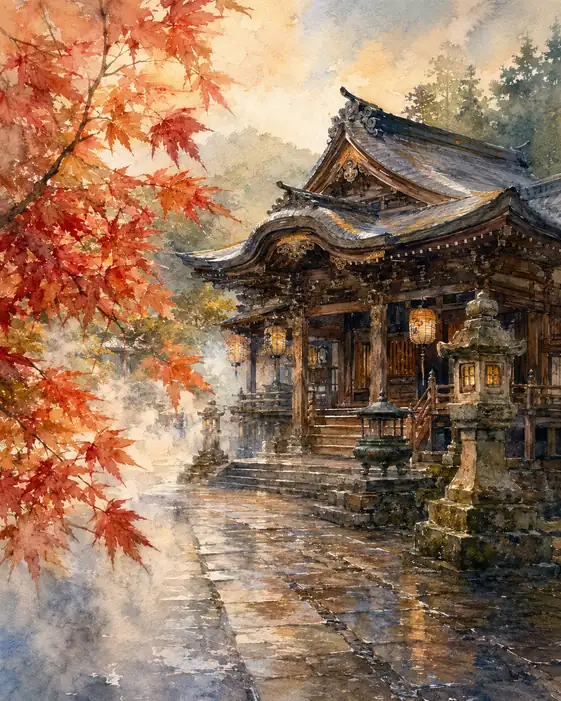 Fleeting Crimson, Eternal Prayer
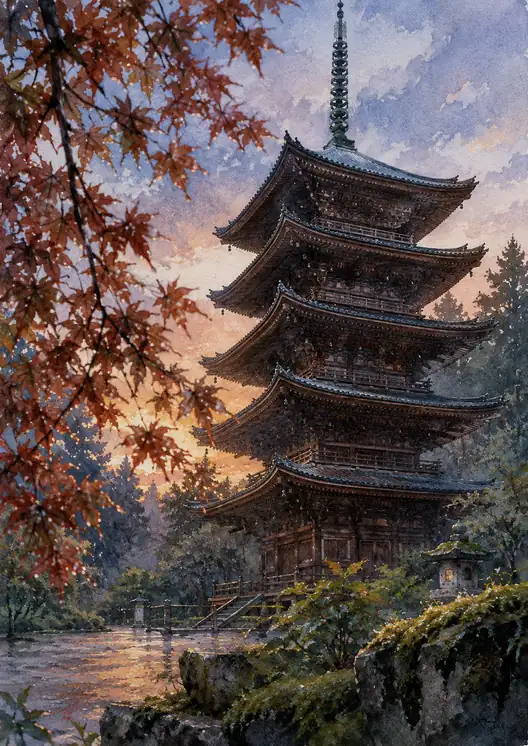 Autumn twilight, the Pagoda’s Silent Prayer
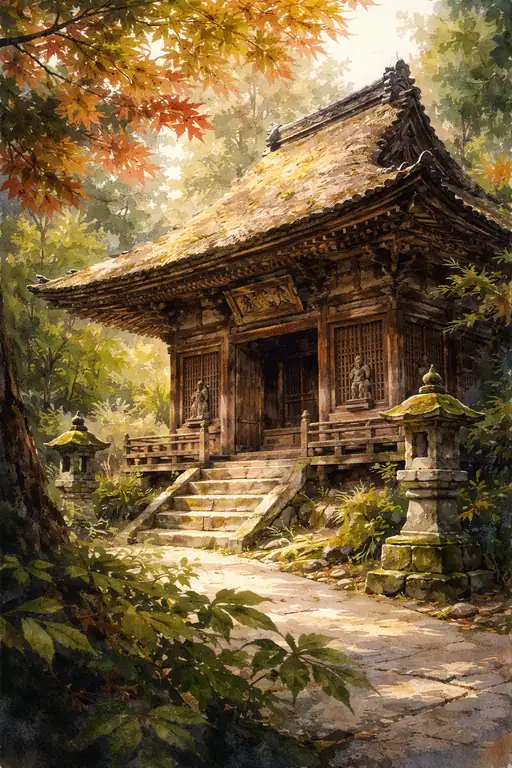 Sunlight Through the Crimson Gate
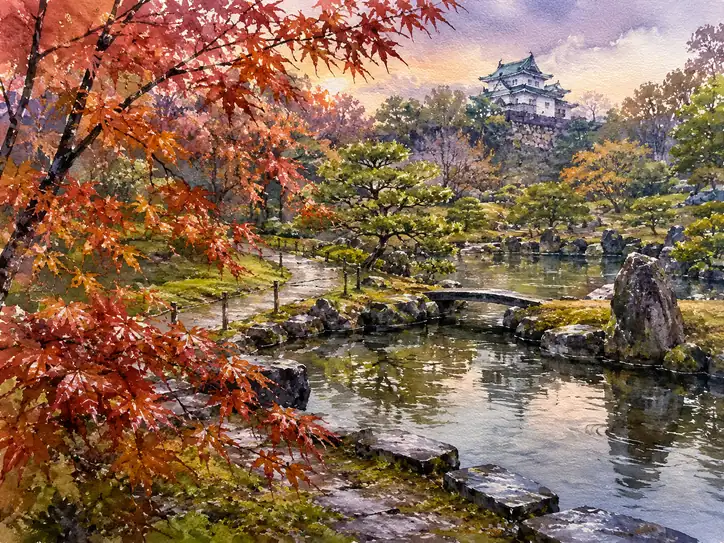 Ephemeral Fire of the Autumn Court
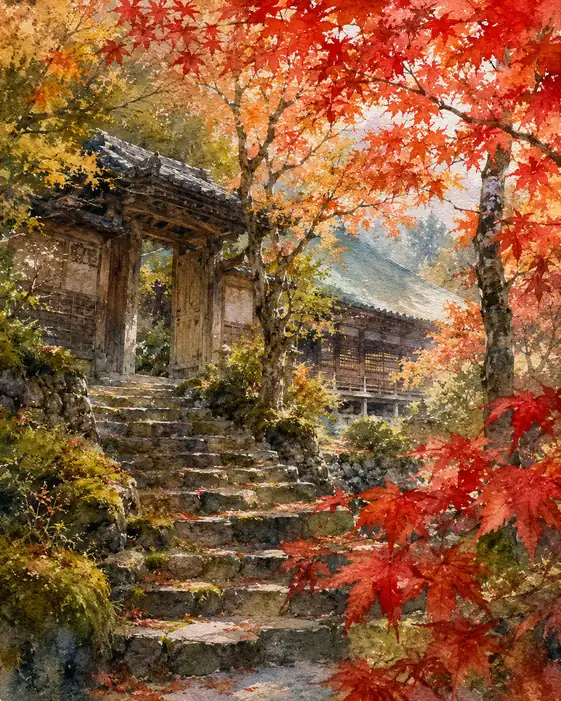 The Crimson Threshold of Silence
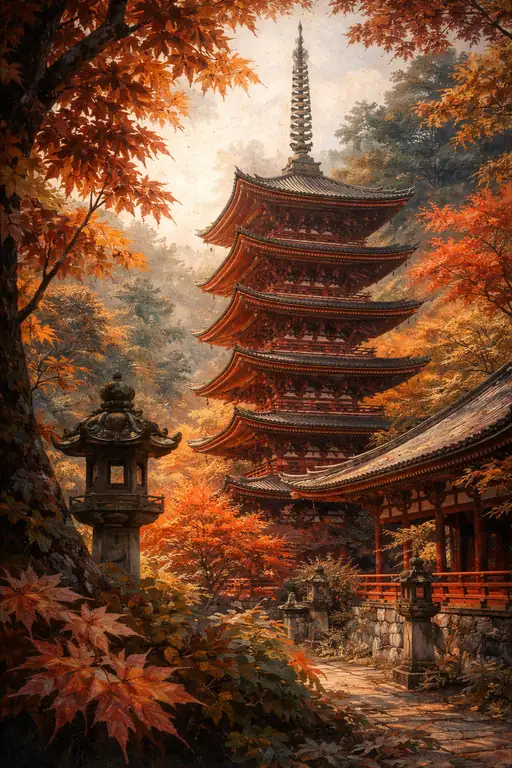 Autumn's Golden Reverie
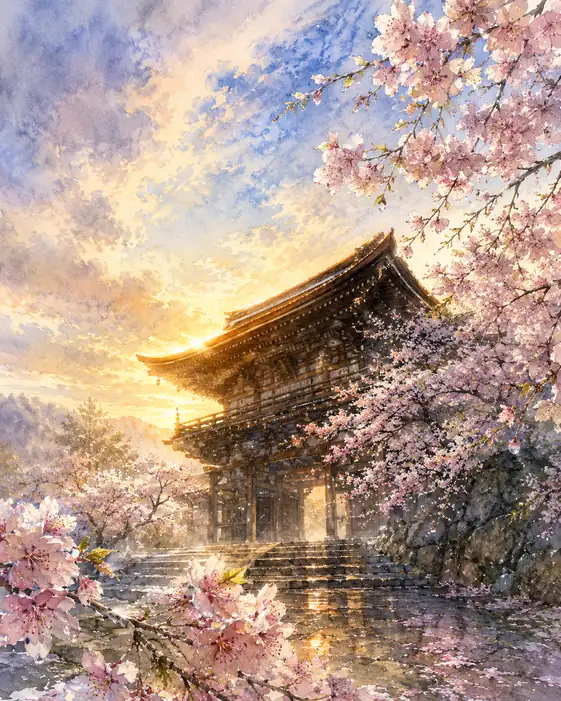 Spring Knocks on the Ancient Gate
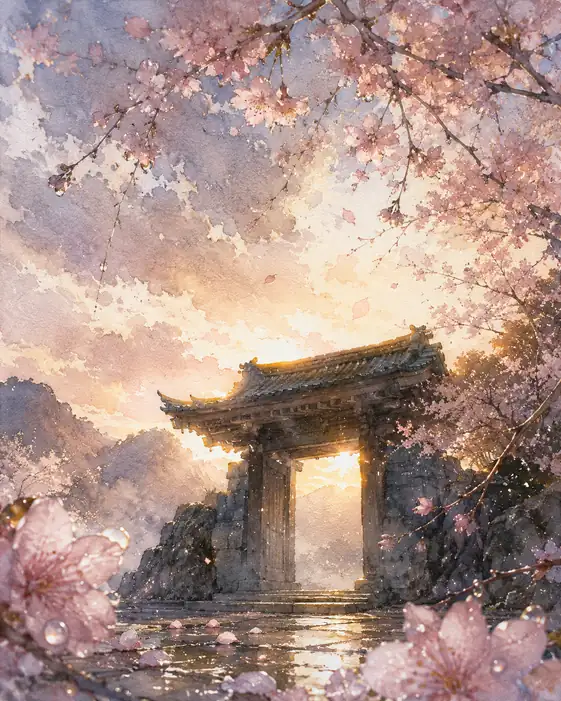 The Gate Opens into Cherry Mist