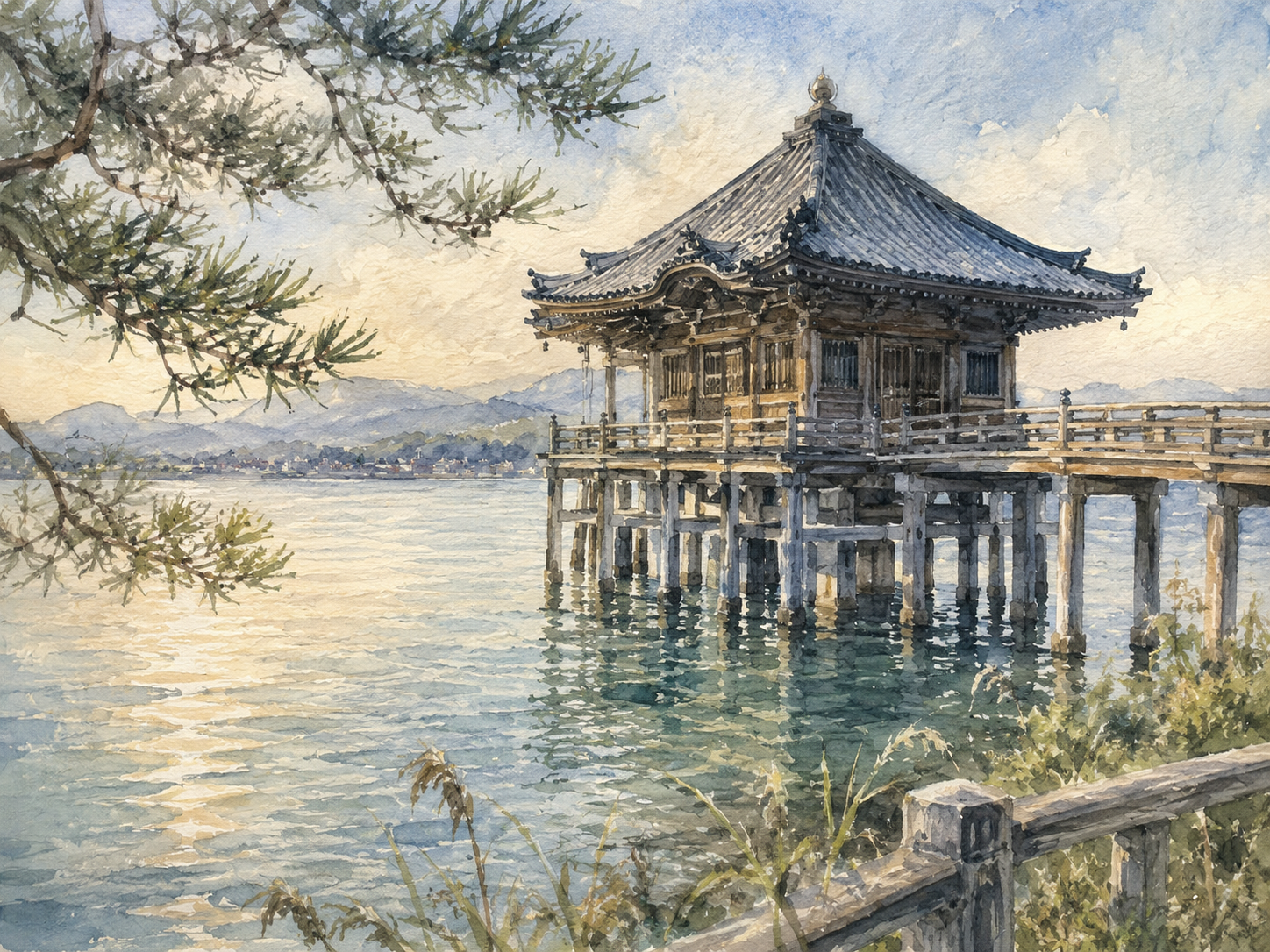
Timeless Serenity of the Floating Pavilion
Critique
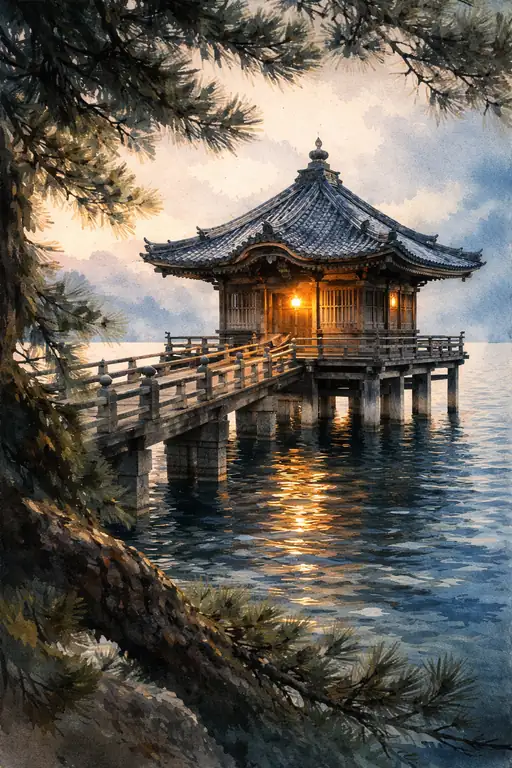
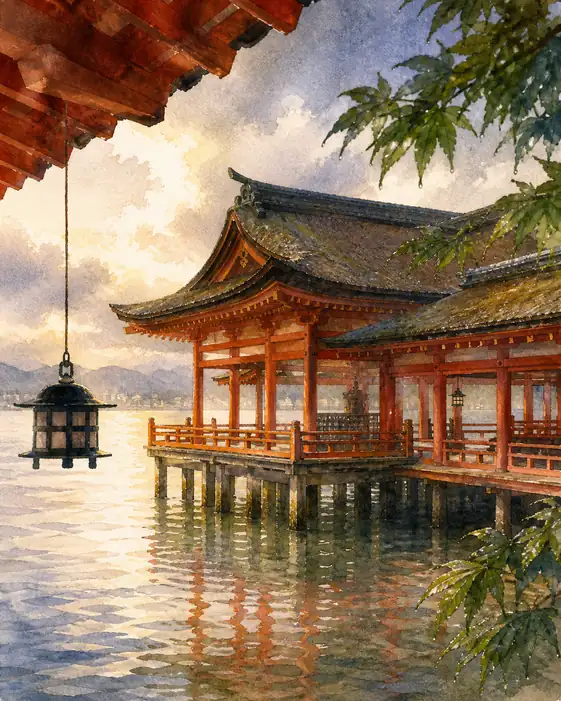
1. Introduction This watercolor painting presents a serene view of a traditional Japanese pavilion standing on stilts over a tranquil body of water. The work captures a moment of quiet reflection, emphasizing the harmony between classical architecture and the natural landscape. The use of soft, light tones and delicate brushwork creates an atmospheric scene that evokes a sense of peace and historical continuity. 2. Description The central focus is an octagonal wooden pavilion with a dark, layered roof, supported by a forest of vertical pillars rooted in the water. A wooden walkway extends from the structure toward the shore, while pine branches with intricate needles frame the upper-left corner of the composition. In the background, rolling mountains and a distant coastal town are visible under a pale, luminous sky. The foreground includes a stone railing and wild grasses, anchoring the viewer’s perspective on the bank. 3. Analysis The artist employs a sophisticated watercolor technique, utilizing transparent washes to render the shimmering reflections on the lake's surface. The warm light of the rising or setting sun is effectively captured through golden highlights in the sky and their corresponding ripples in the water. The composition is balanced by the heavy, dark form of the pavilion against the light, airy background of the mountains and sky. The detailed textures of the pine needles and wooden beams provide a sharp contrast to the soft, atmospheric rendering of the distant landscape. 4. Interpretation and Evaluation This piece excels in its ability to convey a sense of stillness and reverence for traditional architecture. The choice of a high-angle, slightly distanced viewpoint allows the viewer to appreciate the pavilion as an integral part of the natural environment rather than an isolated object. Technical skill is evident in the precise rendering of the complex pillar structure and its reflection, which adds depth and stability to the work. The overall aesthetic is one of refined elegance, demonstrating a deep understanding of light and spatial organization. 5. Conclusion The painting successfully captures the ethereal beauty of the floating pavilion through a masterful use of watercolor and composition. By balancing detailed architectural elements with soft, atmospheric effects, the artist creates a compelling visual narrative of tranquility and balance. Ultimately, the work stands as a poignant celebration of cultural heritage and the enduring charm of the Japanese landscape, offering the viewer a space for quiet contemplation.
Same Subcategory
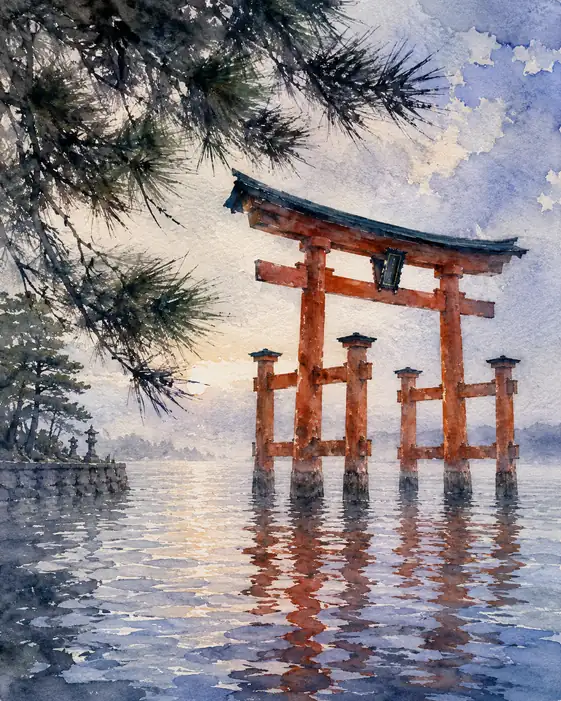 Eternal Reverie: The Sacred Tide
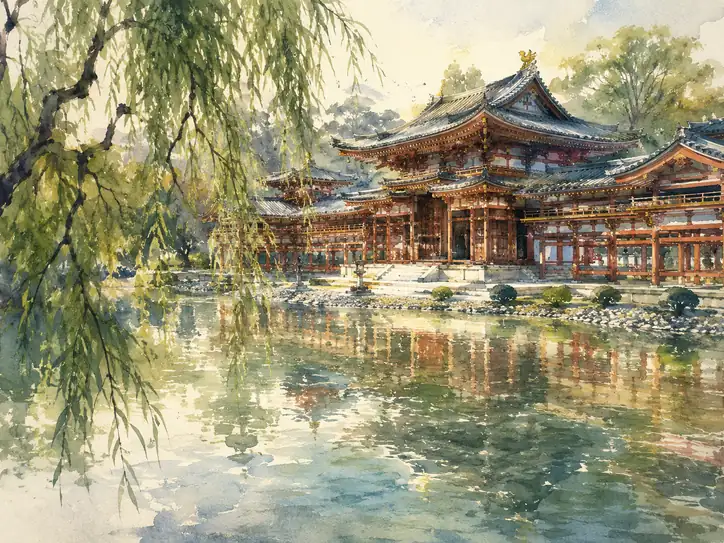 Mirror of the Celestial Paradise
Similar Artworks
 Boardwalk to the Water Sanctuary
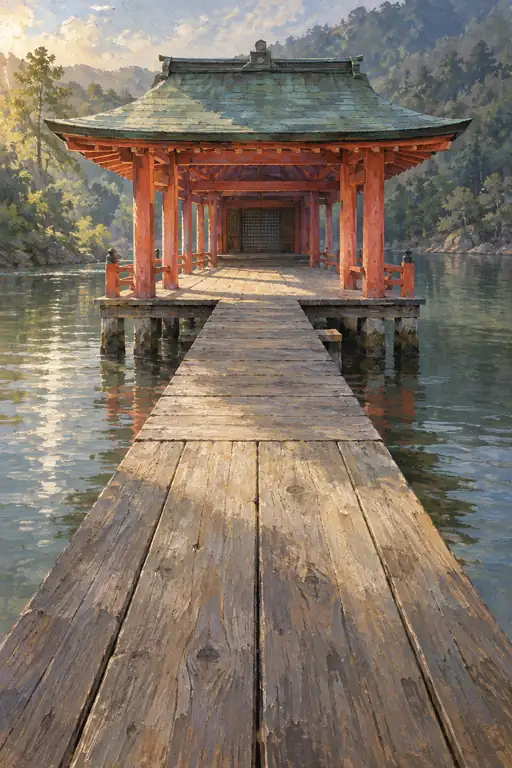 Path Across the Sacred Waters
 Sanctuary of the Golden Ripple
 Symphony of the Alpine Mist
 Autumn twilight, the Pagoda’s Silent Prayer
 Sanctuary Above the Crashing Depths
 Whispers of the Eternal Bridge
 Ripples of Eternal Gold
 Echoes from the Ancient Heights
 The Vermilion Sanctuary of Twilight Waters