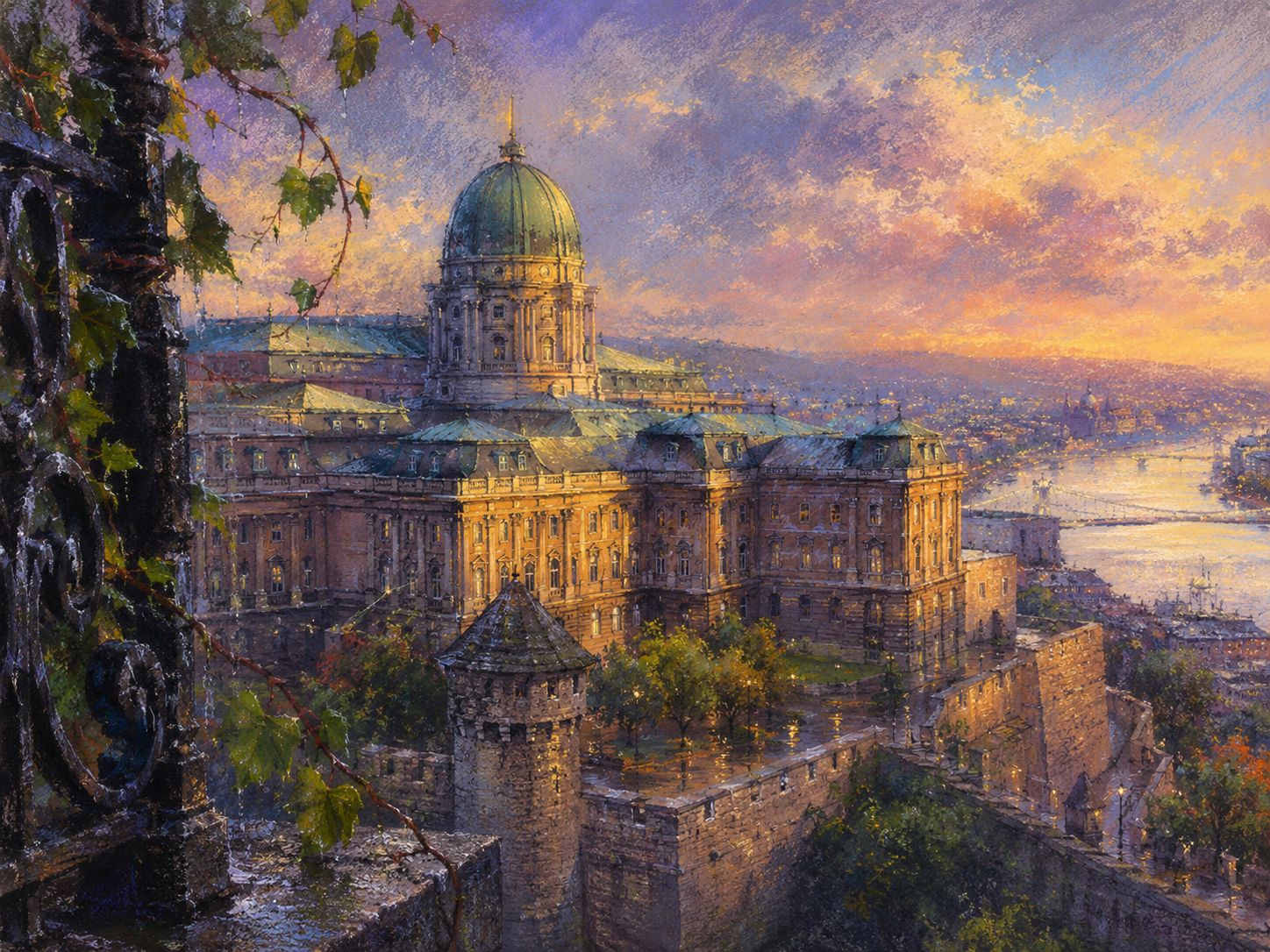
Eternal Glow of the Royal Realm
Critique
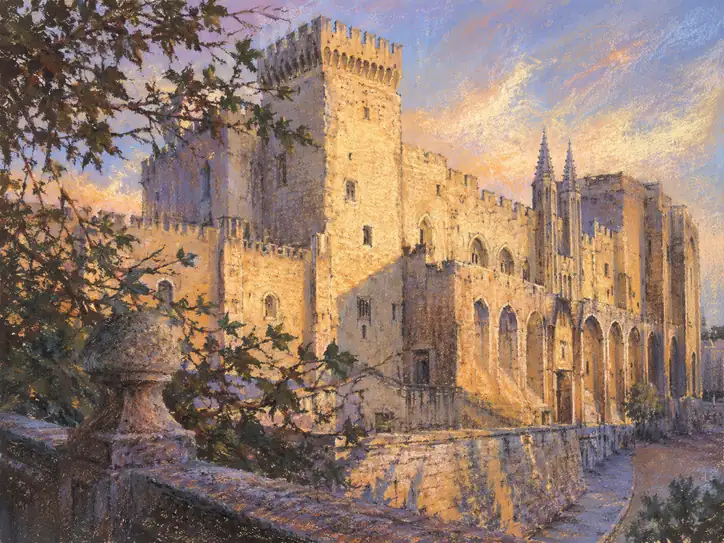
1. Introduction This dramatic painting captures the majestic Buda Castle in Budapest as it stands illuminated against a spectacular twilight sky. The composition is framed by an intricate, ivy-clad iron gate in the left foreground, which serves as a window into a world of historical grandeur. The work masterfully blends architectural precision with an atmospheric, painterly style, evoking the romantic and enduring spirit of one of Europe's most iconic cityscapes. 2. Description The central focus is the sprawling Royal Palace, its massive green dome and ornate facades glowing with warm, golden light. Below the castle, medieval fortifications and stone towers are rendered with rich texture, suggesting the ancient history of the site. In the background, the Danube river winds through the city, reflecting the fiery oranges and deep purples of the sunset. The distant Chain Bridge and city lights add a layer of modern vitality to the historic scene. 3. Analysis The artist employs a sophisticated use of light and shadow to create a sense of three-dimensional depth. The warm highlights on the castle's stonework contrast sharply with the cool, darkening tones of the foreground gate and the deep violet clouds. The brushwork is expressive yet controlled, particularly in the way it captures the wet, reflective surfaces of the castle grounds and the shimmering water of the Danube. This combination of textures adds a palpable sense of atmosphere and realism to the piece. 4. Interpretation and Evaluation This work is a profound exploration of the intersection between history, architecture, and natural beauty. The choice of the sunset hour symbolizes the enduring legacy of the castle, which remains a beacon of cultural identity even as the day fades. Technical execution is exceptional, specifically in the rendering of the complex architectural details and the vast, emotive sky. The painting successfully captures the unique "genius loci" or spirit of Budapest, presenting it as a place where the past and present coexist in a harmonious, luminous embrace. 5. Conclusion Ultimately, the painting serves as a stunning tribute to the architectural heritage of Hungary and the transformative power of light. The balanced composition and rich color palette create a visual experience that is both grand in scale and intimate in detail. The viewer is left with a lasting impression of the castle's timeless majesty, beautifully translated through a sensitive and highly skilled artistic vision that honors the city's unique historic character.
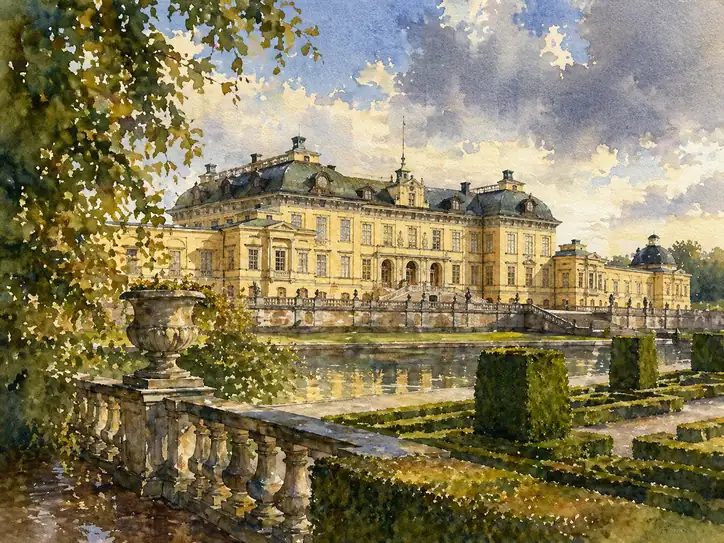 Symphony of the Silent Garden
 Mirror of Imperial Grandeur
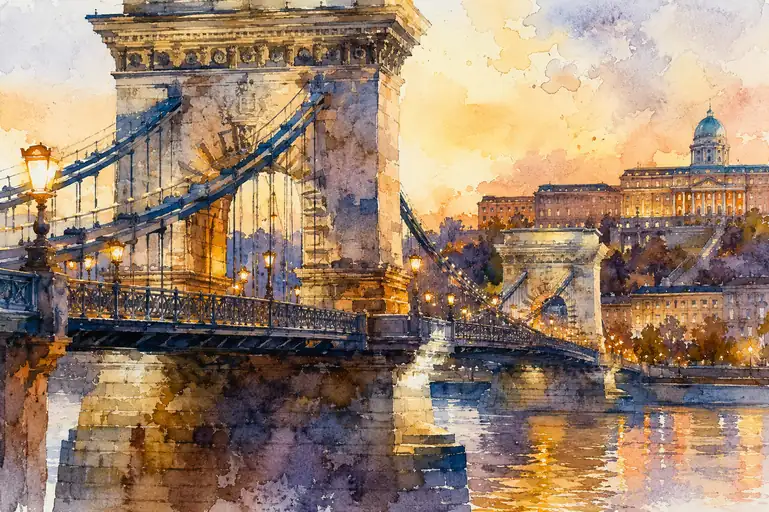 Sunset Bridge to Eternity
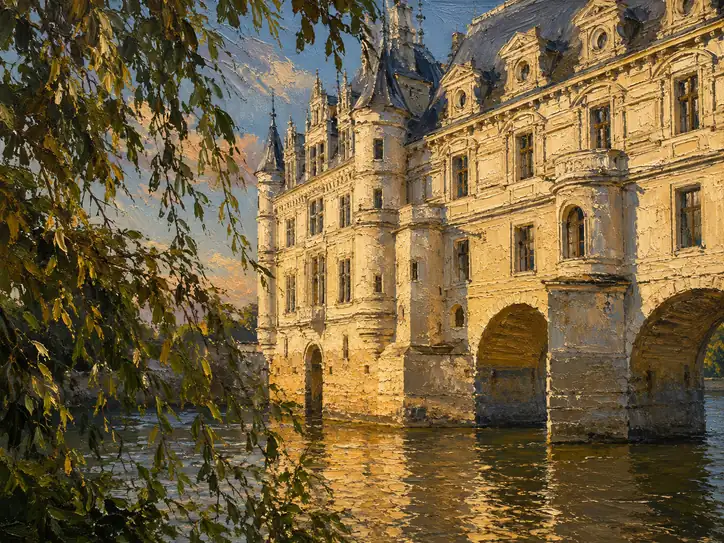 Where Time Whispers on the Water
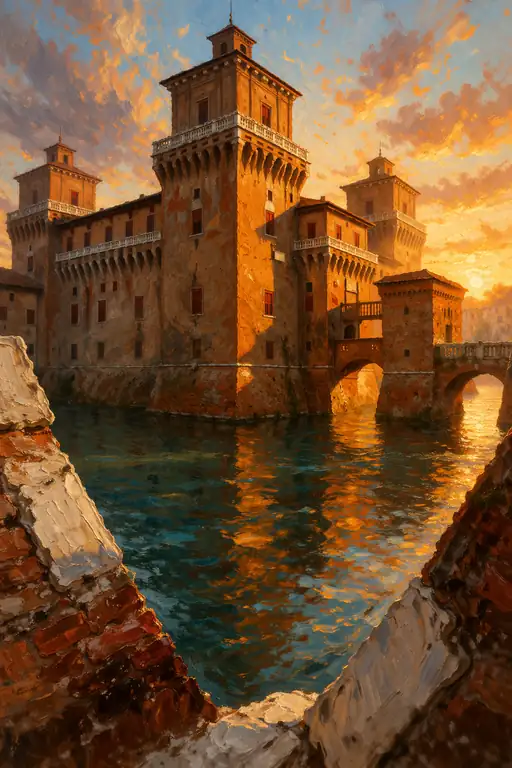 Golden Echoes on the Fortress Moat
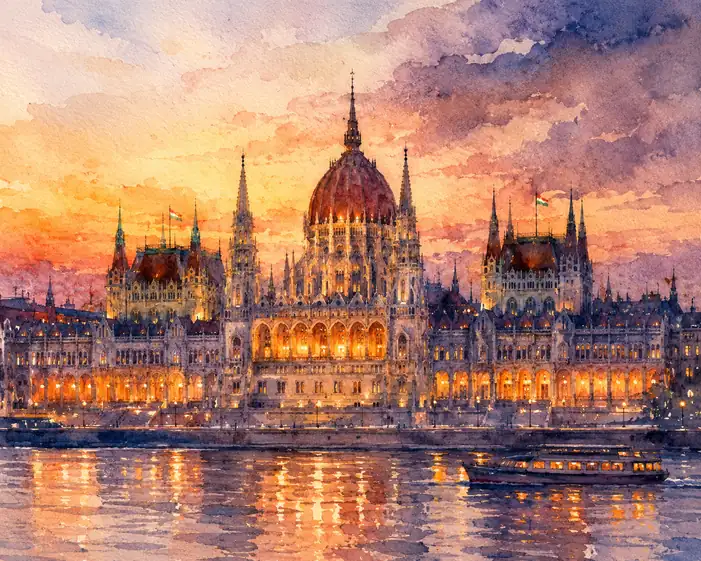 Golden Ripple in the Night
 Mirror of the Lost Kingdom
 Citadel of the Eternal Sunset
 Mirror of the Dreamer's Castle
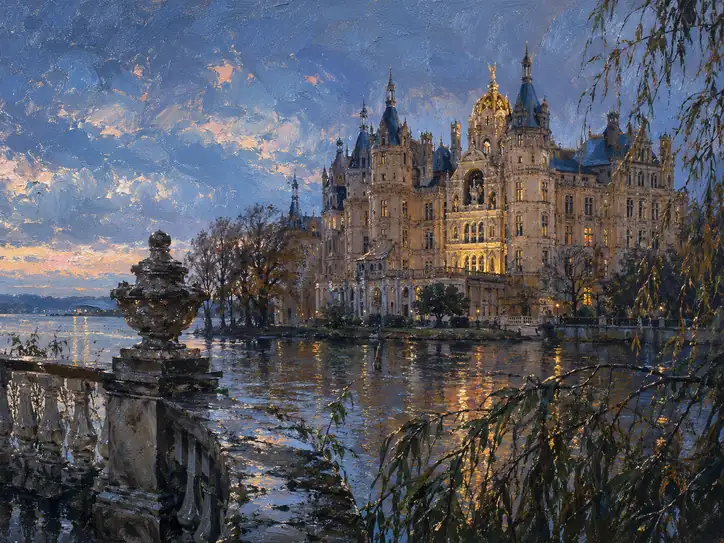 Eternal Reflection
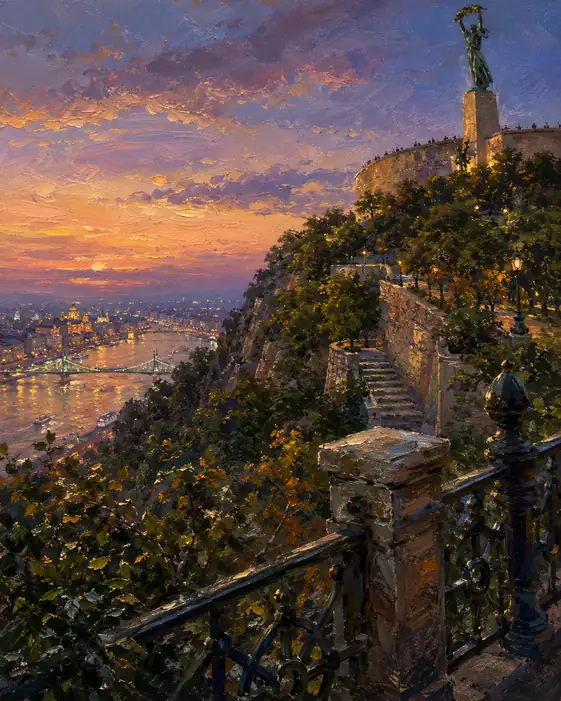 Gaze of Liberty over the Golden City
 Where History Sleeps in Gold