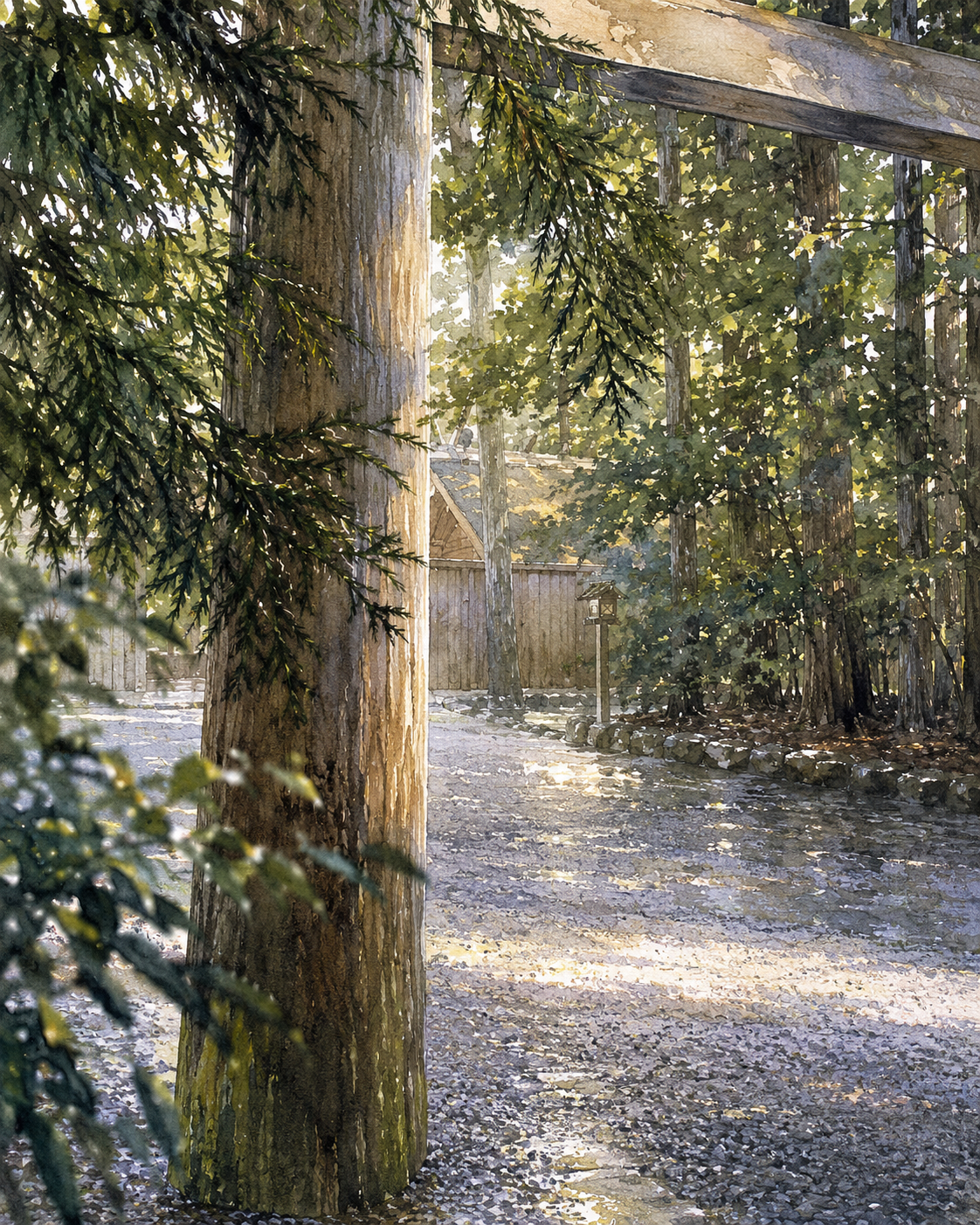
Sunbeams Dancing on the Path of Gods
Critique
1. Introduction This watercolor painting depicts a serene forest path leading toward a traditional wooden structure, likely a shrine or temple, nestled among towering cedar trees. The composition is framed by the massive wooden pillar and crossbeam of a torii gate in the foreground, which immediately establishes a sense of sacred space and depth. The work captures a specific moment where bright morning sunlight filters through the dense canopy, creating a complex interplay of light and shadow across the gravel ground and ancient tree trunks. 2. Description In the immediate foreground, a large, weathered wooden pillar dominates the left side of the frame, showing intricate textures of bark and moss. Above, a horizontal beam extends across the upper right, partially obscured by the lush green needles of a cedar branch. The middle ground reveals a sun-drenched gravel path that leads the eye toward a simple wooden building and a small stone lantern. Tall, slender trees fill the background, their vertical forms receding into the distance, while vibrant green leaves are illuminated by the brilliant rays of light. 3. Analysis The artist employs a sophisticated vertical composition that emphasizes the height and majesty of the forest environment. The use of light is the most striking analytical element, with high-contrast highlights on the pillar and ground effectively conveying the intensity of the sunbeams. The color palette is dominated by earthy browns, deep greens, and warm yellows, which create a harmonious and naturalistic atmosphere. Fine, delicate brushwork is used to define individual needles and the rough surface of the gravel, providing a rich tactile quality to the image. 4. Interpretation and Evaluation The painting successfully evokes a feeling of profound tranquility and spiritual reverence through its meticulous attention to natural detail. The technical execution of the watercolor medium is exceptional, particularly in the handling of the dappled light and the subtle transitions between shadow and highlight. The decision to frame the scene with the torii gate adds a layer of cultural significance, suggesting an invitation into a protected, hallowed environment. The originality lies in the realistic yet poetic rendering of a common landscape, transforming it into a moment of transcendent beauty. 5. Conclusion This work is a masterful exploration of light and atmosphere within a traditional architectural and natural setting. The initial impression of a peaceful woodland scene is deepened by the discovery of the intricate details in the wood grain and foliage. The artist demonstrates a high level of skill in capturing the fleeting quality of sunlight, resulting in a composition that feels both timeless and immediate. It stands as an evocative tribute to the quiet dignity of sacred spaces and the enduring power of nature.
Same Subcategory
 Fleeting Crimson, Eternal Prayer
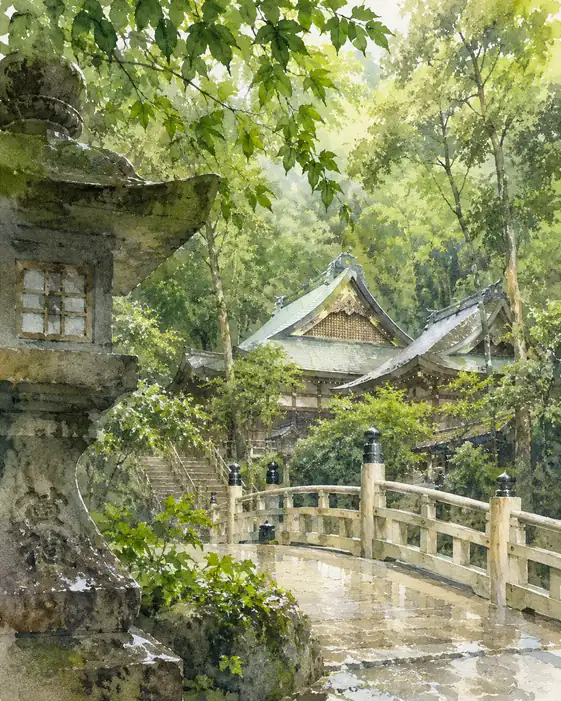 Stillness of the Hidden Sanctuary
Similar Artworks
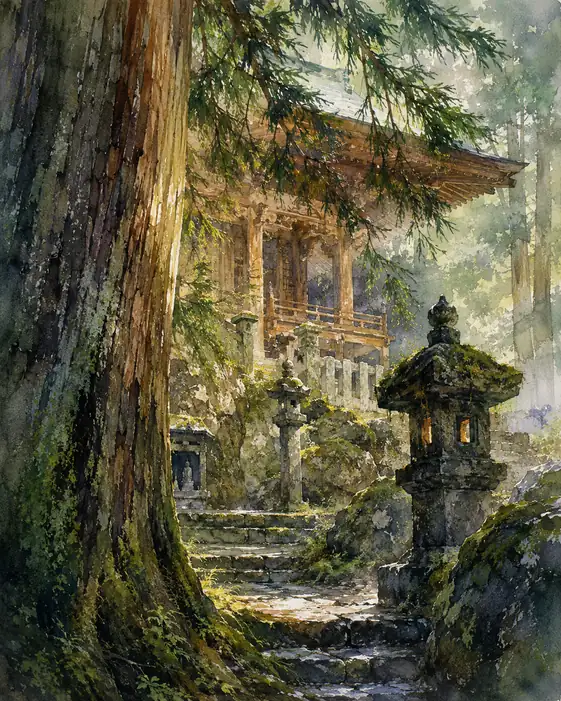 Sanctuary of the Ancient Cedars
 Where Crimson Meets the Emerald Wilds
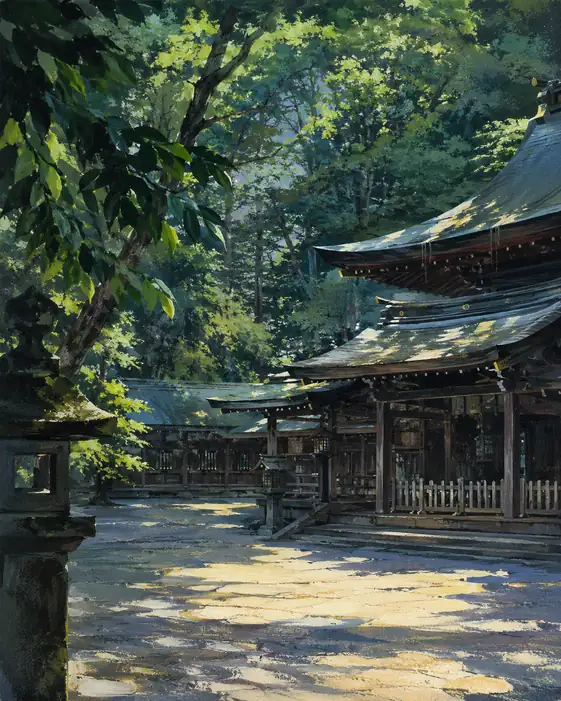 Whispers of the Sunlit Sanctuary
 Passage Through the Sacred Shadows
 Sanctuary in the Shadows
 Awakening the Sacred Path
 Sanctuary of the Silent Forest
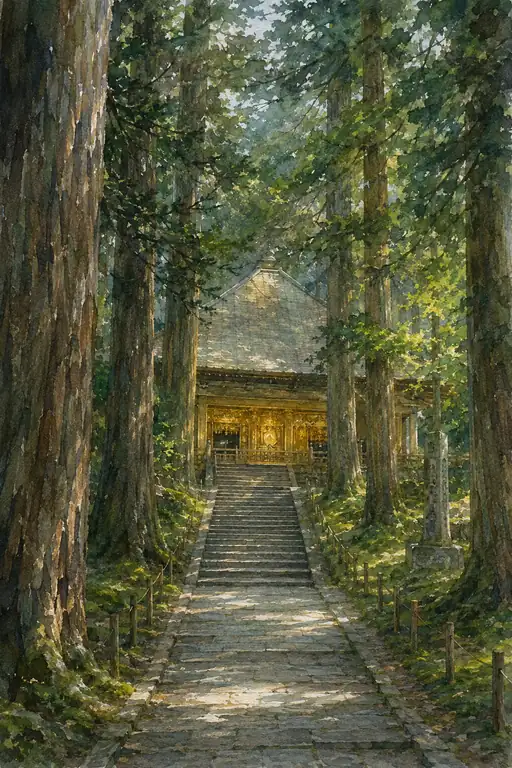 A Sanctuary of Golden Silence
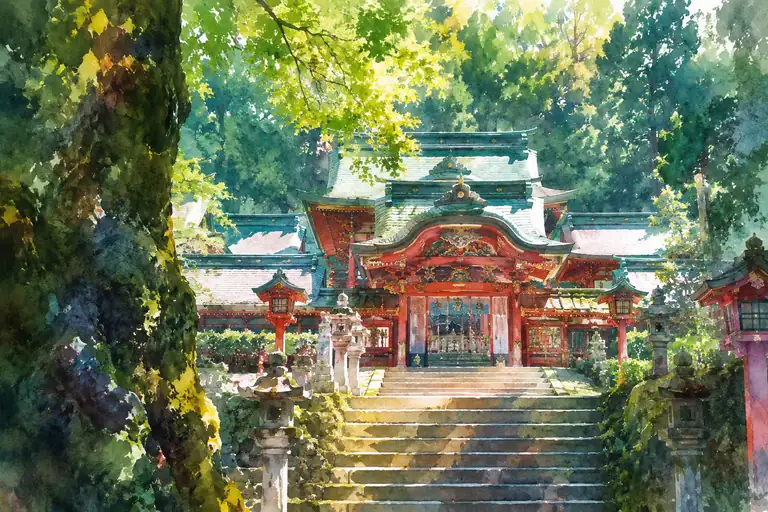 Sunlight on the Sacred Path
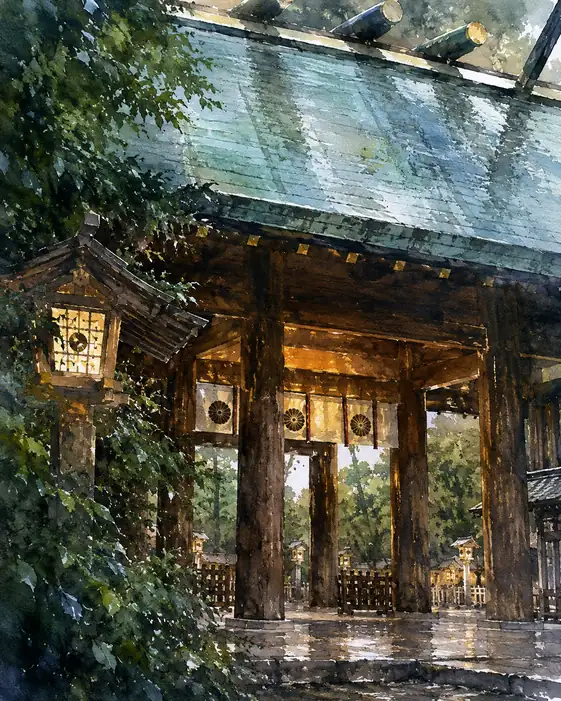 The Silent Breath of the Shrine