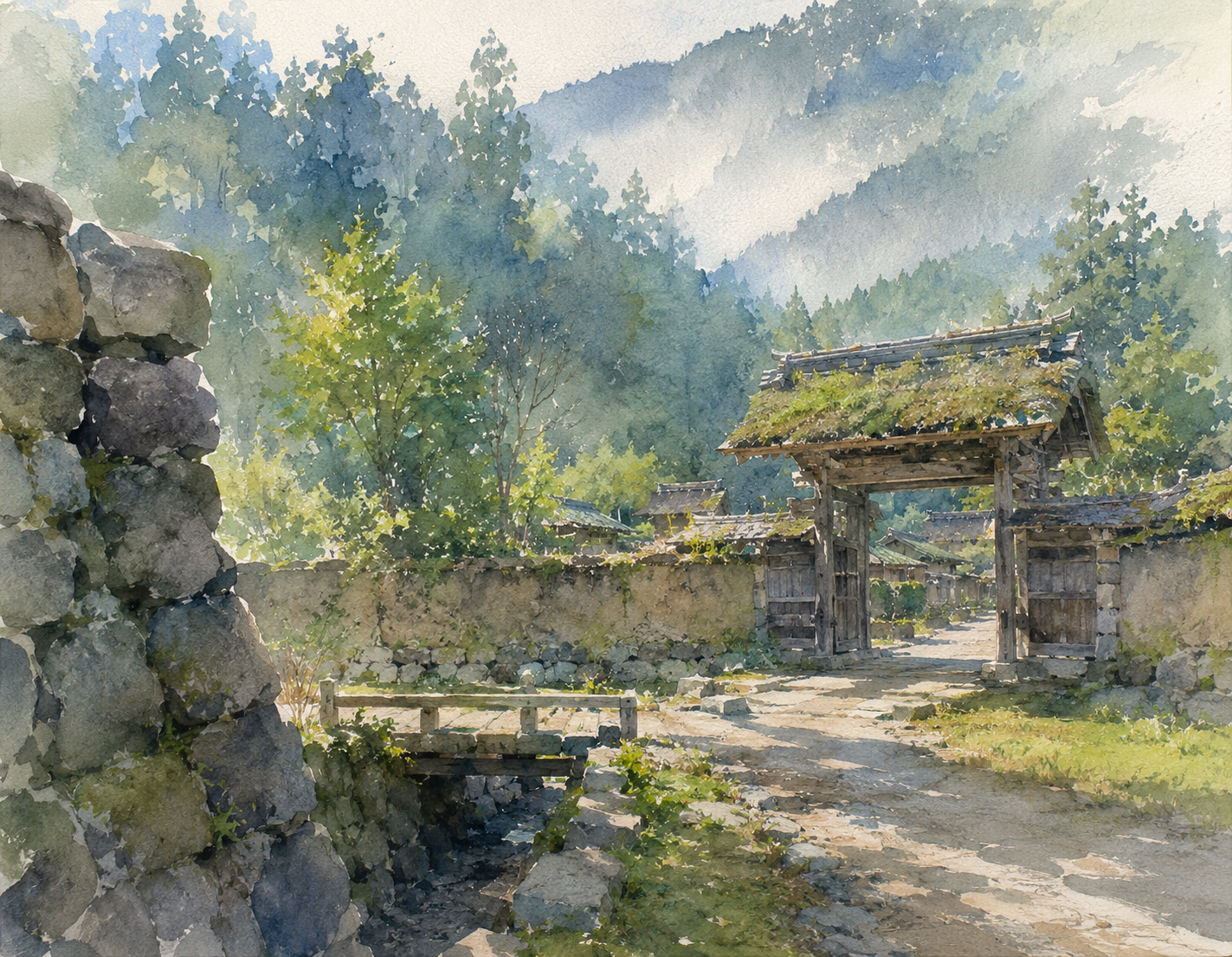
The Silent Gate Where Time Lingers
Critique
1. Introduction This watercolor painting portrays a serene scene of a traditional mountain village, capturing the quiet atmosphere of a rural Japanese settlement. The work focuses on the harmonious integration of stone, wood, and water within a misty, forested landscape. It invites the viewer to experience a moment of stillness and the subtle beauty of weathered structures in a natural setting. 2. Description In the foreground, a rugged stone wall anchors the left side of the composition, its grey surfaces softened by patches of moss. A small, simple wooden bridge crosses a narrow stream that runs alongside a dirt path. The path leads to an aged wooden gate with a thatched roof covered in thick green moss. Beyond the gate, more traditional houses are nestled among dense green trees, while misty mountains fade into a pale sky in the background. 3. Analysis The artist utilizes the transparency of watercolor to create a sense of depth and atmospheric perspective. Soft washes of green and blue in the background represent the humid, mountainous air, contrasting with the more detailed and textured rendering of the stones and wood in the foreground. The composition follows the path through the gate, drawing the eye into the village while maintaining a balanced distribution of weight between the heavy stone wall and the light, airy background. 4. Interpretation and Evaluation The work successfully conveys a feeling of nostalgia and the passage of time through the depiction of weathered materials and thriving moss. Technical proficiency is evident in the controlled bleeding of colors and the use of dry brush techniques to suggest texture on the stone and wood. The choice of watercolor is particularly effective for capturing the soft, diffused light of a mountain morning, resulting in a piece that feels both delicate and grounded. 5. Conclusion An initial impression of simple rural life is deepened by the discovery of intricate textures and the evocative treatment of light and mist. The painting stands as a poetic tribute to the enduring charm of traditional Japanese architecture in nature. It leaves the viewer with a sense of peace and a renewed appreciation for the quiet corners of the world.
Same Subcategory
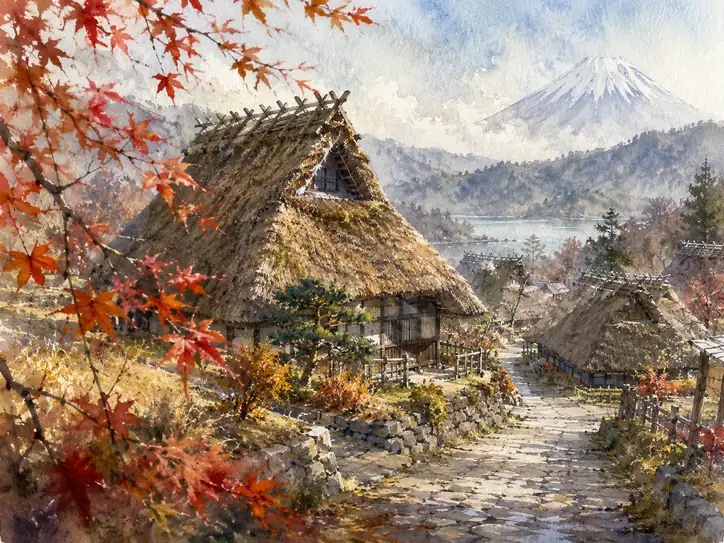 Sanctuary of the Eternal Mountain
Similar Artworks
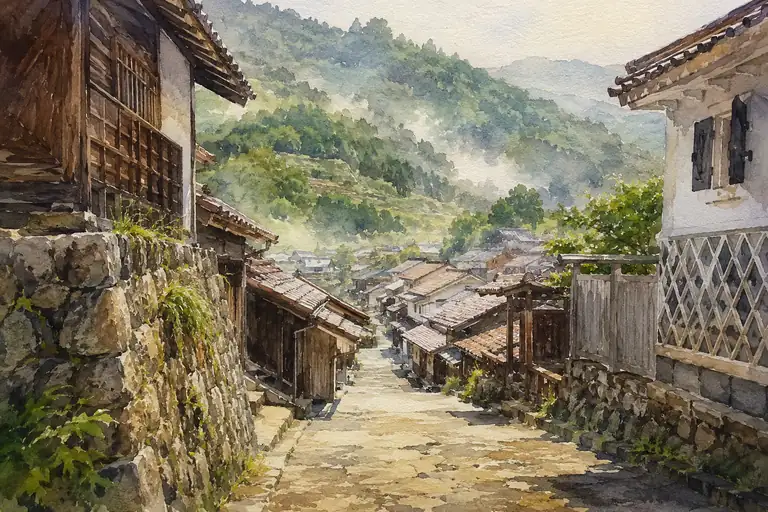 Echoes of the Ancient Path
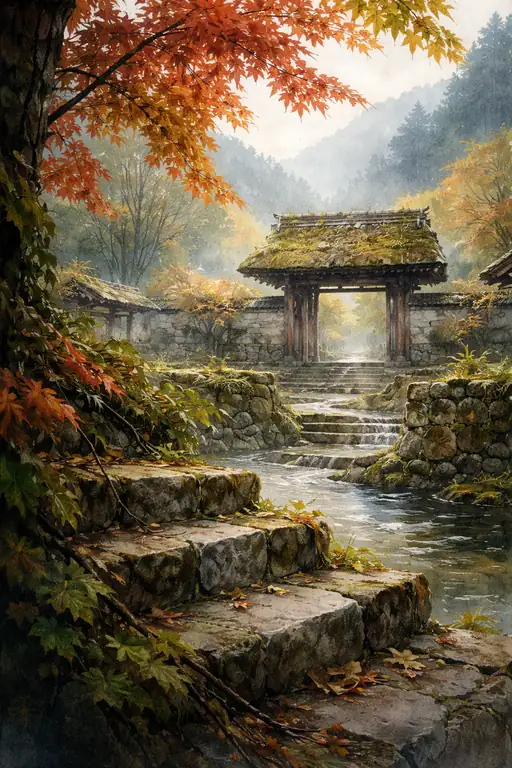 Whispers of Autumn: The Mossy Gate in the Mist
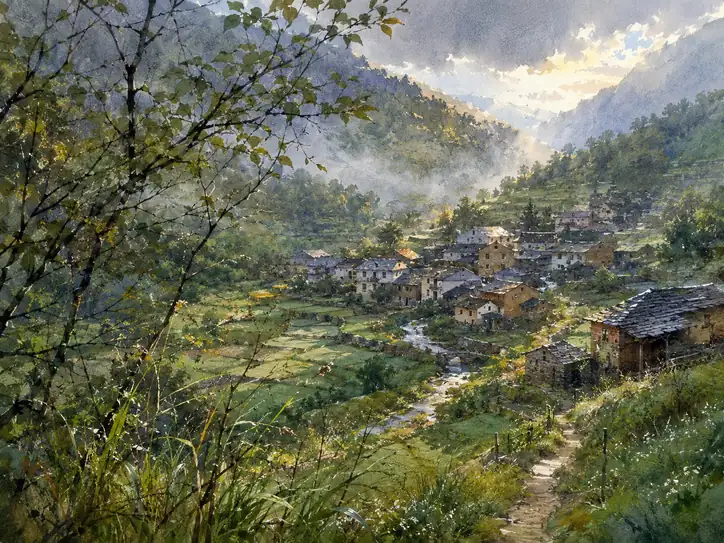 Where the Mist Whispers
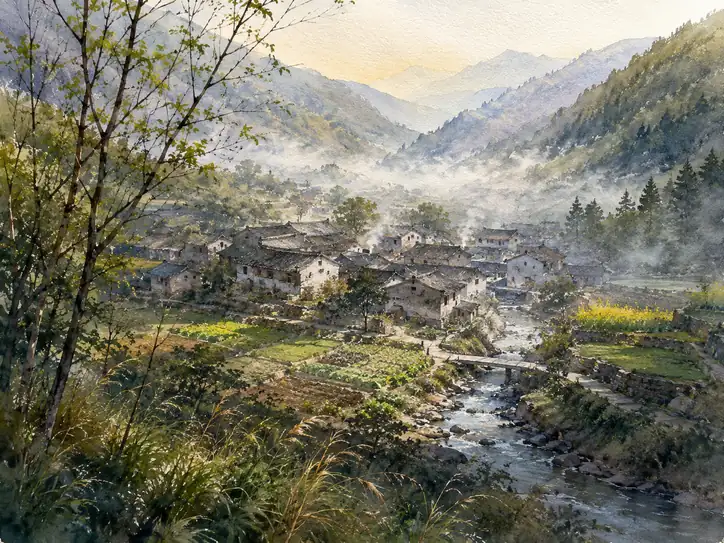 Morning Mist in the Cradle of Mountains
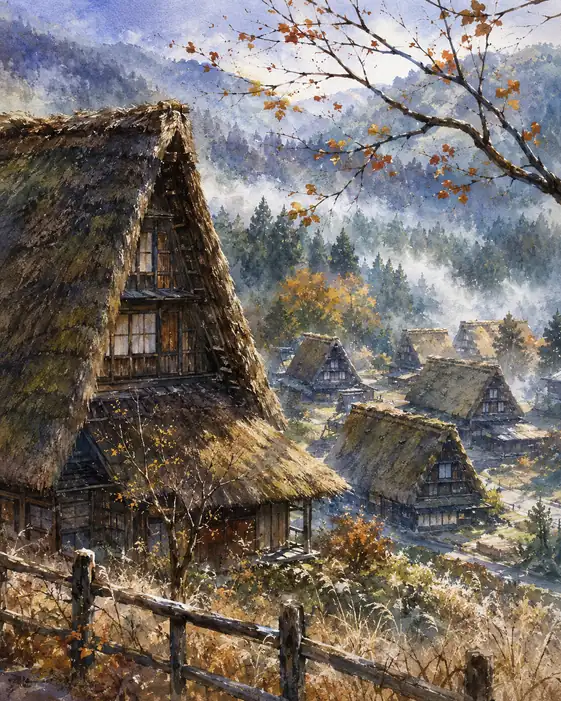 Echoes of the Thatch: A Misty Autumn Memory
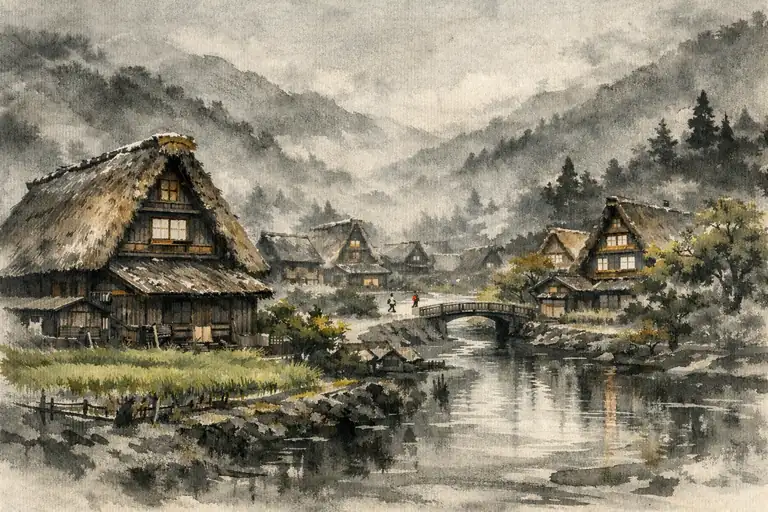 Quiet Breath of the Sacred Valley
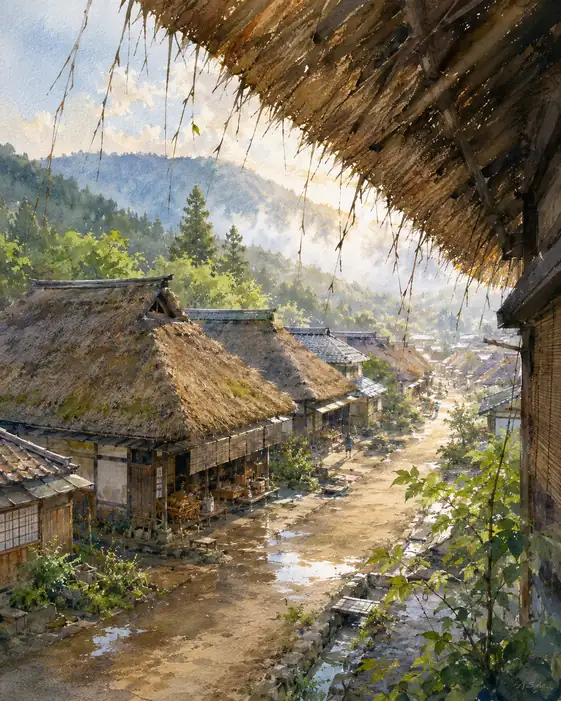 Echoes of the Thatched Village
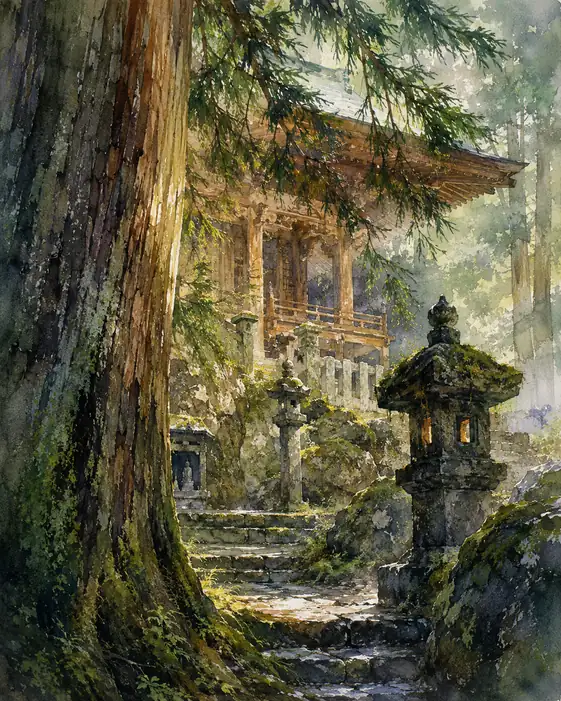 Sanctuary of the Ancient Cedars
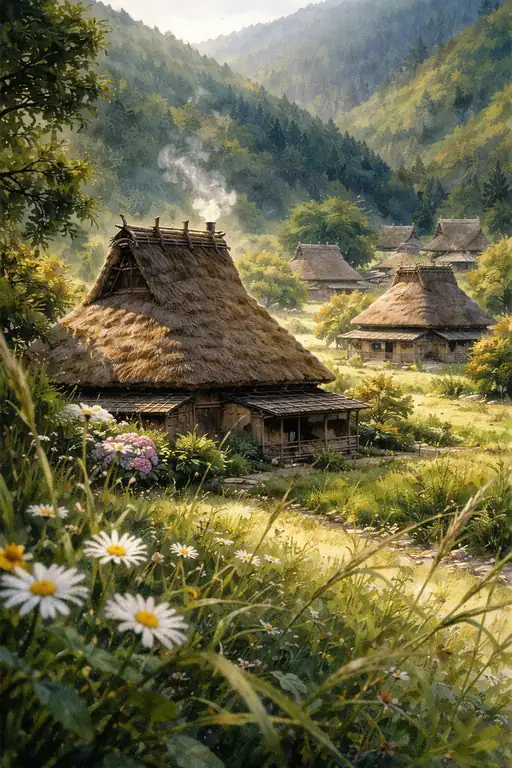 Whispers of the Golden Valley
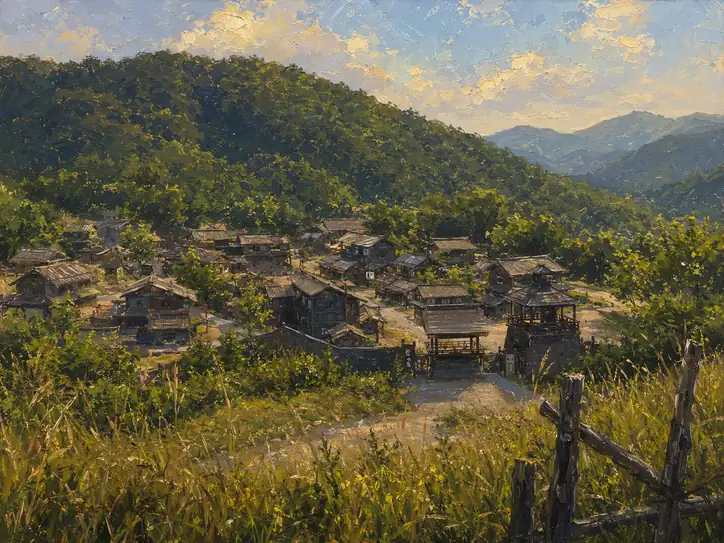 Mountain Village in the Golden Hour