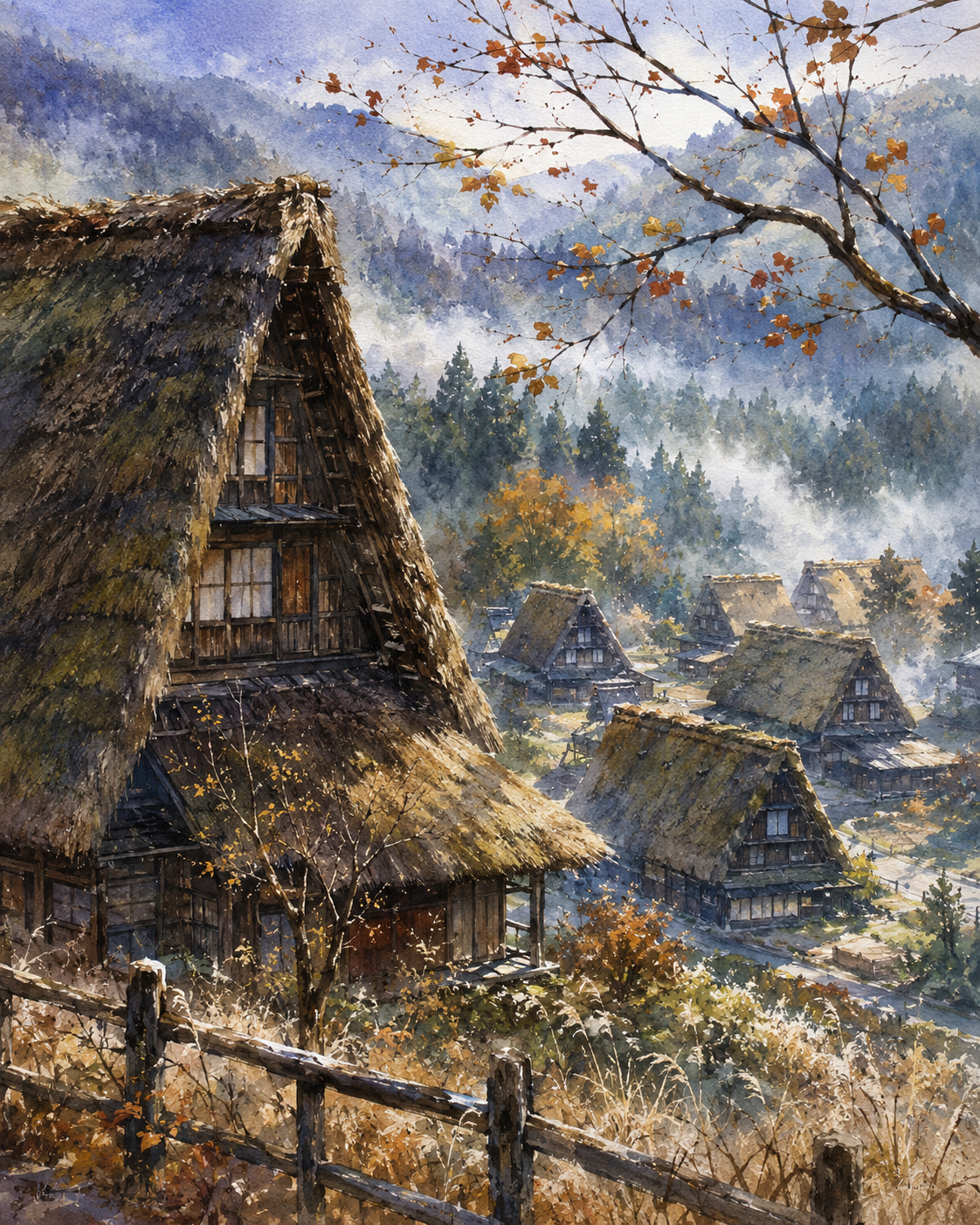
Echoes of the Thatch: A Misty Autumn Memory
Critique
1. Introduction This watercolor painting presents a nostalgic and atmospheric view of a traditional Japanese village, characterized by its iconic steep-thatched roofs. The work masterfully captures a sense of timelessness and cultural heritage through a detailed exploration of rural architecture and the natural environment. The overall composition is imbued with a quiet dignity, inviting the viewer to contemplate the harmonious relationship between human habitation and the changing seasons. 2. Description The foreground is defined by a weathered wooden fence and dry grasses, while a branch with orange autumn leaves frames the upper right corner. Dominating the left side is a large, multi-story house with a thick, textured thatched roof that shows signs of moss and age. In the midground, several similar structures are clustered together among autumnal trees, all set against a backdrop of misty mountains and dense pine forests that fade into a soft, hazy sky. 3. Analysis Technical prowess is evident in the rendering of the thatched roofs, where individual straws and various layers of decay are suggested through precise brushwork and color variations. The artist effectively employs atmospheric perspective, using softer edges and cooler tones for the distant mountains to create a profound sense of depth. Light filters through the mist, casting subtle shadows that define the geometric volumes of the houses and ground the structures within the landscape. 4. Interpretation and Evaluation The painting can be interpreted as a poignant reflection on the "furusato" or ancestral home, emphasizing the enduring beauty of traditional Japanese life. From a critical standpoint, the work succeeds in balancing intricate architectural detail with a broader, more impressionistic treatment of the surrounding nature. The warm, earthy palette of the village contrasts beautifully with the cool grays and greens of the mountains, showcasing an exceptional understanding of color harmony and mood. 5. Conclusion Initial observation of the village's rustic charm gives way to a deeper appreciation for the complex interplay of light, shadow, and texture that defines this work. This painting is a testament to the evocative power of watercolor in capturing both the physical reality and the spiritual essence of a landscape. It stands as a refined artistic achievement that preserves a vision of traditional Japan with both technical accuracy and profound emotional resonance.
Same Subcategory
 Where Silence Breathes
Similar Artworks
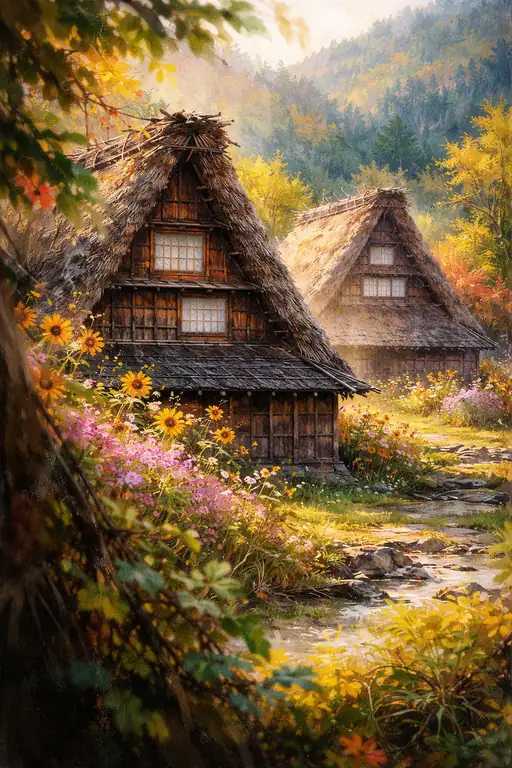 A Warm Hearth in the Misty Valley
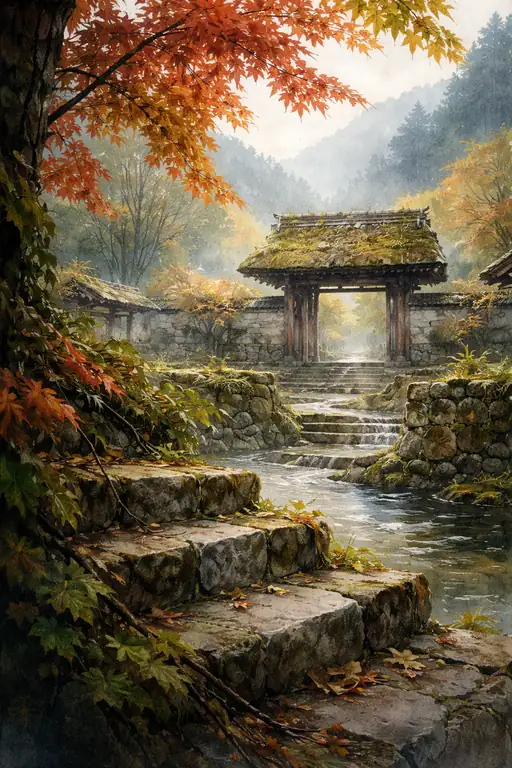 Whispers of Autumn: The Mossy Gate in the Mist
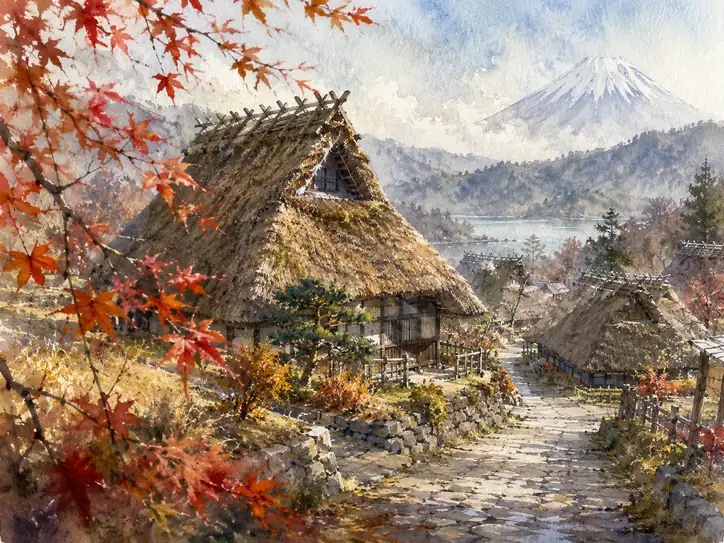 Sanctuary of the Eternal Mountain
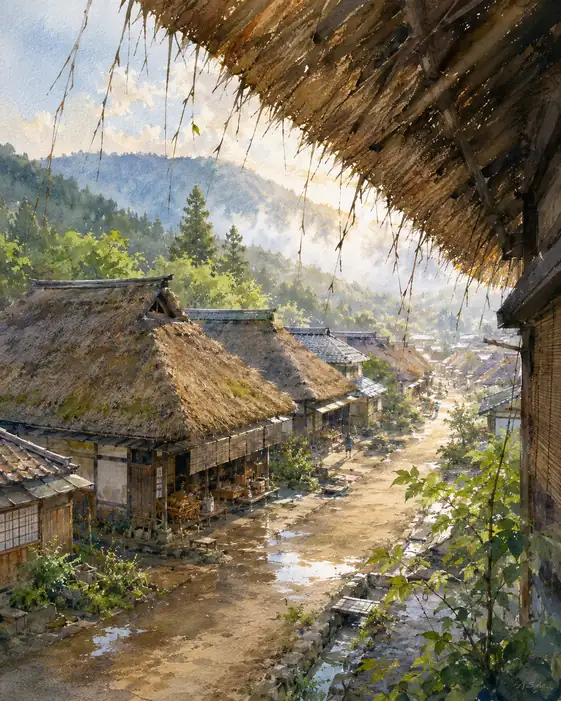 Echoes of the Thatched Village
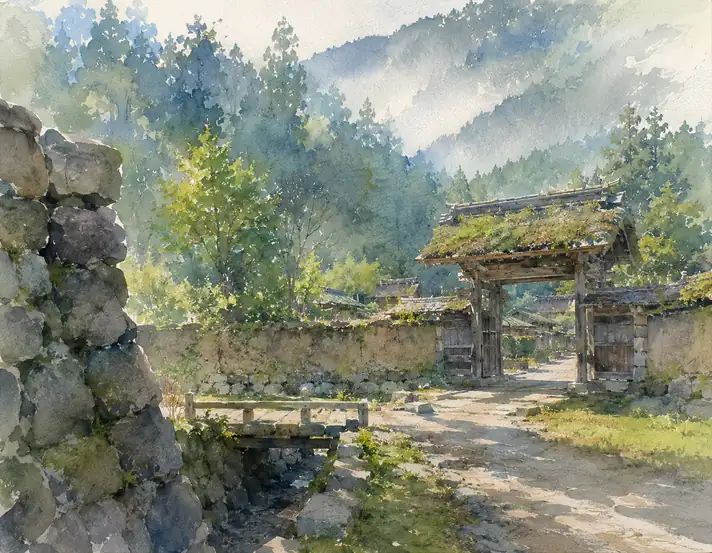 The Silent Gate Where Time Lingers
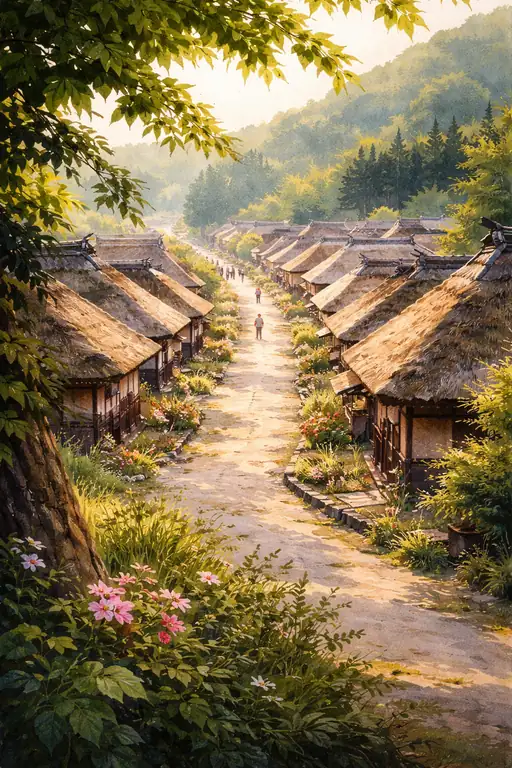 Tranquil Shadows Along the Thatched Village Road
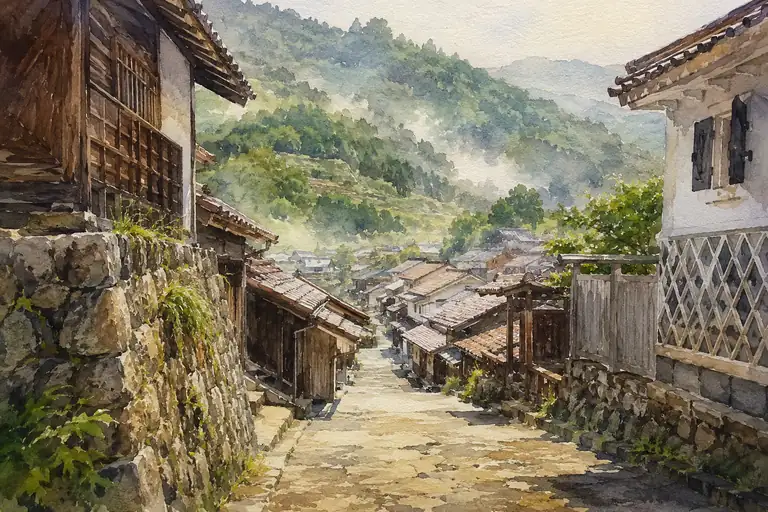 Echoes of the Ancient Path
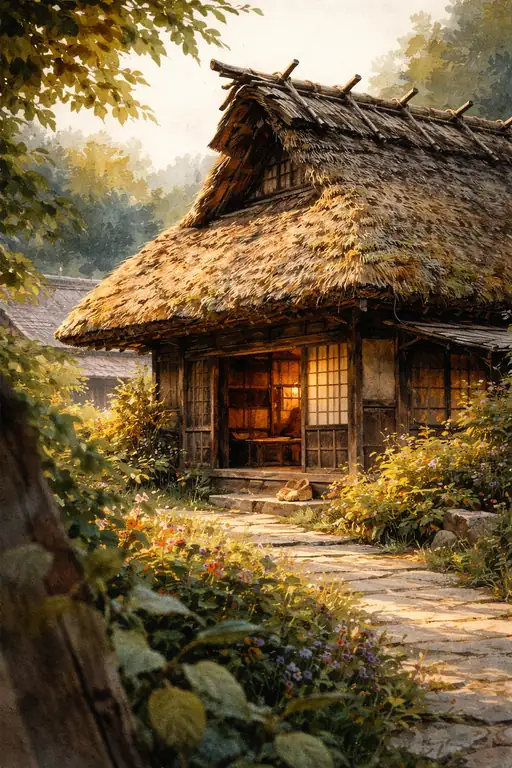 Whispers of the Evening Sun on the Stone Path
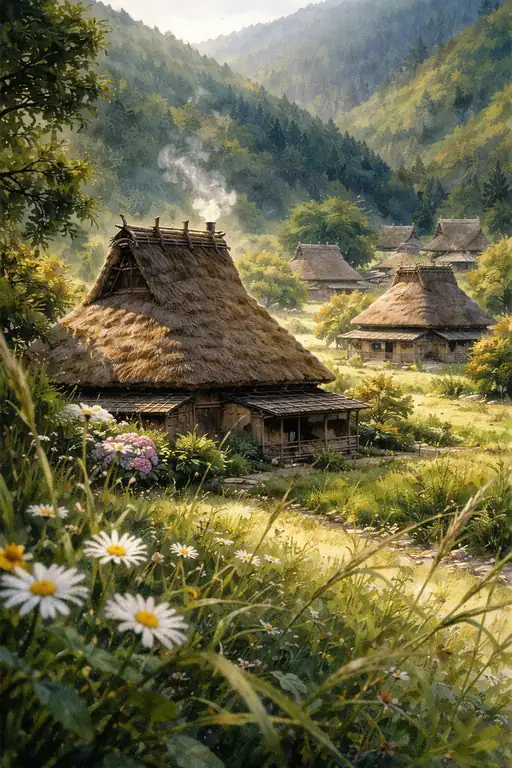 Whispers of the Golden Valley
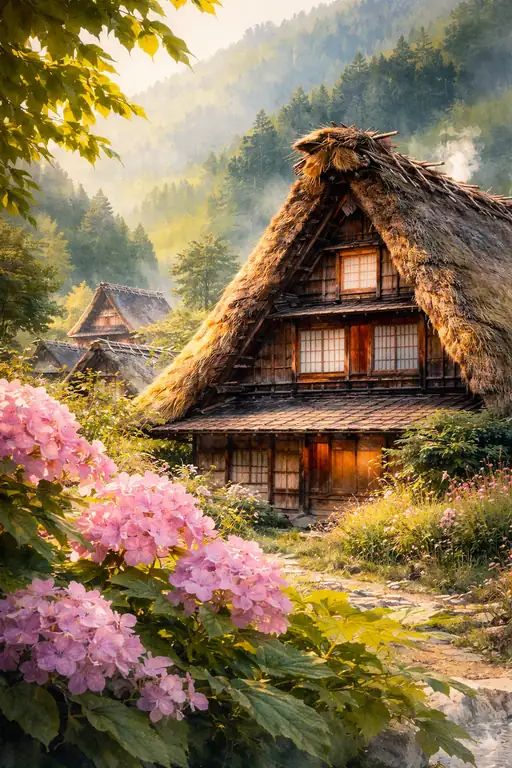 Summer Bloom Beneath the Thatched Eaves