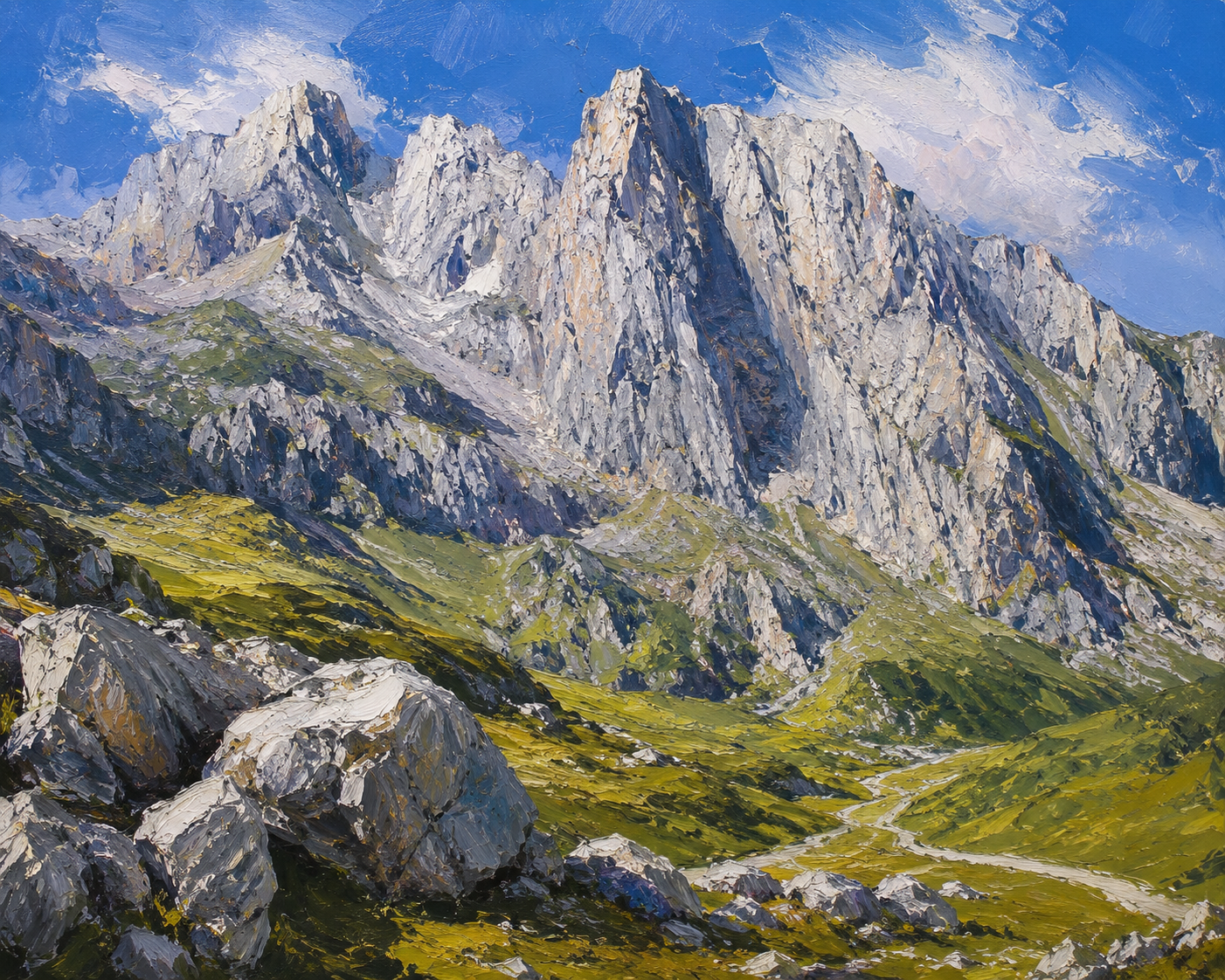
The Silent Roar of Stone
Critique
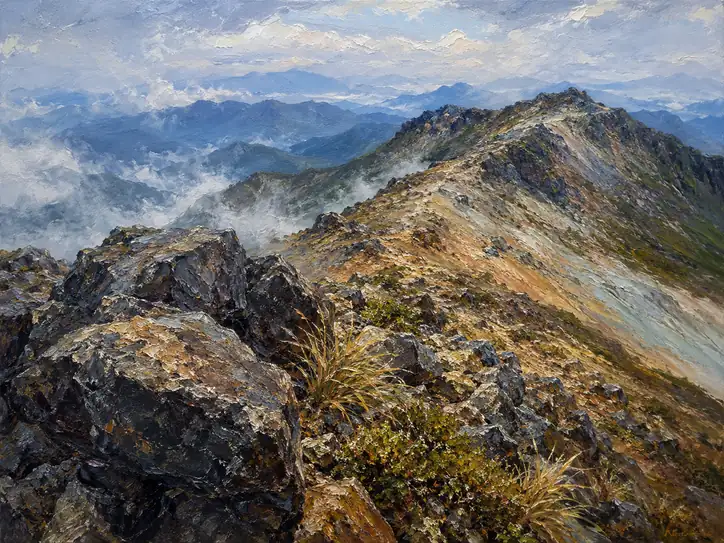
1. Introduction This oil painting presents a breathtaking view of a high-altitude mountain range. The work captures the rugged beauty of towering peaks under a brilliant sky, inviting the viewer into a vast alpine environment. It serves as a testament to the enduring allure of mountain landscapes in the tradition of landscape art. 2. Description The composition is dominated by sharp, granite-like peaks that rise vertically into the blue firmament. In the foreground, large, textured boulders are scattered across a verdant slope, their surfaces catching the bright light. A narrow, winding path or stream meanders through the valley below, providing a sense of depth and scale to the immense geological formations. 3. Analysis Technically, the artist employs a bold impasto technique, applying thick layers of paint with a palette knife or heavy brush. This creates a physical relief on the canvas that mimics the rough, craggy texture of the rocks and the soft, rolling nature of the mountain grass. The contrast between the stark white snow patches and the deep grey shadows enhances the three-dimensional quality of the mountain's anatomy. 4. Interpretation and Evaluation The work succeeds in conveying the sublime power of nature through its energetic execution and vibrant color palette. The use of saturated greens against the cool tones of the rock and sky creates a harmonious yet dynamic visual experience. The depiction of light is particularly effective, suggesting a clear, crisp atmosphere characteristic of high elevations. The composition is balanced, leading the eye naturally from the boulders to the distant summits. 5. Conclusion This painting effectively balances raw textural intensity with a serene atmosphere. It offers a powerful interpretation of the natural world, emphasizing the grandeur of the mountains. The viewer is left with a lasting impression of the monumental scale and enduring strength of the alpine landscape.
Same Subcategory
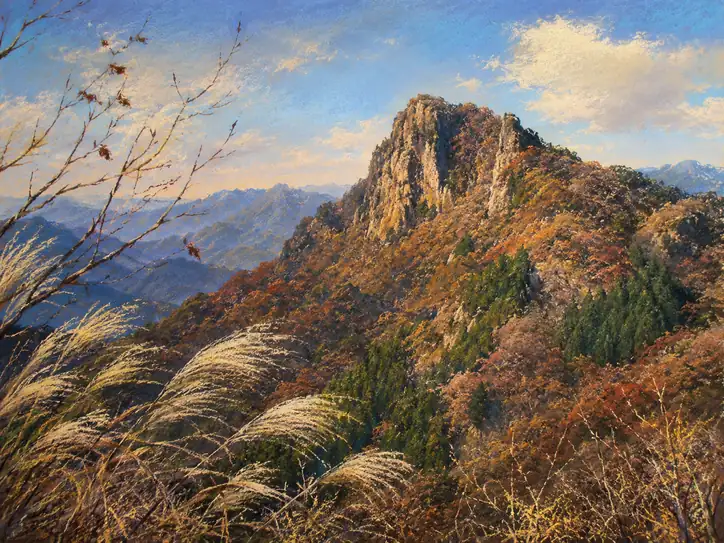 Eternal Heights, Fleeting Grace
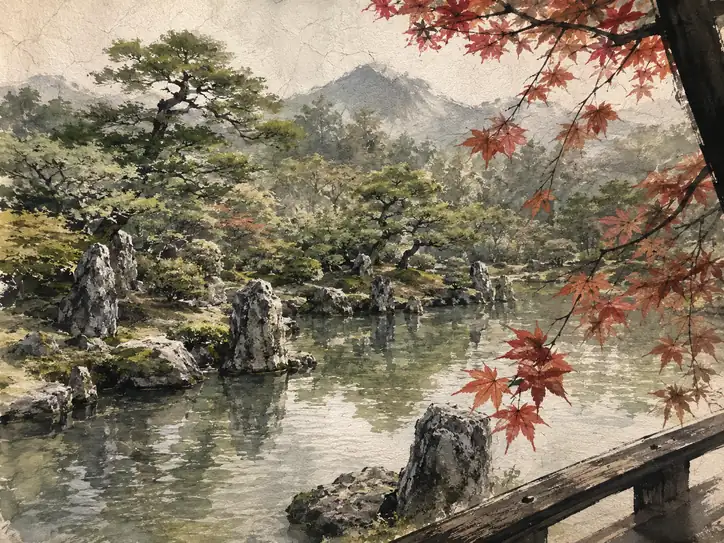 The Infinite Garden: Breath of the Autumn Mist
Similar Artworks
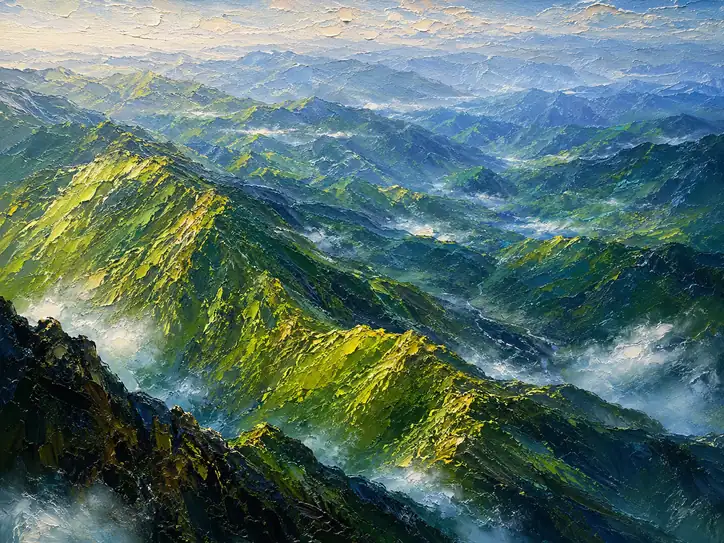 The Titan's Golden Crest
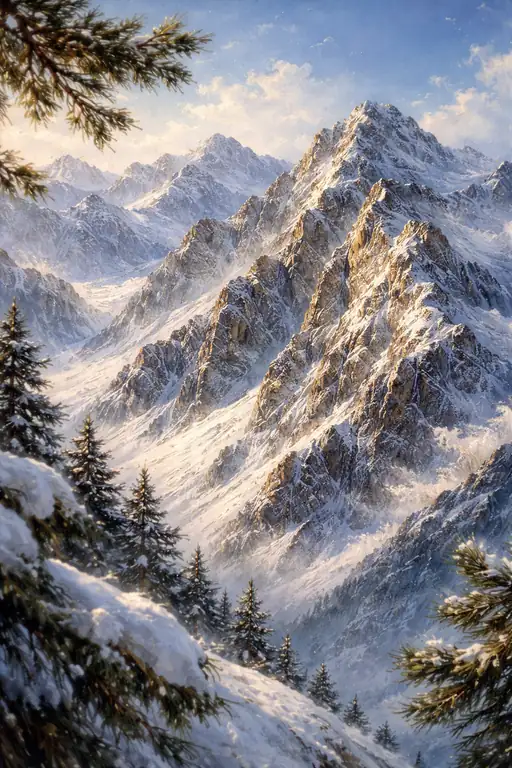 Sovereign of the Crystalline Summit
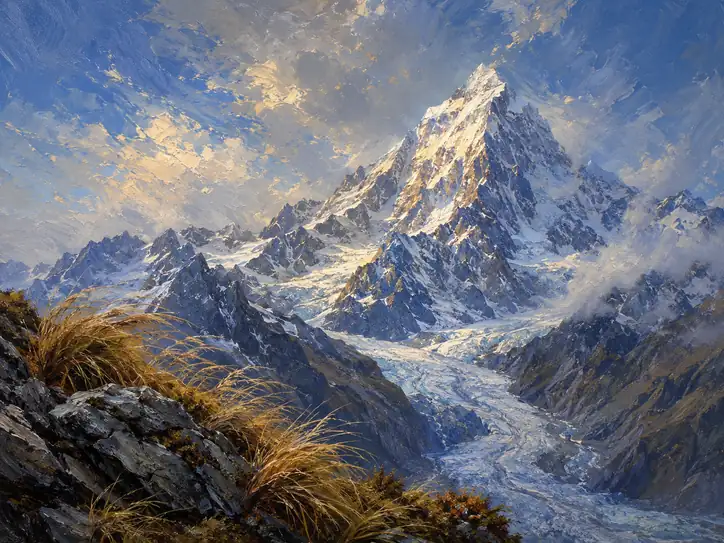 Eternal Crown of Gold and Ice
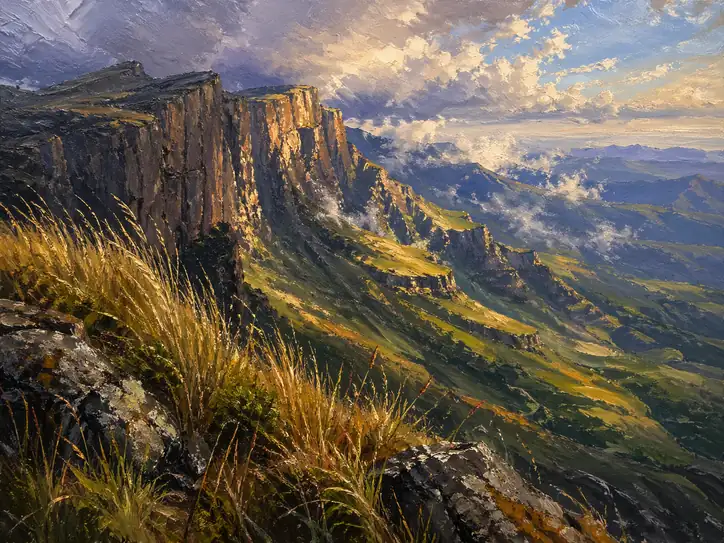 Eternal Guard of the Golden Heights
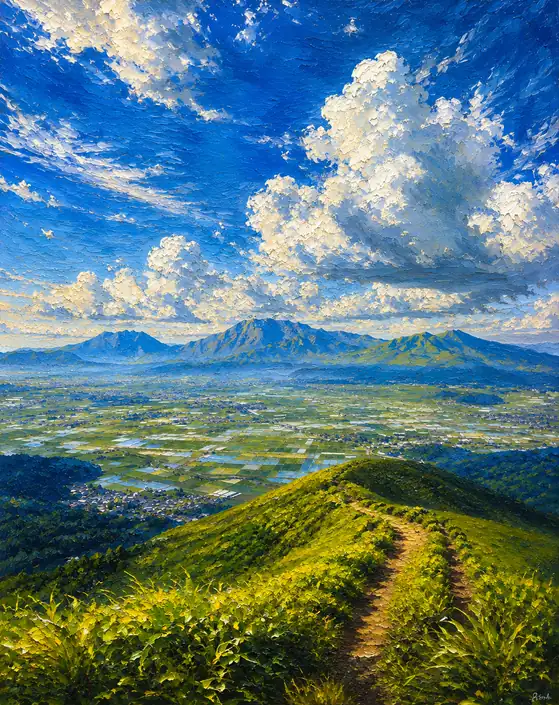 Impasto Horizon of the Caldera
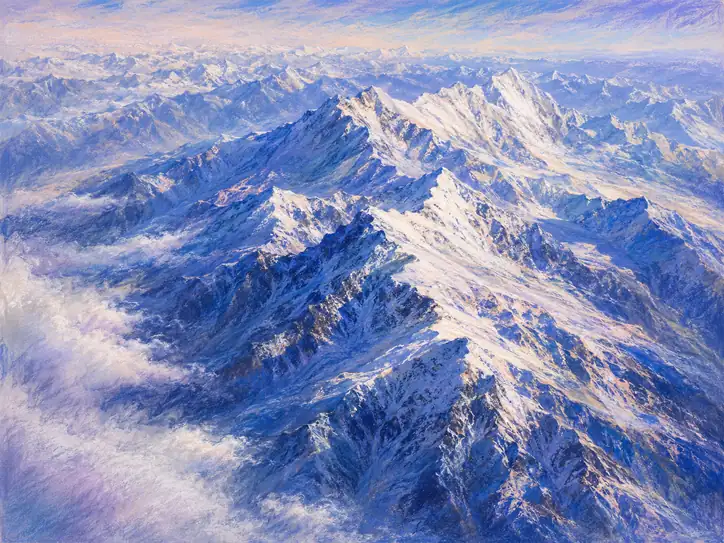 Soaring Over the Eternal Silence
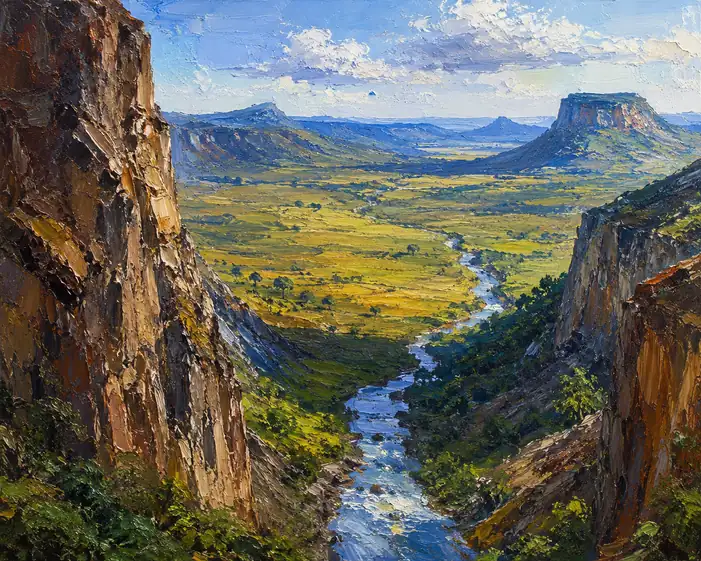 Corridor of the Ancient Earth
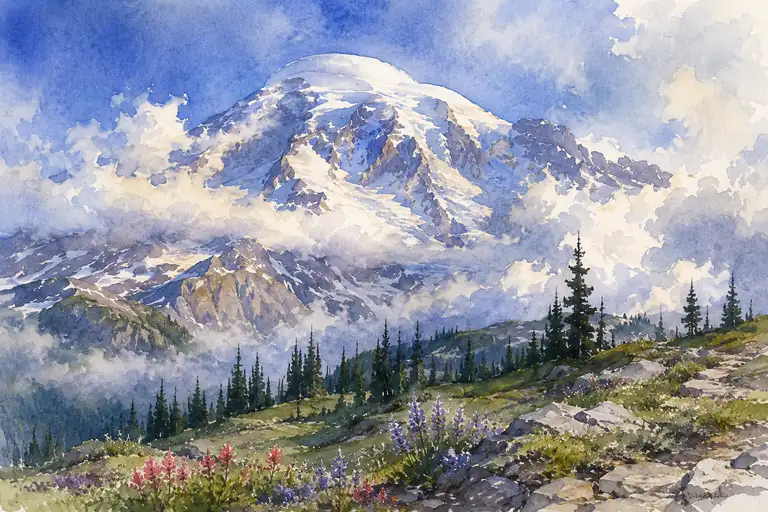 Where Flowers Gaze at Eternity
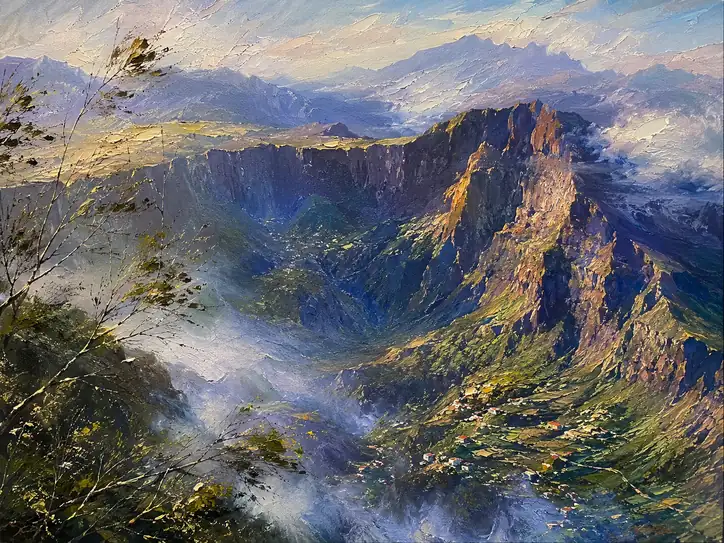 Watching the Mist Veil the Highlands
 Echoes from the Alpine Crest