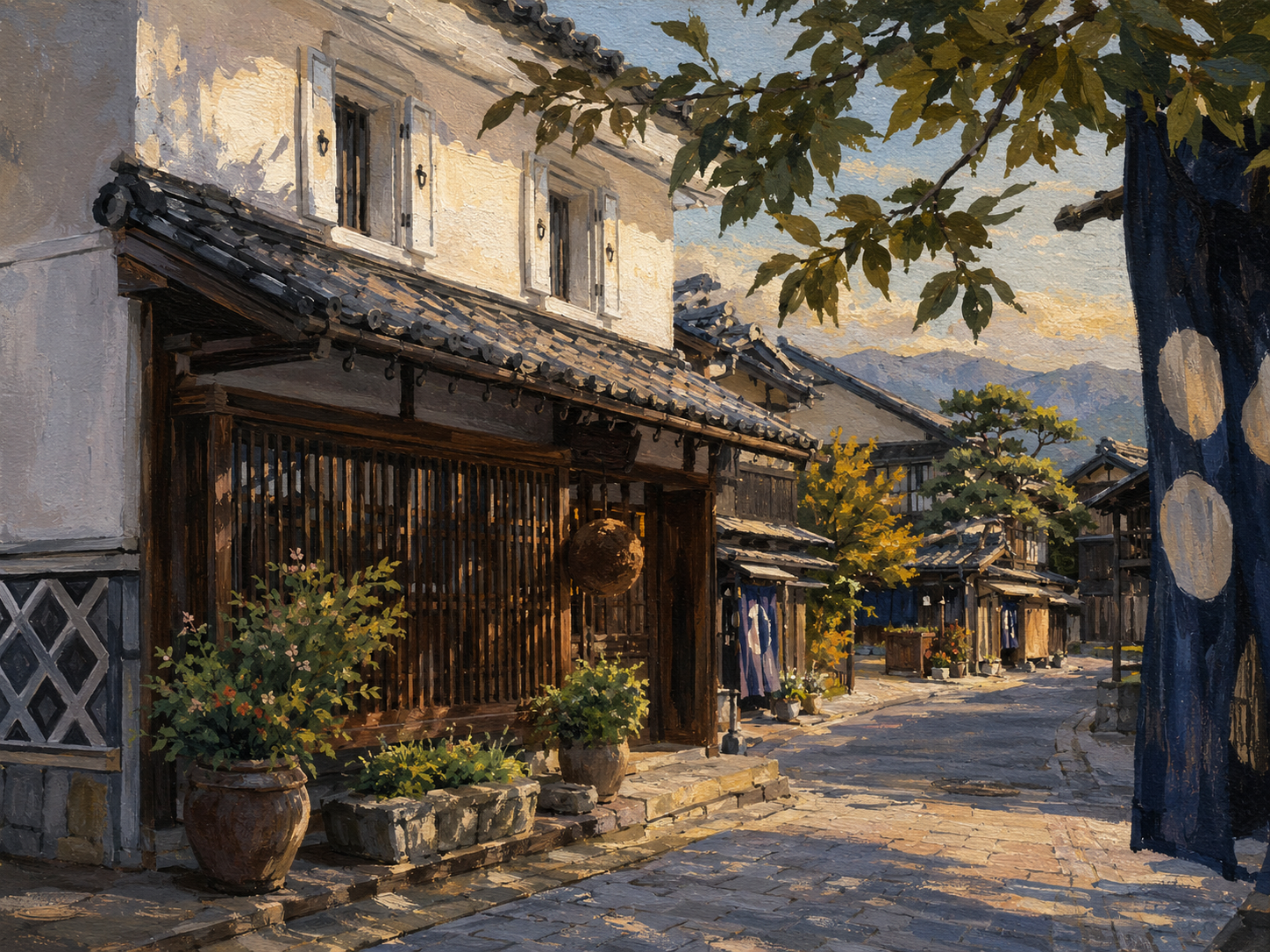
The Golden Hour in a Hidden Village
Critique
1. Introduction This evocative oil painting depicts a serene street scene in a traditional Japanese village, capturing the quiet beauty of historic architecture under a warm, late-afternoon sun. The composition is centered on a winding cobblestone path lined with old wooden houses and white-plastered buildings. The play of light and shadow creates a nostalgic atmosphere, inviting the viewer to step back in time. The artwork reflects a deep appreciation for the enduring character of traditional dwellings and the peaceful rhythms of village life. 2. Description The focus of the work is a two-story building on the left, featuring intricate wooden lattices and a tiled roof that catches the golden sunlight. To the right, a large indigo noren curtain with white circular patterns hangs prominently, partially framing the view of the street as it recedes toward distant blue mountains. Potted plants and vibrant greenery are placed carefully along the storefronts, adding a touch of natural life to the man-made environment. The sky is a pale, hazy blue, suggesting the soft light of a declining day in a high-altitude or mountainous region. 3. Analysis The artist employs a rich, impressionistic brushwork that emphasizes the varied textures of the plaster walls, wooden beams, and stone-paved street. A warm color palette of ochres, browns, and creams is balanced by the cool blues of the curtains and the distant peaks. Light is utilized as a dynamic element, casting long, dramatic shadows that define the structural volumes of the buildings. The perspective is handled skillfully, drawing the viewer’s eye along the gentle curve of the road and into the atmospheric depth of the village. 4. Interpretation and Evaluation This painting successfully captures the soul of a historic Japanese town through its masterful rendering of light and architectural detail. The juxtaposition of the solid, permanent buildings with the fleeting qualities of the evening sun creates a sense of transient beauty. Technical skill is evident in the nuanced handling of reflected light on the white walls and the complex patterns of the wooden lattices. The composition is both intimate and expansive, offering a balanced view that honors the heritage of the setting while celebrating its visual charm. 5. Conclusion By emphasizing the harmony between the built environment and the natural light, the painting offers a poignant meditation on the passage of time. The initial impression of a quiet, empty street gradually gives way to an appreciation for the craftsmanship and history embedded in each structure. This piece stands as a compelling tribute to the aesthetic values of traditional Japanese urban design and the serene quality of its landscapes. The final effect is one of profound tranquility and a lingering sense of nostalgia for a slower, more deliberate way of life.
Same Subcategory
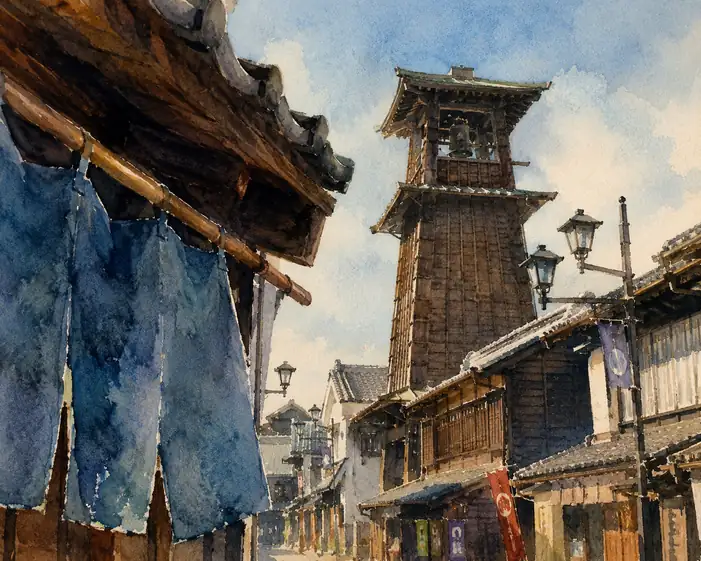 Resonance of a Timeless Afternoon
Similar Artworks
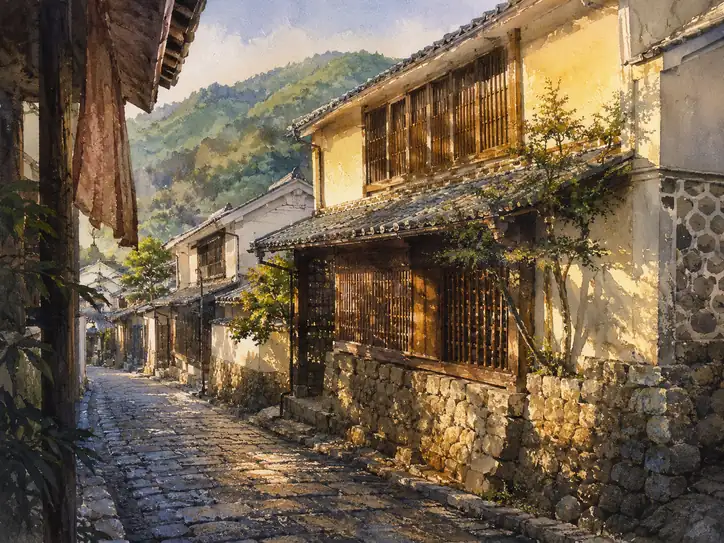 Sun-Drenched Memories of the Old Street
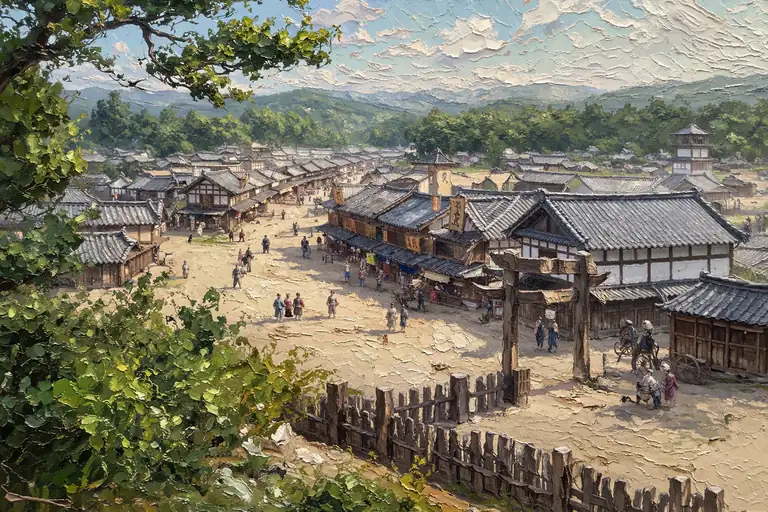 Pulse of the Ancient Path
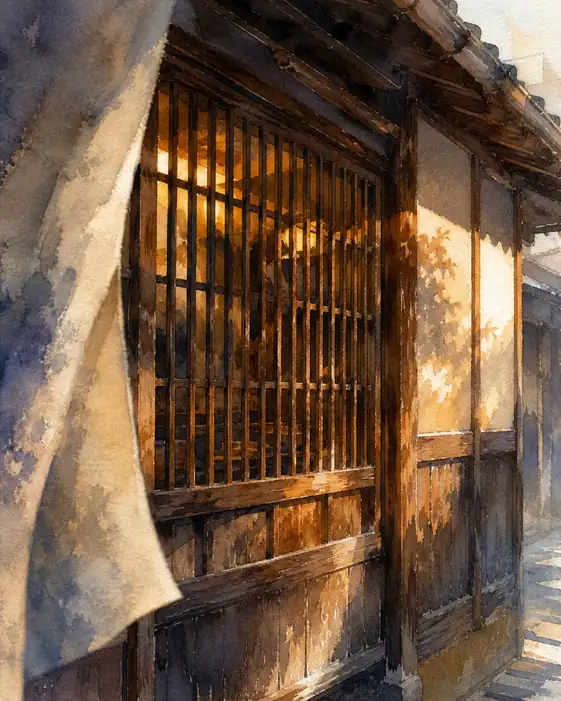 Shadows Dancing on the Lattice
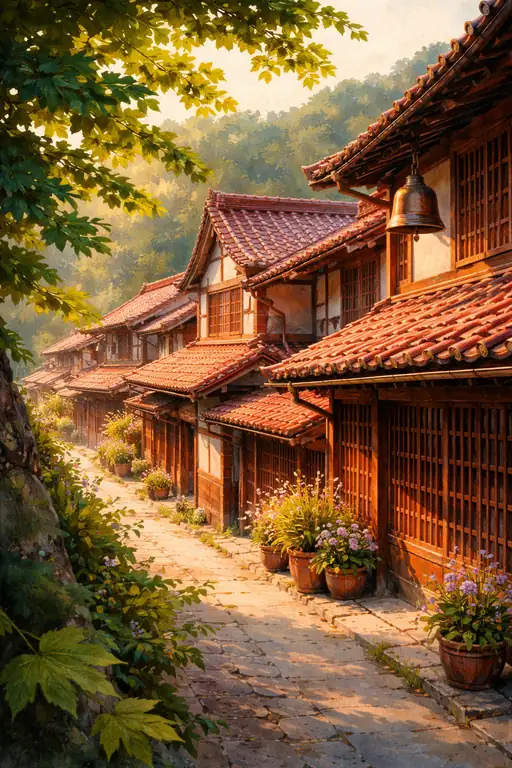 Nostalgia on the Stone Path
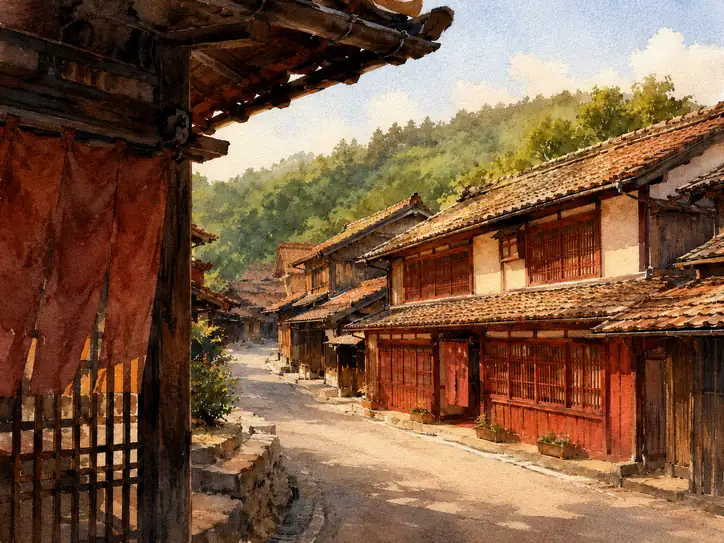 Golden Shadows on the Post Town
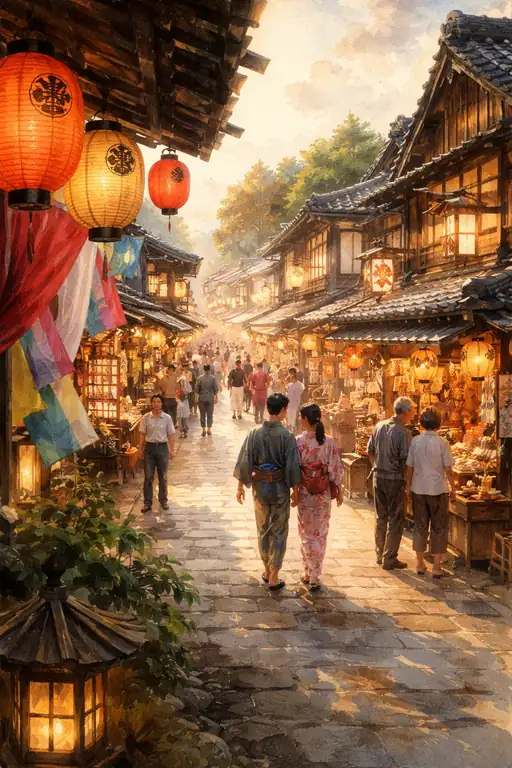 Lanterns at Twilight
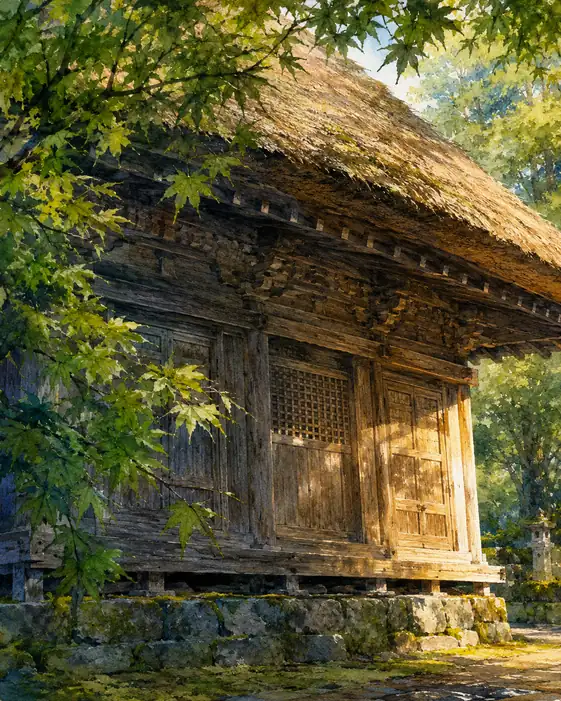 Memory of the Sun-Drenched Leaves
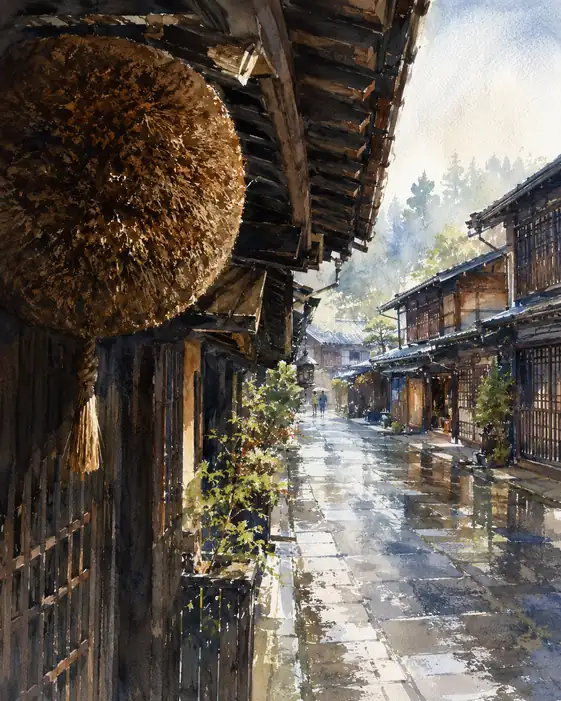 Memory Reflected in the Post-Rain Stone
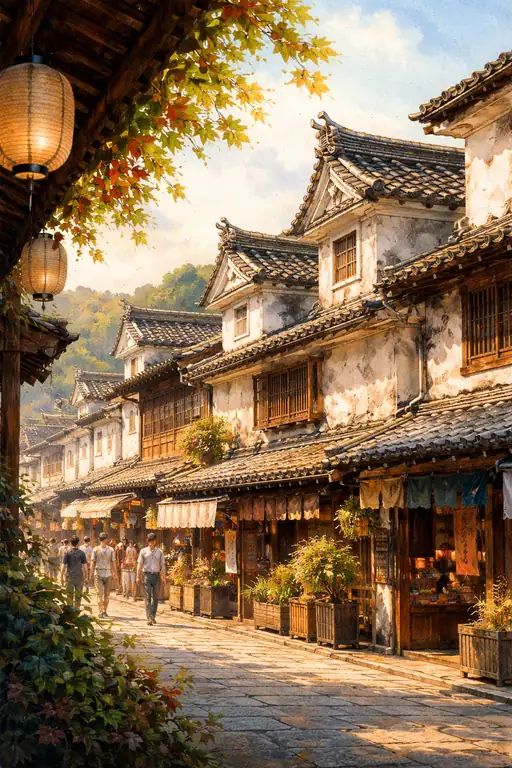 Sunset Glow on the Ancient Road
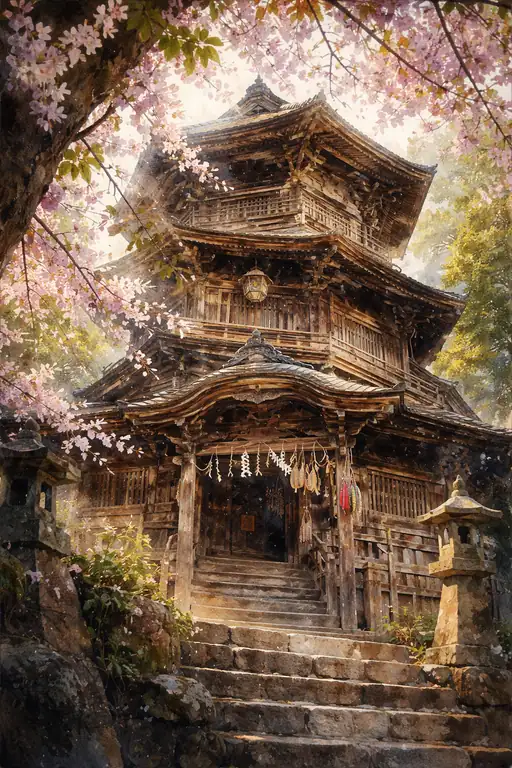 Spring's Quiet Benediction