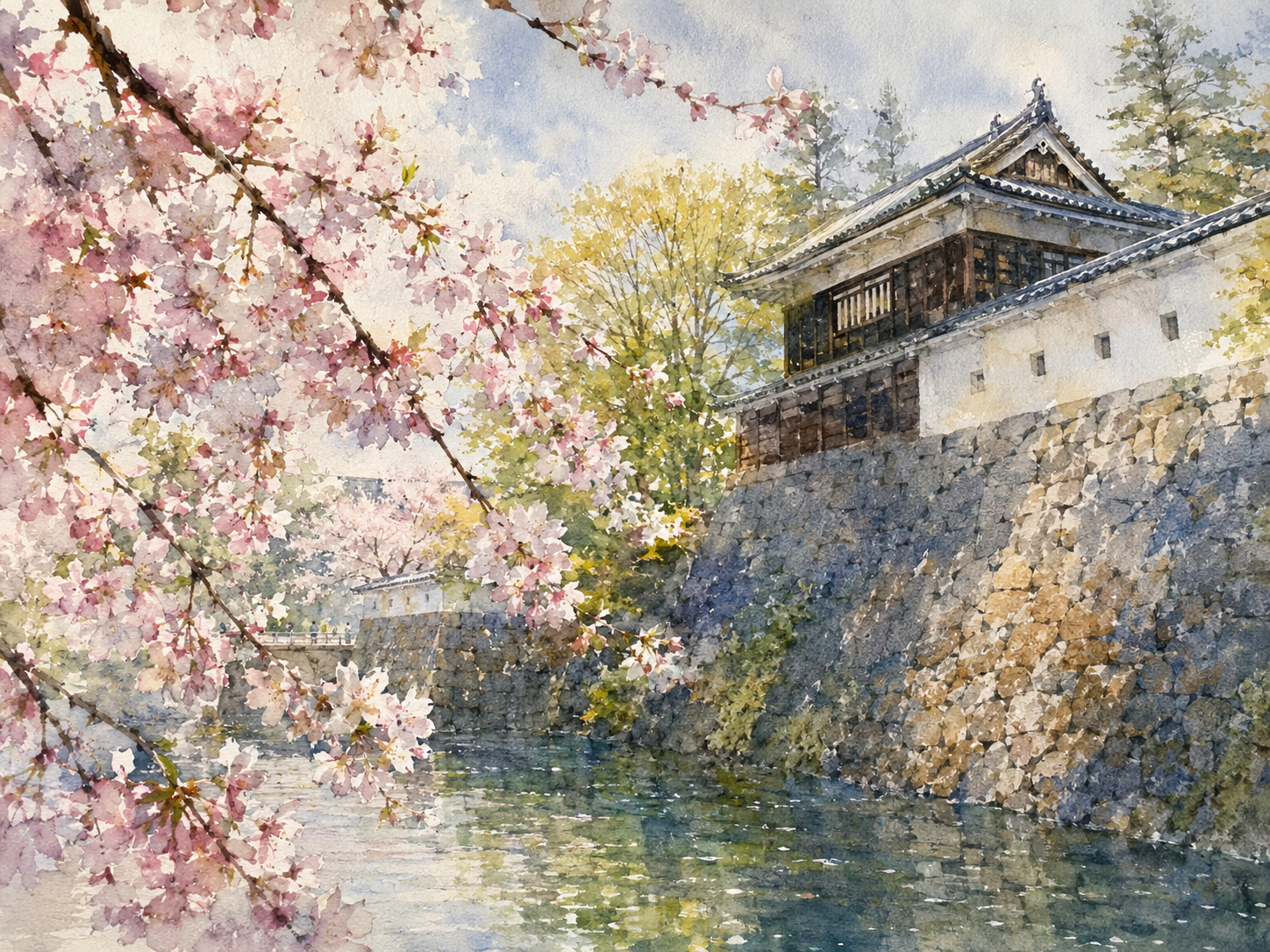
Spring's Breath Upon the Ancient Keep
Critique
1. Introduction This watercolor painting presents a serene landscape featuring a Japanese castle surrounded by blooming cherry blossoms in full splendor. From the left, large branches of sakura extend gracefully toward the center, acting as a vibrant frame that heralds the arrival of spring. The work harmonizes historic architecture with natural beauty, capturing a quintessential scene of Japanese tradition. 2. Description On the right, a wooden turret stands firmly atop a massive stone wall. The contrast between the white walls and dark timber framing is rendered with precision, while the rooflines blend into the lush greenery. In the foreground, a quiet moat flows calmly, its surface mirroring the pink petals and structural silhouettes through soft, atmospheric watercolor washes that suggest a tranquil environment. 3. Analysis The color palette is a sophisticated blend of pale pinks for the blossoms, contrasted with the deep browns of the castle and the variegated greys of the stonework. Technically, the artist employs wet-on-wet techniques to suggest the diffused light of a spring day. The delicate brushwork used for the petals contrasts effectively with the textured strokes that define the rugged surface of the stone fortifications. 4. Interpretation and Evaluation By juxtaposing the ephemeral cherry blossoms with the enduring castle, the work explores themes of transience and permanence. Technically, the rendering of light is exceptionally handled, showing mastery in the subtle gradations found in the moat's reflections. While the subject is classic, the impeccable composition and refined sense of color elevate the piece into a profound and contemplative sensory experience. 5. Conclusion Overall, this is a masterful watercolor that utilizes the medium's transparent qualities to create a sense of clarity. While the initial attraction lies in the brilliant blossoms, a closer inspection reveals the solid structural integrity of the castle that anchors the entire scene. It is an accomplished landscape that pays sincere tribute to the timeless aesthetics of Japanese nature and architecture.
Same Subcategory
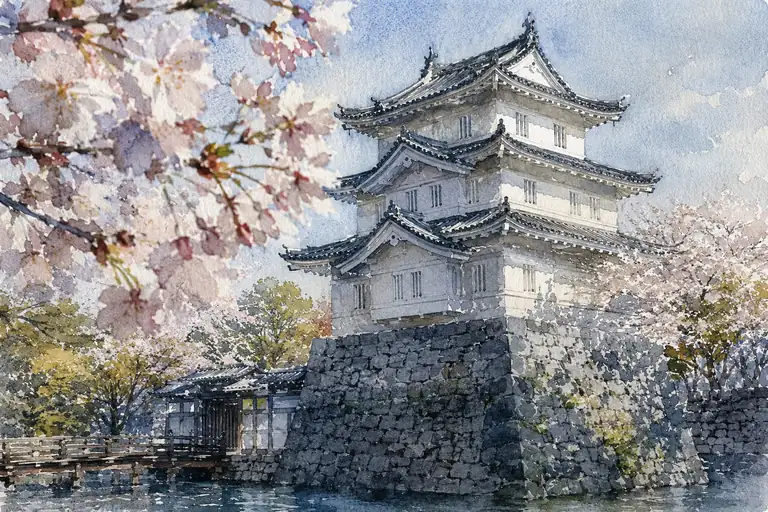 The White Fortress in Spring's Embrace
Similar Artworks
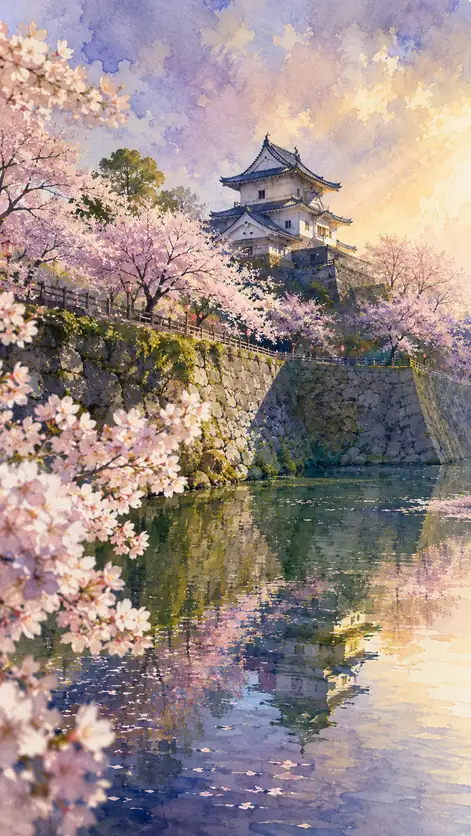 For One Spring, the Walls Learned Tenderness
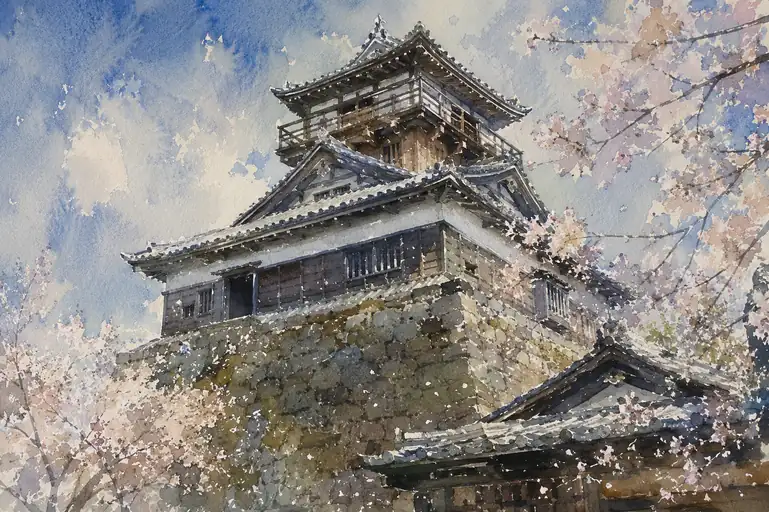 Eternal Stones, Dancing Petals
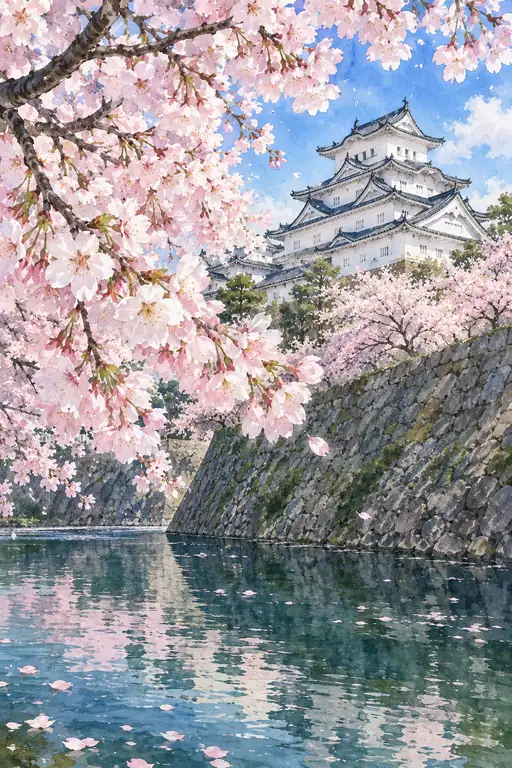 Spring Bloom over the Castle Moat
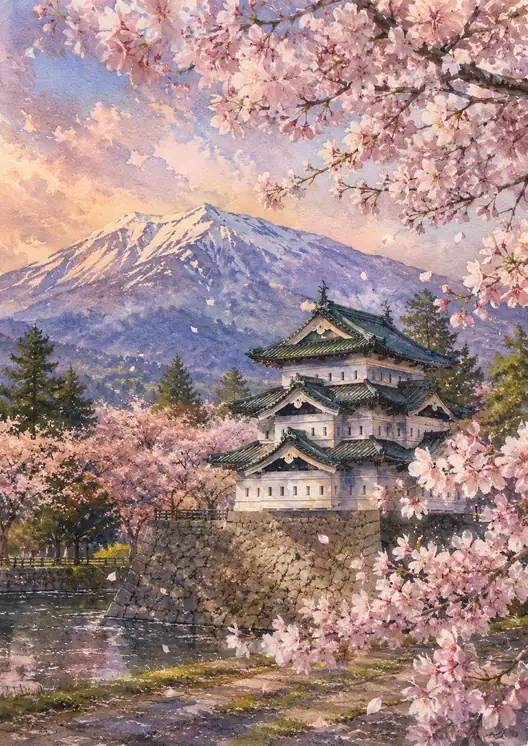 Eternal Keep, Fleeting Sakura
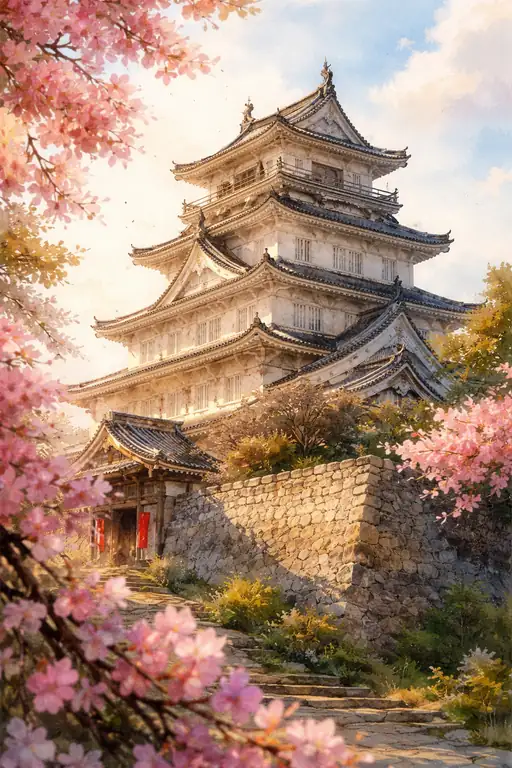 A Fortress of Petals: Harmony in Stone and Bloom
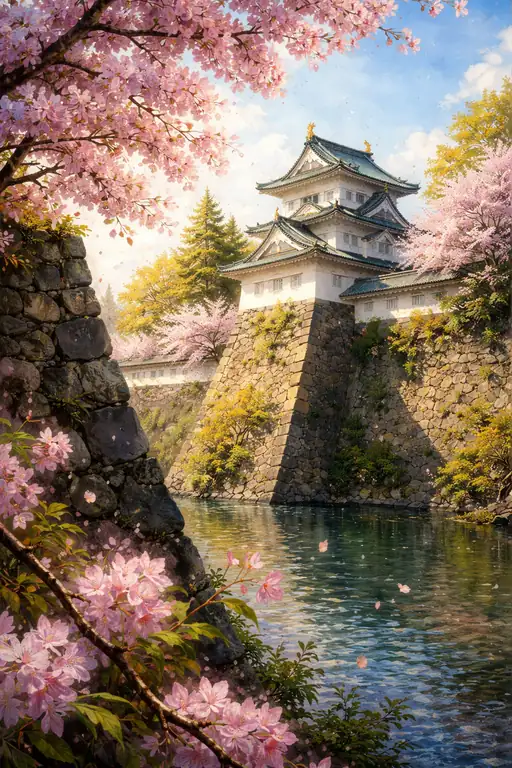 The Silver Castle and Blossoms Unfolding on the Water
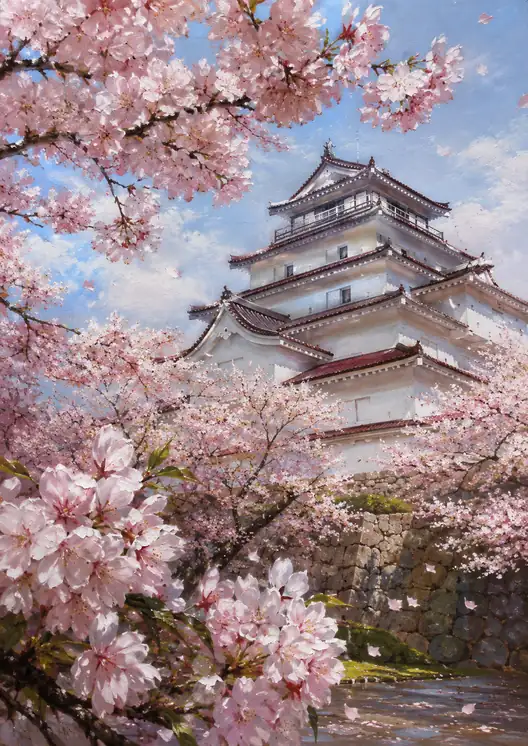 Vernal Majesty of the White Keep
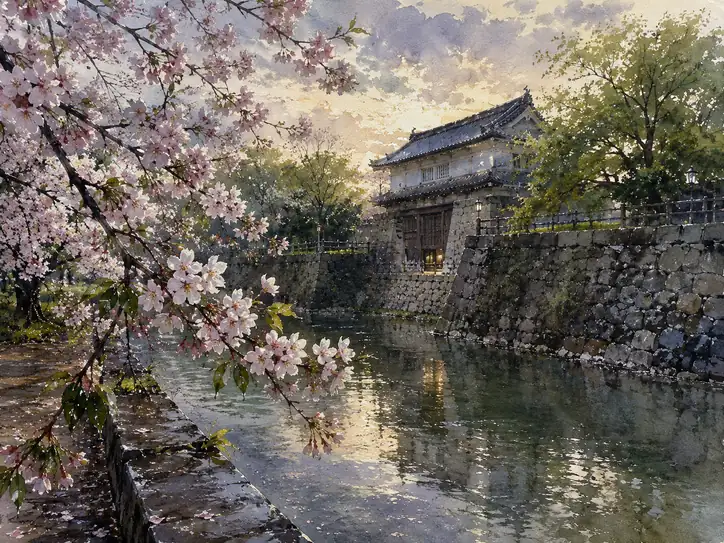 Eternal Spring at the Castle Moat
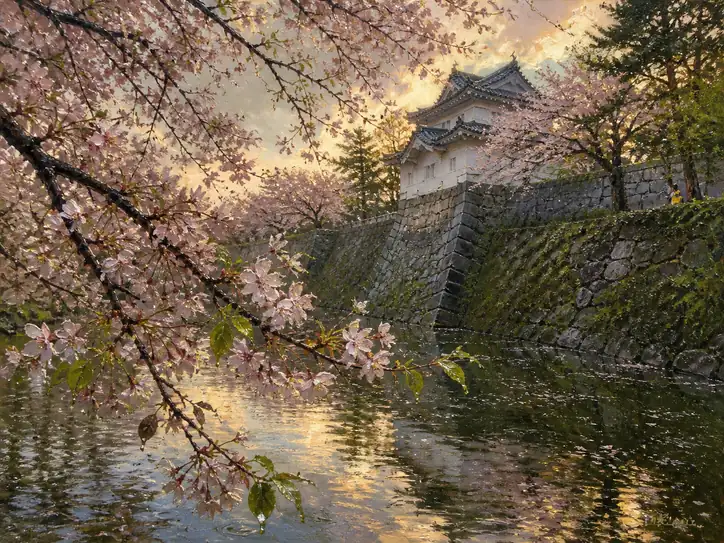 Spring Sunset at the Castle Moat
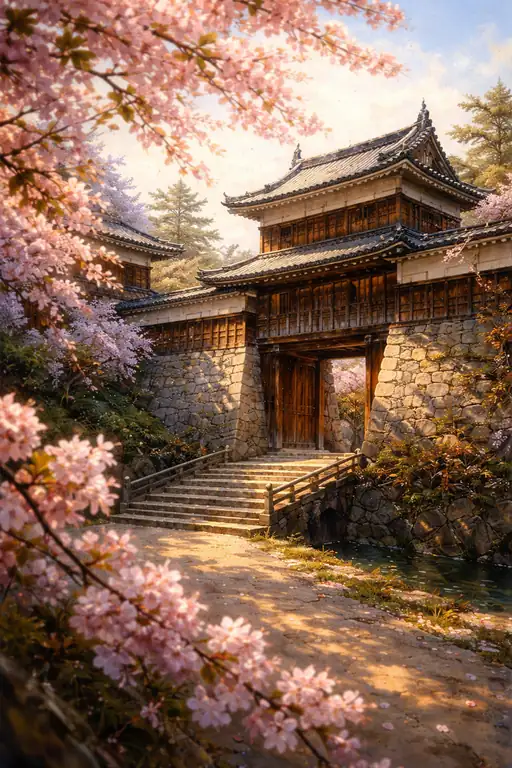 Spring's Gentle Embrace