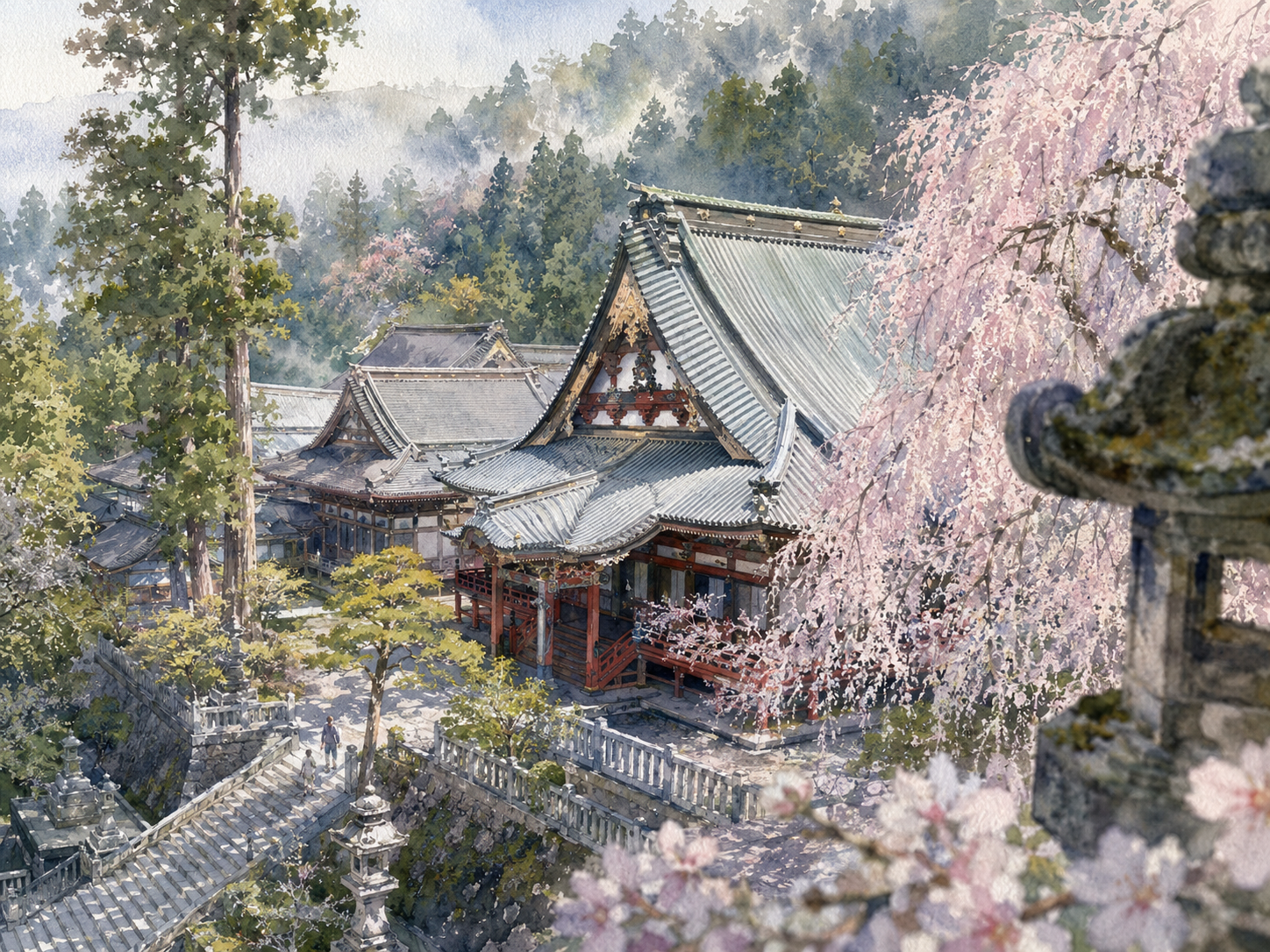
Whispers of the Weeping Sakura
Critique
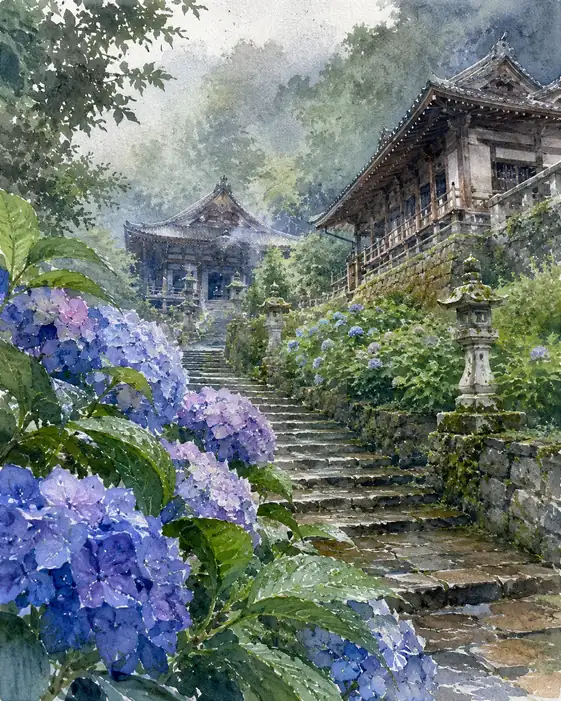
1. Introduction This delicate watercolor painting portrays a traditional Japanese temple complex during the height of the cherry blossom season. The scene is dominated by the ethereal presence of a large weeping cherry tree, its cascading pink blossoms contrasting beautifully with the solid, grey-tiled roofs of the temple buildings. The work captures a moment of spiritual tranquility and seasonal beauty, characteristic of the Japanese aesthetic of "mono no aware" or a sensitivity to the ephemeral. The artist employs soft washes and fine lines to create a sense of atmospheric depth and intricate detail. 2. Description The composition features several temple structures with traditional curved roofs, nestled among lush, misty mountains. A set of stone stairs with a stone railing leads up from the lower left, where two small figures can be seen ascending. A stone lantern stands prominently in the foreground on the right, partially obscured by a foreground branch of cherry blossoms, which adds a layer of depth to the scene. The main temple building is positioned centrally, its dark wooden framework and red accents providing a structured counterpoint to the organic forms of the surrounding nature. 3. Analysis The artist uses a high-angle perspective to provide a comprehensive view of the temple grounds and the surrounding landscape. The color palette is composed of muted, harmonious tones, with the pale pink of the cherry blossoms acting as the primary focal point. The use of watercolor washes effectively represents the misty atmosphere of the mountains and the soft, diffused light of a spring day. Fine brushwork is evident in the rendering of the individual blossoms and the detailed texture of the roof tiles and stone lanterns, demonstrating a high level of technical control over the medium. 4. Interpretation and Evaluation This artwork successfully conveys the serene and contemplative atmosphere of a sacred site in spring. The technical proficiency is shown in the artist's ability to balance the complex architectural details with the delicate, transient nature of the blossoms. The inclusion of the small figures on the stairs adds a human element to the scene, suggesting a journey or pilgrimage. The overall composition is well-balanced, with the heavy forms of the stone and wood anchored by the lightness of the flowers and the mist. It is a masterful interpretation of a classic Japanese subject. 5. Conclusion In conclusion, the painting offers a poetic and visually stunning depiction of a Japanese temple in spring. The initial impression of delicate beauty is deepened by the artist's skillful handling of watercolor and their keen eye for detail and atmosphere. The work serves as an evocative reminder of the harmony between human architecture and the natural cycle of the seasons. It is a sophisticated and emotionally resonant piece that demonstrates a deep appreciation for traditional Japanese themes and techniques. The final result is a balanced and tranquil landscape.
Same Subcategory
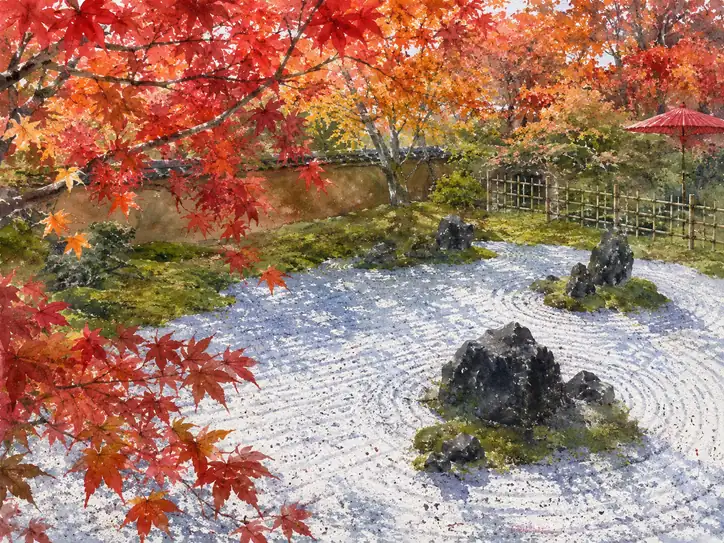 Zen Garden, Where Maples and Sand Ripples Weave Silence
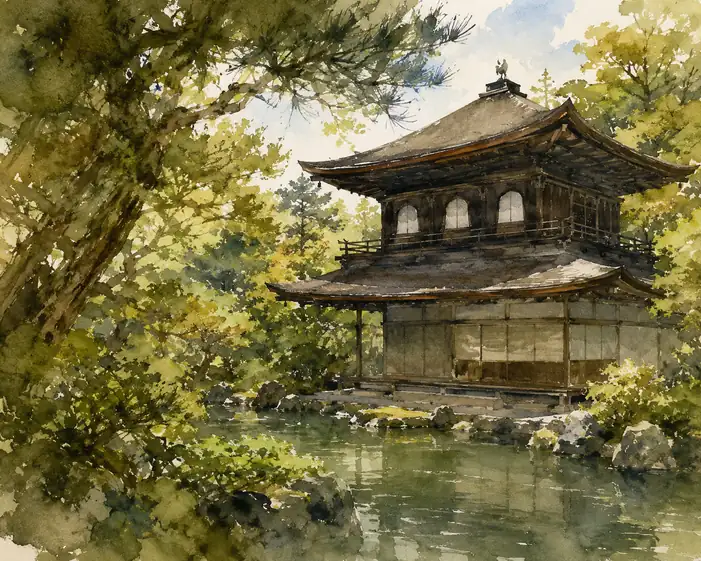 Echoes of Wabi-Sabi: The Silver Mirror
Similar Artworks
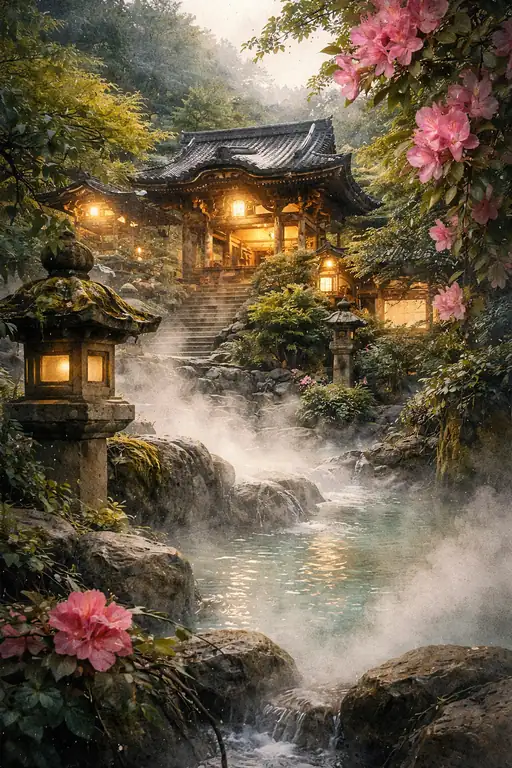 Misty Sanctuary Amidst the Woods
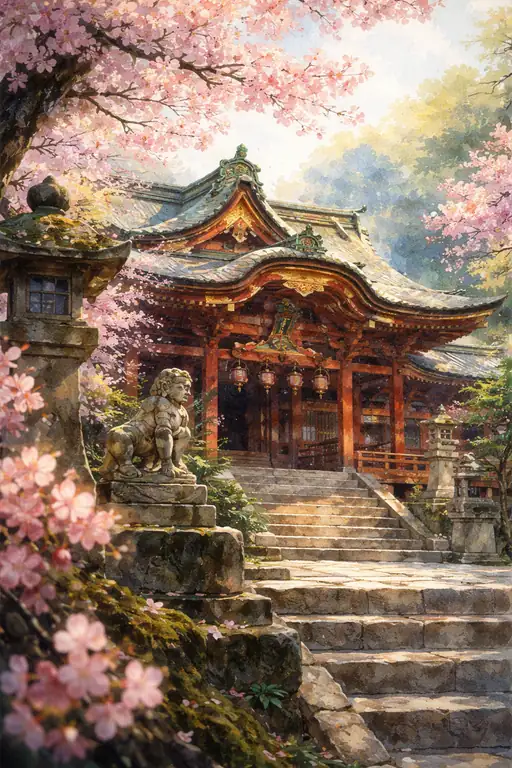 Whispers of the Spring Sanctuary
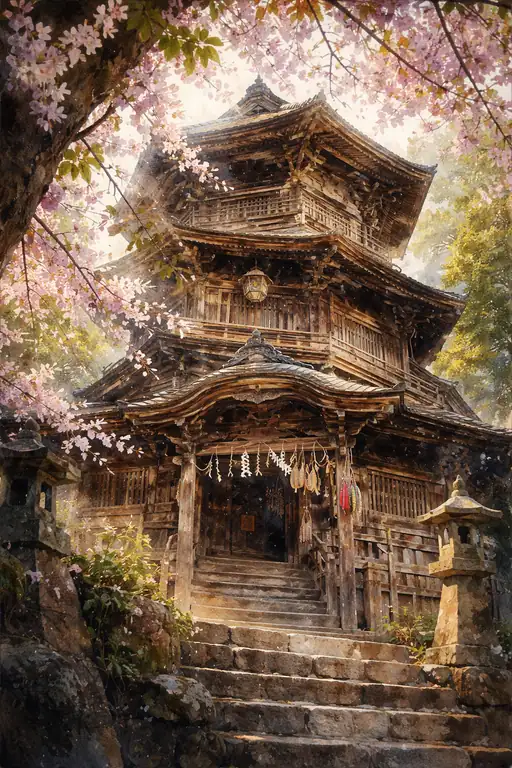 Spring's Quiet Benediction
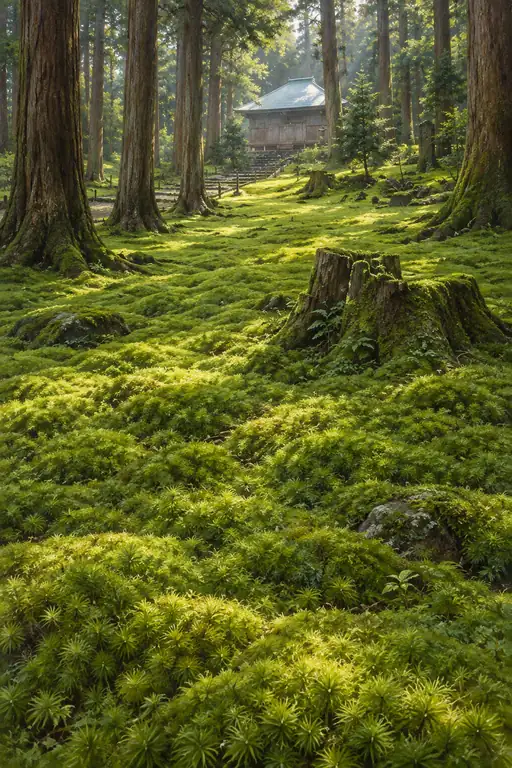 Prayer Among a Thousand Moss Stars
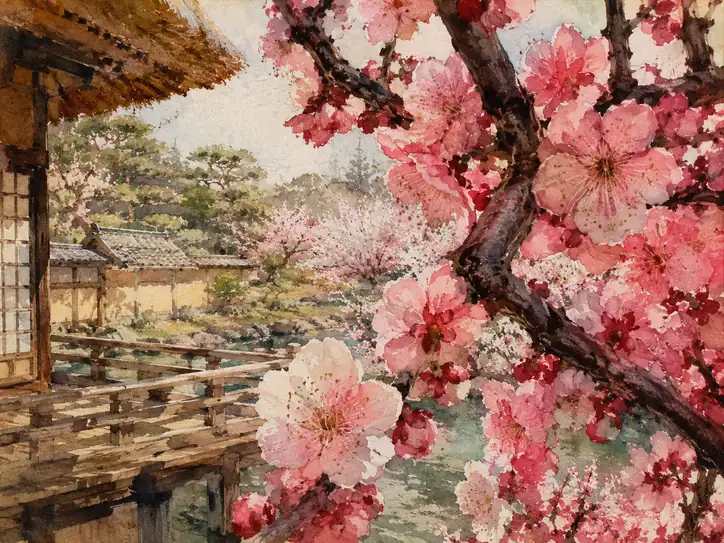 Where the Spring Wind Pauses
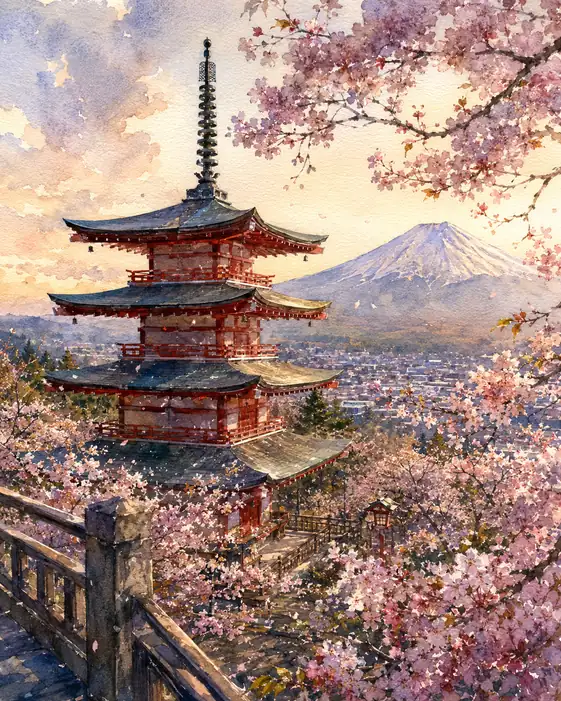 Echoes of the Gilded Spring
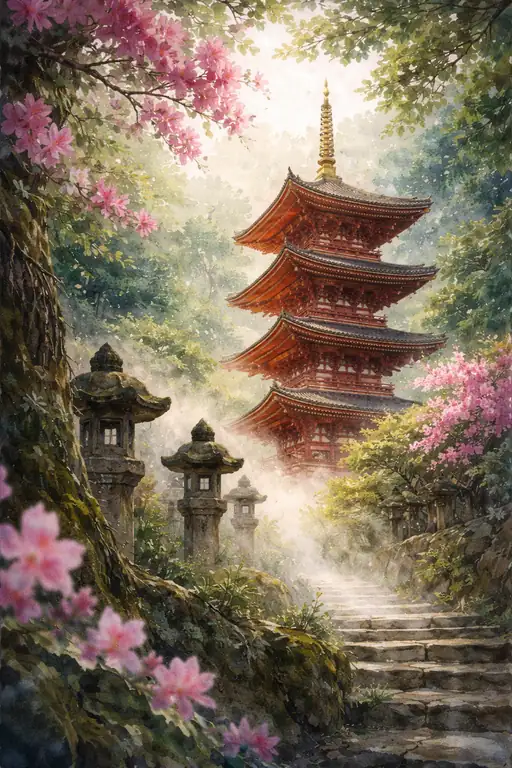 Sacred Pagoda Rising from the Morning Mist
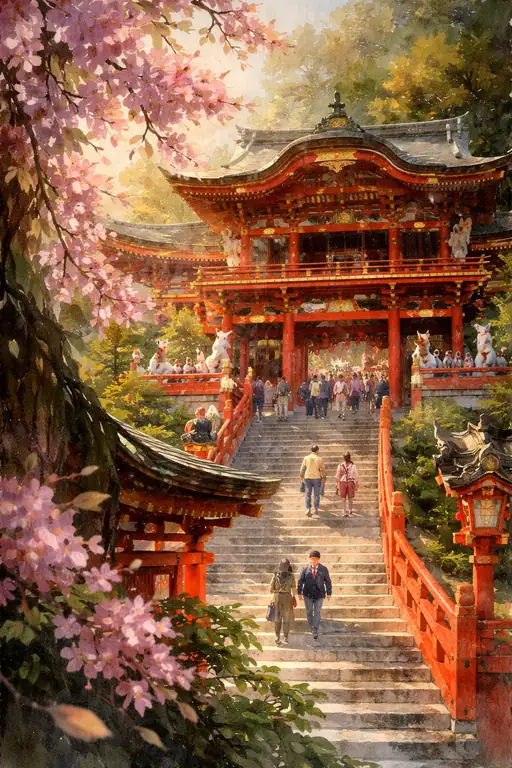 Vermillion Steps to the Spring Heavens
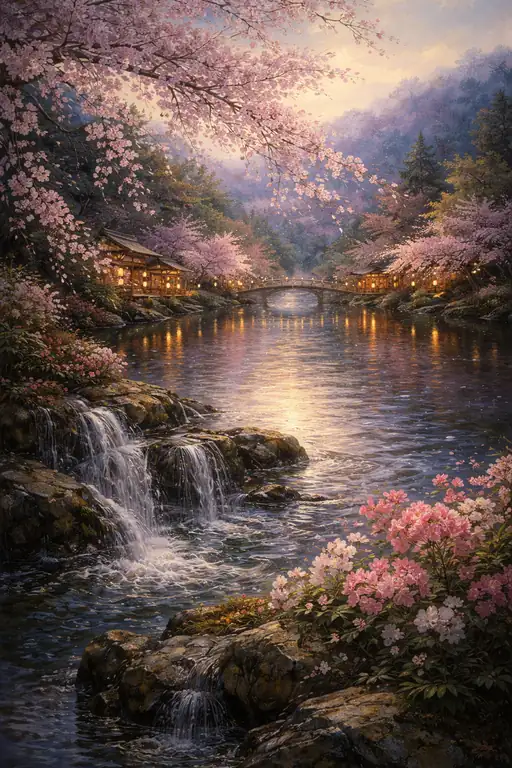 Whispers of the Sakura Moon
 Lullaby in the Azure Rain