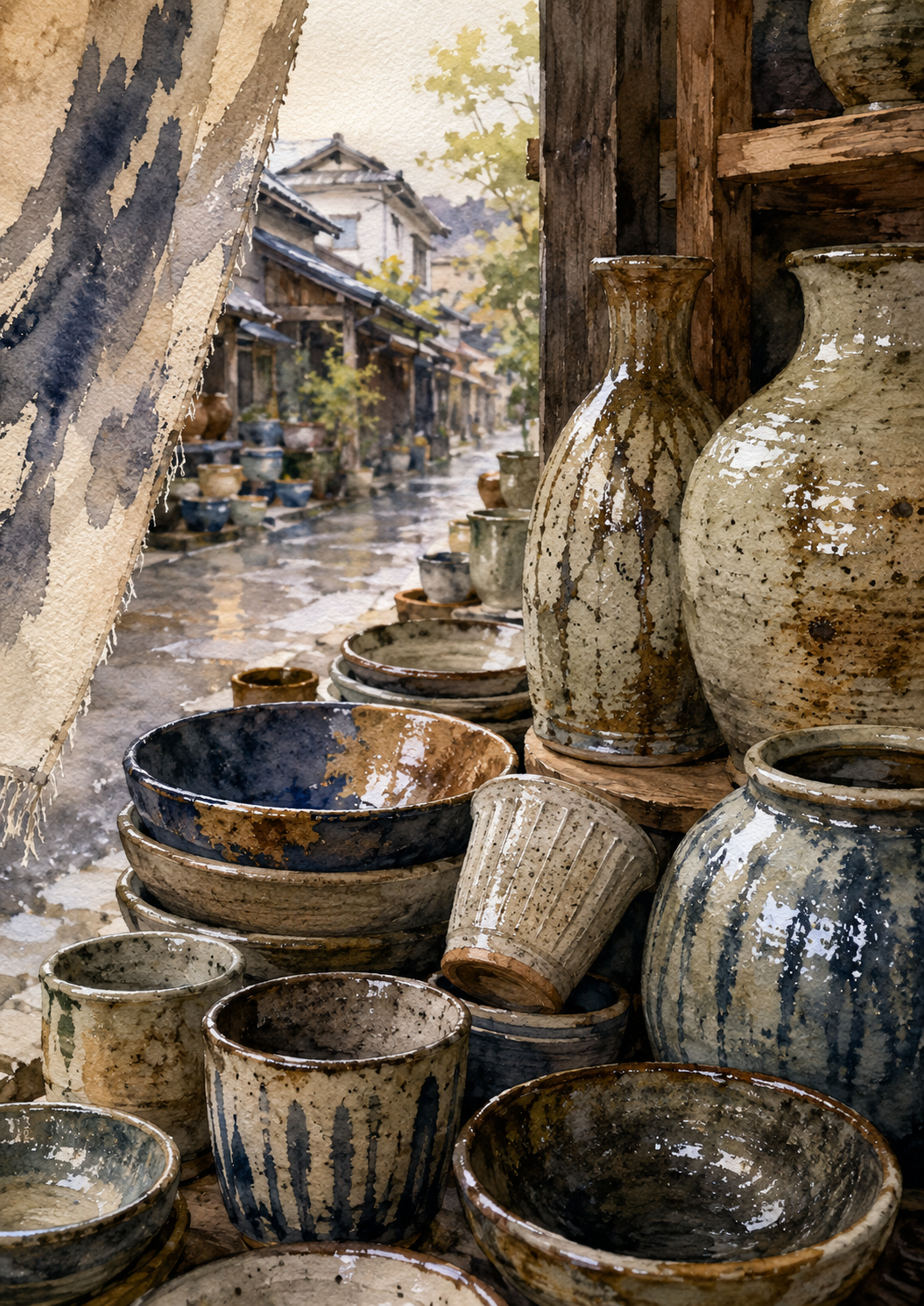
Reflections of Craft in the Rain
Critique
1. Introduction This artwork presents a lyrical view of a ceramics shop located in a historical district, capturing the rustic charm of traditional craftsmanship. By juxtaposing the tactile reality of stacked pottery in the foreground with a misty, rain-slicked street in the background, the painting evokes a sense of nostalgia and enduring cultural heritage. The artist invites the viewer to appreciate the quiet dignity of handmade objects within their social and environmental context. 2. Description The foreground is filled with an array of earthenware, including large vases, bowls, and cups, each displaying unique glaze patterns and textures. Detailed brushwork captures the intricate crazing and the organic flow of blue and amber glazes on the clay surfaces. A weathered, stained fabric hangs on the left, framing the scene with a sense of age. In the background, a narrow street lined with traditional houses stretches into the distance, rendered with a soft focus that emphasizes the immediacy of the ceramics. 3. Analysis The artist utilizes a shallow depth of field to draw the viewer’s attention to the material qualities of the pottery. The color palette is dominated by earthy browns and deep indigo blues, reflecting the natural minerals used in traditional glazes. Watercolor techniques such as bleeding and layering are masterfully employed to suggest the weight of the clay and the shimmering reflections on the wet cobblestones. The subtle highlights on the ceramic rims effectively convey the humid atmosphere of the setting. 4. Interpretation and Evaluation This piece celebrates the beauty of imperfection and the passage of time, themes often associated with the aesthetic of wabi-sabi. The realistic rendering of the chipped textures and worn fabric suggests a world that is lived-in and deeply connected to its past. Technically, the contrast between the sharp details of the pottery and the atmospheric blur of the background demonstrates exceptional control over the medium. The work succeeds in transforming a mundane shopfront into a profound meditation on history and craft. 5. Conclusion Initially, the viewer is impressed by the physical presence of the ceramics, but further observation reveals the quiet narrative of the village beyond. This painting is a testament to the artist's ability to capture both the tangible weight of objects and the ethereal quality of a place, resulting in a compelling and harmonious composition. The artist has achieved a remarkable level of technical proficiency, creating an evocative image that resonates with a sense of quiet wonder.
Same Subcategory
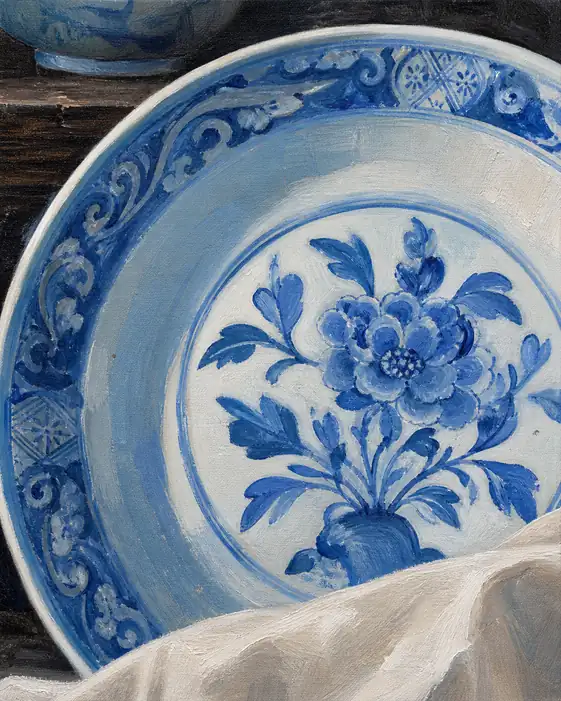 Resonance of the Blue Flower
Similar Artworks
 Stories Written in Cobalt Blue
 Light Dwelling in the Seams
 Basin of Quiet Glaze
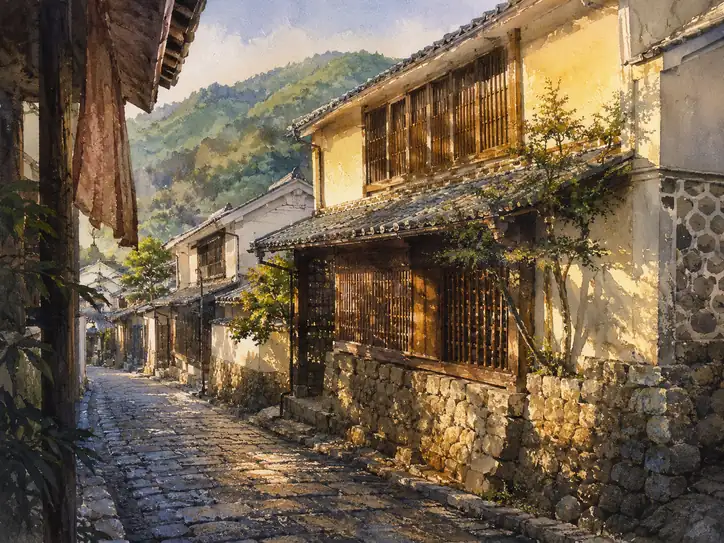 Sun-Drenched Memories of the Old Street
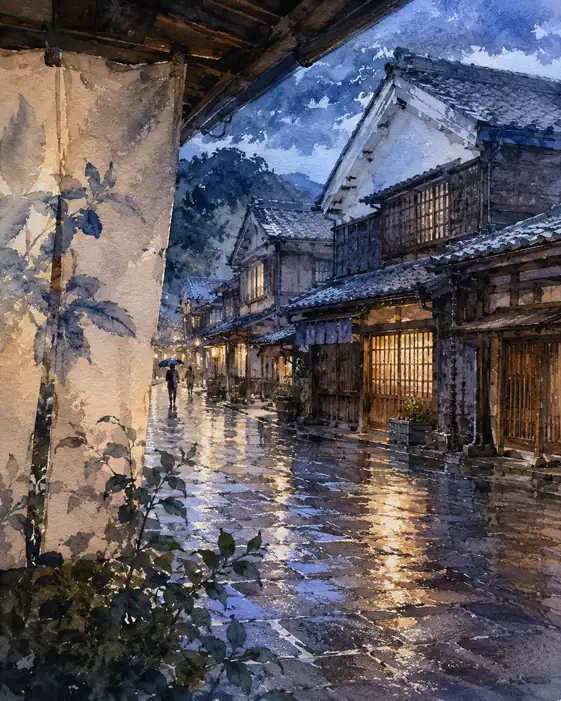 Light Dwelling in the Rain
 Vessels of Pale Solitude
 Wildflower Bouquet on the Sunlit Alley Chairs
 Memory Reflected in the Post-Rain Stone
 Vessel of Boundless Blue
 Opulence in Cobalt