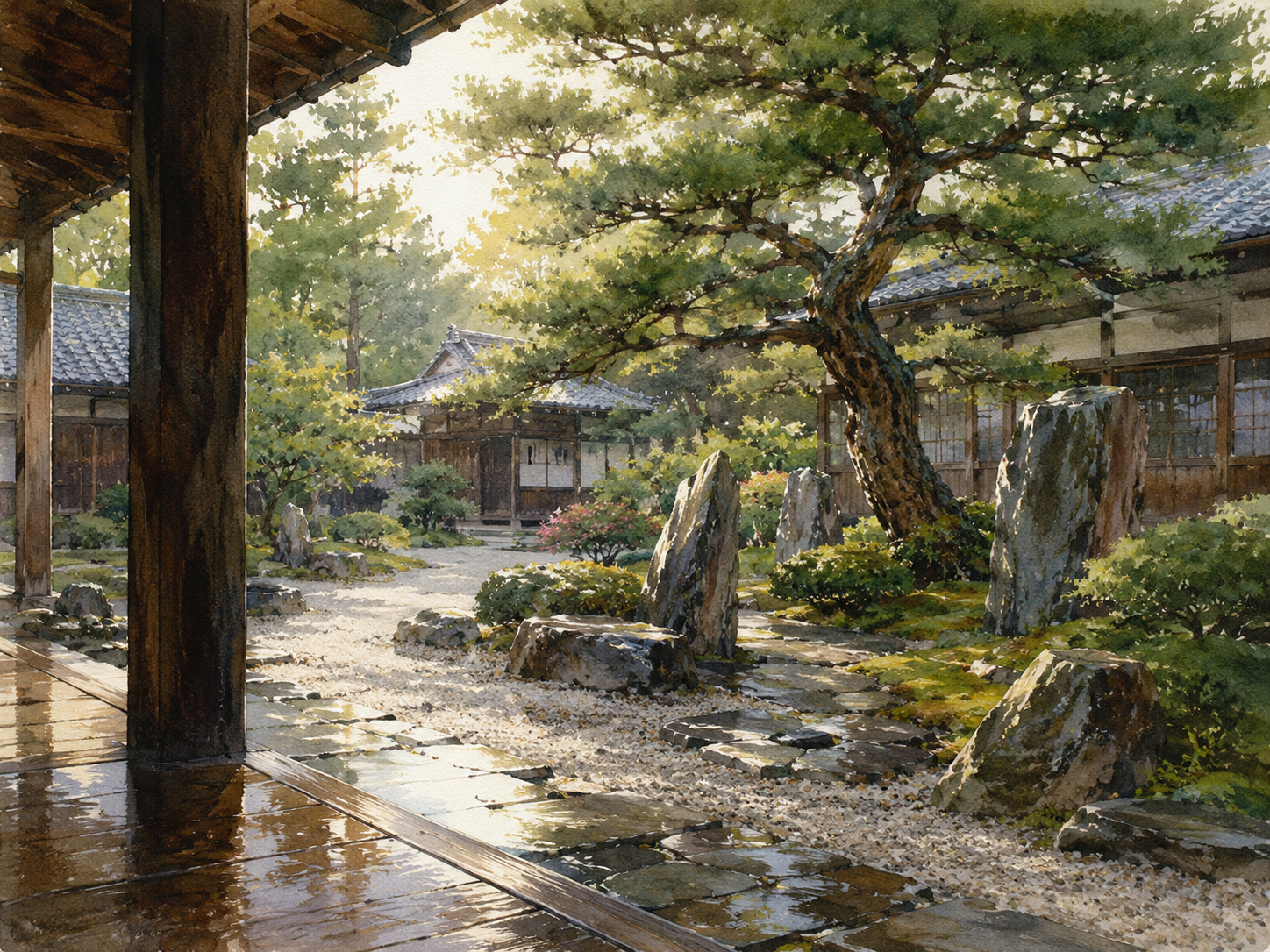
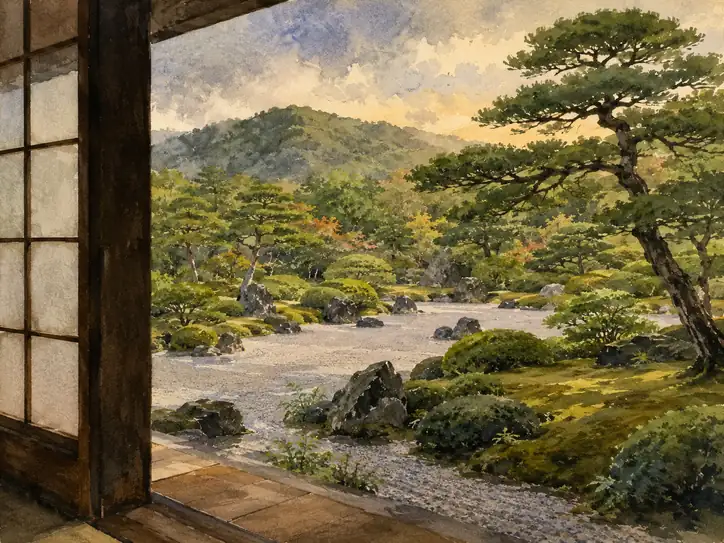
Reflections of Tranquility: Sunlight on the Wet Engawa
Critique
1. Introduction This artwork captures the serene beauty of a traditional Japanese garden, viewed from the vantage point of a wooden veranda. The painting masterfully illustrates the harmony between nature and architecture, offering a glimpse into a tranquil space where time seems to stand still. The artist has created an immersive experience that reflects a deep appreciation for the aesthetic principles of balance and tranquility inherent in Japanese design. 2. Description In the foreground, a polished wooden floor reflects the garden like a mirror, suggesting a recent rainfall or meticulous care. A magnificent, sprawling pine tree dominates the mid-ground, surrounded by carefully placed ornamental stones and mossy patches. The garden floor is a composition of white gravel and stepping stones, leading toward traditional buildings with tiled roofs in the background. Sunlight filters through the lush canopy, creating a dappled pattern of light and shadow across the entire scene. 3. Analysis The dark vertical pillar on the left serves as a framing device, providing structural stability and enhancing the sense of depth. The color palette is a rich tapestry of vibrant greens, earthy browns, and cool greys, all unified by the warm, golden glow of the sunlight. The artist's use of watercolor textures allows for a delicate transition between light and shadow, particularly evident in the "komorebi" or filtered light effect. This interplay of light creates a palpable sense of atmosphere and humidity. 4. Interpretation and Evaluation The painting succeeds in evoking a sense of meditative peace, characteristic of Zen-inspired landscapes. The depiction of the wet veranda is a brilliant touch that adds visual complexity and depth to the composition. The technical execution of the pine needles and the textured stone surfaces shows a high degree of skill and observation. By focusing on the ephemeral qualities of light, the work elevates a static garden into a dynamic, living environment that resonates with spiritual depth. 5. Conclusion Initially, the viewer is drawn to the lush greenery, but the true depth of the work lies in its subtle rendering of light and reflection. This piece is a sophisticated exploration of traditional aesthetics and natural beauty, executed with remarkable precision and poetic sensitivity. It stands as an exceptional example of atmospheric landscape painting, successfully conveying the quiet dignity of the Japanese garden tradition through a modern artistic lens.
Same Subcategory
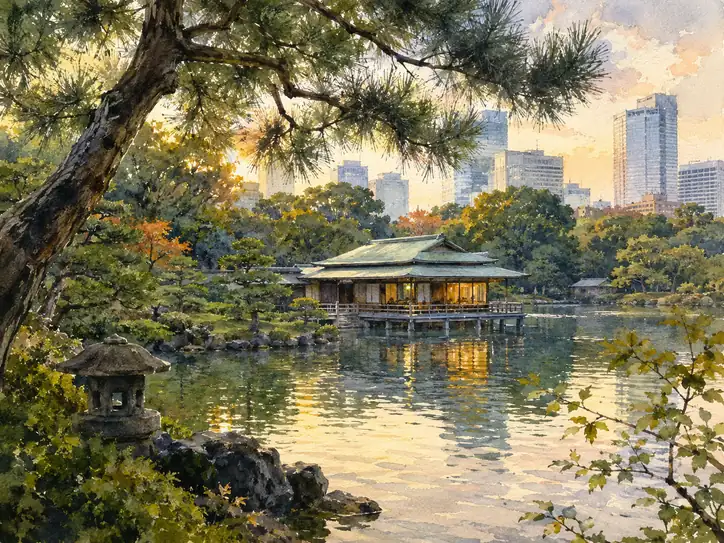 Twilight Sanctuary Between Eras
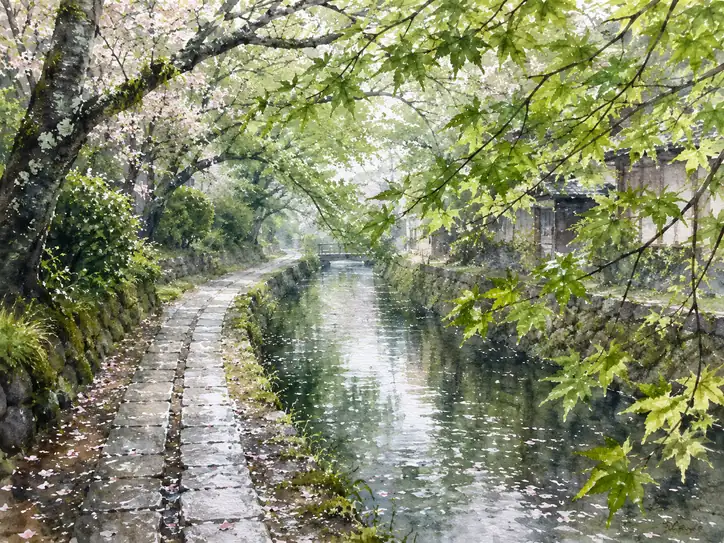 Whispers of the Flowing Spring
Similar Artworks
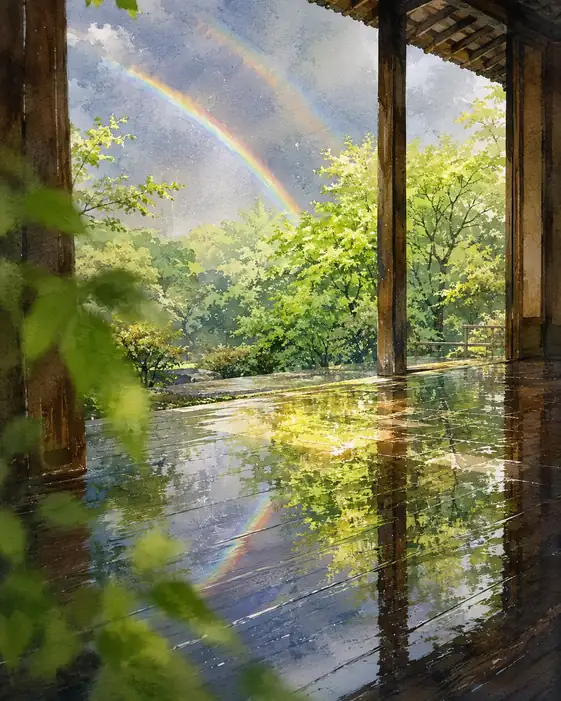 Rainbows Resting on the Engawa Floor
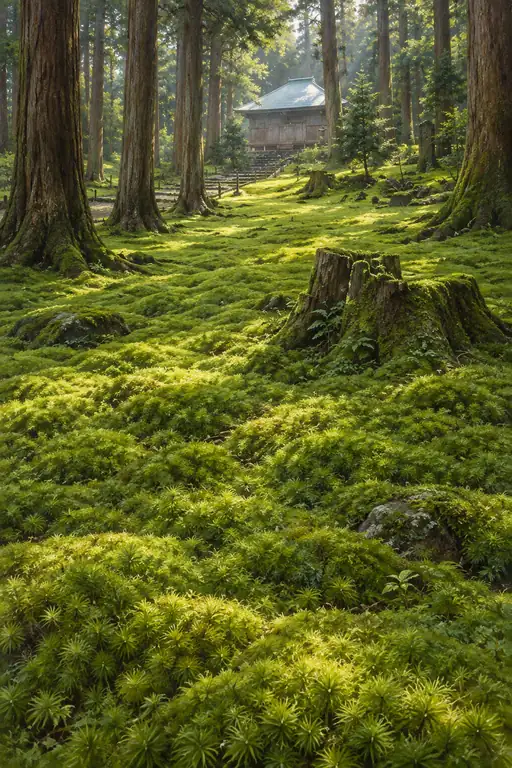 Prayer Among a Thousand Moss Stars
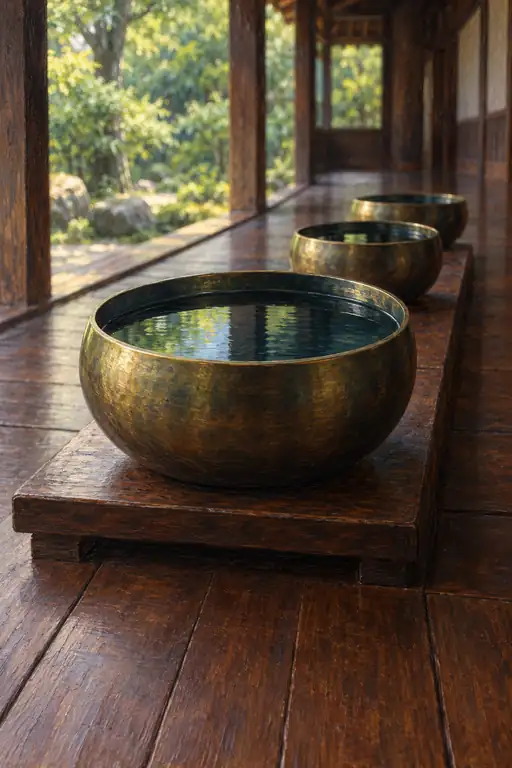 Three Basins of Monastic Stillness
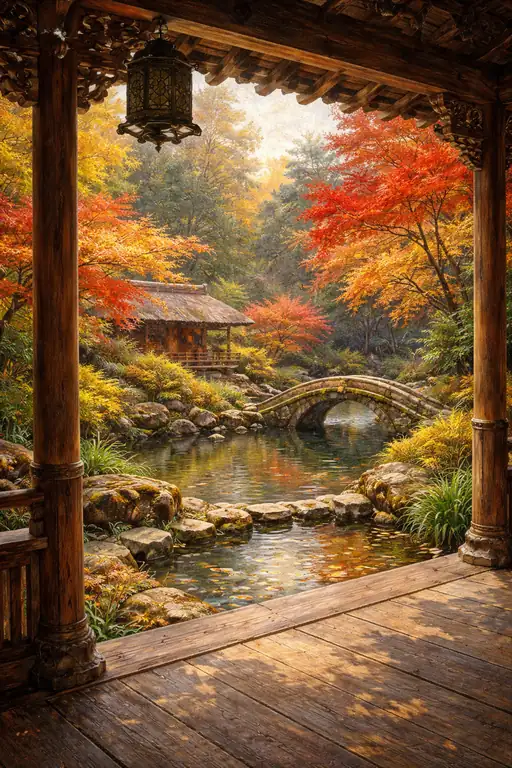 Crimson Reflections
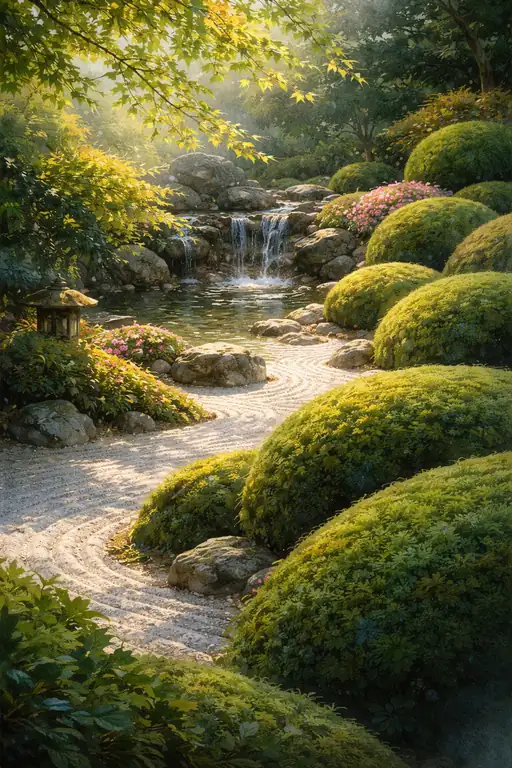 Ripples of the Raked Zen Sea
 Meditative Silence: The Karesansui Cosmos
 Green Shadows on Polished Wood
 Memory of the Sun-Drenched Leaves
 The Sleeping Giant across the Garden
 The Silent Threshold: A Window into Zen