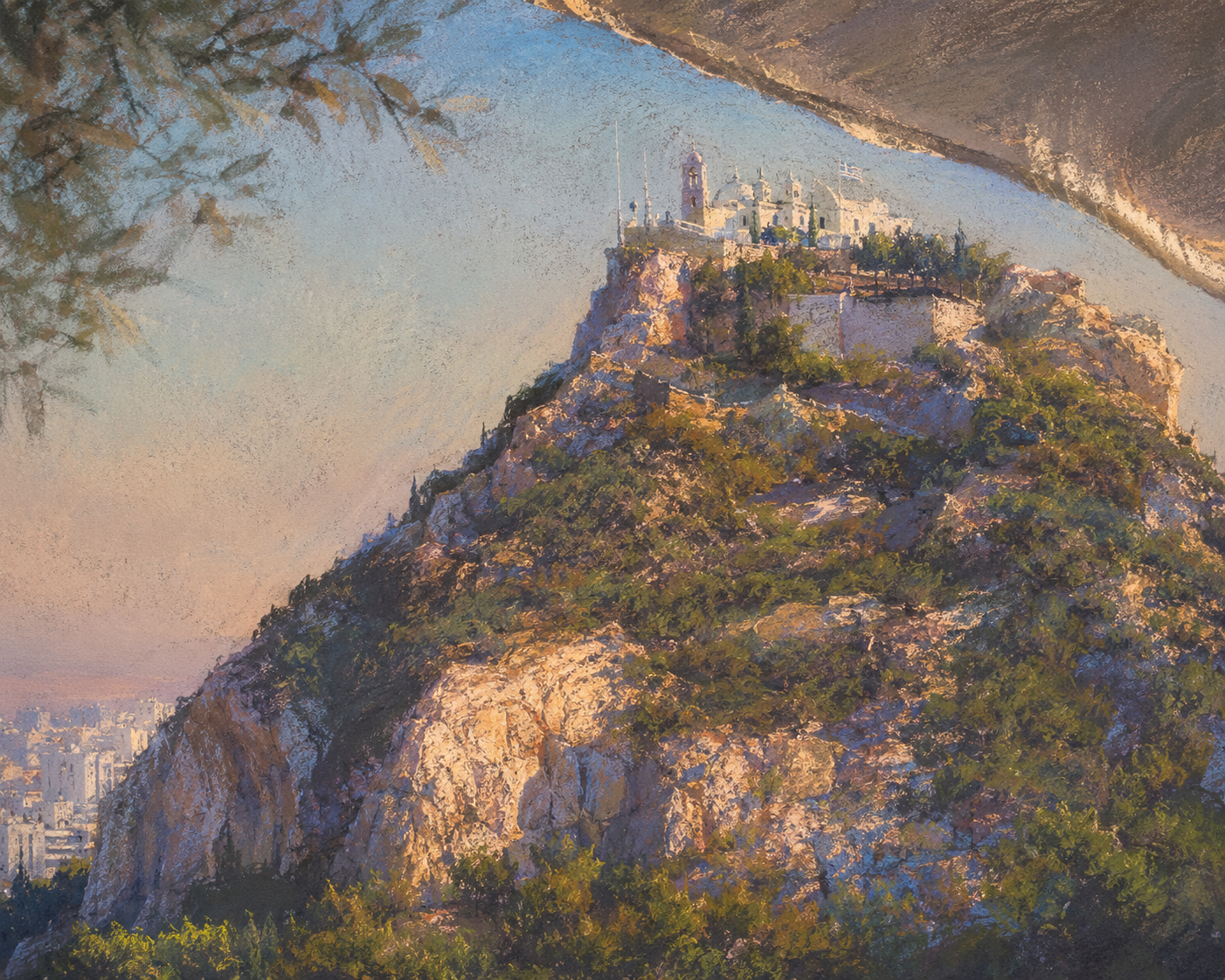
Sanctuary Above the Haze
Critique
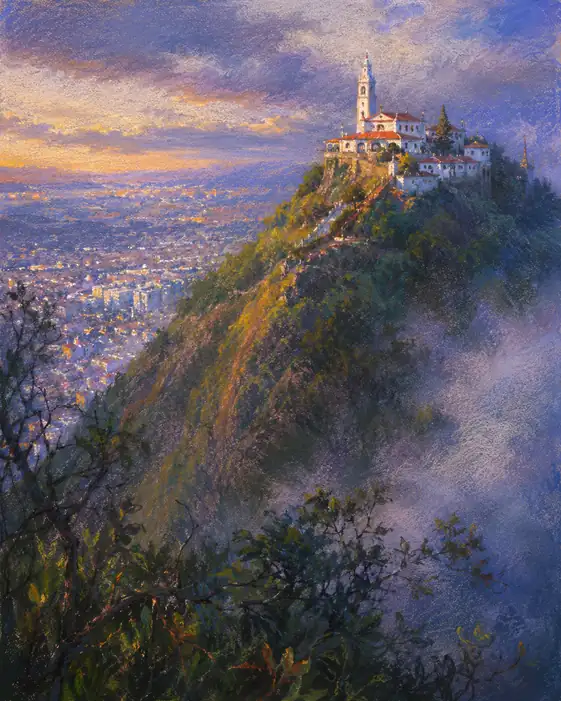
1. Introduction This evocative painting presents a dramatic view of a historic hilltop chapel, likely located in Athens, perched atop a steep, rocky eminence. The composition emphasizes the verticality of the landscape, creating a sense of ascension and spiritual elevation. The work is notable for its vibrant handling of light and its ability to capture the unique geological character of the region. 2. Description At the summit, a small white chapel with a bell tower sits surrounded by dark green trees and a Greek flag. The hillside is composed of sun-bleached limestone, with patches of rugged vegetation clinging to its precipitous slopes. In the lower left corner, the hazy silhouette of a dense city extends toward the horizon, while foliage in the foreground adds a layer of depth. 3. Analysis The artist utilizes a warm, golden palette for the sunlit portions of the rock, contrasted with deep, cool-toned shadows that define the hill's craggy texture. The perspective is low-angled, which heightens the monumental presence of the hill within the frame. A soft, atmospheric haze in the background suggests the heat and distance of the urban environment below. 4. Interpretation and Evaluation The painting successfully conveys the symbolic importance of the hilltop as a place of refuge and observation. The juxtaposition of the serene, isolated chapel against the vast, bustling city below creates a powerful narrative of contrast between the sacred and the mundane. Technically, the rendering of the limestone's faceted surface and the varied green tones of the scrub is both precise and expressive. 5. Conclusion This work offers a profound sense of clarity and perspective, both literally and figuratively. The initial impression of the hill's ruggedness is balanced by the delicate, light-filled architecture at its peak. It stands as an accomplished example of landscape painting that masterfully combines topographical accuracy with an atmospheric, emotional resonance.
Same Subcategory
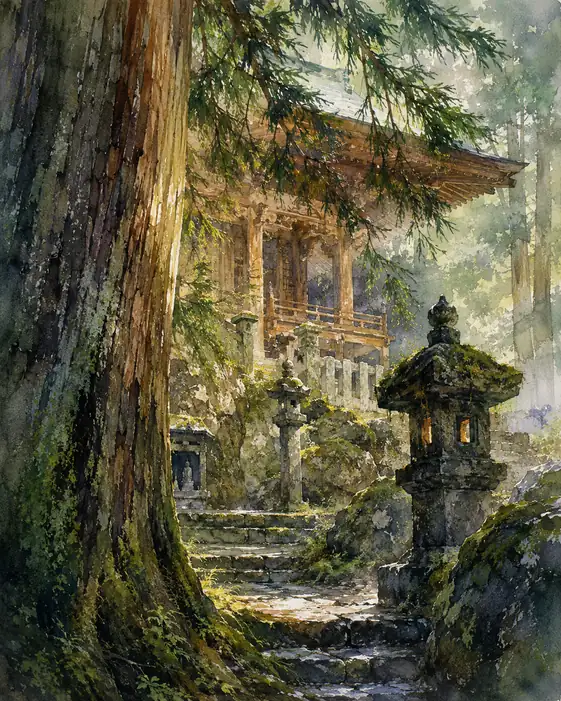 Sanctuary of the Ancient Cedars
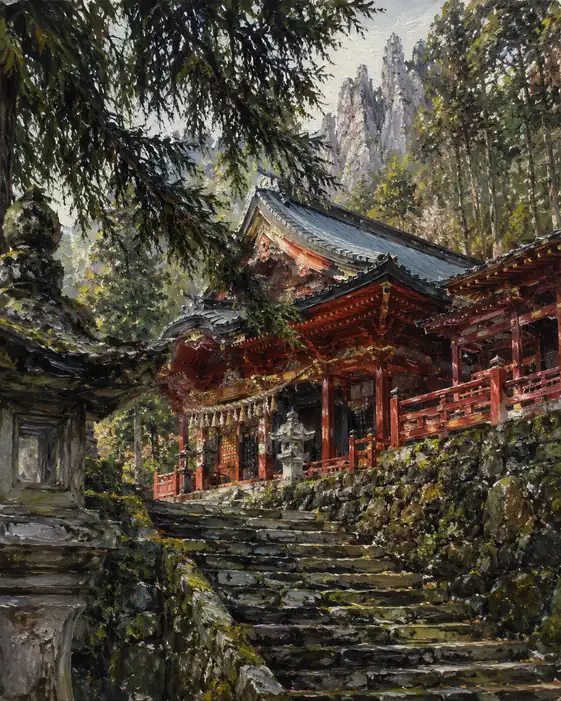 Eternal Prayer in the Vermilion Woods
Similar Artworks
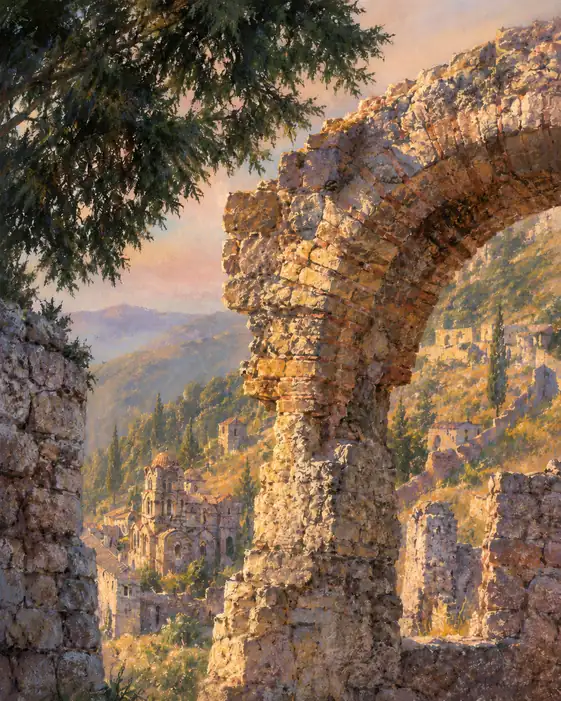 Byzantine Echoes Through the Stone Arch
 Sanctuary Above the Whispering Mist
 Where Silence Touches the Sky
 Whispers of Spring Before the Silent Peak
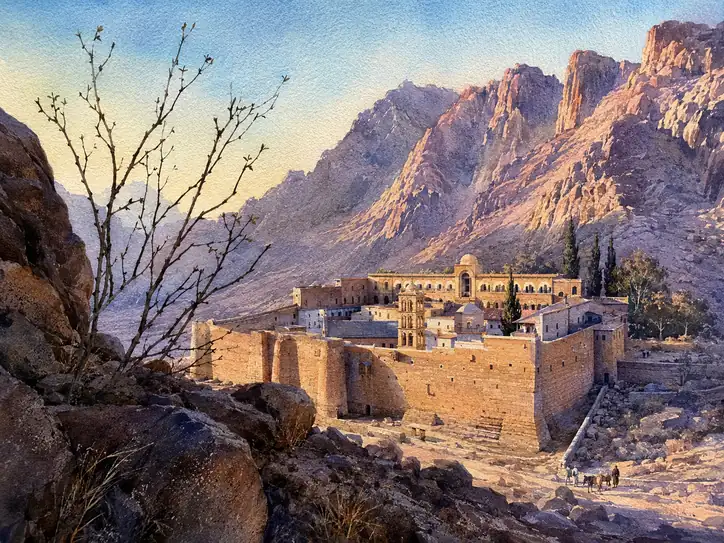 Sanctuary in the Sinai Valley
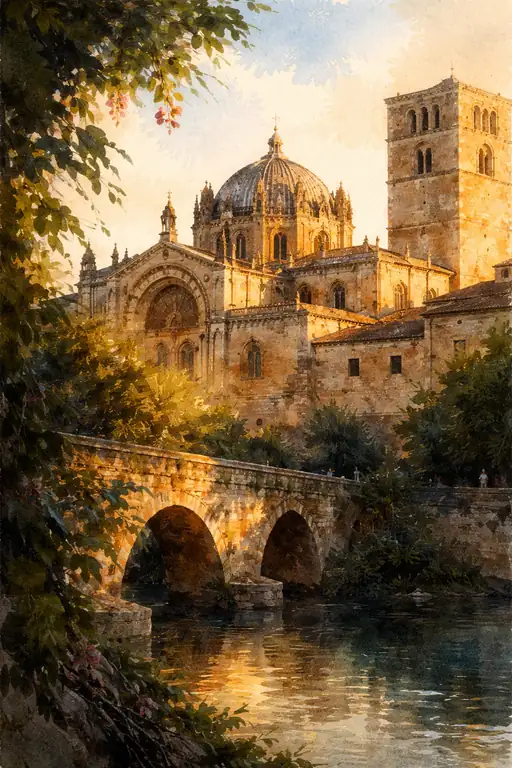 Eternal Grace Spanning the Still Waters
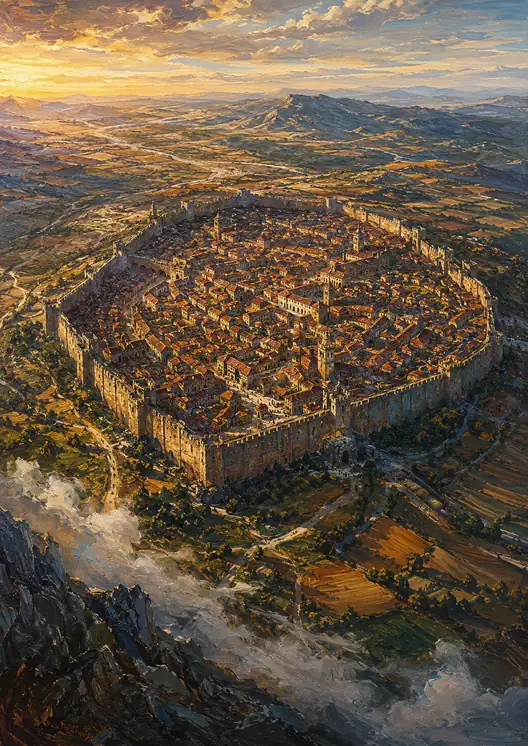 The Walled Dream of Golden Twilight
 Cradled by the Golden Slopes
 Silent Chapel in the Whispering Alps
 Reaching for the Silent Heavens