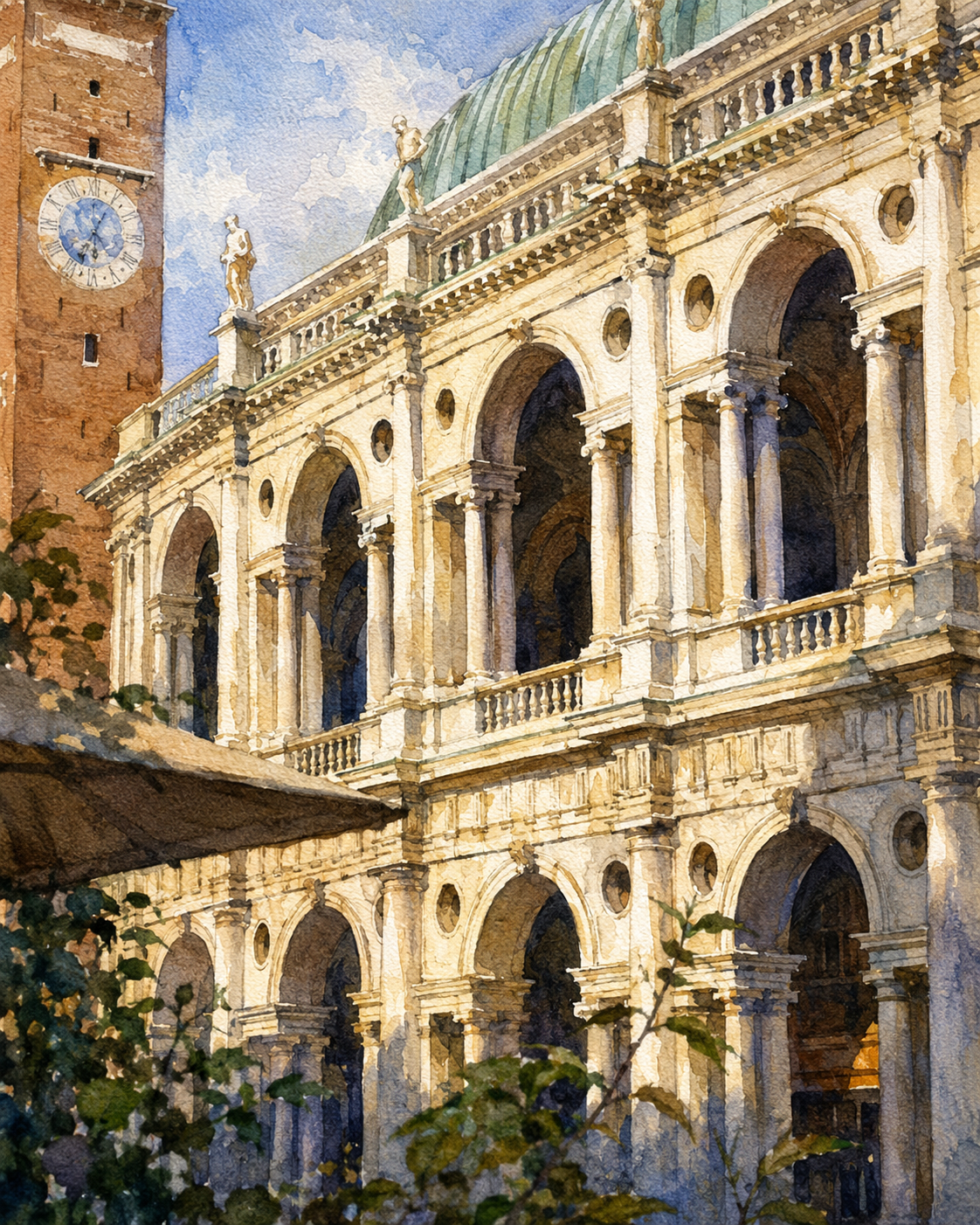
The Golden Hour at Palladio's Loggia
Critique
1. Introduction This watercolor painting presents a masterful architectural study of a Renaissance-style building, likely situated in a historic European city. The composition focuses on the intricate loggia and arched facades that define the structure's classical elegance. Bathed in strong afternoon sunlight, the scene highlights the interplay between grand architecture and the lived-in atmosphere of an urban space. The artist skillfully uses a warm palette to convey the enduring beauty of the stone and brick materials. This work serves as an exploration of light, shadow, and historical permanence. 2. Description The main subject is a two-story loggia featuring a series of graceful arches supported by slender columns. Statues stand prominently along the roofline, silhouetted against a clear blue sky filled with soft clouds. To the upper left, a tall terracotta-colored brick tower with a prominent clock face adds a vertical counterpoint to the horizontal lines of the loggia. In the foreground, dark green foliage and the edge of a large outdoor umbrella suggest the viewpoint of someone seated at a nearby cafe. The stone surfaces are rendered in shades of ochre and cream, contrasting with the deep shadows within the arches. 3. Analysis The artist employs a strong directional light source from the right, creating sharp, dramatic shadows that emphasize the three-dimensional quality of the architectural elements. The color palette is harmoniously balanced between the warm, earthy tones of the buildings and the cool, translucent blues of the sky. Textural variety is achieved through the contrast between the precise, linear details of the stonework and the loose, impressionistic handling of the foreground vegetation. The composition uses a low-angle perspective, which enhances the monumental feel of the architecture while maintaining an intimate, observational quality. 4. Interpretation and Evaluation This work successfully captures the timelessness of classical European architecture while grounding it in a specific, sun-drenched moment. The technical proficiency in watercolor is evident in the controlled washes and the preservation of bright highlights on the stone columns. By including the cafe umbrella and foliage, the artist avoids a purely clinical architectural rendering, instead offering a piece that feels atmospheric and evocative. The painting effectively communicates the grandeur of the past through a personal and artistic lens. It is a highly accomplished example of urban landscape painting. 5. Conclusion The initial impact of the complex architectural detail is eventually secondary to the overall mood of a peaceful, sunny afternoon. The artist has achieved a fine balance between rigorous structural accuracy and a fluid, expressive painting style. Closer inspection reveals the subtle shifts in color and tone that give the ancient stones their character and history. This watercolor invitation to linger and admire the harmony of form and light. It leaves the viewer with a profound appreciation for the beauty of historical urban environments.
Same Subcategory
 Where Light Breathes in Stone
 Golden Promise at the World’s Edge
Similar Artworks
 Palladio's Grandeur
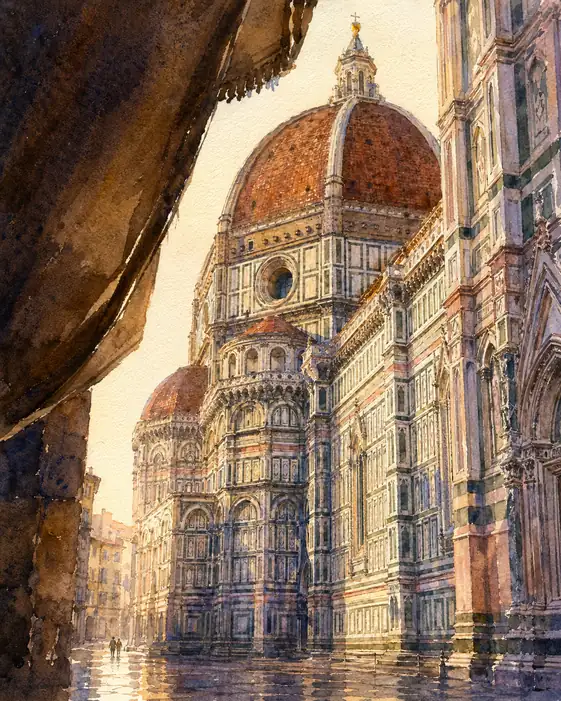 Gilded Memories of the Duomo
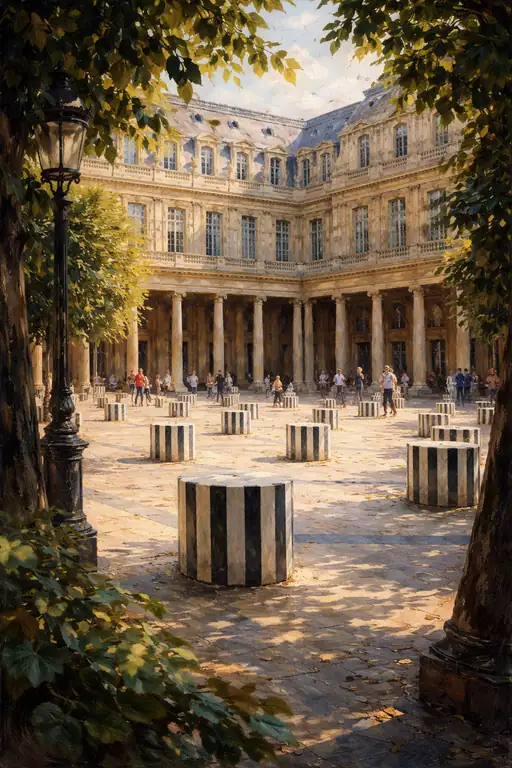 Symphony of Stripes and Shadows
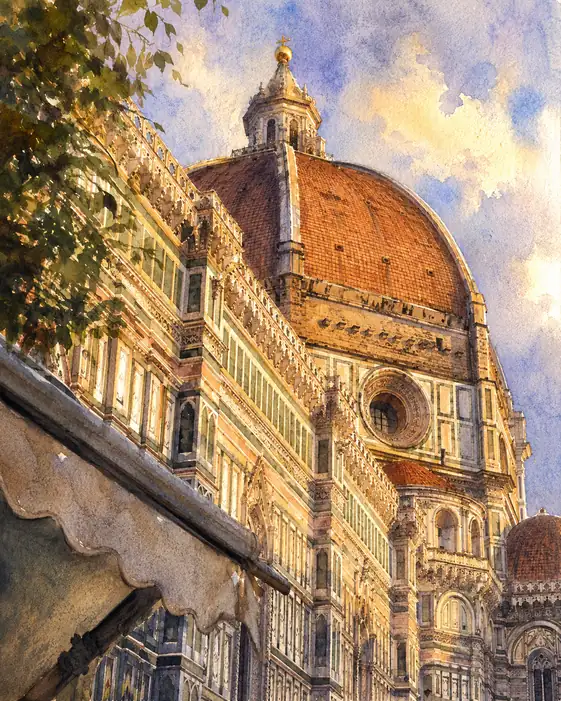 Looking Up Toward the Eternal Dome
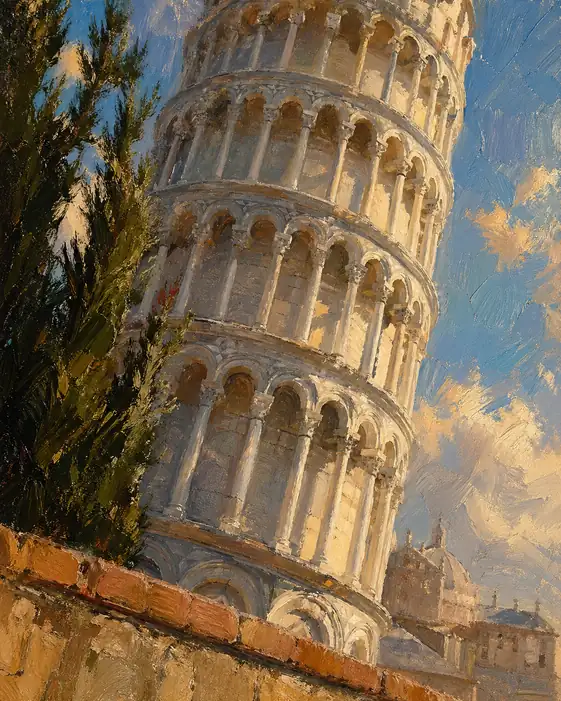 Endurance in the Golden Light
 Echoes of Time on Wet Cobblestone
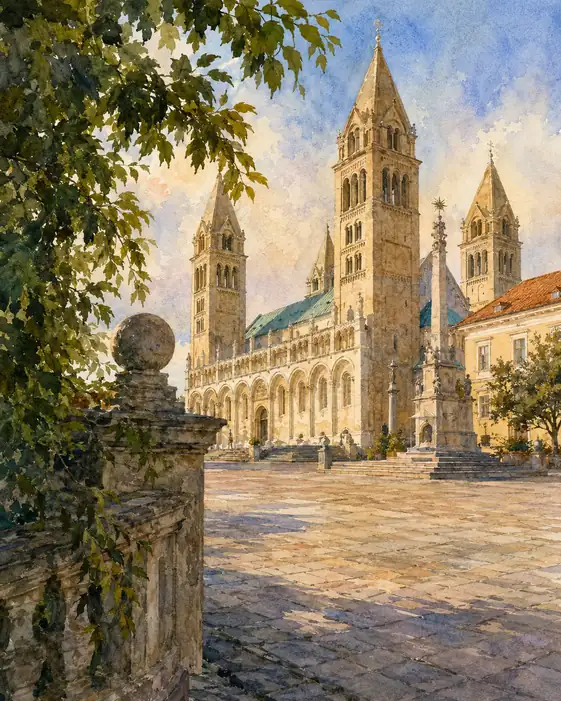 Golden Silence of the Cathedral Square
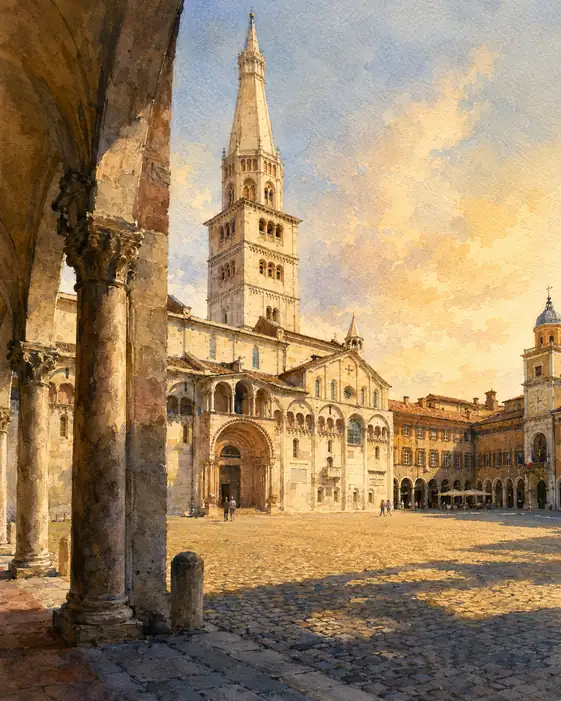 Sun-Kissed Stones of Modena
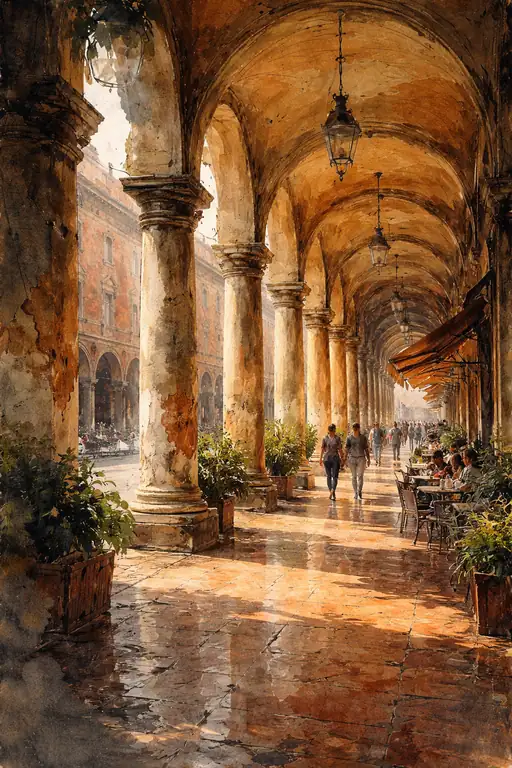 The Golden Corridor: A Symphony of Stone and Light
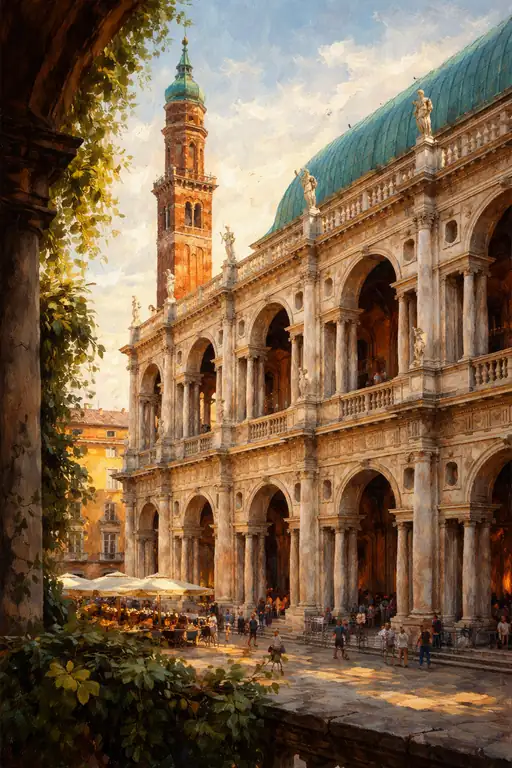 Life Beneath the Turquoise Dome