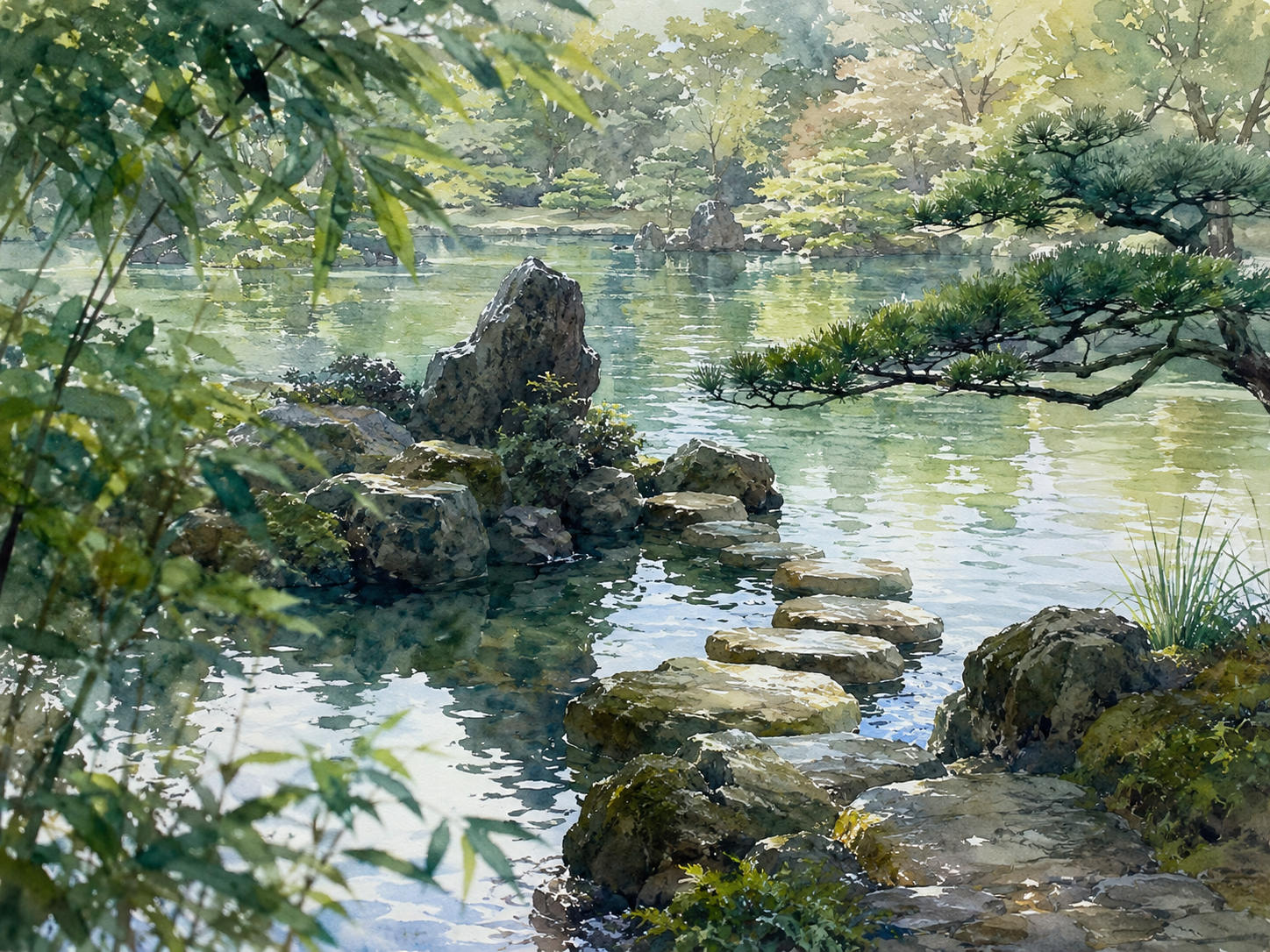
Path of Silent Stones
Critique
1. Introduction This watercolor painting presents a tranquil scene of a traditional Japanese garden, where nature and artifice coexist in harmony. The composition is centered on a series of stepping stones that lead the viewer's eye into the heart of a serene pond. Sunlight filters through a lush canopy of trees, casting a gentle glow over the entire landscape. The artist utilizes the transparency of the medium to capture the delicate interplay of light and water. This work invites quiet contemplation of the peaceful environment depicted. 2. Description In the foreground, vibrant bamboo leaves frame the left side of the image, while flat stepping stones emerge from the lower right to cross the water. The middle ground features a still pond reflecting the surrounding greenery and sky with remarkable clarity. Large, weathered rocks are strategically placed within and beside the water, providing a sense of stability and structure. To the right, a pine branch extends horizontally, its fine needles meticulously rendered. The background is filled with dense, soft-edged foliage that suggests a deep, sun-drenched forest. 3. Analysis The artist employs a sophisticated color palette dominated by various shades of green, blue, and earthy browns. The use of the wet-on-wet technique in the pond area effectively creates the fluid, shimmering reflections on the water's surface. Contrast is established between the sharp, detailed rendering of the pine needles and bamboo leaves and the softer, more impressionistic background. The diagonal arrangement of the stepping stones creates a dynamic sense of depth and leads the eye toward the distant shore. Light is used as a primary structural element, defining forms and creating a sense of atmosphere. 4. Interpretation and Evaluation This painting succeeds in capturing the quintessential atmosphere of a Zen garden, emphasizing the beauty of simplicity and balance. The technical skill displayed in the watercolor medium is exceptional, particularly in the handling of light and transparency. The choice to frame the scene with bamboo adds a sense of intimacy and discovery for the viewer. While the subject matter is traditional, the execution feels fresh and modern through its precise yet fluid brushwork. The work effectively communicates a feeling of timelessness and spiritual calm. 5. Conclusion The initial impression of a bright, sunlit day is reinforced upon closer inspection by the intricate details of the natural elements. The artist has skillfully balanced the various components of the garden to create a cohesive and engaging visual experience. This watercolor serves as a masterful exploration of the relationship between light, water, and vegetation. It ultimately offers a profound sense of tranquility that resonates with the viewer. The painting stands as a testament to the enduring appeal of the Japanese garden as a subject for artistic expression.
Same Subcategory
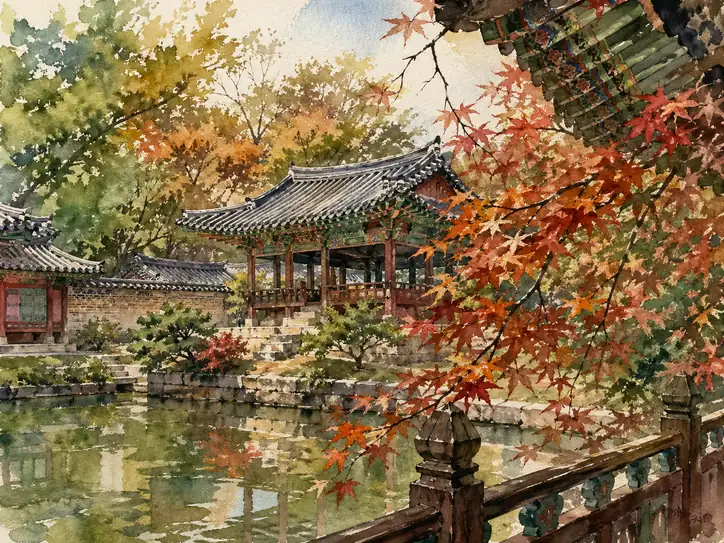 Whispers of Red in the Tranquil Garden
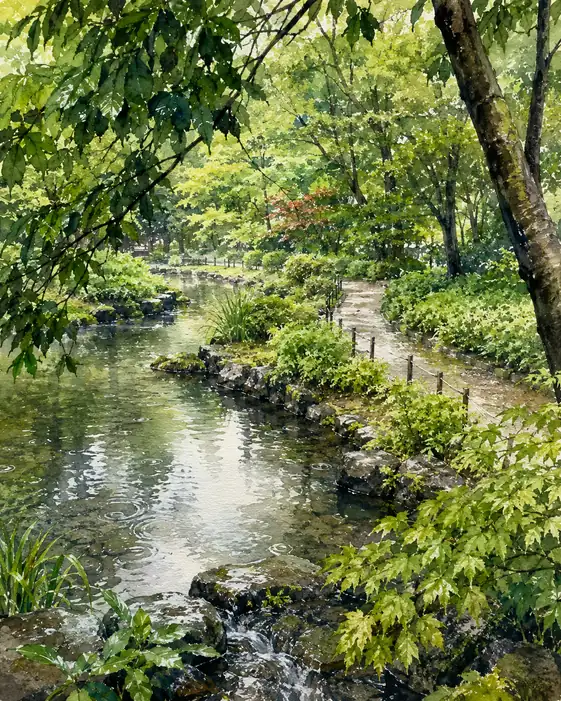 Listening to the Song of the Ripples
Similar Artworks
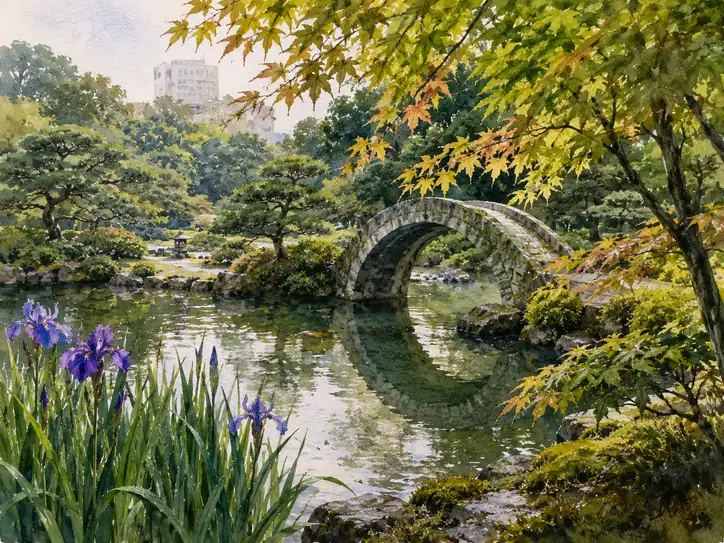 Where the Heart Finds Its Circle
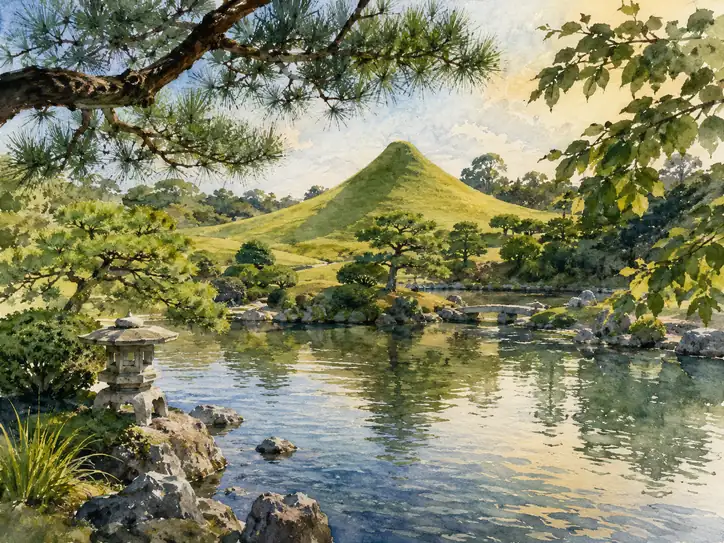 Tranquil Pulse of the Water Garden
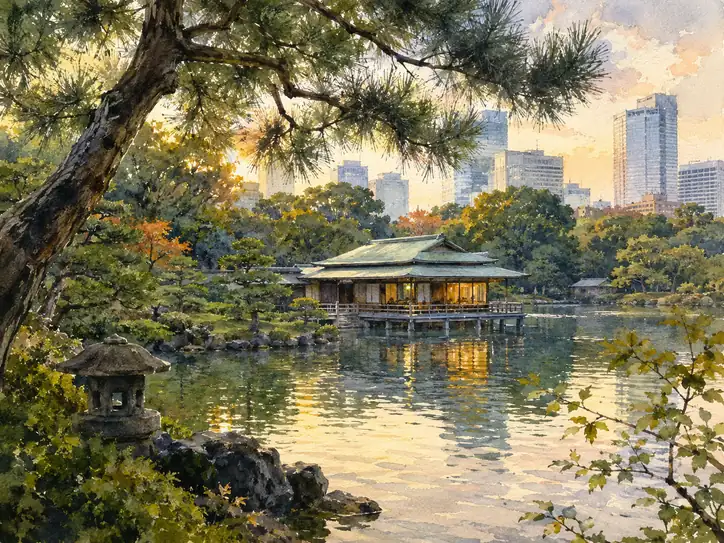 Twilight Sanctuary Between Eras
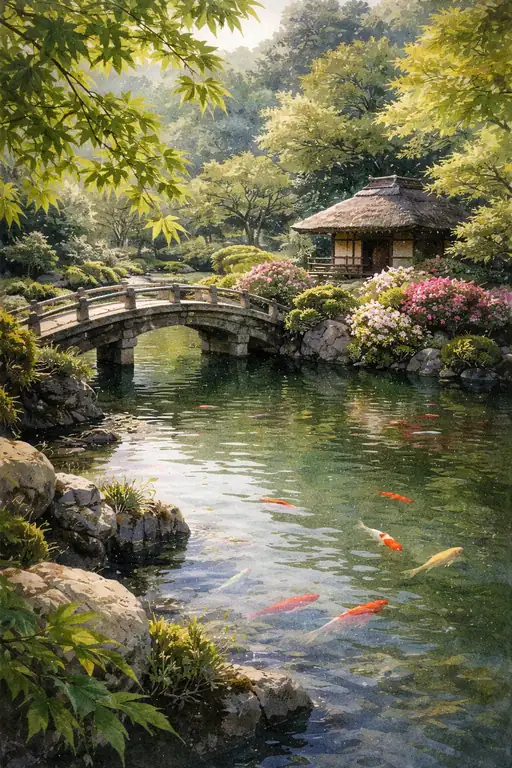 Harmony in the Sunlit Ripples
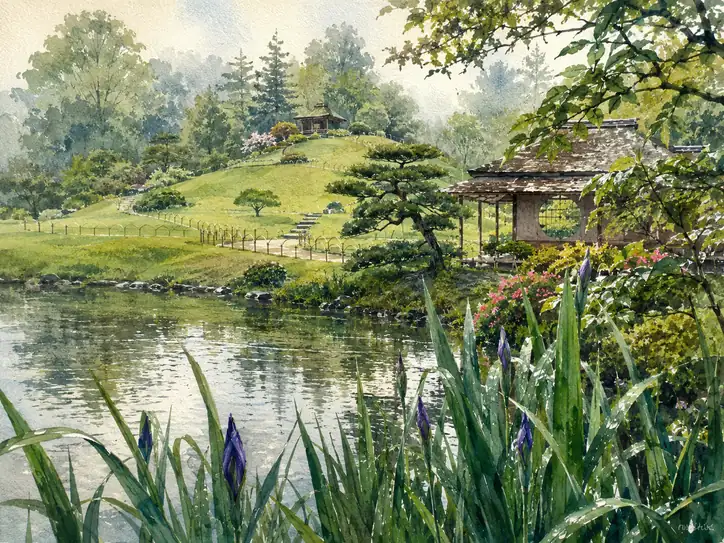 The Garden's Silent Breath
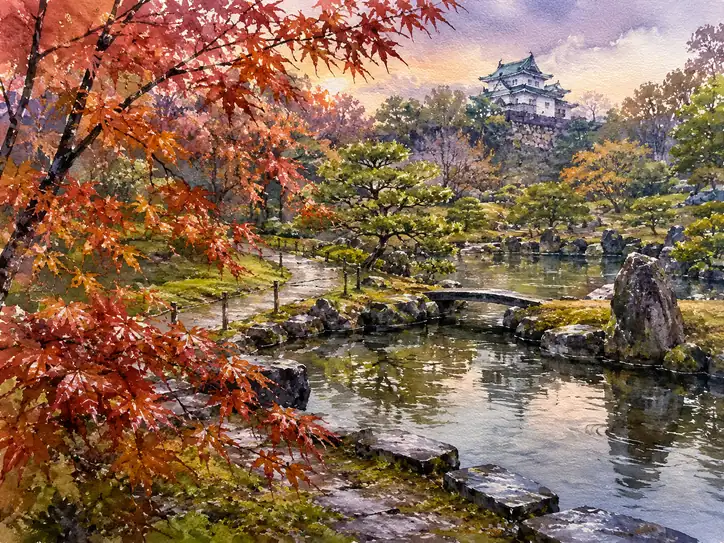 Ephemeral Fire of the Autumn Court
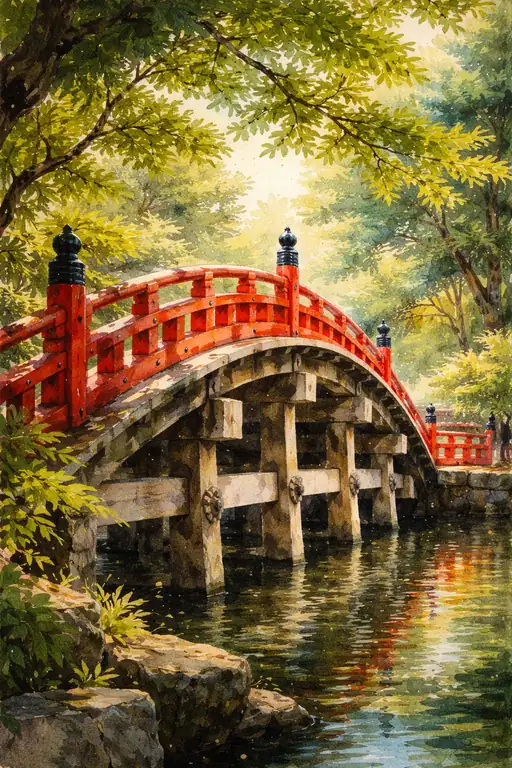 Crimson Arch Through the Sunlit Verdure
 Stepping Stones Across the Autumn Mirror
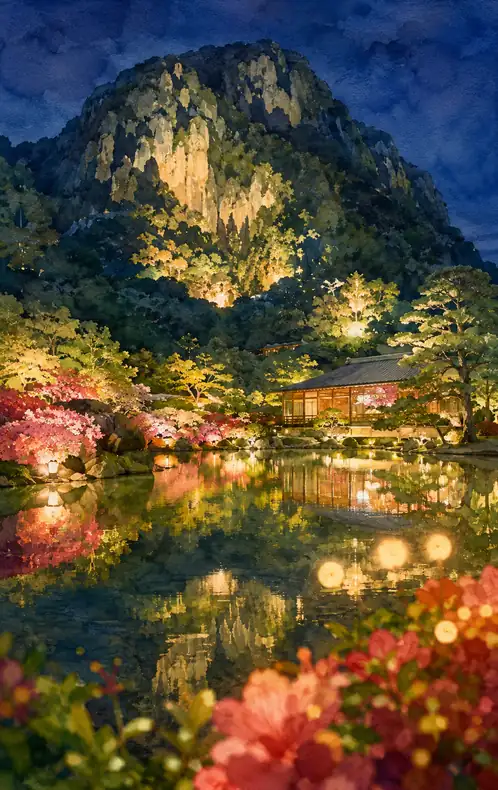 The Mountain Kindles a Garden of Stars
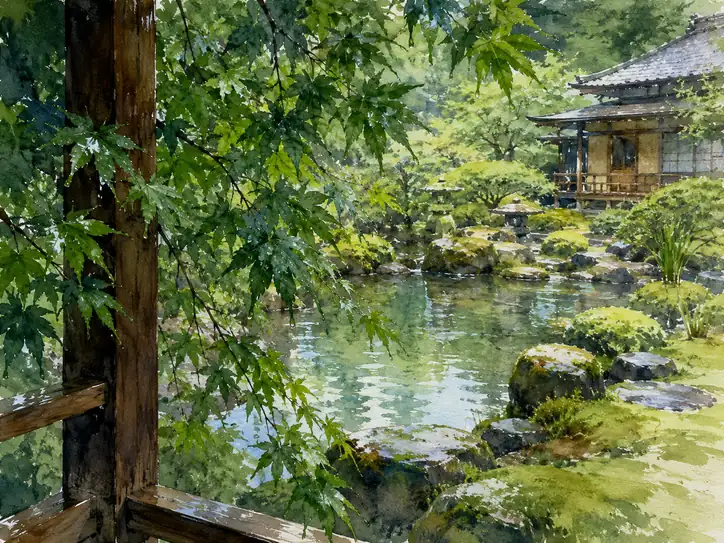 Whispers of the Summer Rain