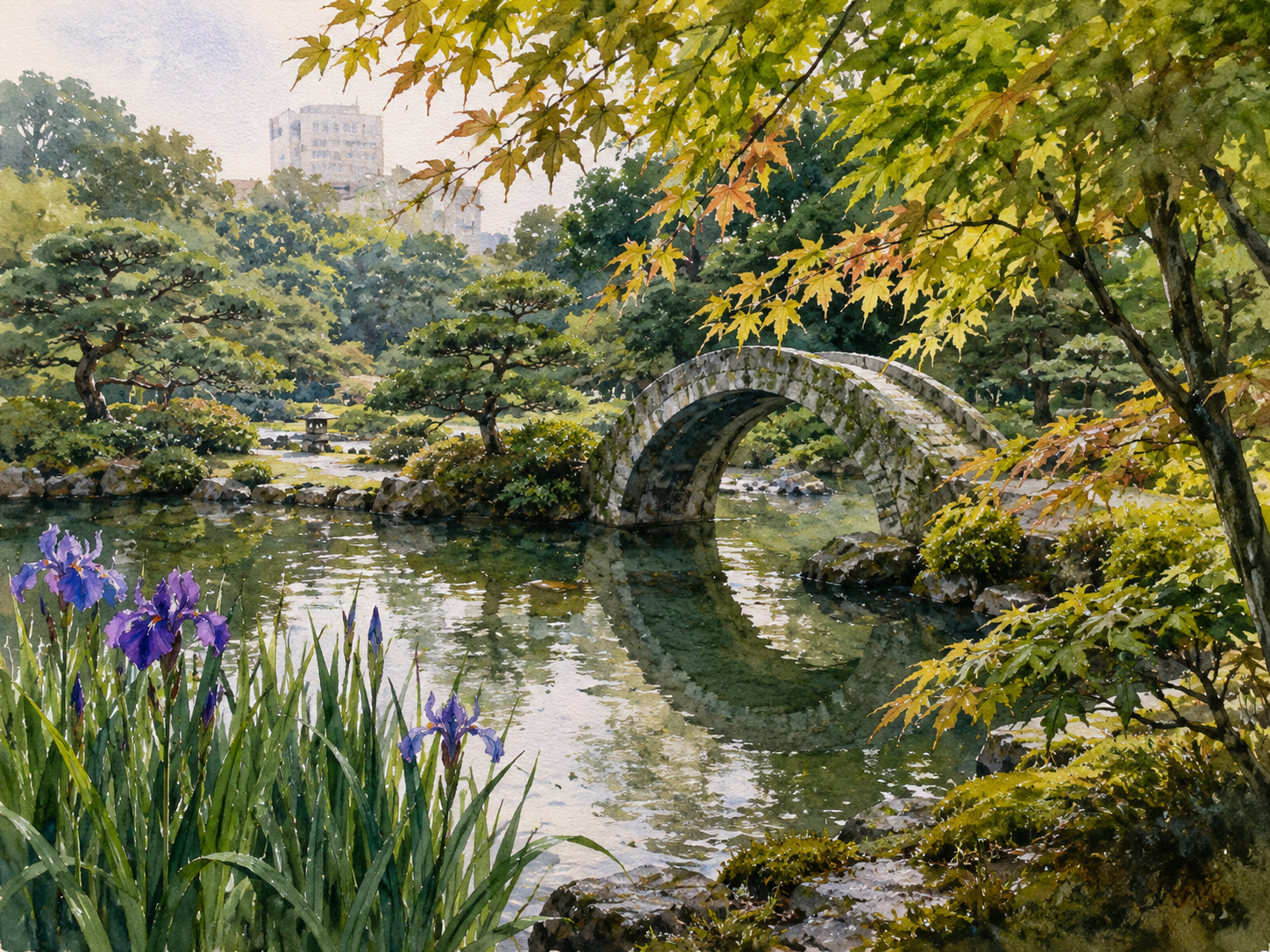
Where the Heart Finds Its Circle
Critique
1. Introduction This watercolor painting captures the serene beauty of a traditional Japanese stroll garden, featuring a stone arch bridge as its central visual motif. The scene is a delicate study of reflection and seasonal transition, where nature's meticulous arrangement meets a distant hint of contemporary urban life. It invites the viewer into a space of quiet contemplation, where every element of the landscape has been purposefully placed to evoke harmony. 2. Description In the left foreground, several vibrant purple irises bloom amidst sharp, upright green leaves, providing a strong focal point. A moss-covered stone bridge arches gracefully over a clear pond, its reflection in the water creating a near-perfect circular form. Overhead, Japanese maple leaves in shades of green and early orange frame the upper portion of the composition, while a modern light-colored building rises faintly above the dense tree line in the background. 3. Analysis The composition is masterfully balanced, using the circular shape of the bridge and its reflection to anchor the center of the piece. The artist utilizes the transparent quality of watercolor to create soft, layered foliage and the shimmering, translucent surface of the pond. A subtle sense of depth is achieved by the crisp detail of the foreground irises in contrast with the softer, more atmospheric rendering of the distant architectural elements. 4. Interpretation and Evaluation The work explores the traditional concept of "borrowed scenery," where the distant urban structure becomes part of the garden's broader narrative. The stone bridge serves as a symbol of connection between the natural world and human engineering, as well as between the past and the present. The artist's ability to capture the specific textures of stone, water, and delicate petals within the fluid medium of watercolor is highly commendable. 5. Conclusion What is initially appreciated for its classical garden aesthetics eventually reveals a complex layer of modern coexistence. The painting successfully evokes a sense of meditative peace while acknowledging the existence of the surrounding contemporary world. It is a sophisticated atmospheric study that celebrates both the enduring harmony of nature and the precision of artistic observation and technique.
Same Subcategory
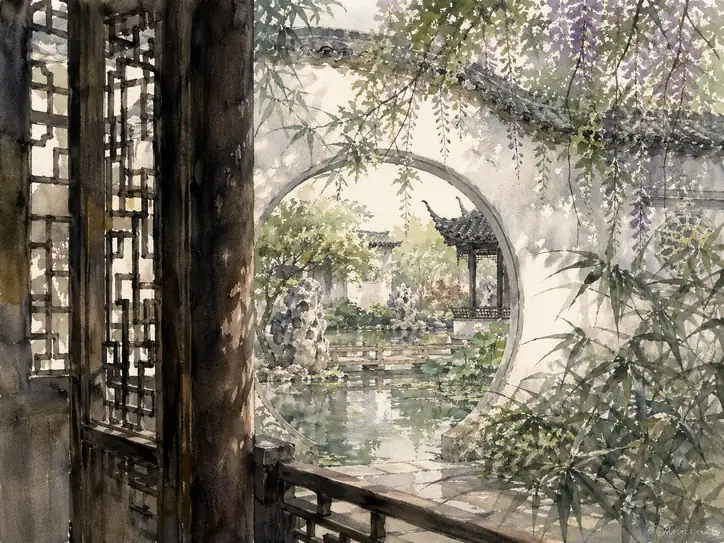 Through the Moon Gate: A Whisper of Serenity
Similar Artworks
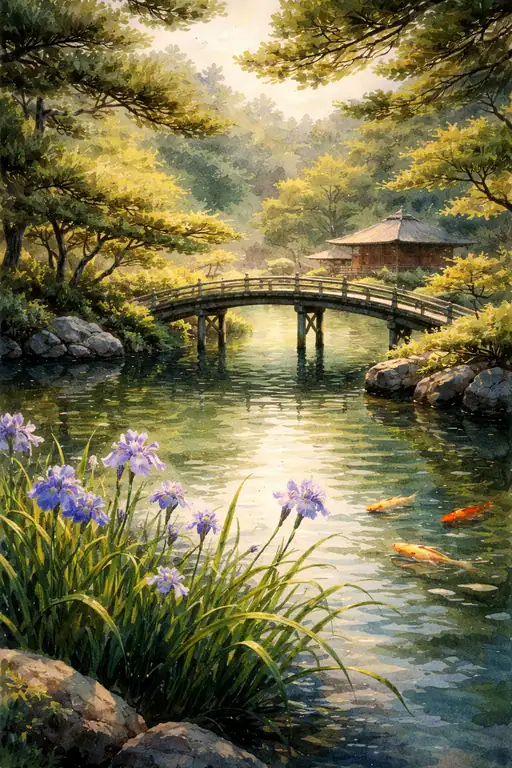 Whispers of the Golden Pond
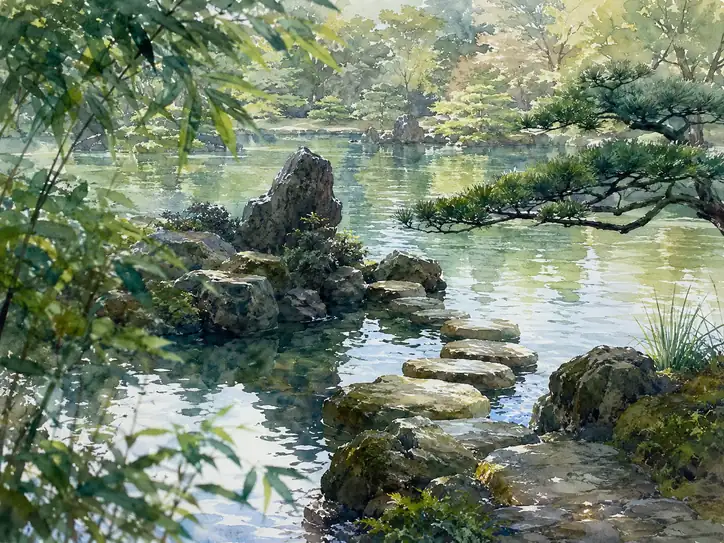 Path of Silent Stones
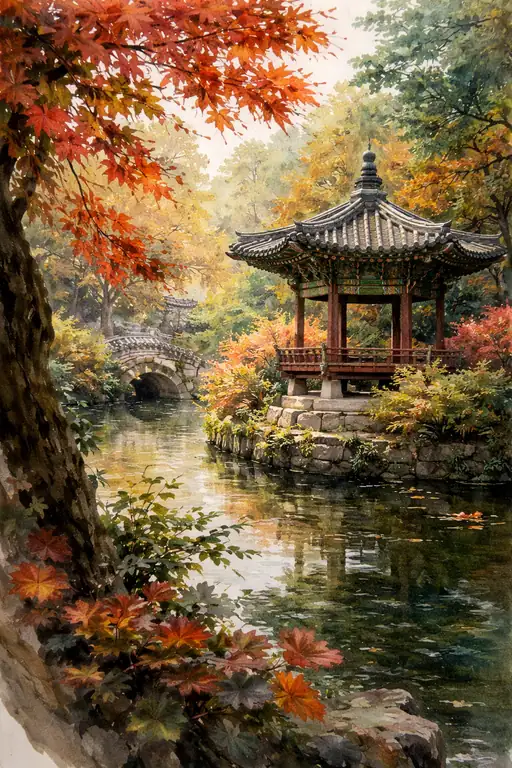 Crimson Leaves Reflected in Autumn's Mirror
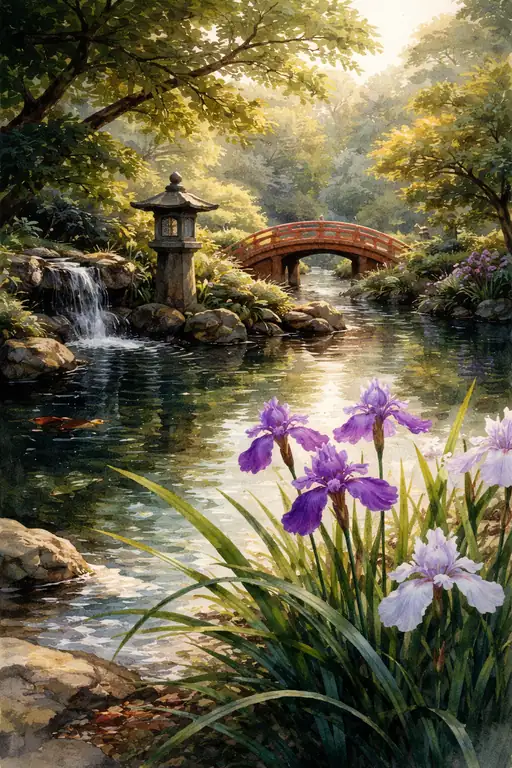 Sunlit Melody of the Arch and Lantern
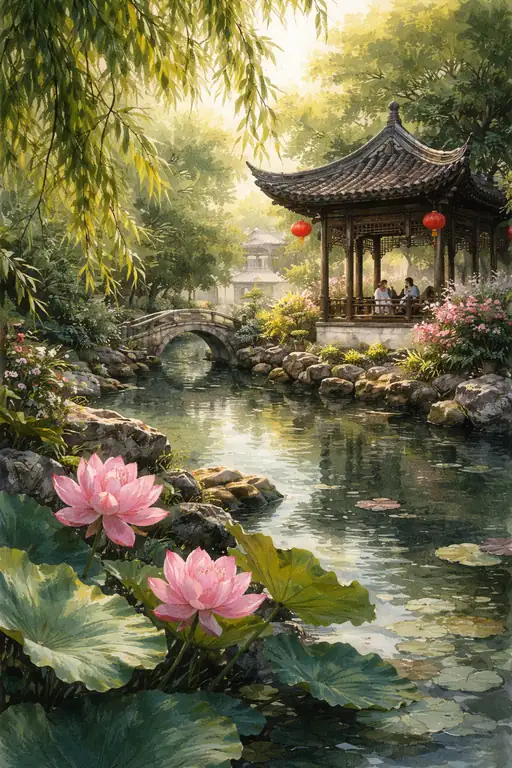 Tranquility in Bloom: The Lotus Pavilion
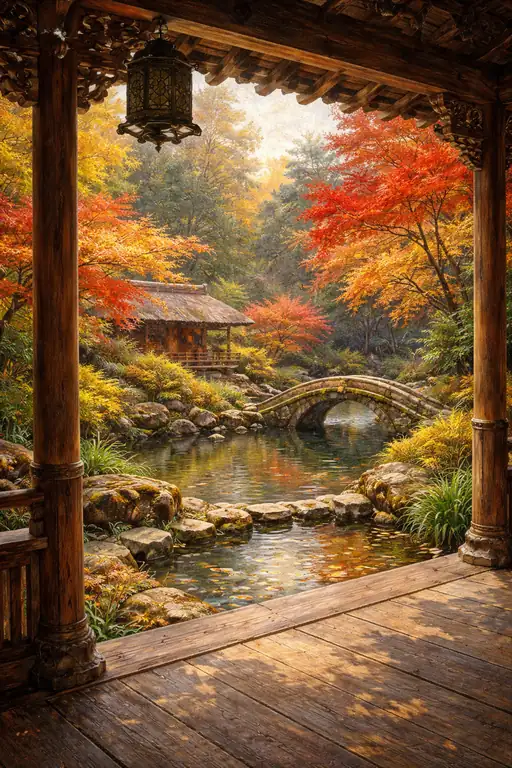 Crimson Reflections
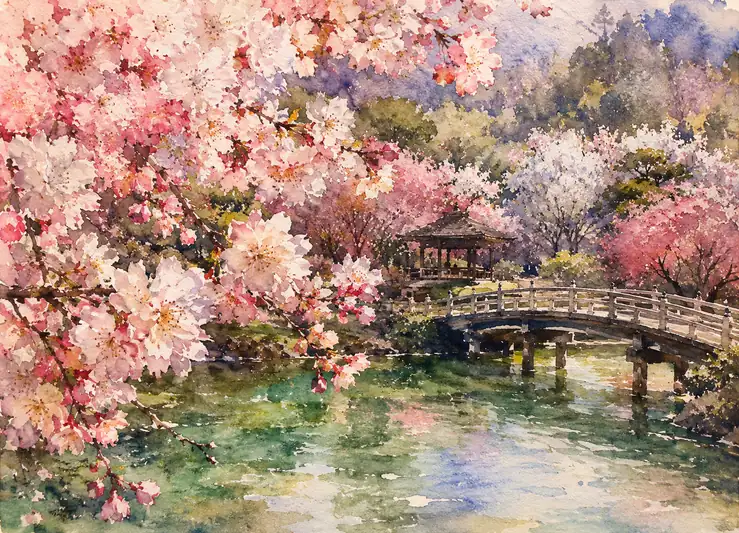 The Waltz of Sakura and Stone
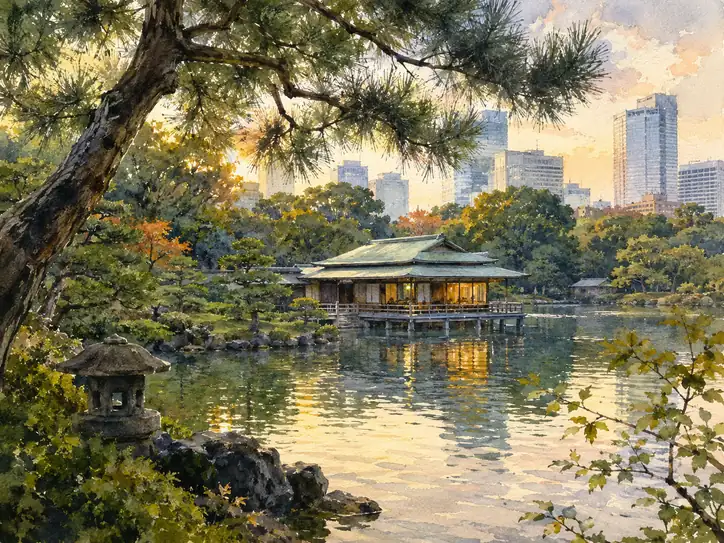 Twilight Sanctuary Between Eras
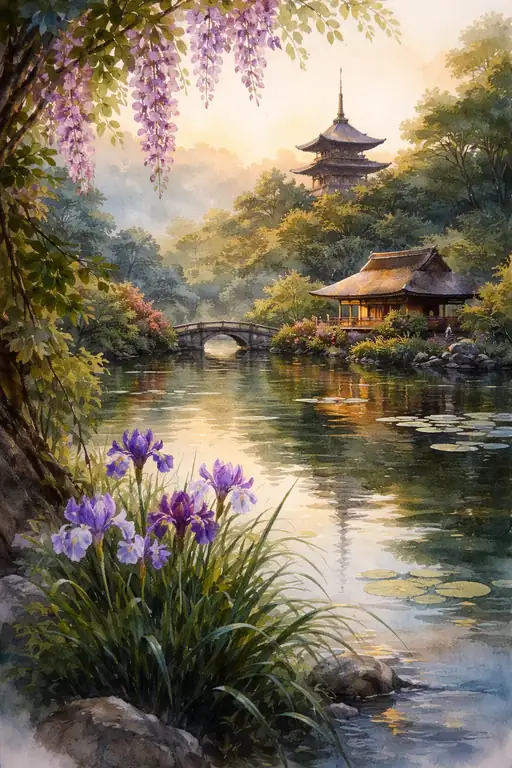 Sunset Harmony in the Temple Garden
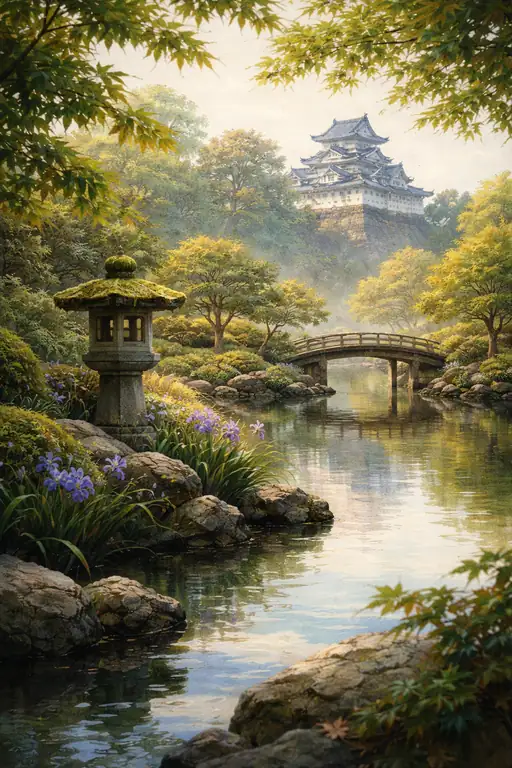 Echoes of the White Heron