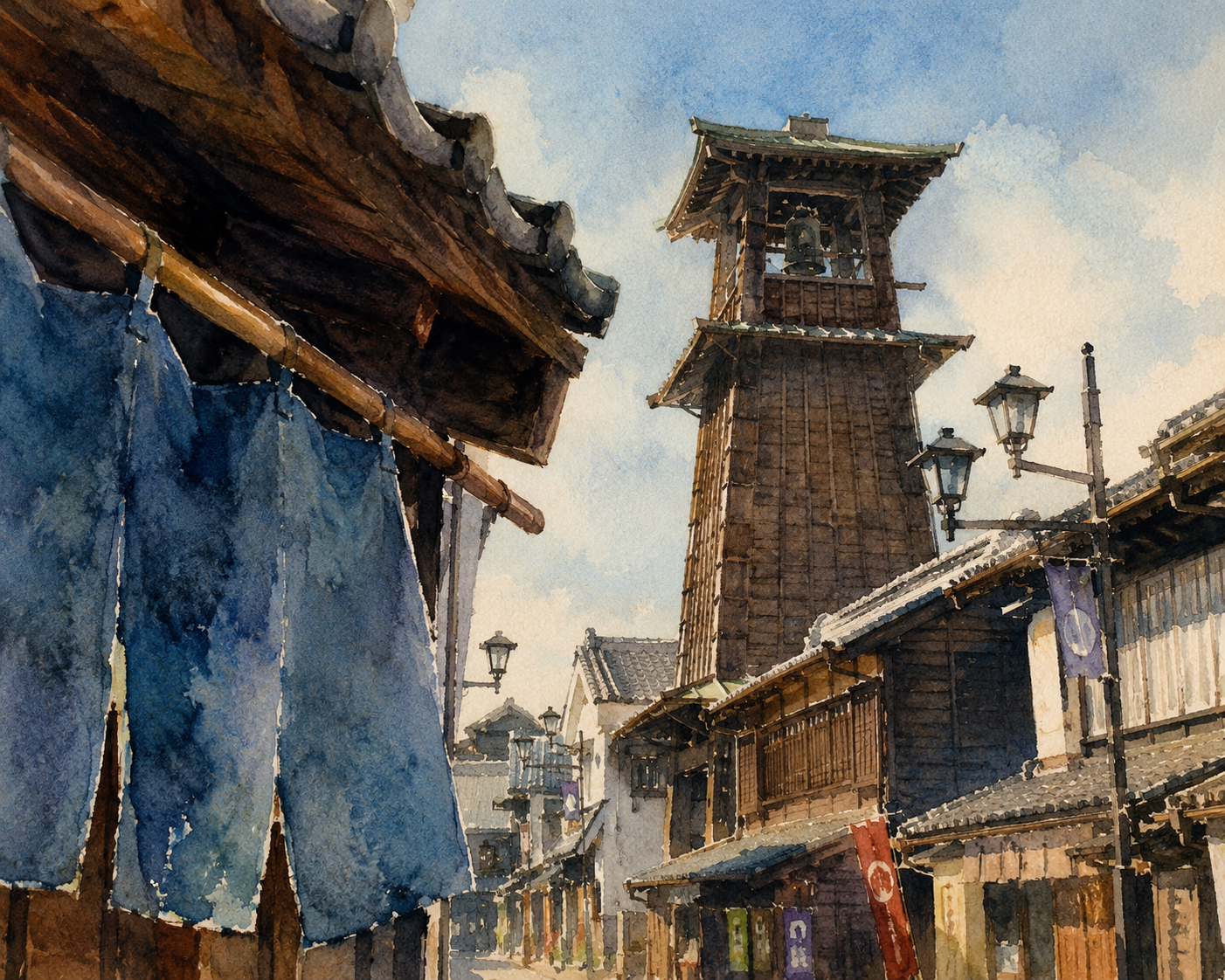
Resonance of a Timeless Afternoon
Critique
1. Introduction This watercolor painting captures a nostalgic and historically rich street scene, prominently featuring a traditional wooden bell tower that serves as a landmark. The work depicts an architectural landscape reminiscent of a Japanese "Kurazukuri" townscape, where the preservation of the past is central to the visual narrative. The perspective is slightly angled from within the street, providing an intimate look at the various textures and details of the old buildings. Through a delicate yet confident application of watercolor, the artist evokes the quiet atmosphere of a bright afternoon in a historic district. 2. Description The composition is anchored by a tall, multi-tiered wooden bell tower situated in the middle ground, its dark timber surfaces showing signs of age and craftsmanship. In the immediate foreground on the left, indigo-blue "noren" curtains hang from a wooden pole, their frayed edges and deep color providing a strong vertical element. The street is lined with two-story wooden structures featuring traditional tiled roofs and latticed windows. Colorful banners and old-fashioned street lamps punctuate the walkway, while the sky above is a pale, clear blue with soft, scattered clouds that allow natural light to wash over the scene. 3. Analysis The artist employs a sophisticated range of earthy tones, primarily browns, greys, and deep blues, to render the weathered wood and masonry of the townscape. The use of light and shadow is particularly effective, with the sun casting gentle shadows that define the architectural volumes and the depth of the street. The composition uses the foreground noren and the receding line of buildings to create a sense of three-dimensional space, leading the viewer's eye toward the bell tower and into the distance. The brushwork varies from broad, atmospheric washes in the sky to fine, precise details in the lattice work and the bell itself. 4. Interpretation and Evaluation This work demonstrates excellent draftsmanship, particularly in the accurate rendering of complex architectural forms and perspective. The composition is thoughtfully balanced, using the large foreground element on the left to offset the verticality of the bell tower on the right. The color palette successfully conveys a sense of historical continuity and the enduring beauty of traditional Japanese aesthetics. The artist's mastery of the watercolor medium is evident in the controlled bleeding of the indigo curtains and the subtle textural variations of the wooden surfaces. This painting transcends mere documentation, offering a poignant reflection on the passage of time and the preservation of cultural heritage. 5. Conclusion Initially, the viewer is drawn to the impressive structure of the bell tower, but the focus soon shifts to the harmonious relationship between the individual architectural elements and the overall townscape. The artist has successfully captured not just a location, but the specific mood of a historic space where the past remains present in the everyday environment. The synthesis of traditional motifs and modern watercolor techniques results in a compelling and evocative piece. Ultimately, the painting serves as a celebration of historical architecture and the quiet dignity of a well-preserved cultural landscape.
Same Subcategory
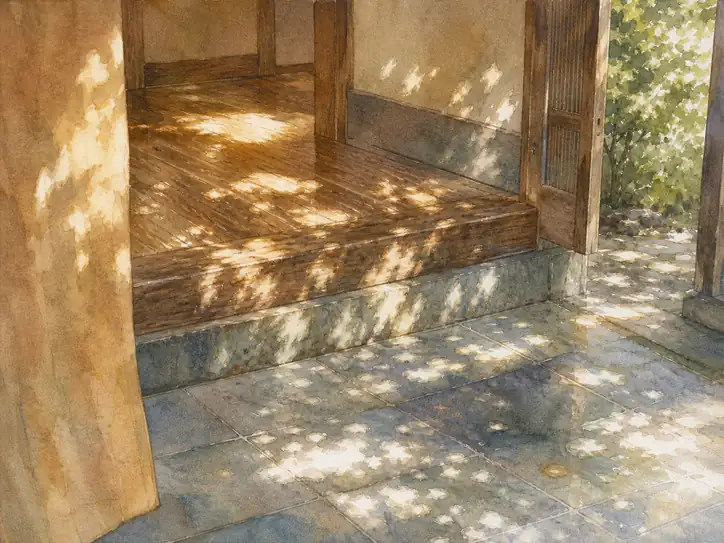 The Starry Threshold of Sunlit Memories
Similar Artworks
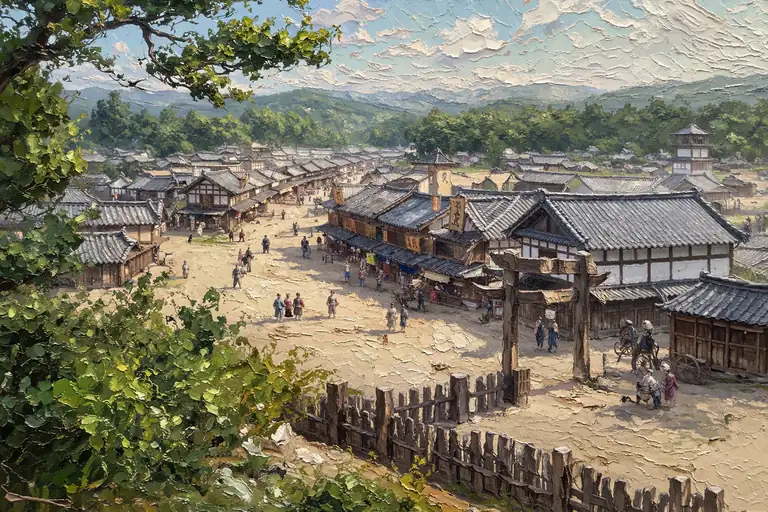 Pulse of the Ancient Path
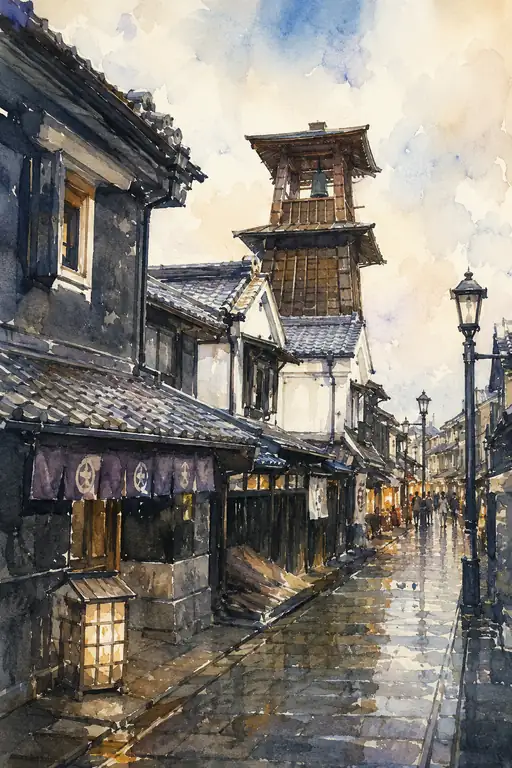 Listening to the Voice of Time in the Rain-Washed Dusk
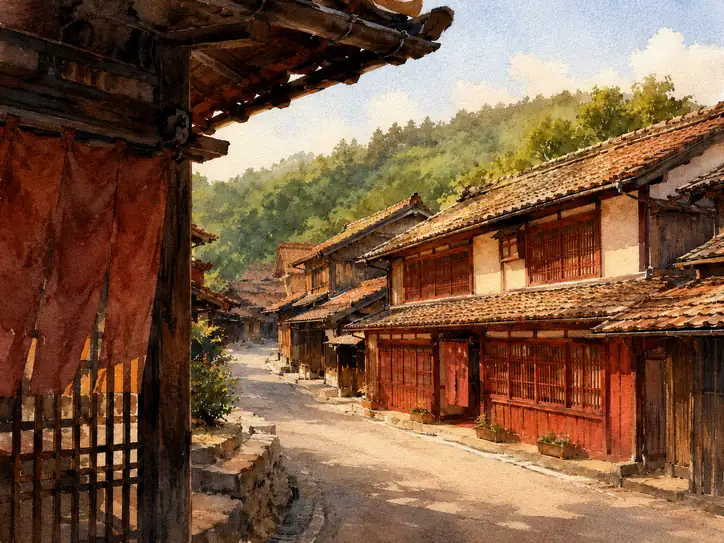 Golden Shadows on the Post Town
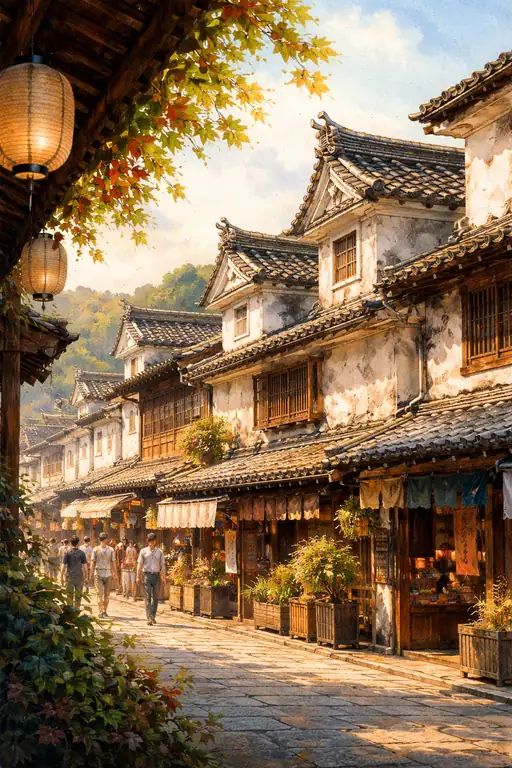 Sunset Glow on the Ancient Road
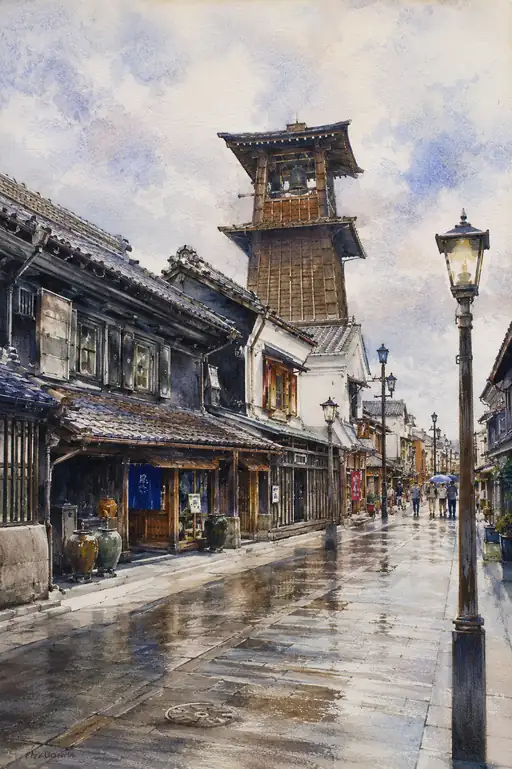 Echoes of Time on Wet Cobblestones
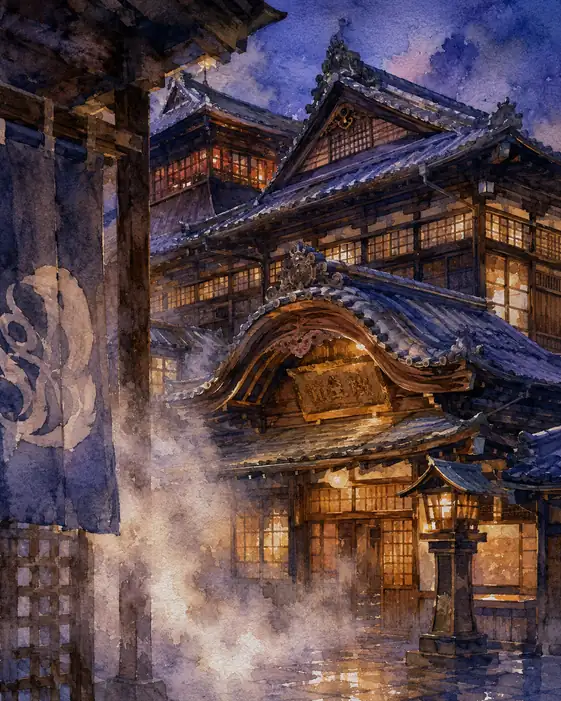 Warmth Wrapped in Indigo Night
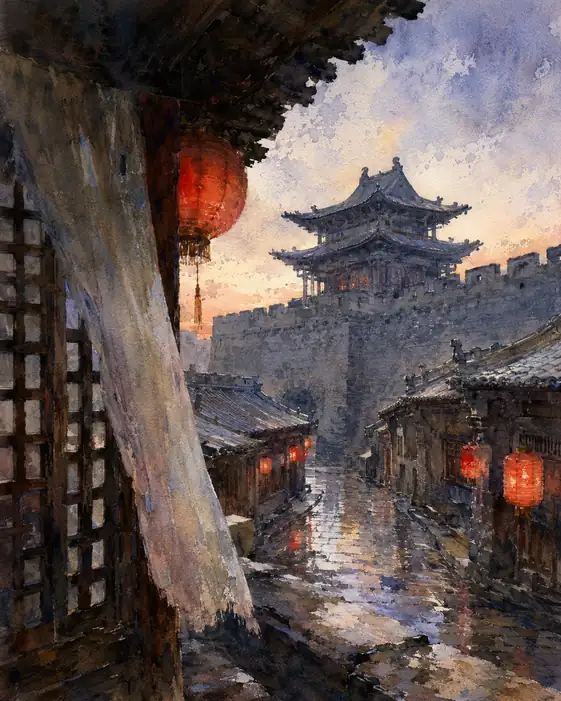 A Soft Beacon in the Gathering Dusk
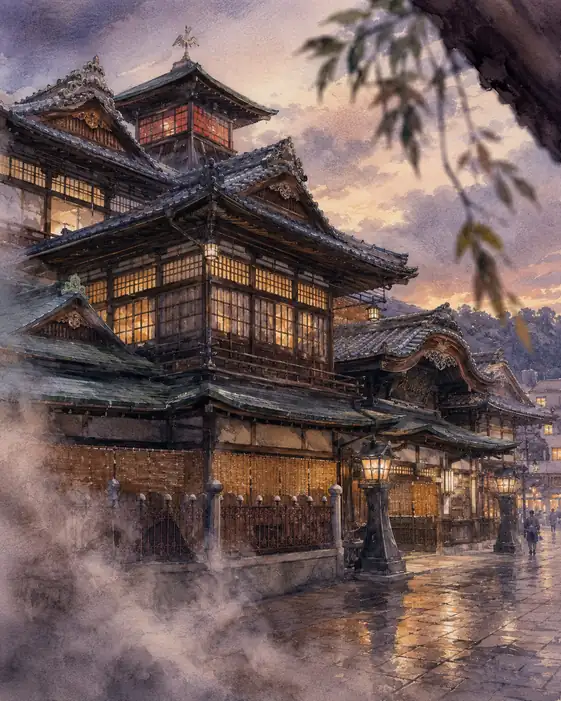 Whispers of the Twilight Spring
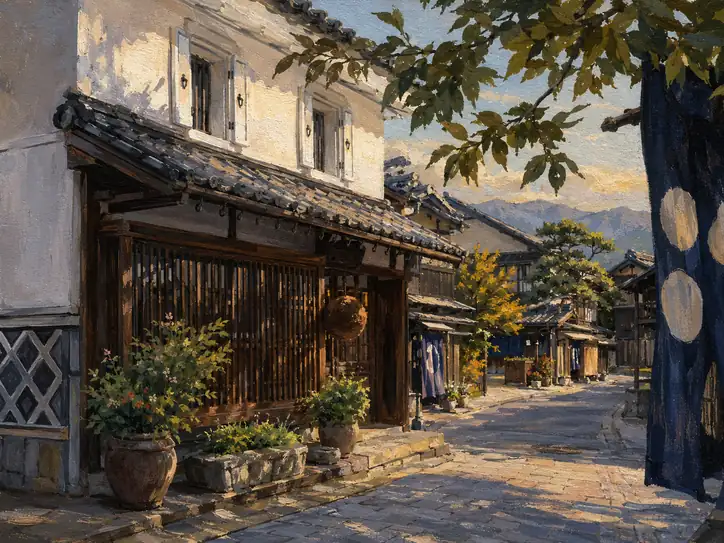 The Golden Hour in a Hidden Village
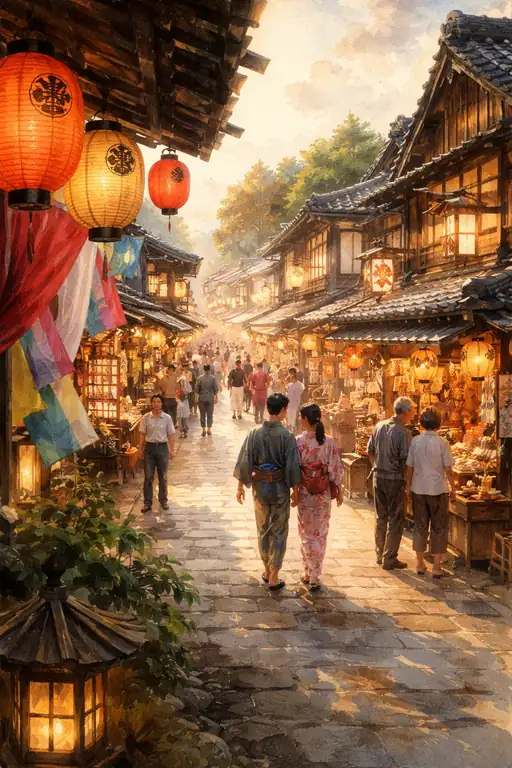 Lanterns at Twilight