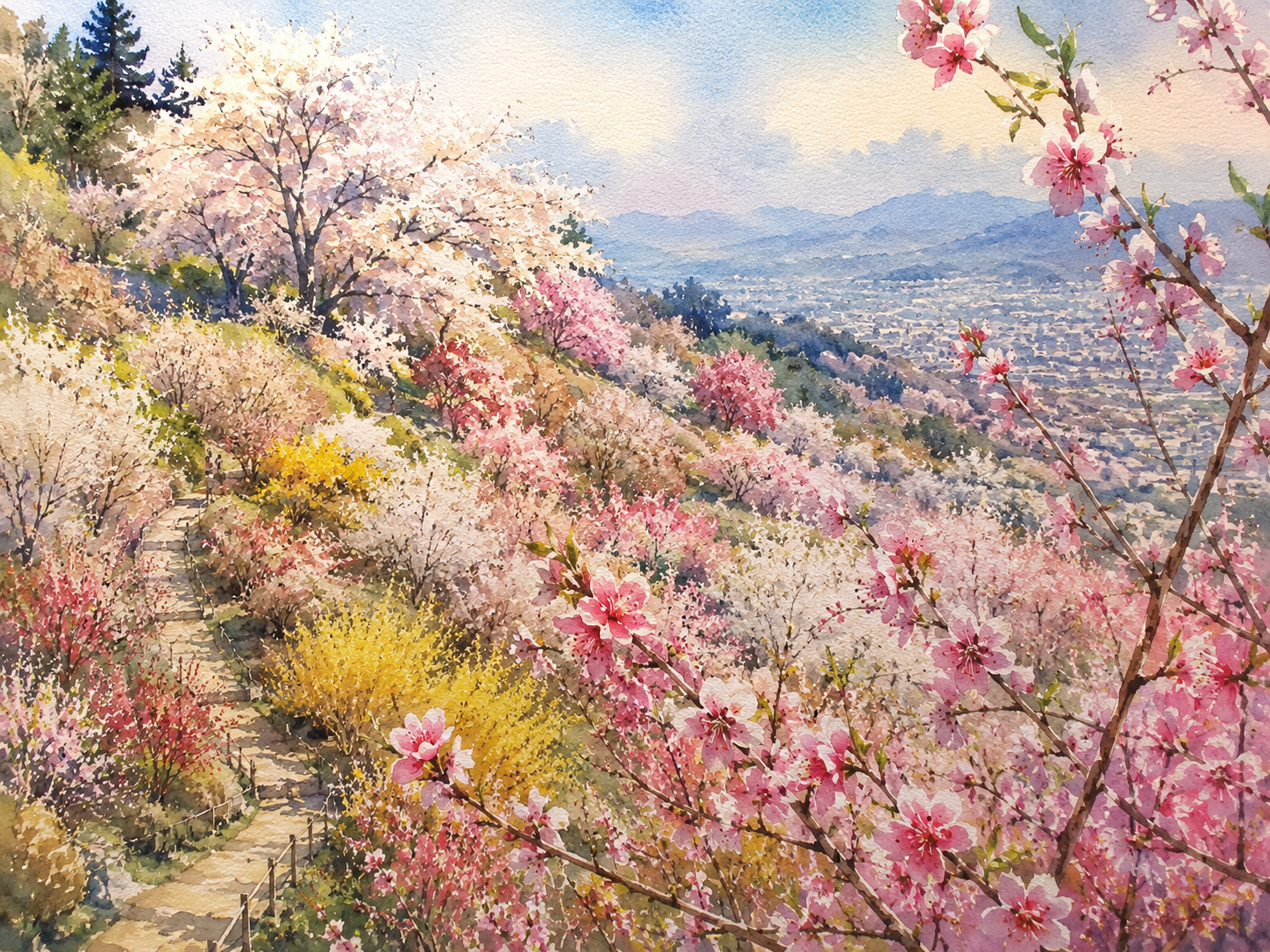
Spring Symphony on the Flower Slope
Critique
1. Introduction This painting looks across a blossom-filled hillside toward a valley town and distant mountains. White, pink, and yellow flowering trees form layered bands on the slope, while a nearby branch at the right gives the view a bright foreground accent. A path at the lower left provides direction through the density of blossoms, and the town and mountains recede in pale blue. The scene keeps its spring abundance while organizing near flowers and far landscape into a clear visual progression. 2. Description The scene includes the pink and white trees, yellow shrubs, path, valley view, and soft mountains. Forms are described with loose but controlled brushwork, so individual details remain readable without becoming rigid. The viewpoint places the viewer close to the foreground while keeping a clear path into the surrounding space. 3. Analysis The composition depends on layered blossom colors turn the slope into a patterned field of depth. Color is handled with a balanced range of warm and cool notes, and the light is used to separate planes of depth. The technique favors visible strokes, giving the surface an active texture while preserving spatial order. 4. Interpretation and Evaluation The work suggests an attentive encounter with a specific environment rather than a generalized scenic view. Its strengths lie in descriptive clarity, coherent composition, and a color structure that supports mood without excess. The originality is modest but effective, especially in the way ordinary natural or architectural features are shaped into a sustained visual experience. 5. Conclusion At first the painting may appear primarily descriptive, but closer viewing reveals careful decisions about rhythm, light, and scale. The image succeeds because its technique and composition guide observation steadily from immediate detail toward broader atmosphere. Overall, it offers a calm and well-organized example of representational painting.
Same Subcategory
Similar Artworks
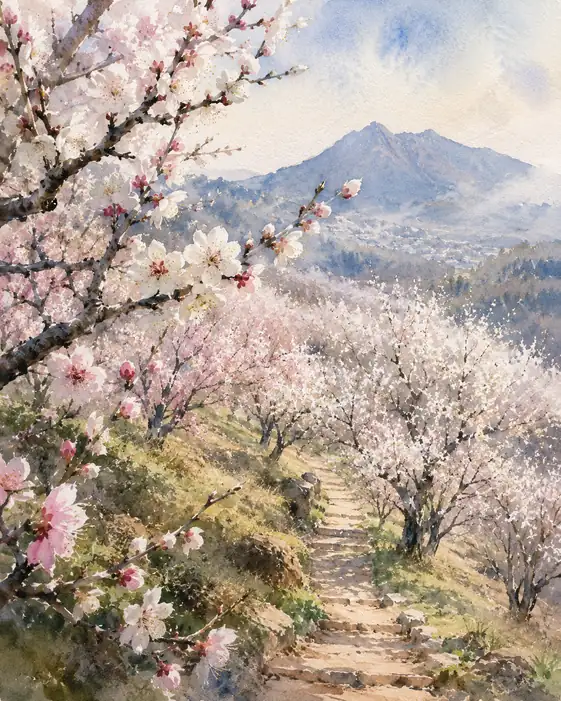 Spring's Gentle Embrace: Path to the Mist
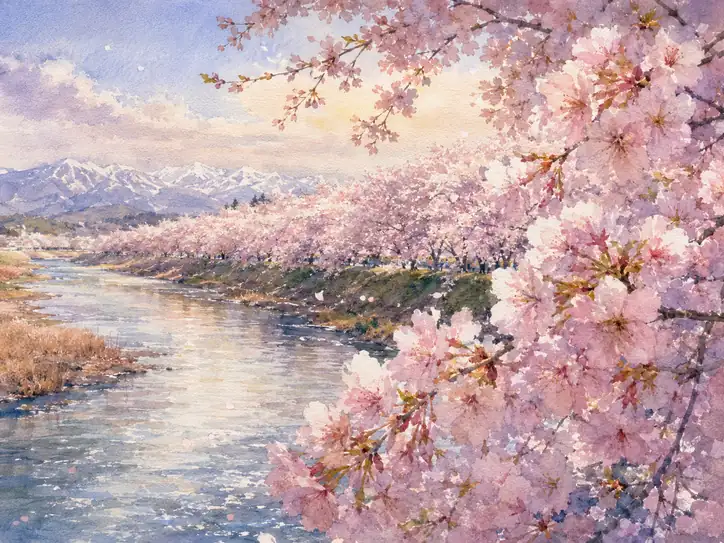 Spring Reflections by the Snowy Peaks
 Spring's Triumph Over Snow
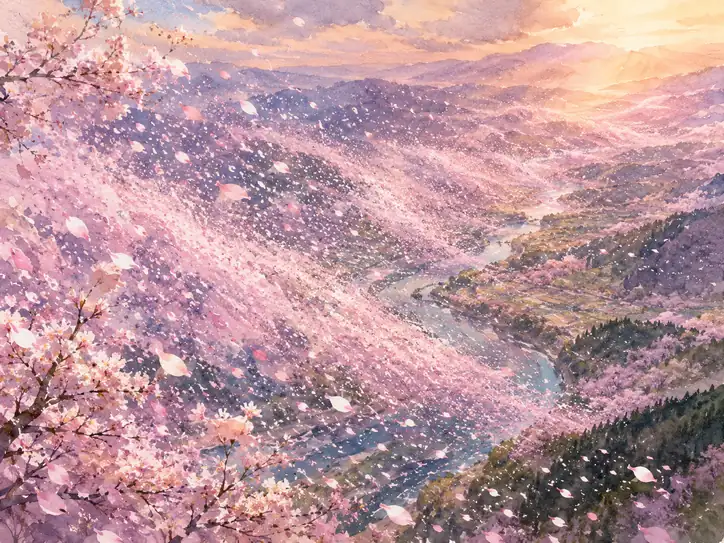 Dance of the Vernal Twilight
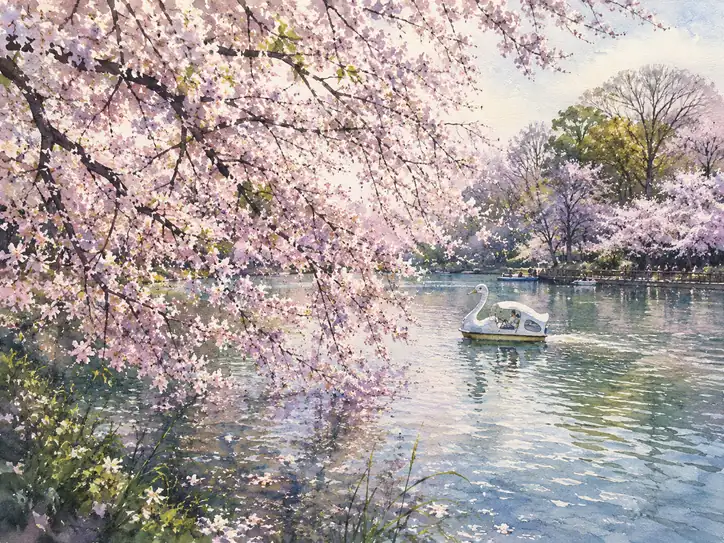 A Spring Waltz on the Water
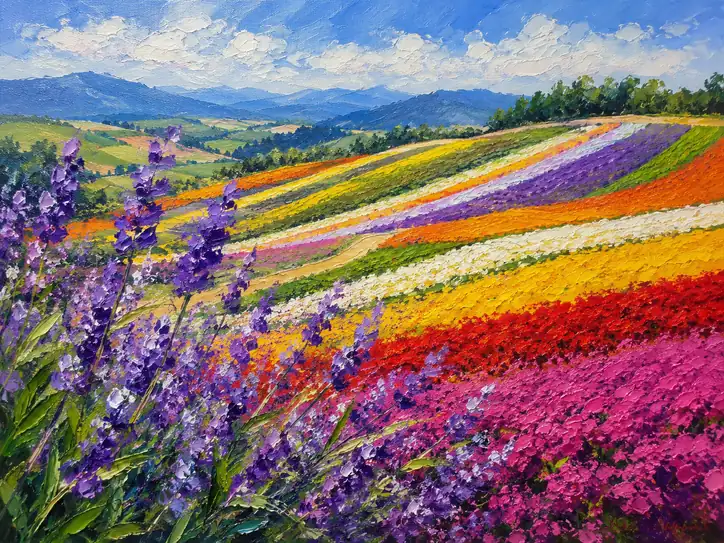 A Rainbow Journey to the Horizon
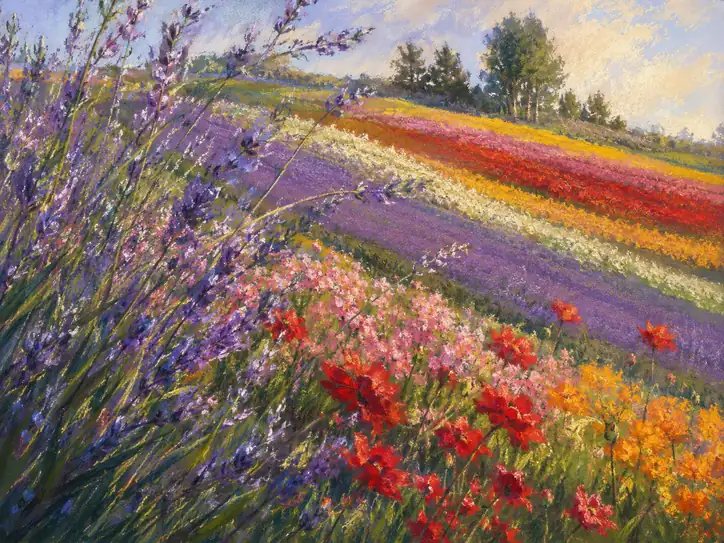 A Gradient of Summer Dreams
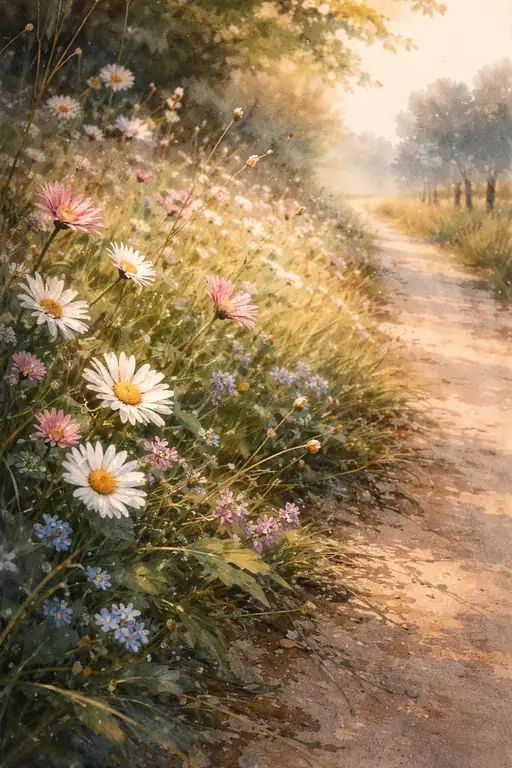 Path of Wildflowers
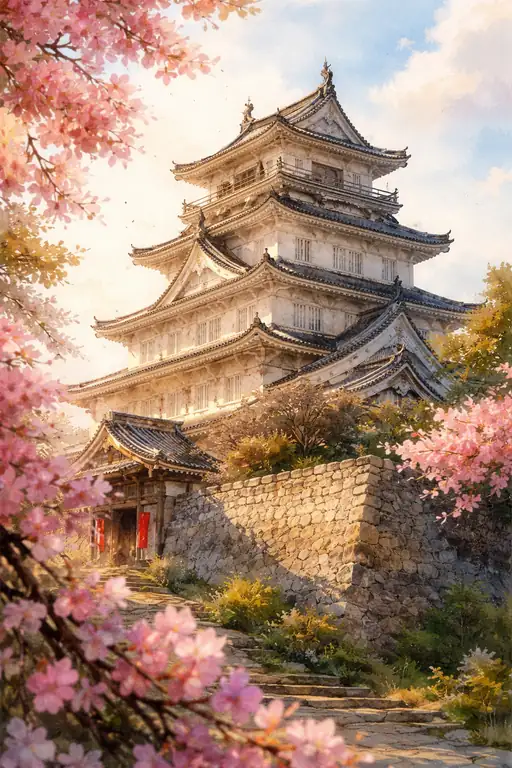 A Fortress of Petals: Harmony in Stone and Bloom
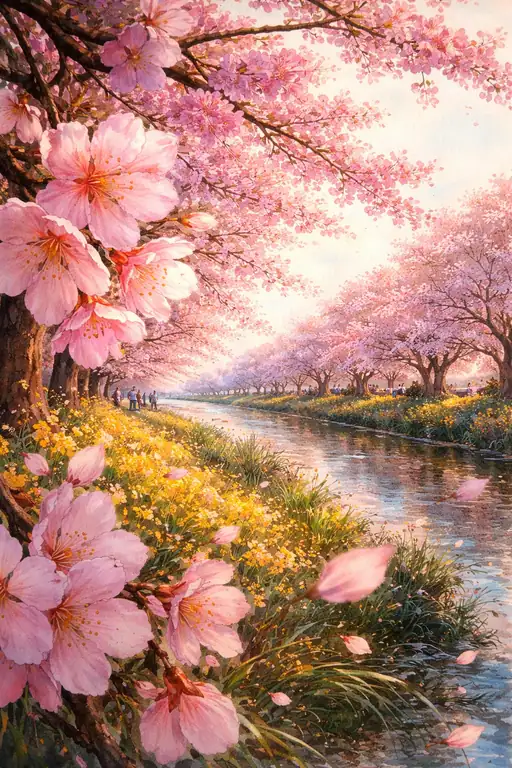 Awakening Spring, A Glimmer of Eternity