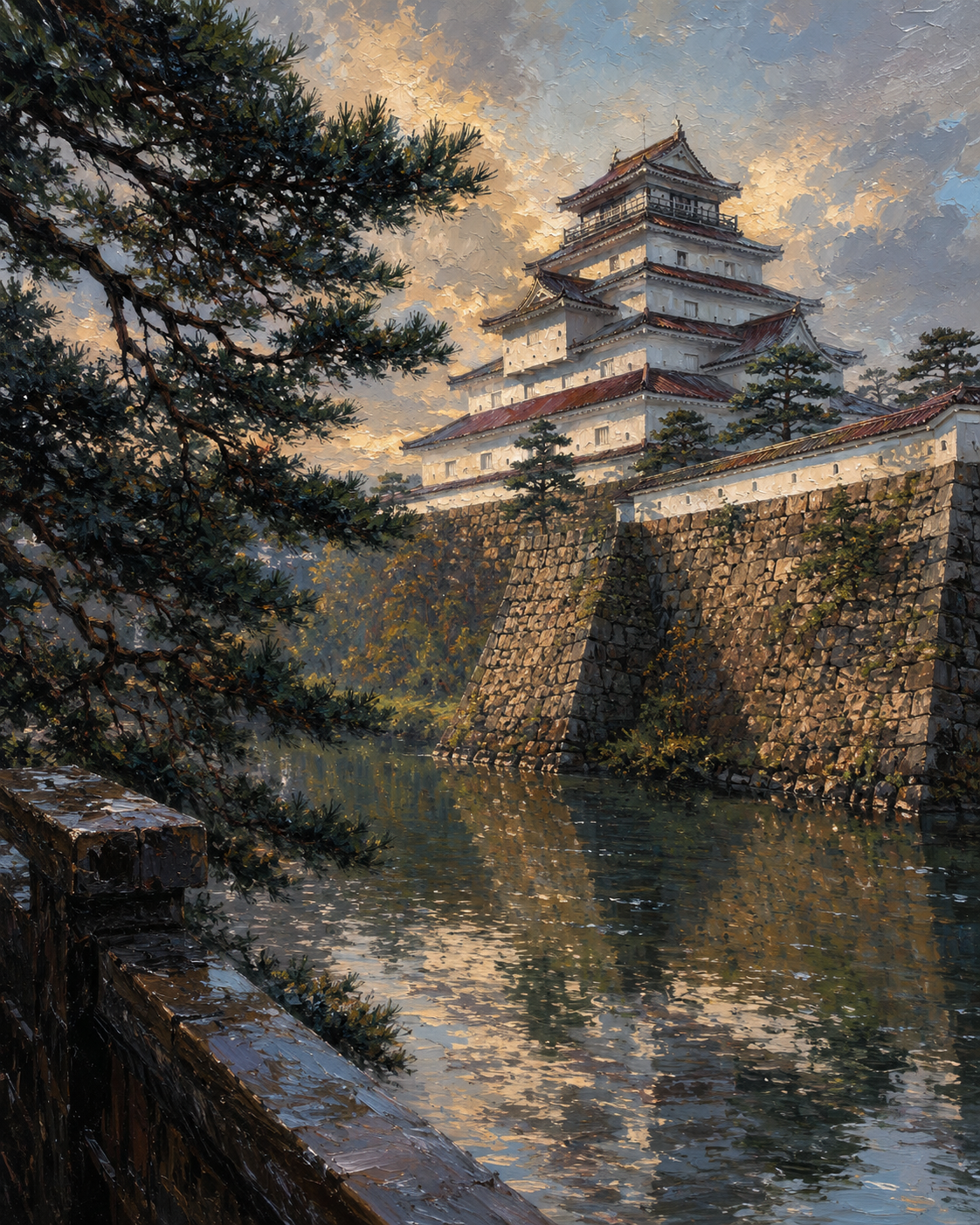
Sentinel of the Golden Twilight
Critique
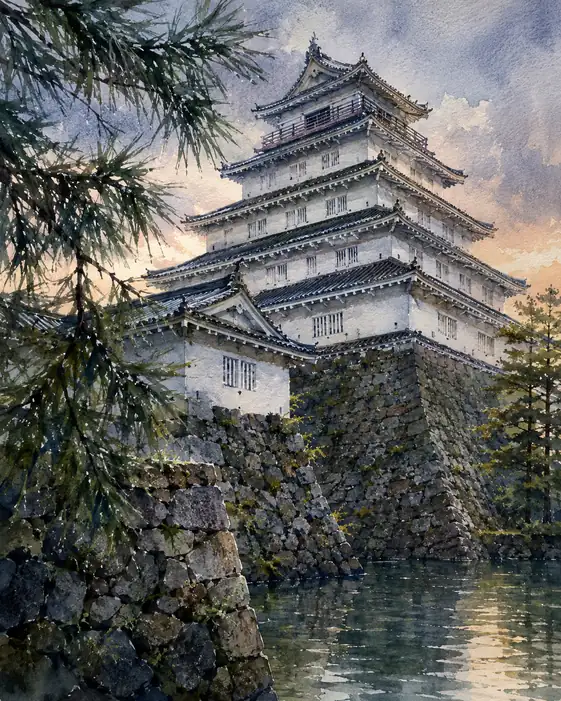
1. Introduction This painting looks past pine branches toward a castle rising above a moat and heavy stone walls. The white keep stands bright against evening clouds, while the sloped masonry gives the structure weight and height. Reflections in the water soften the hardness of the walls and bring the sky into the lower half of the image. The dark pine and foreground railing tighten the view, giving the scene the measured distance of looking from the edge of the moat. 2. Description The scene includes the white keep, massive masonry, pine branches, water reflection, and evening clouds. Forms are described with loose but controlled brushwork, so individual details remain readable without becoming rigid. The viewpoint places the viewer close to the foreground while keeping a clear path into the surrounding space. 3. Analysis The composition depends on the vertical tower and sloping stone base create authority and stability. Color is handled with a balanced range of warm and cool notes, and the light is used to separate planes of depth. The technique favors visible strokes, giving the surface an active texture while preserving spatial order. 4. Interpretation and Evaluation The work suggests an attentive encounter with a specific environment rather than a generalized scenic view. Its strengths lie in descriptive clarity, coherent composition, and a color structure that supports mood without excess. The originality is modest but effective, especially in the way ordinary natural or architectural features are shaped into a sustained visual experience. 5. Conclusion At first the painting may appear primarily descriptive, but closer viewing reveals careful decisions about rhythm, light, and scale. The image succeeds because its technique and composition guide observation steadily from immediate detail toward broader atmosphere. Overall, it offers a calm and well-organized example of representational painting.
Same Subcategory
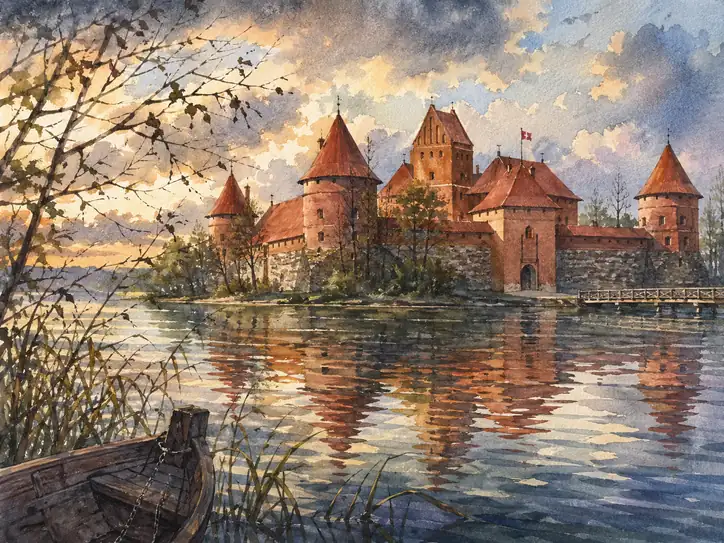 Serene Lake and the Medieval Castle
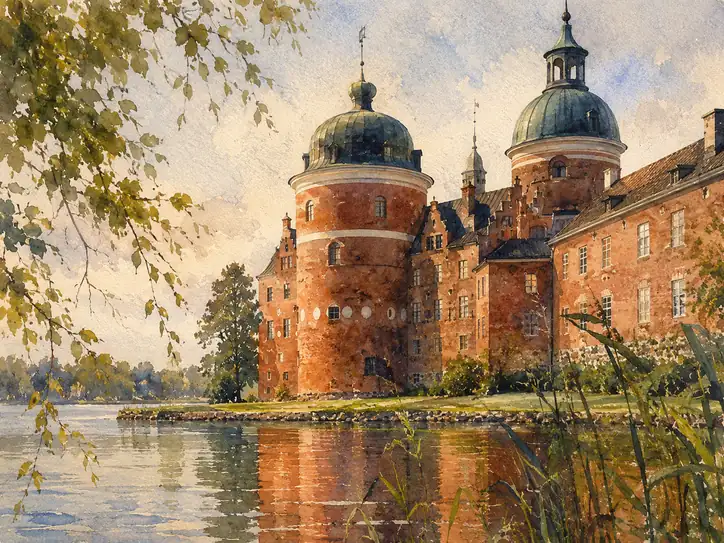 Echoes on the Mirror Lake
Similar Artworks
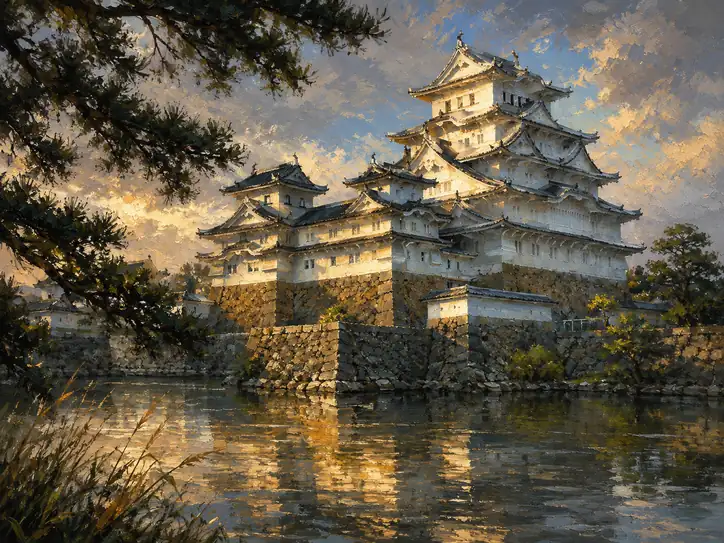 Eternal Gaze in the Amber Sunset
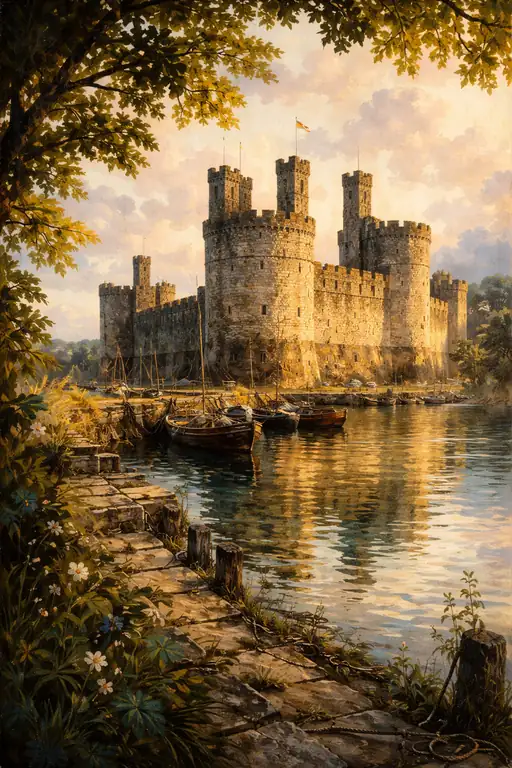 A Golden Lullaby for the Old Fortress
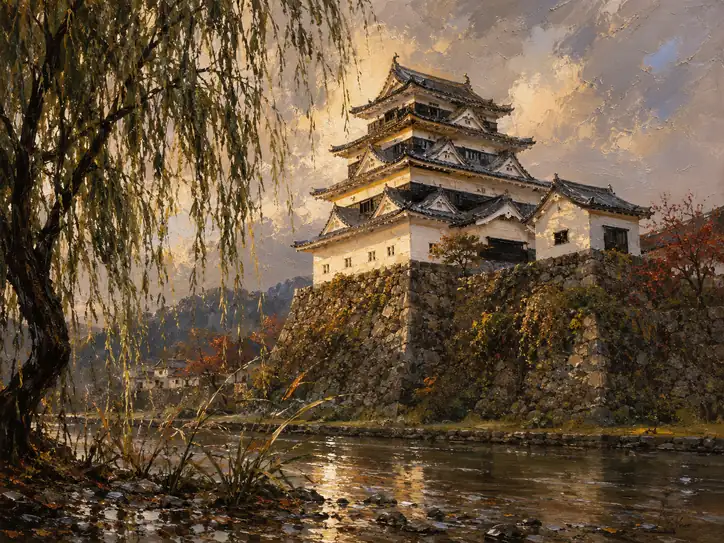 Eternal Echoes of the Golden Keep
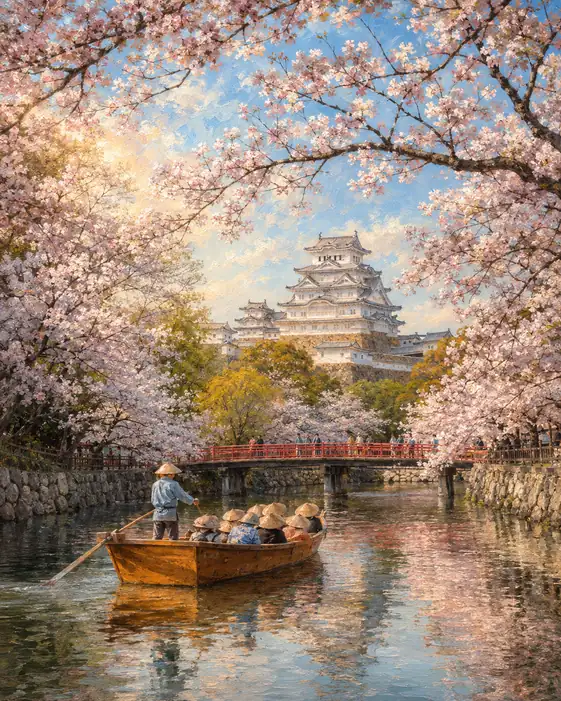 Morning Breeze on Sakura River
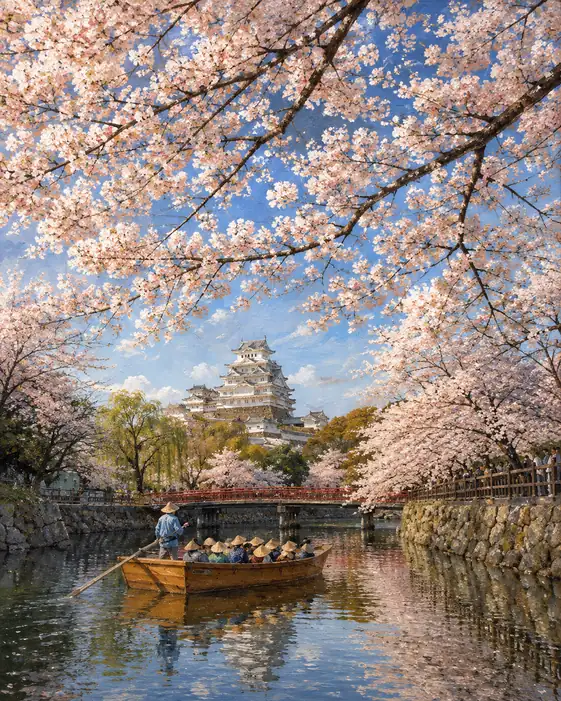 Spring Moat and the White Heron Castle
 Echoes of History in the Crimson Sunset
 The Citadel of Sunsets
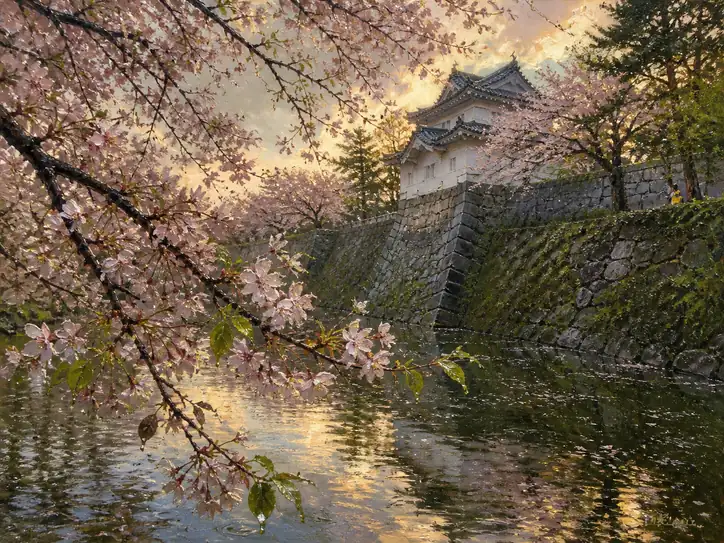 Spring Sunset at the Castle Moat
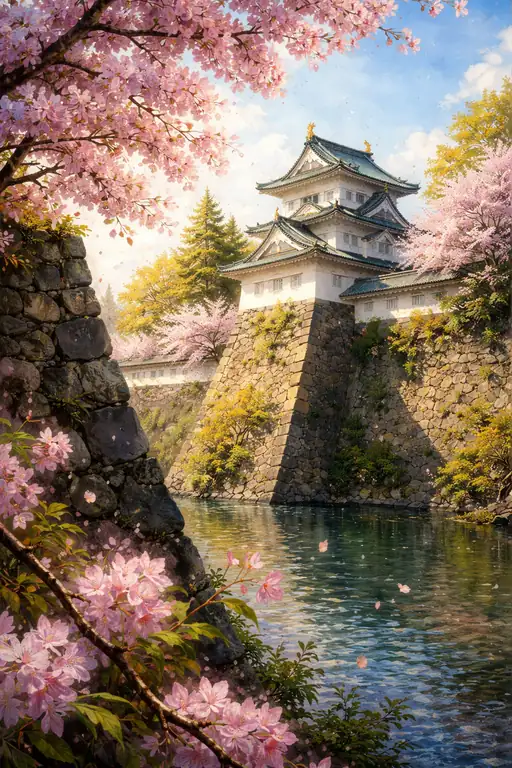 The Silver Castle and Blossoms Unfolding on the Water
 Stone Keeps the Evening Close