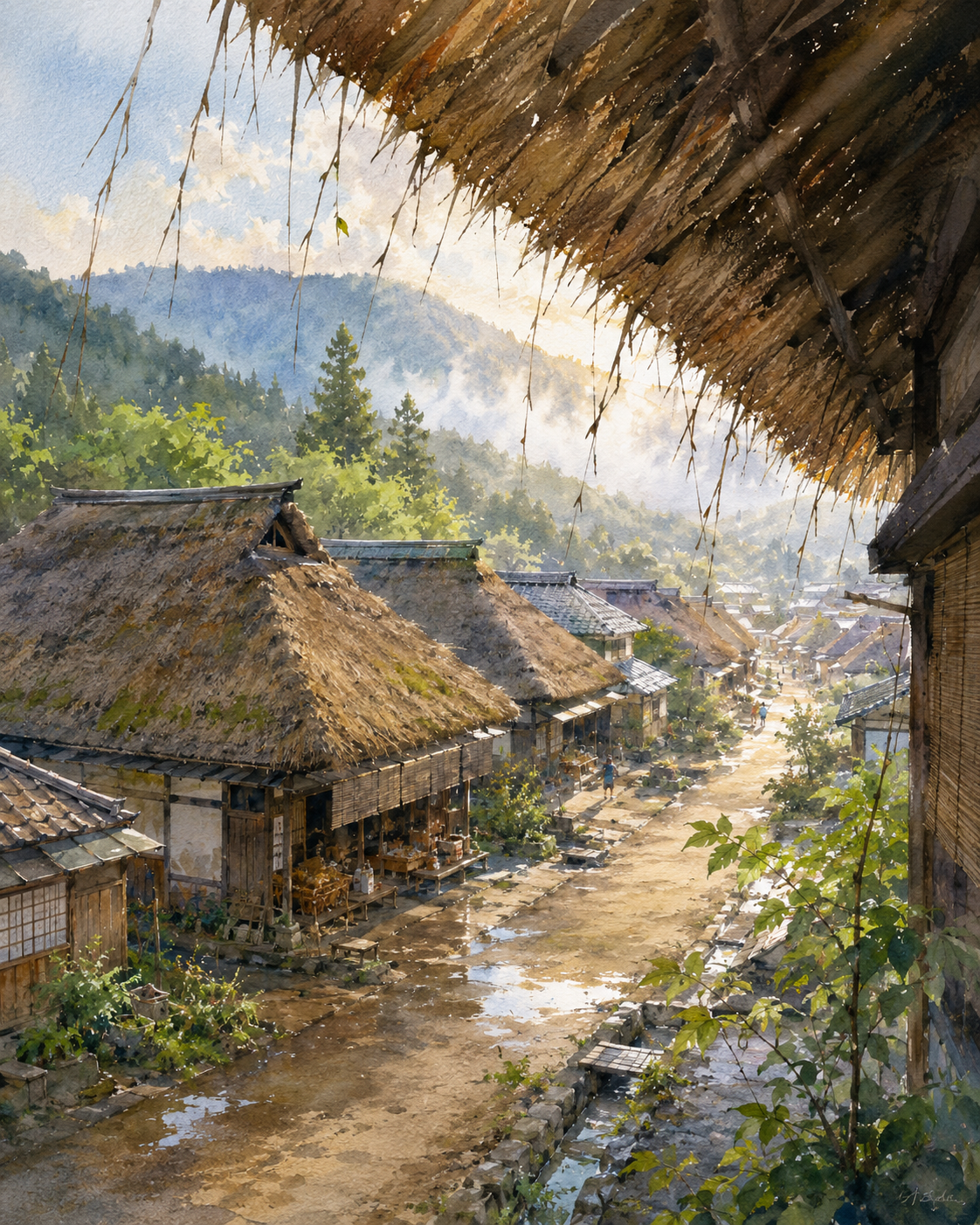
Echoes of the Thatched Village
Critique
1. Introduction This painting views a mountain village street from beneath a thatched eave. The dark mass of straw across the top frames the scene, while houses, damp earth, and small reflections lead the eye down the road. Mist on the hills and soft light bring out the textures of old roofs and wooden walls. The focus is not on documenting every detail of village life, but on the felt interval of standing at an eave and looking along the street. 2. Description The scene includes the straw roofs, muddy road, wooden walls, distant hills, and hanging thatch. Forms are described with loose but controlled brushwork, so individual details remain readable without becoming rigid. The viewpoint places the viewer close to the foreground while keeping a clear path into the surrounding space. 3. Analysis The composition depends on the dark eave frames the view and turns the street into a receding corridor. Color is handled with a balanced range of warm and cool notes, and the light is used to separate planes of depth. The technique favors visible strokes, giving the surface an active texture while preserving spatial order. 4. Interpretation and Evaluation The work suggests an attentive encounter with a specific environment rather than a generalized scenic view. Its strengths lie in descriptive clarity, coherent composition, and a color structure that supports mood without excess. The originality is modest but effective, especially in the way ordinary natural or architectural features are shaped into a sustained visual experience. 5. Conclusion At first the painting may appear primarily descriptive, but closer viewing reveals careful decisions about rhythm, light, and scale. The image succeeds because its technique and composition guide observation steadily from immediate detail toward broader atmosphere. Overall, it offers a calm and well-organized example of representational painting.
Same Subcategory
 Sanctuary in the Snowy Silence
Similar Artworks
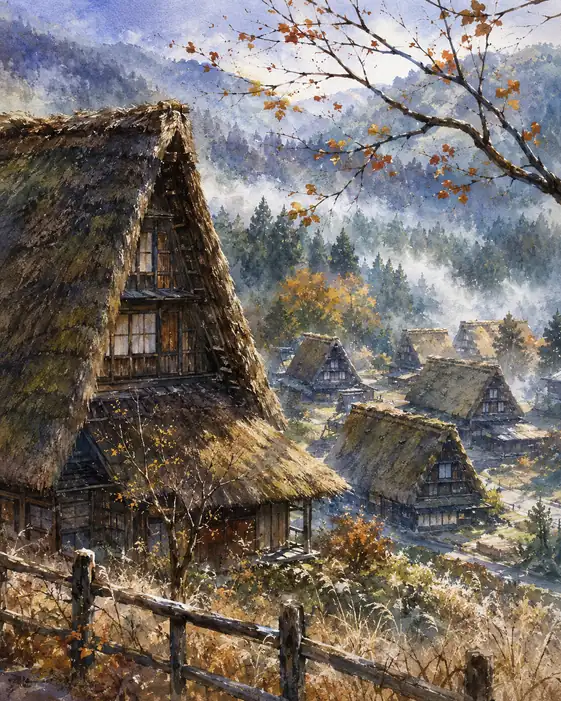 Echoes of the Thatch: A Misty Autumn Memory
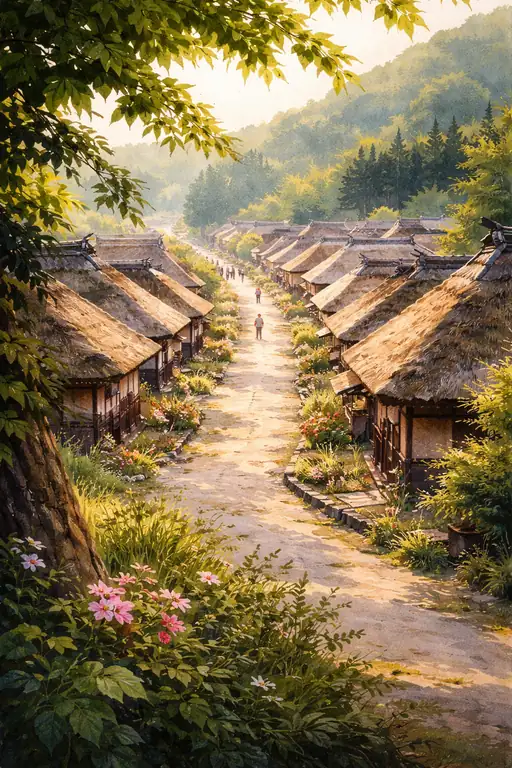 Tranquil Shadows Along the Thatched Village Road
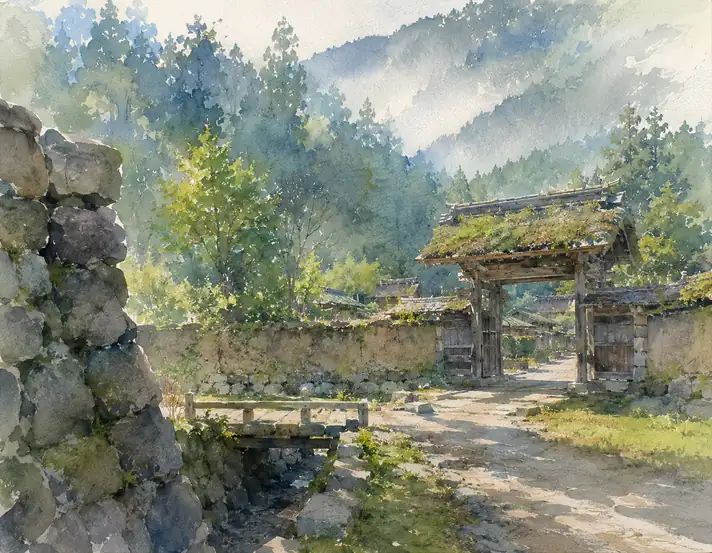 The Silent Gate Where Time Lingers
 Whispers of the Golden Valley
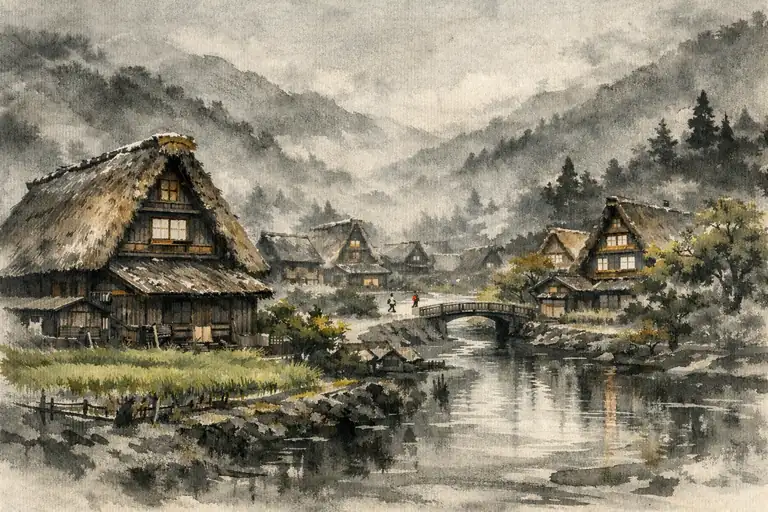 Quiet Breath of the Sacred Valley
 Whispers of the Evening Sun on the Stone Path
 A Warm Hearth in the Misty Valley
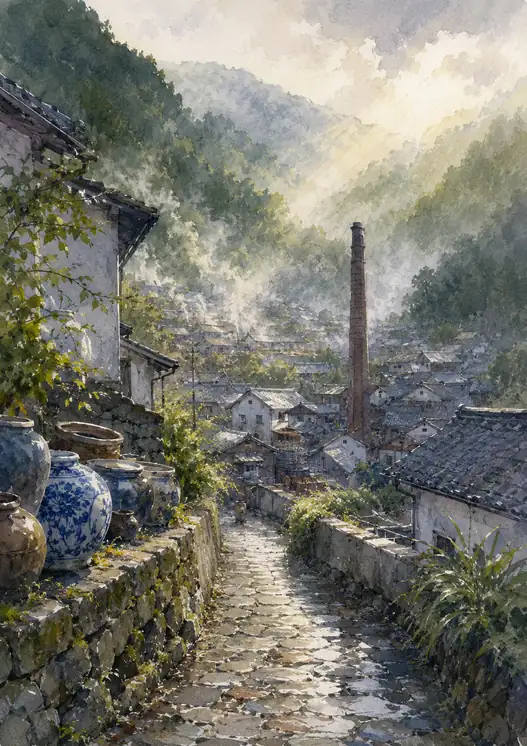 The Kiln's Smoke Remembers Hands
 Where the Fields Become Mist
 A Path Through the Breath of Morning