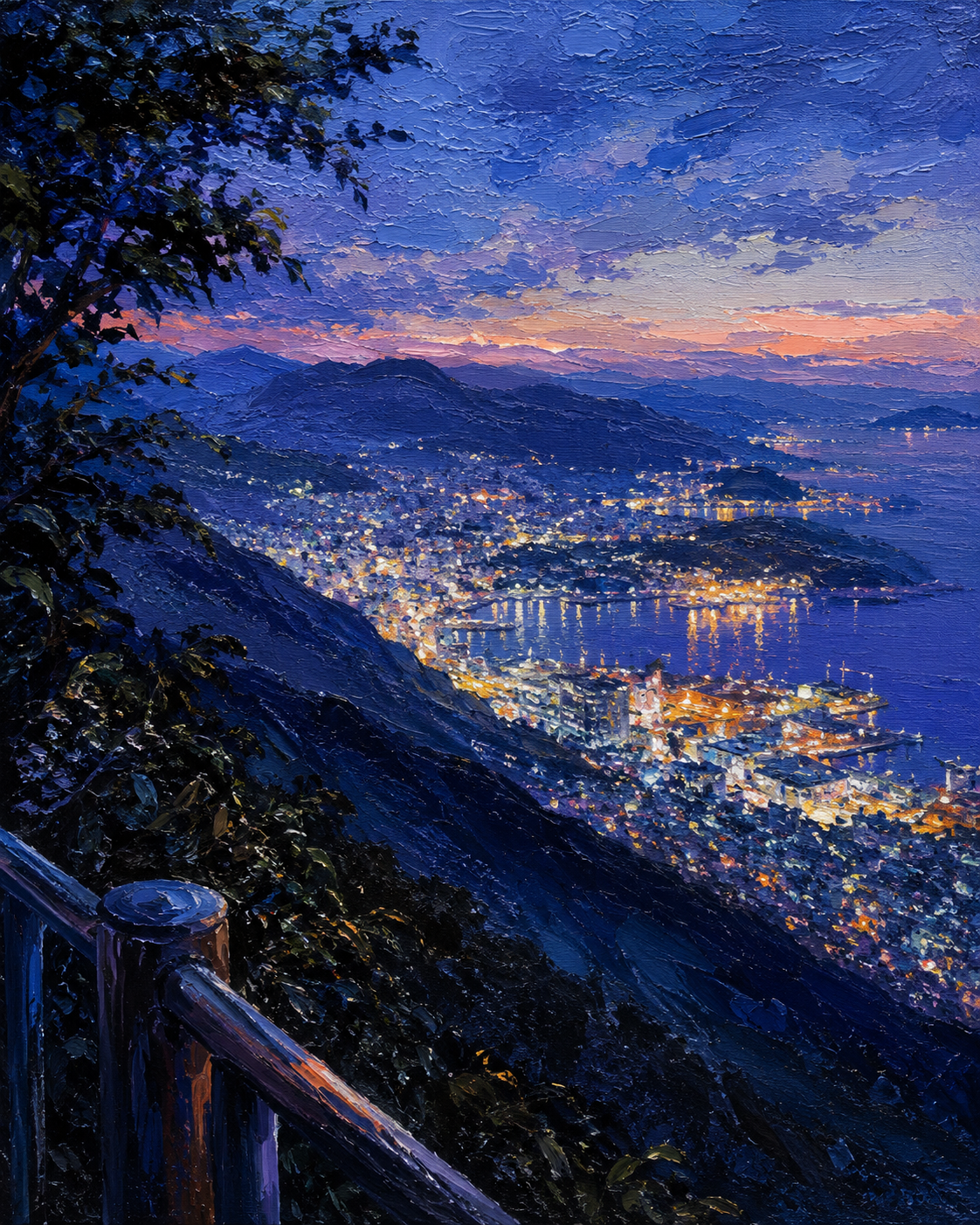
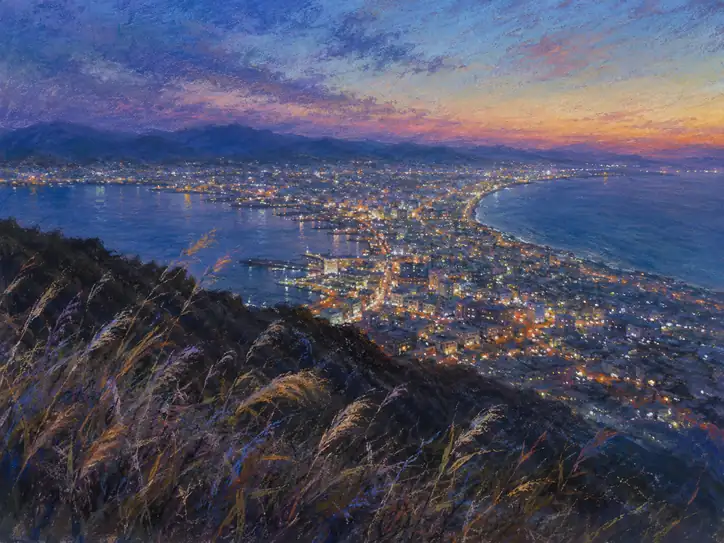
Twilight Harbor, the City of Radiant Whispers
Critique
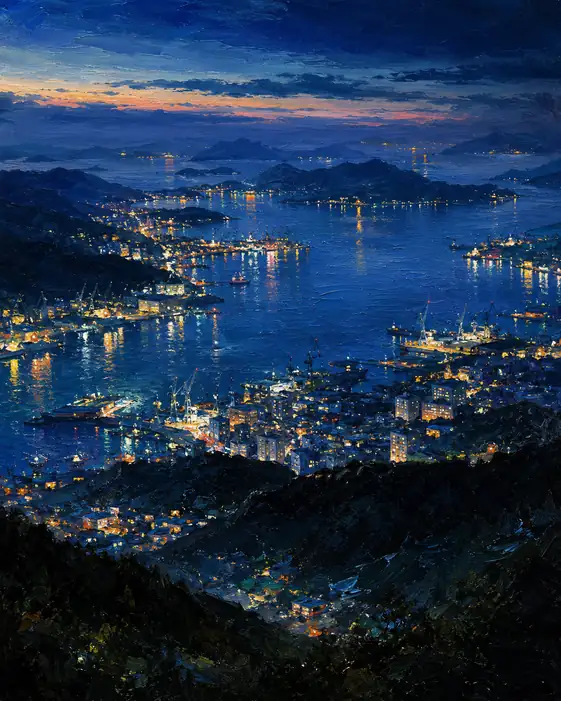
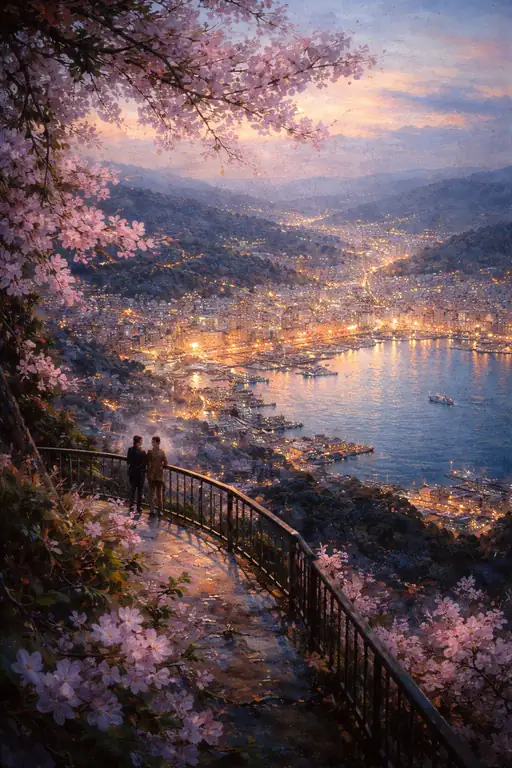
1. Introduction This oil-like painting presents a harbor city at twilight, seen past trees and a foreground railing. Dark foliage and the rail establish the elevated lookout, below which the curving harbor, city lights, mountain silhouettes, and reflected water spread outward. Within the deep blue of evening, white and orange lights scatter along the shore, while pink afterglow remains on the distant horizon. The dark foreground makes the illuminated port feel broader and farther away, revealing the quiet rhythm of the city at night. 2. Description The scene includes the lights, bay curve, dark railing, mountain silhouettes, and blue sky. Forms are described with loose but controlled brushwork, so individual details remain readable without becoming rigid. The viewpoint places the viewer close to the foreground while keeping a clear path into the distance. 3. Analysis The composition depends on night color and scattered points of light produce a measured urban rhythm. Color is handled with a balanced range of warm and cool notes, and the light is used to separate planes of depth. The technique favors visible strokes, giving the surface an active texture while preserving spatial order. 4. Interpretation and Evaluation The work suggests an attentive encounter with a specific environment rather than a generalized scenic view. Its strengths lie in descriptive clarity, coherent composition, and a color structure that supports mood without excess. The originality is modest but effective, especially in the way ordinary natural features are shaped into a sustained visual experience. 5. Conclusion At first the painting may appear primarily descriptive, but closer viewing reveals careful decisions about rhythm, light, and scale. The image succeeds because its technique and composition guide observation steadily from immediate detail toward broader atmosphere. Overall, it offers a calm and well-organized example of landscape painting.
Same Subcategory
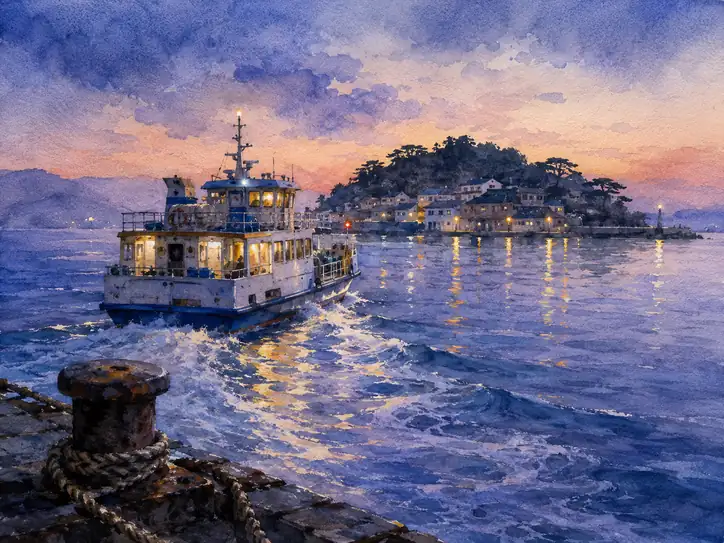 The Crossing of Golden Memories
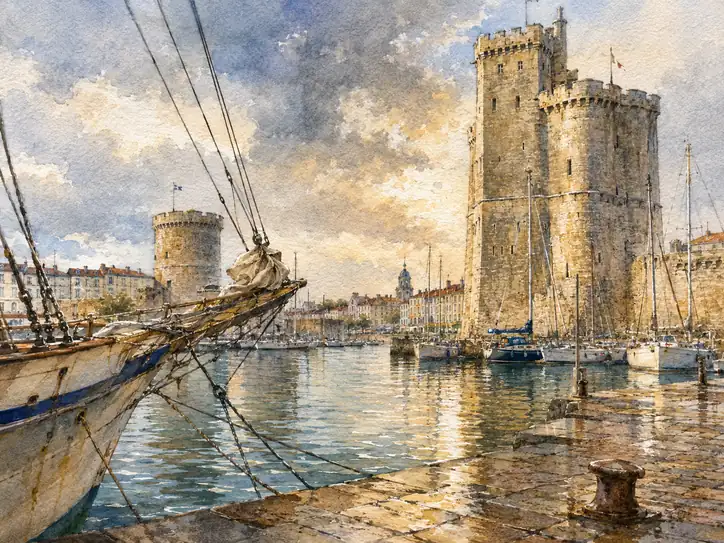 The Sun's Last Promise to the Harbor
Similar Artworks
 Vibrant Dusk over the Sleeping Giant
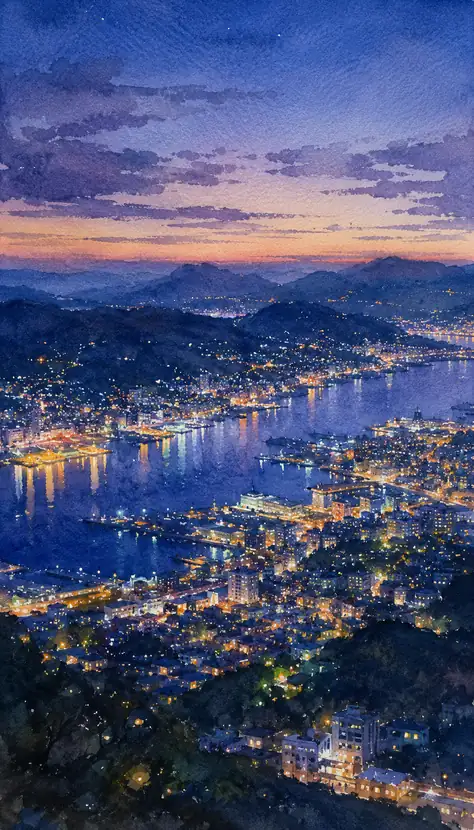 Night Learns the Shape of the Harbor
 The Cradle of Shimmering Dreams
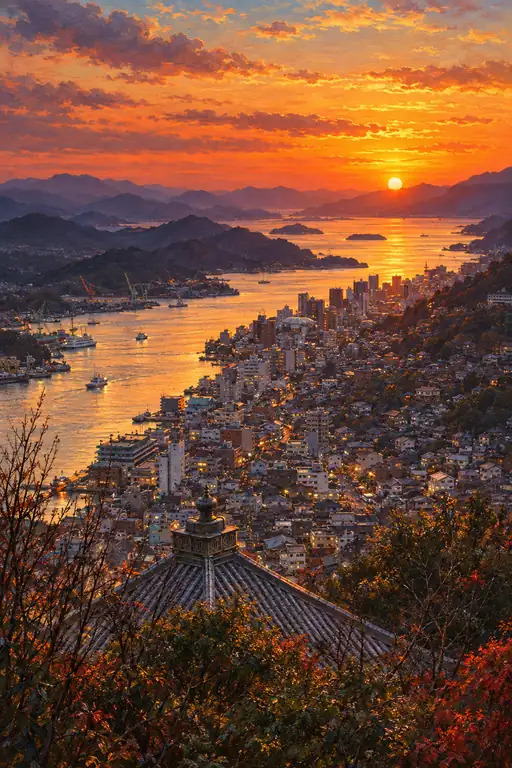 Radiance upon the Inland Sea
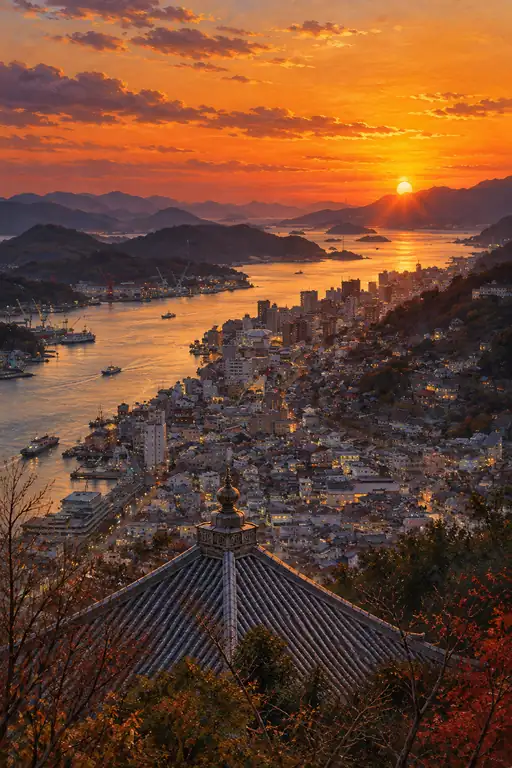 Evening Glow on the Sloping Port
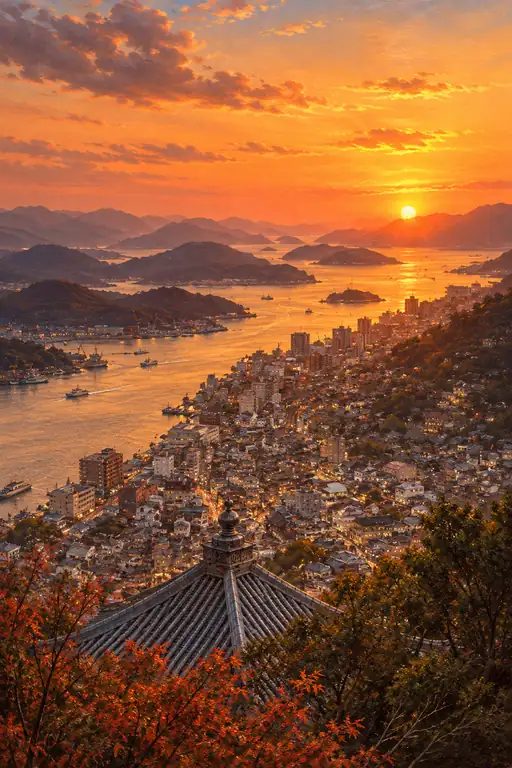 Golden Twilight Over the Narrow Sea
 A Constellation Anchored to Water
 The Silent Watchers of the Twilight City
 Golden Embrace of the Evening Tide
 Magenta Cascade Over White Plaster