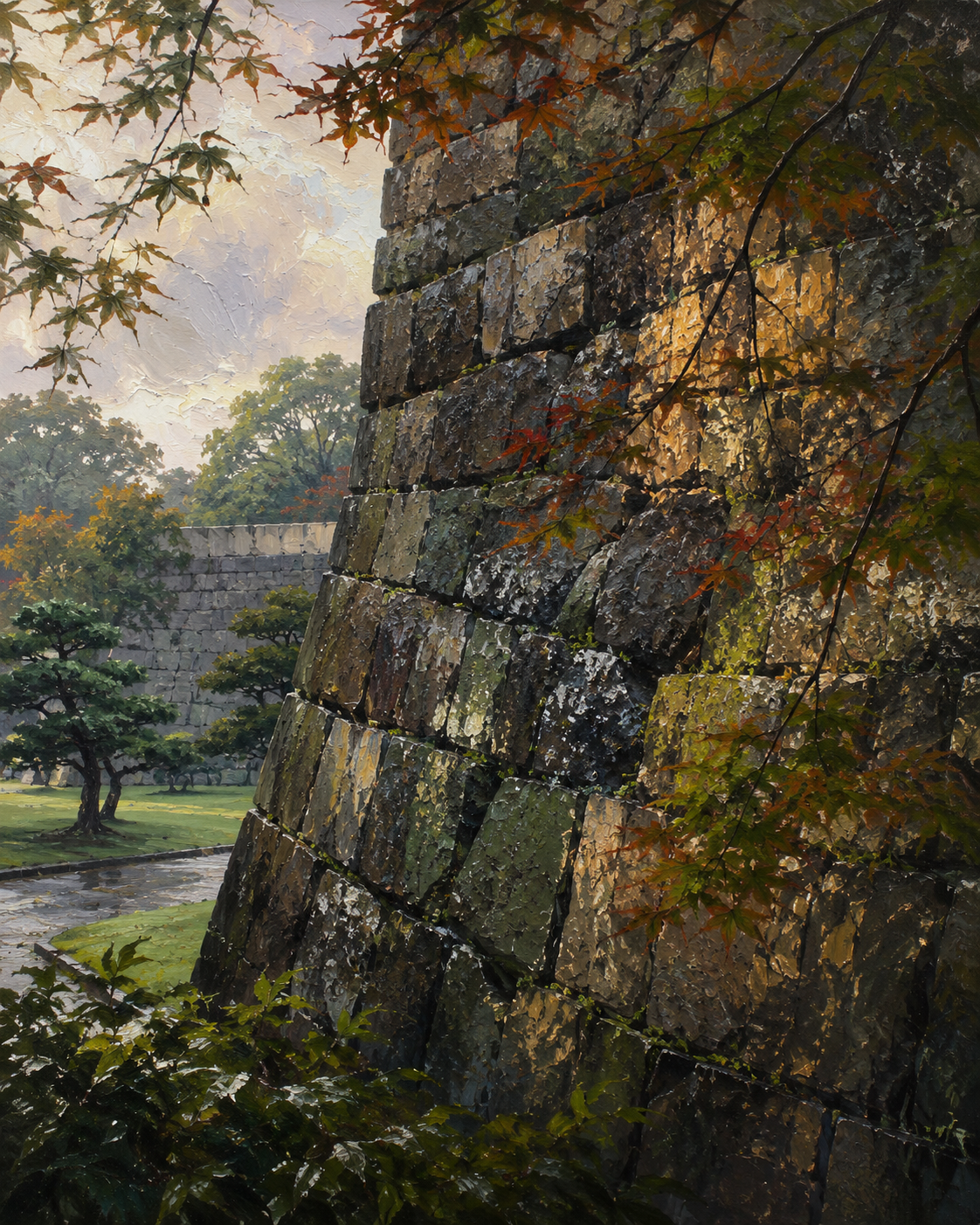
Fortress of Time and Crimson Leaves
Critique
1. Introduction This oil painting presents a powerful study of a massive stone wall juxtaposed with vibrant autumn foliage. It explores the profound relationship between permanent architectural structures and the transient beauty of nature. The artist's focus is clearly directed toward capturing the physical presence and rugged texture of the historical fortification. The scene evokes a sense of quiet grandeur typical of a Japanese castle garden in autumn, reflecting a deep respect for historical legacy. 2. Description A sloping stone wall occupies the majority of the right and central portions of the canvas, standing as a testament to time. The individual stones exhibit varied textures with patches of damp moss and intense highlights from side-lighting. In the foreground, delicate maple branches with reddish-orange leaves hang over the scene, partially obscuring the stones with their intricate details. The background reveals another section of the wall and neatly trimmed pine trees under a soft, overcast sky that diffuses light across the landscape. 3. Analysis The artist employs a thick impasto technique to emphasize the rugged surfaces and perceived weight of the stones. A strong diagonal composition created by the wall provides both significant depth and a sense of structural stability to the image. Color contrasts between the cool greys of the wall and the warm tones of the maple leaves create a vibrant visual rhythm throughout the piece. The clear direction of light enhances the three-dimensional quality of each stone, making the structure feel tangible and immense. 4. Interpretation and Evaluation The work succeeds in balancing the enduring strength of the fortress with the fleeting elegance of autumn leaves. The detailed rendering of the stone surfaces demonstrates a mastery of light and shadow, blending realism with expressive brushwork. The inclusion of lush greenery adds a layer of vitality to the otherwise stoic and inorganic subject matter. This piece represents a sophisticated reinterpretation of traditional themes through a modern and textured lens, achieving a high degree of artistic completion. 5. Conclusion While the sheer scale of the wall initially dominates the viewer's attention, the subtle interplay of light eventually reveals more delicate details. The masterful arrangement of highlights and shadows elevates the subject beyond a mere architectural study into a work of spiritual depth. Such meticulous observation results in a profound and contemplative viewing experience for any observer. The painting is a remarkable example of technical skill combined with a keen sensitivity to atmospheric conditions and natural cycles.
Same Subcategory
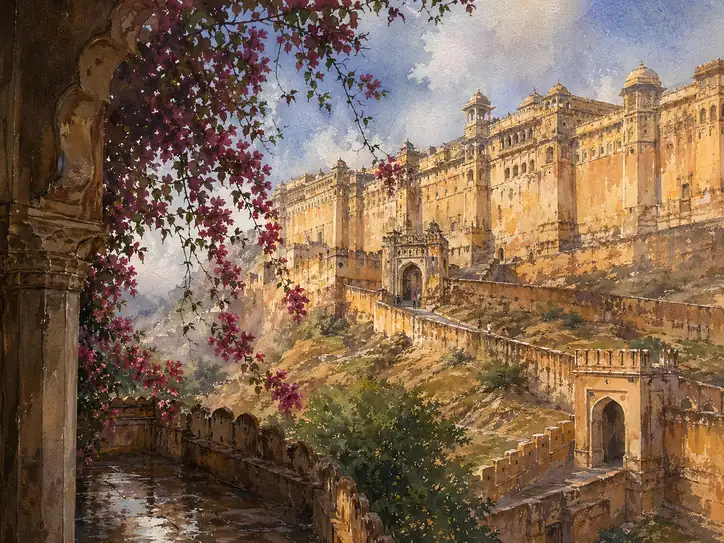 The Golden Bastion and the Crimson Cascade
Similar Artworks
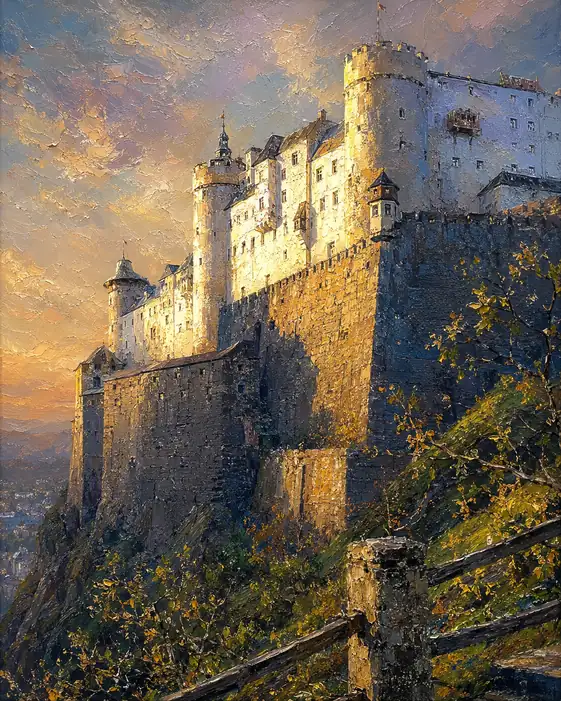 Sentinel of the Setting Sun
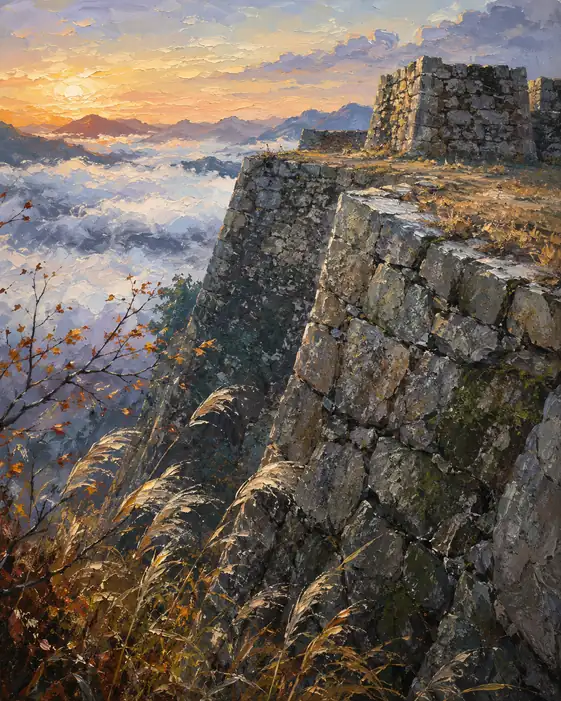 Bastion Floating in the Morning Mist
 Eternal Echoes of the Golden Keep
 Eternal Fortress of the White Tower
 Echoes of the Rain on Castle Stones
 Sentinel of the Golden Hour
 The Unyielding Guardian
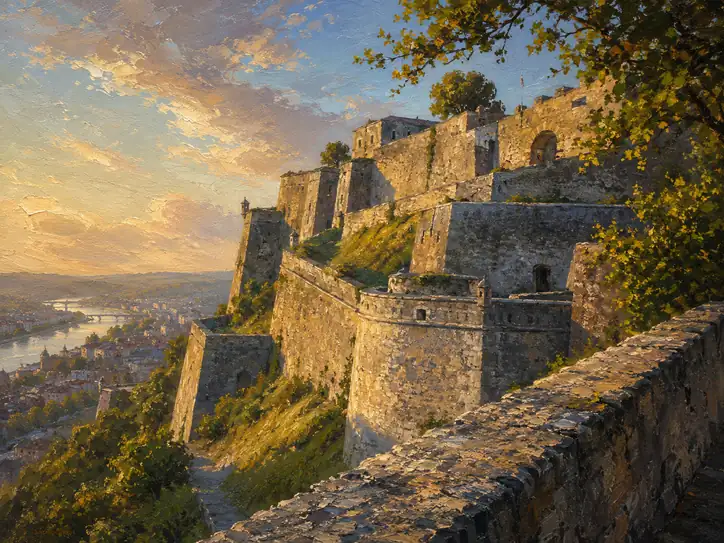 Gilded Walls of the Forgotten King
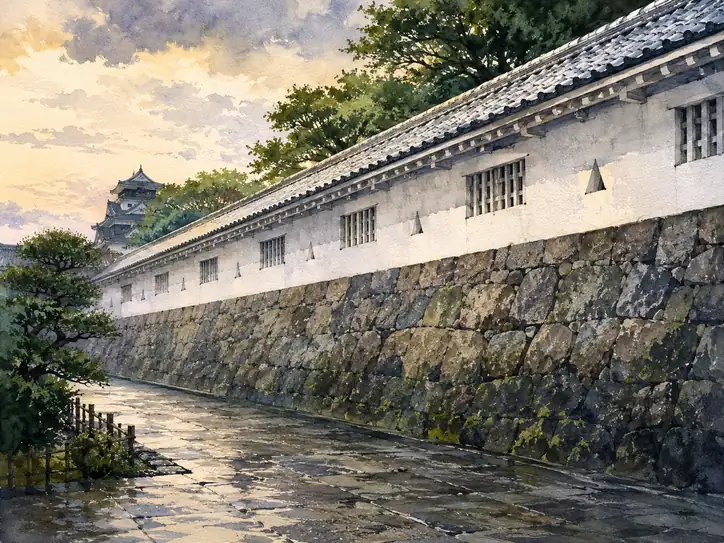 The Citadel's Quiet Breath
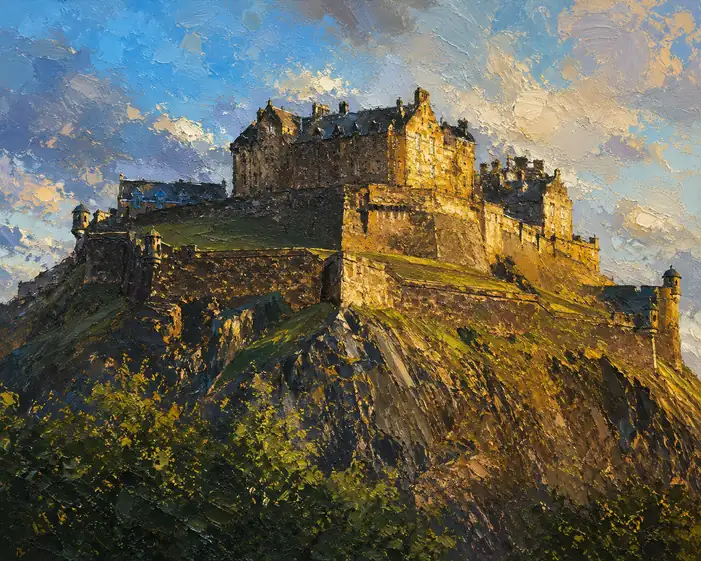 Crowned by Light