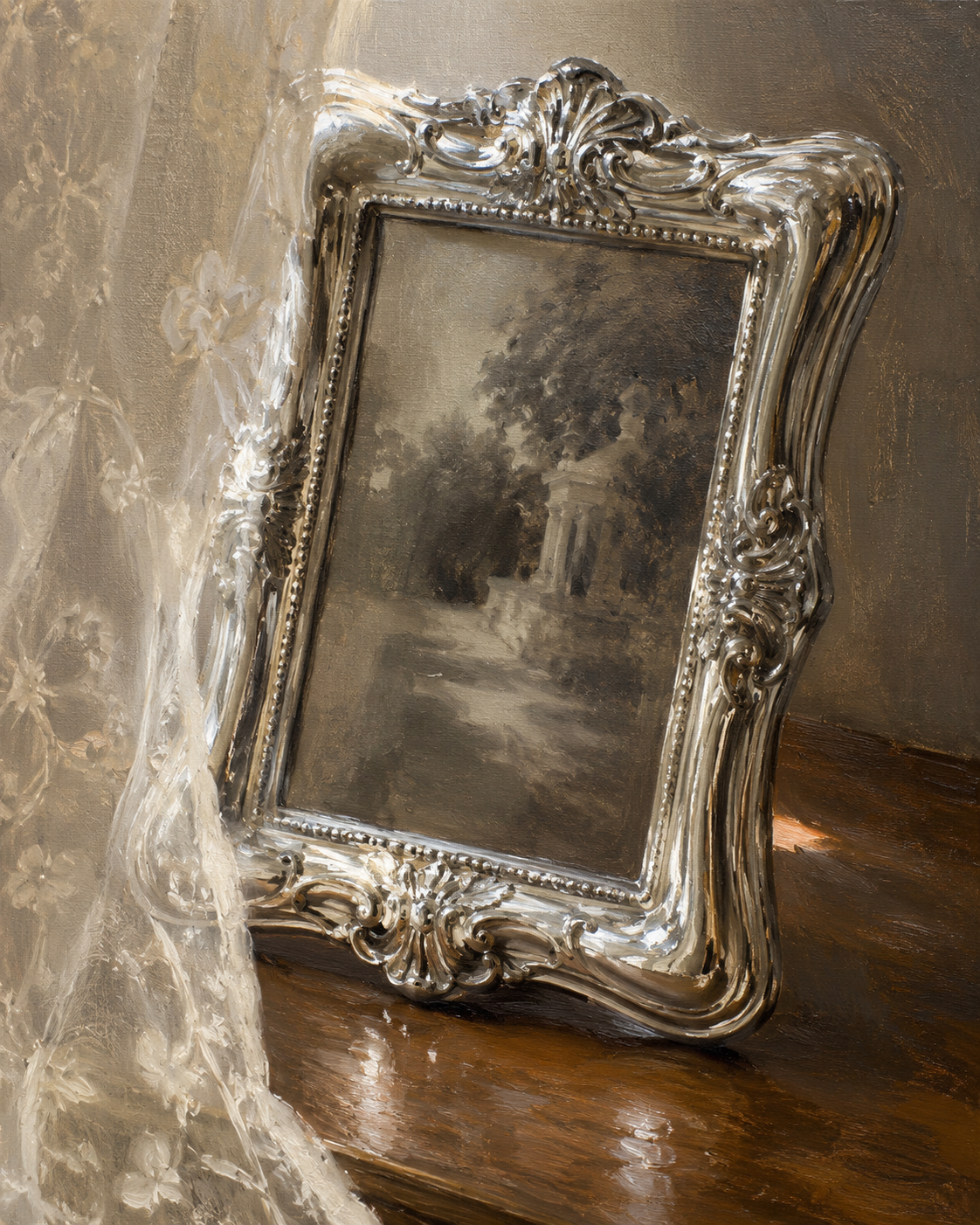
Eternal Reflections in Silver
Critique
1. Introduction This still life painting captures an ornate silver frame resting on a polished wooden surface, partially veiled by a delicate lace curtain. The composition invites the viewer into a quiet, interior space where memories and objects are preserved with care. The central focus is a monochromatic landscape contained within the frame, suggesting a nostalgic or historical connection. 2. Description The silver frame is intricately carved with rococo-style flourishes, its reflective surface catching soft ambient light. To the left, a translucent white lace curtain with floral patterns drapes gracefully, adding a layer of texture and softness to the scene. Inside the frame, a sepia-toned painting depicts a classical structure, possibly a garden pavilion, surrounded by dense foliage and trees. The wooden table below reflects the frame's base, showing thick, visible brushstrokes that suggest a rich, varnished finish. 3. Analysis The artist employs a sophisticated use of contrast between the highly detailed, reflective metal of the frame and the soft, diffused textures of the lace and the inner painting. The diagonal placement of the frame creates a sense of depth, leading the eye from the foreground lace to the background landscape. Light plays a crucial role, highlighting the metallic ridges of the frame while casting gentle shadows that define the folds of the curtain and the grain of the wood. 4. Interpretation and Evaluation This work explores the relationship between the physical object and the captured image, emphasizing the act of framing as a way of elevating memory. The technical execution is exceptional, particularly in the rendering of diverse materials like lace, silver, and wood. The choice of a monochromatic palette for the inner landscape enhances the sense of antiquity, creating a poignant contrast with the vibrant presence of the surrounding objects. 5. Conclusion Through its meticulous attention to detail and harmonious composition, the painting succeeds in creating a contemplative atmosphere. The interplay of light and texture transforms a simple arrangement of objects into a compelling study of nostalgia and domestic elegance. Ultimately, the work serves as a testament to the enduring beauty found in the quiet corners of a well-lived space.
Same Subcategory
 The Scholar's Ephemeral Thought
 Porcelain and Pale Petal Ware
Similar Artworks
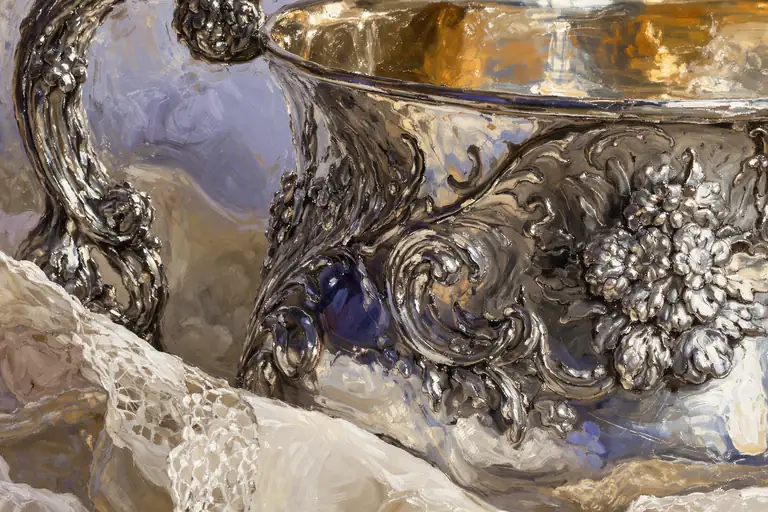 Reflections in Silver and Lace
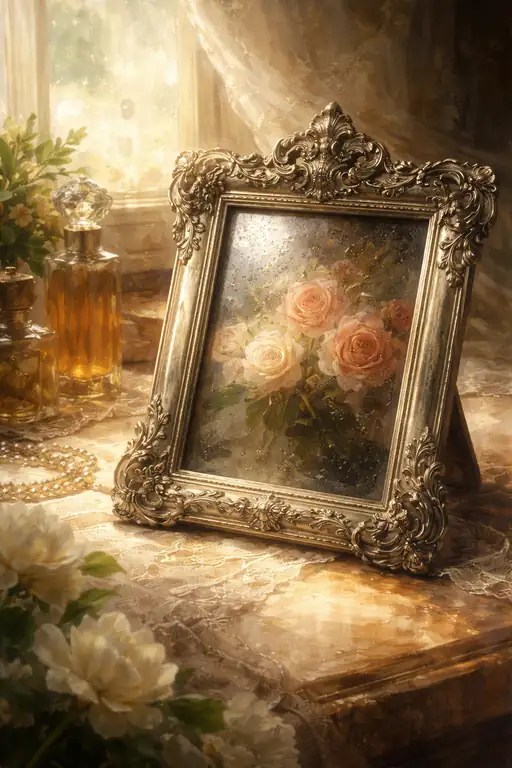 The Fragrance of Yesterday's Dreams
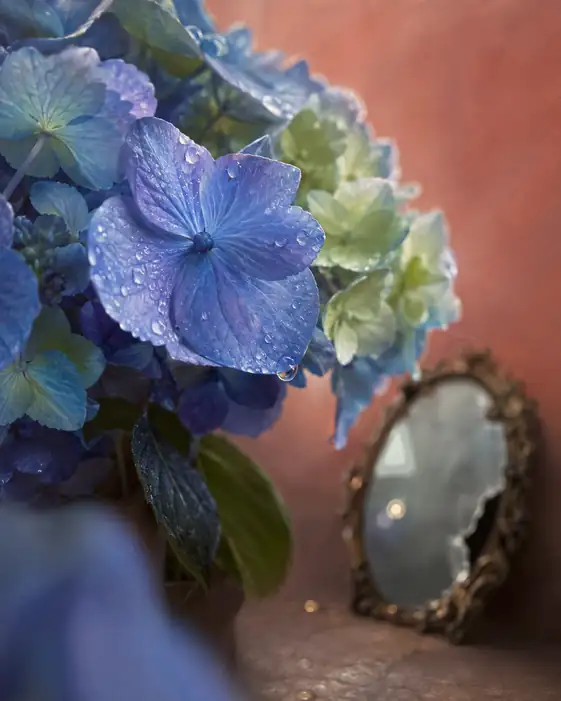 Azure Hydrangeas Beside the Vintage Mirror
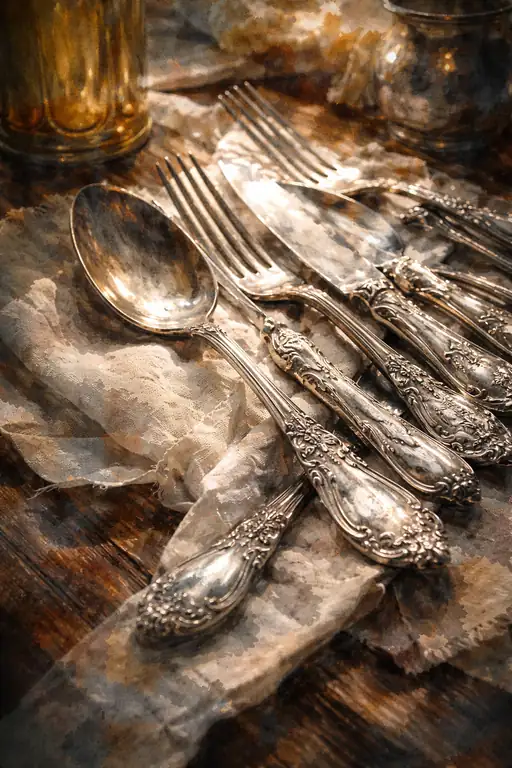 Silver Memories of Extravagant Feasts
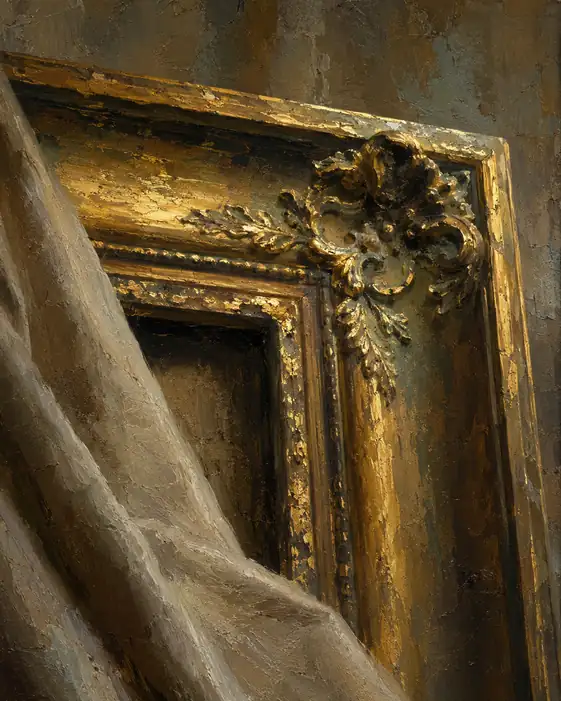 Behind the Golden Veil
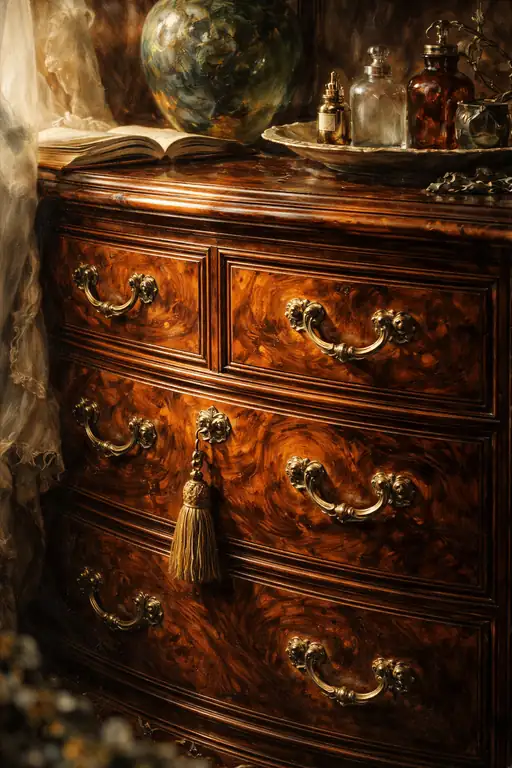 Echoes of History in Wooden Drawers
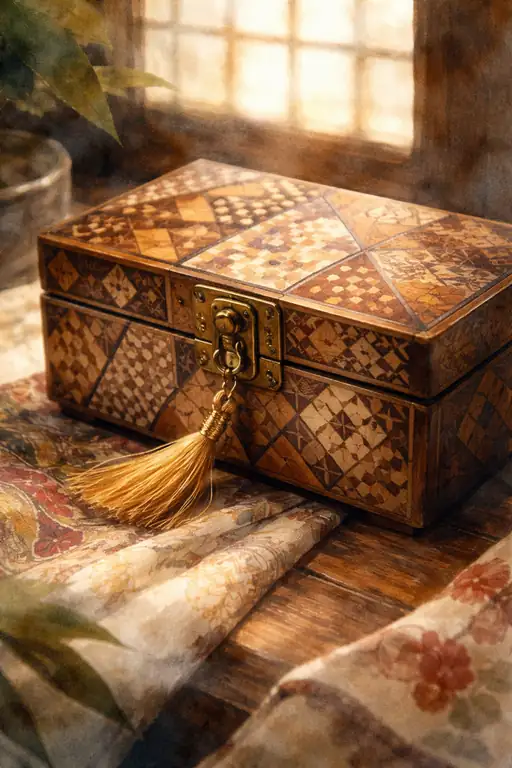 The Artisan's Secret
 Reflections of Elegance
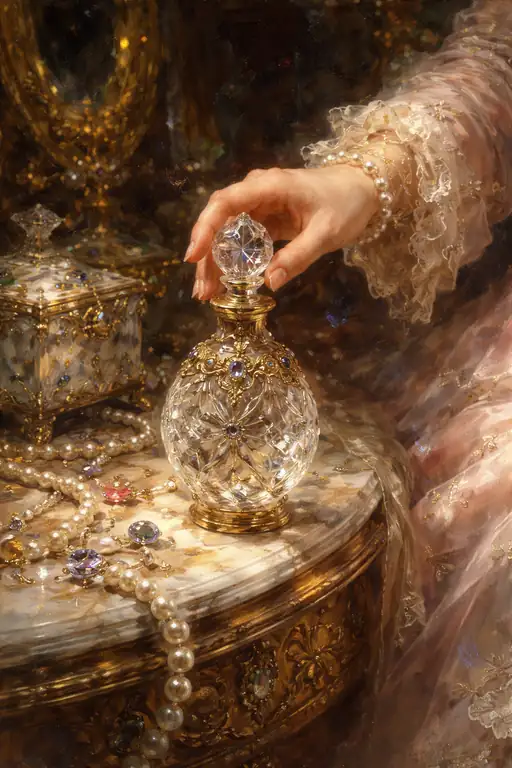 The Timeless Grace of Pearl and Glass
 Camellia by Candlelight