Curated Whispers of the Wild
Critique
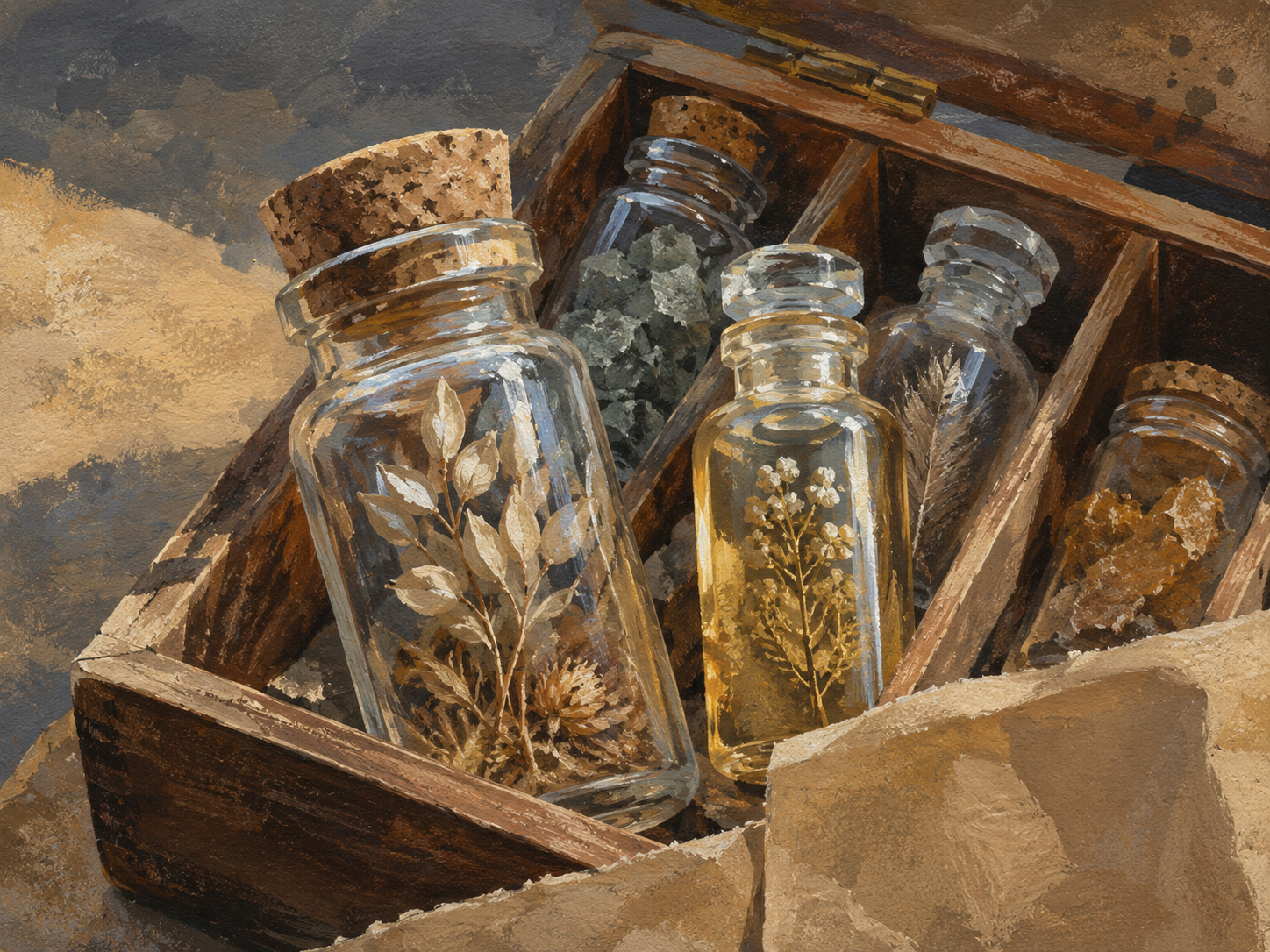
1. Introduction This still life painting features a collection of small glass bottles, each containing delicate botanical specimens, arranged within a rustic wooden box. The work captures the intimate and meticulous nature of collecting and preserving remnants of the natural world. It serves as a visual celebration of curiosities and the quiet beauty of small-scale objects. 2. Description The composition is a close-up, angled view of a divided wooden chest. Several glass bottles are visible; some contain dried leaves and flowers, while others hold moss or minerals. The bottles vary in design, with some featuring simple cork stoppers and others capped with faceted glass. The wooden box shows signs of wear, with visible grain and rough edges. Light enters from the side, creating bright highlights on the glass surfaces and illuminating the amber and golden tones of the bottle contents. The background is rendered in muted, atmospheric tones that emphasize the central subjects. 3. Analysis The artist employs a bold and tactile painting style, characterized by thick brushstrokes and a rich impasto technique. This creates a strong contrast between the smooth, reflective quality of the glass and the coarse, weathered texture of the wood. The color palette is dominated by warm earth tones—ochre, umber, and sienna—which give the piece a nostalgic and timeless feel. The use of high-contrast lighting defines the volume of the bottles and brings out the intricate details of the fragile plants preserved inside. 4. Interpretation and Evaluation The work explores themes of preservation, memory, and the human desire to categorize nature. By focusing on these miniature specimens, the artist elevates mundane scientific objects to the level of fine art. Technically, the painting is highly successful in its ability to render diverse materials with convincing realism while maintaining an expressive, painterly quality. The composition feels both organized and organic, reflecting the balance between scientific order and natural entropy. 5. Conclusion This piece effectively translates the wonder of a naturalist's collection into a compelling visual experience. The harmony between the detailed subject matter and the vigorous brushwork results in a work that is both intellectually engaging and aesthetically pleasing. Ultimately, the painting invites the viewer to slow down and appreciate the complex beauty found within the smallest fragments of life.
 A Warmth Spun from Dreams
 Threshold of Forgotten Dreams
 Echoes of a Sun-Drenched Field
 Preserving a Golden Moment
 Apothecary's Preserved Memories
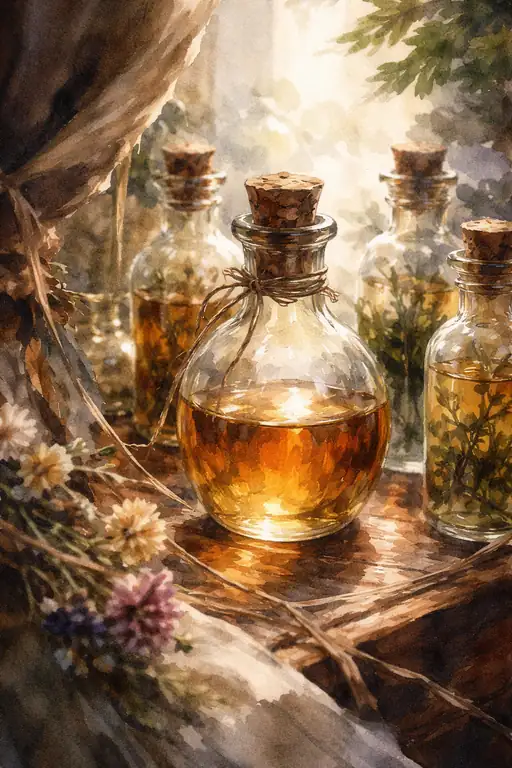 Sunlight Distilled in Glass
 Echoes of a Forgotten Journey
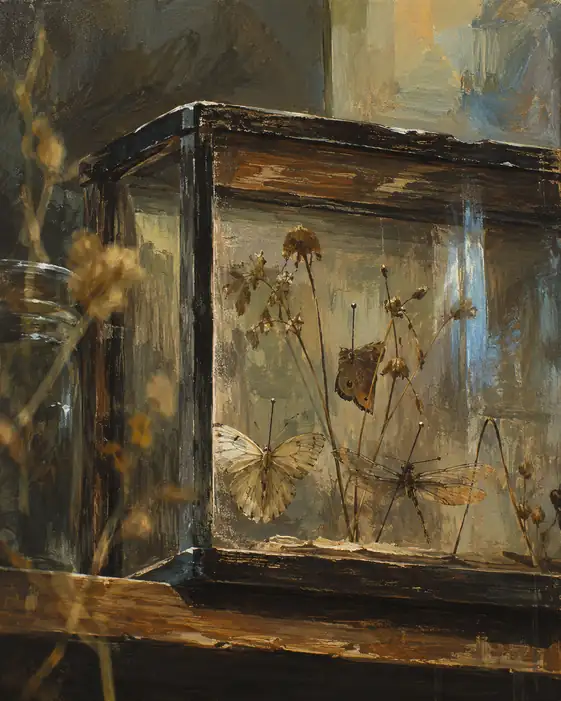 Sanctuary of the Silent Wings
 Prisms in the Morning Sun
 Echoes of a Forgotten Meadow
 The Galaxy We Kept in a Box
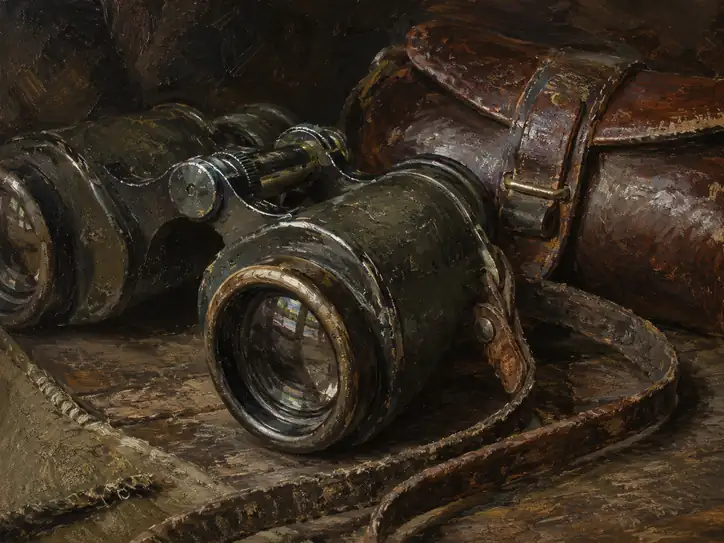 Echoes of Ancient Journeys