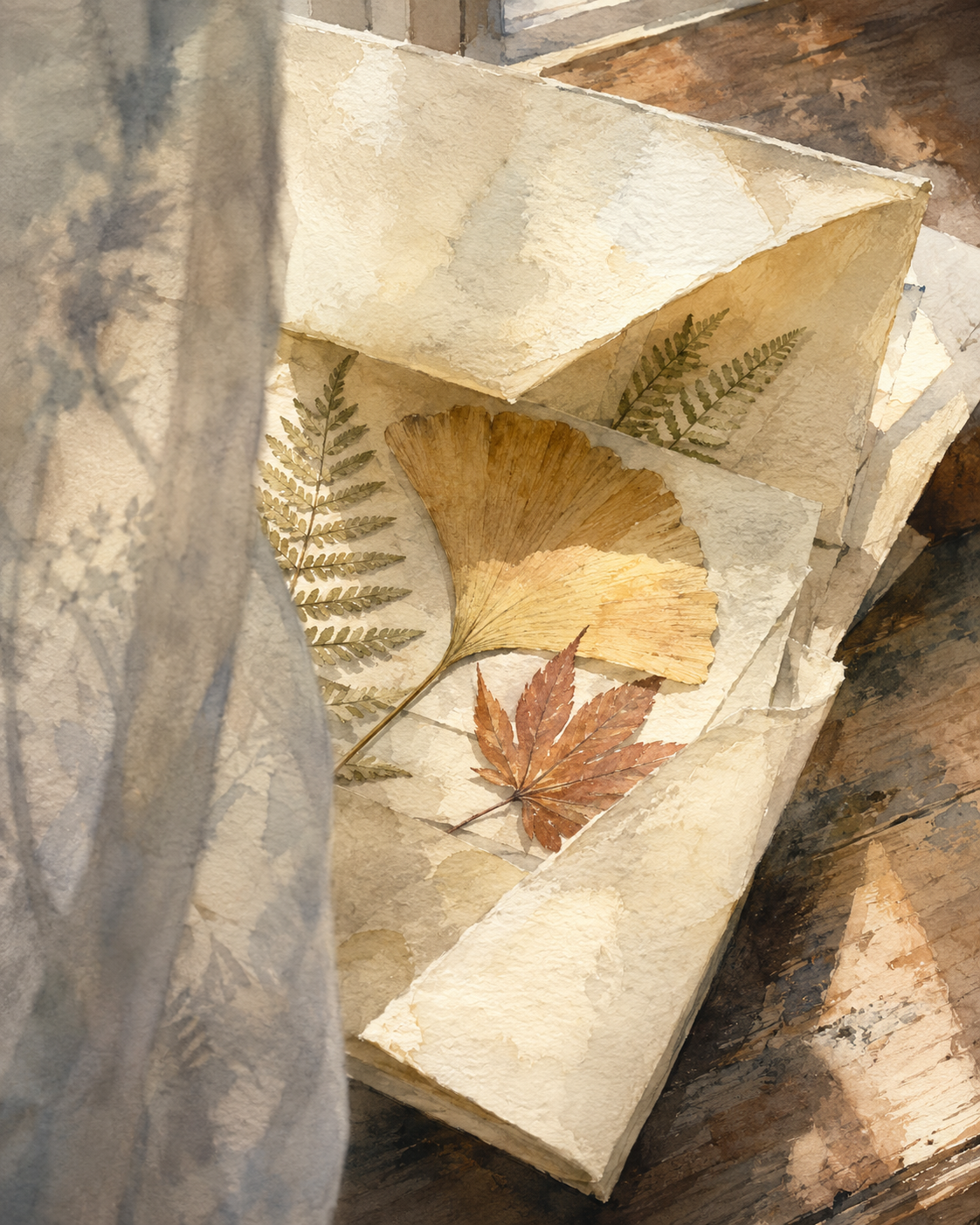
The Fragile Ink of Seasons Past
Critique
1. Introduction This poignant watercolor painting presents a serene and nostalgic study of pressed botanical specimens resting upon a stack of aged, yellowish papers. The composition invites the viewer into a quiet world of memory and preservation, where the beauty of nature is captured and held within the folds of personal history. Through its delicate execution and warm atmospheric light, the work evokes a profound sense of the passage of time. 2. Description The focal point of the scene consists of several dried leaves, including a prominent golden ginkgo leaf, a reddish-brown maple leaf, and delicate fern fronds, all carefully arranged on textured, off-white envelopes. To the left, a translucent curtain with a subtle botanical pattern partially obscures the view, filtering the soft sunlight that dapples the weathered wooden surface below. The papers appear well-handled, their edges softened by time, suggesting they are cherished keepsakes from a bygone era. 3. Analysis The artist utilizes an earthy color palette dominated by ochre, sepia, and warm greys, which reinforces the antique feel of the subject matter. The technical rendering of the leaves is exceptionally fine, capturing the intricate veining of the ginkgo and the fragile, brittle texture of the dried fern. The lighting is masterfully handled, with soft shadows and highlights creating a sense of depth and tactile reality. The contrast between the solid papers and the ethereal, gauzy curtain adds a layer of visual complexity to the composition. 4. Interpretation and Evaluation The act of pressing leaves within letters serves as a powerful metaphor for the human desire to stop time and preserve fleeting moments of beauty. The painting successfully bridges the gap between the natural world and personal narrative, suggesting a deep connection between the environment and individual memory. Technically, the work is highly accomplished, demonstrating a sophisticated understanding of watercolor’s ability to convey transparency, texture, and emotional resonance. 5. Conclusion In summary, the painting is a beautifully realized exploration of nostalgia and the enduring power of simple objects. It achieves a perfect harmony between its symbolic content and its aesthetic presentation, leaving the viewer with a lingering sense of peace and reflection. The initial impression of a quiet still life matures into a deeper appreciation for the artist's ability to imbue mundane items with significant emotional weight and timeless beauty. It is a truly evocative piece.
Same Subcategory
 Echoes of Wisdom: The Golden Gallery of Time
Similar Artworks
 Whispers in the Sunlit Dust
 Memory Pressed in Petals and Sky
 The Silence of Sealed Memories
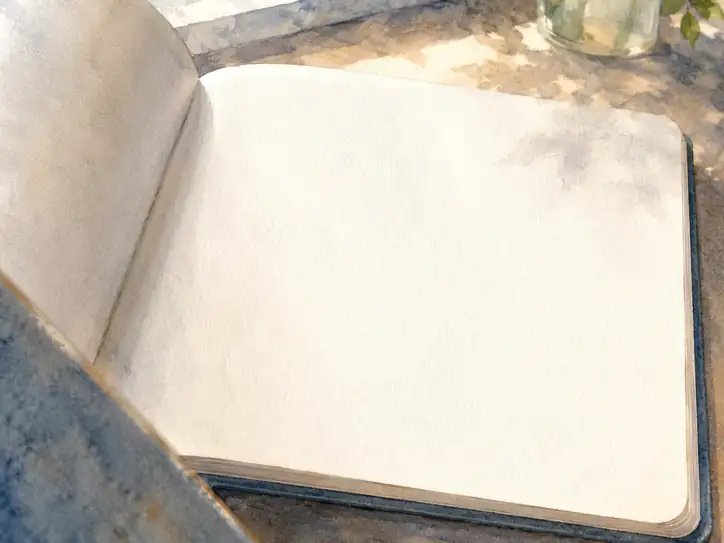 Where Silence Begins to Breathe
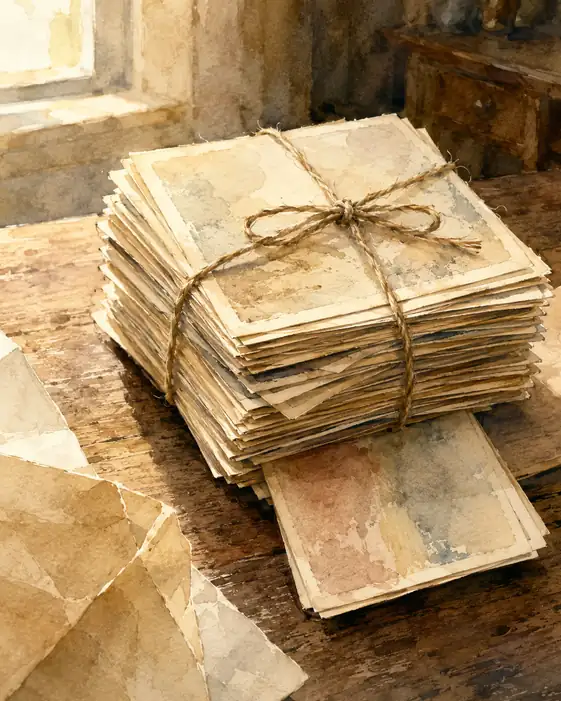 Bonds Tied in Faded Twine
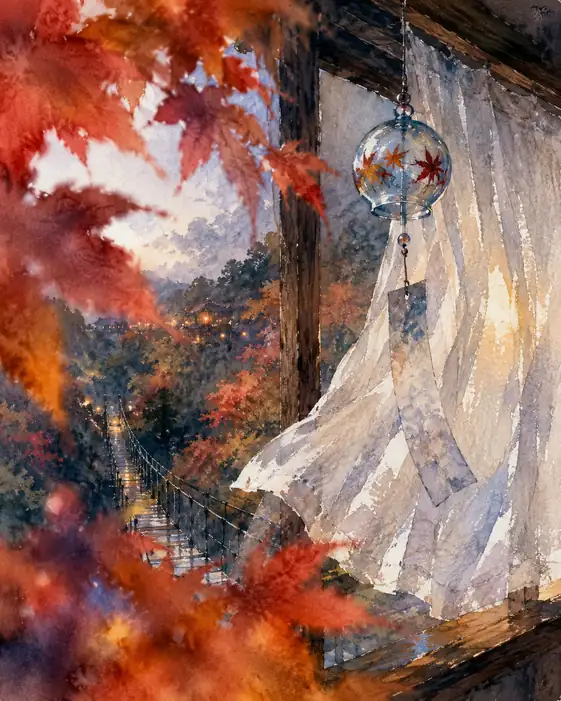 Autumn Chime by the Window of Crimson Leaves
 Golden Resonance in Azure Petals
 Autumn Blossom Book Beside the Sunlit Track
 Forgotten Verses on the Sunlit Railway Water
 Forgotten Verses and Dried Wildflowers