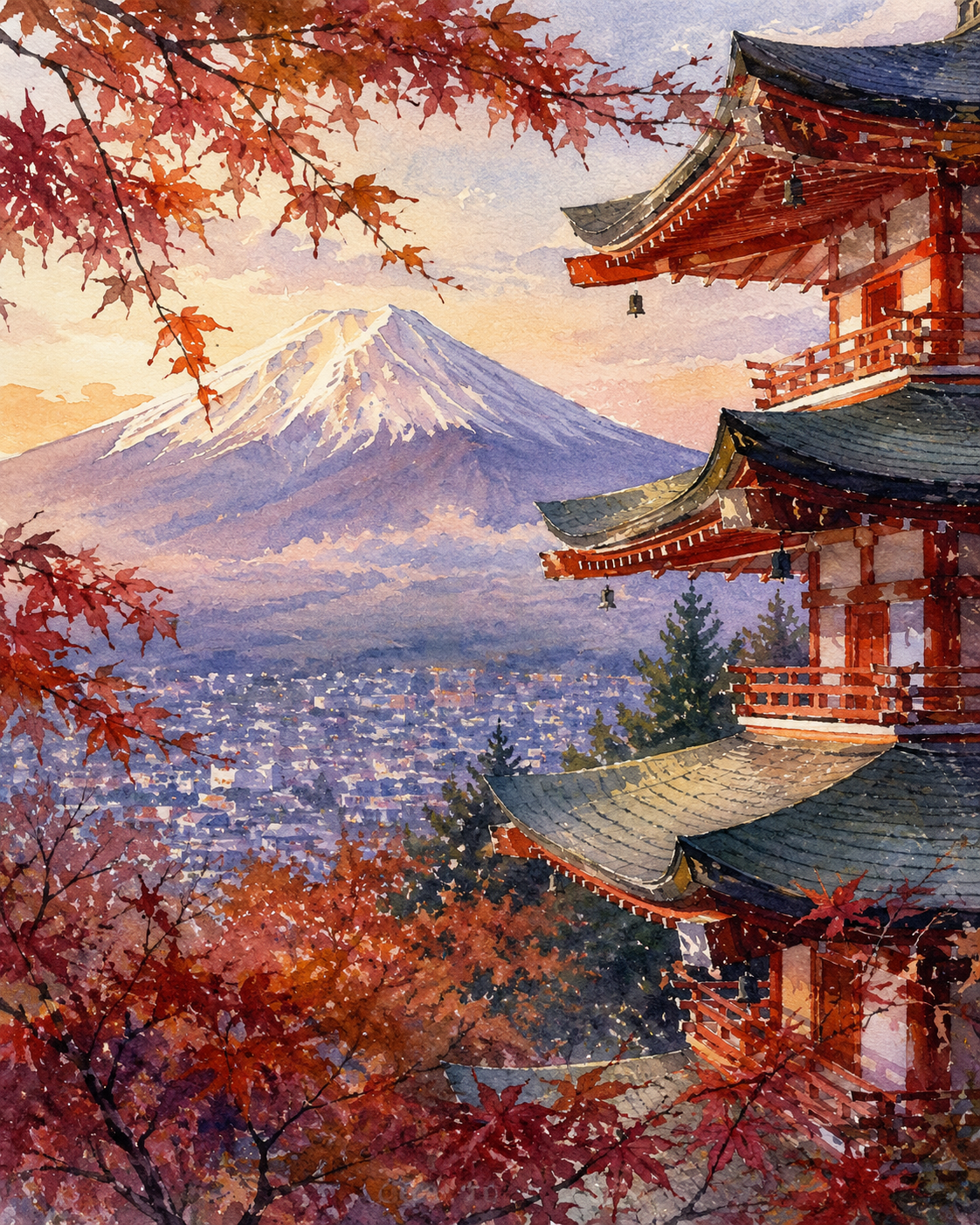
Fleeting Crimson, Eternal Silence
Critique
1. Introduction This watercolor painting presents a stunning autumnal interpretation of a classic Japanese landscape, featuring vibrant maple leaves, a dignified pagoda, and the distant silhouette of Mount Fuji. The work captures the crisp atmosphere of late autumn, infused with the gentle emotionality of the evening light. It masterfully embodies the traditional Japanese aesthetic of "mono no aware"—the pathos of things—through a sophisticated and contemporary artistic lens. 2. Description On the right side of the composition, a portion of a five-story pagoda is rendered with intricate detail, its vermilion woodwork and heavy tiled roofs providing a strong structural rhythm. In the center distance, Mount Fuji rises with its first snow-capped peak, glowing in soft purples under the setting sun, while a sprawling cityscape twinkles through the mist at its base. Framing the left and top edges are branches of maple trees, their leaves a riot of deep crimsons and oranges. 3. Analysis The diagonal placement of the pagoda, combined with the overhanging maple branches, creates an effective framing device that guides the viewer's eye toward the central focal point of Mount Fuji. Coloristically, the warm tones of the autumn foliage contrast sharply with the cool blues and purples of the distant mountains and city, creating a dynamic visual tension. The layering of translucent watercolor washes successfully conveys the overlapping density of the leaves and the atmospheric haze of the distance. 4. Interpretation and Evaluation The artist demonstrates exceptional compositional skill and technical mastery, breathing new life into a traditional subject. The shimmering lights of the cityscape add human presence and narrative depth to the silent natural scenery. Balancing the pagoda's solid presence with the delicate maple leaves showcases a refined sensibility and deep insight into nature's fleeting beauty. 5. Conclusion While the subject matter initially appears traditional, the painting reveals a serious exploration of the harmony between light, shadow, and color. The contrast between the changing seasons and the eternal mountain successfully captures the essence of Japanese beauty. This piece offers the viewer both quiet emotional resonance and an intellectually satisfying visual experience.
Same Subcategory
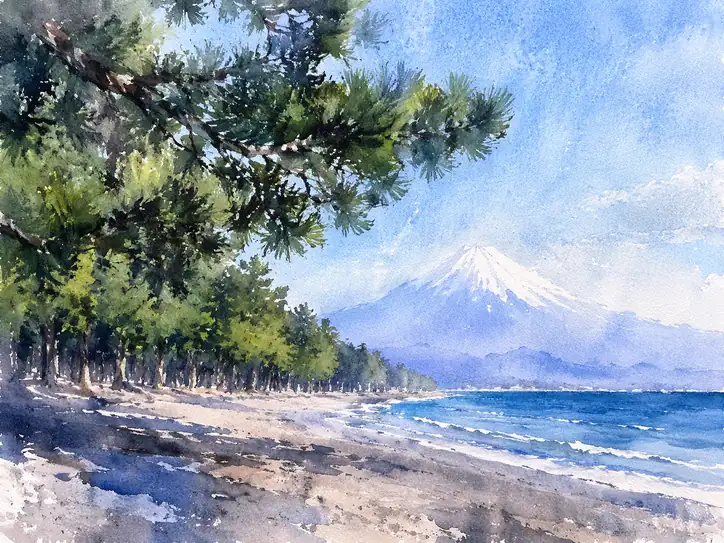 Whispers of the Winter Peak
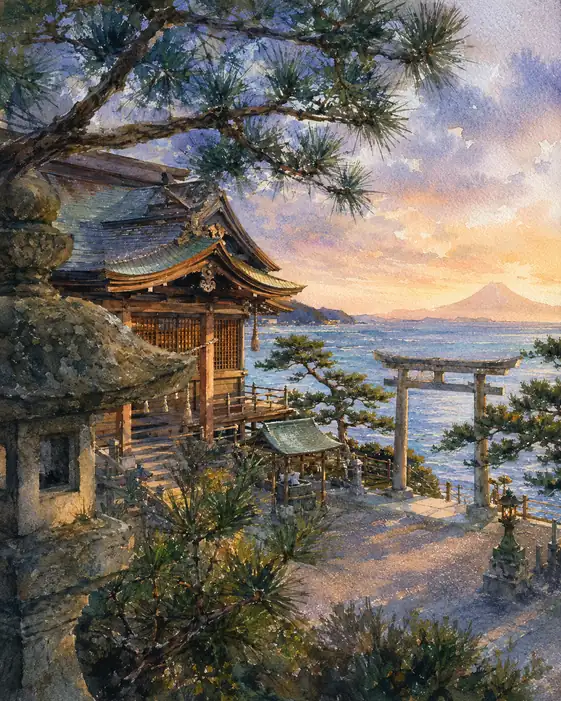 Twilight Prayer Across the Silent Waves
Similar Artworks
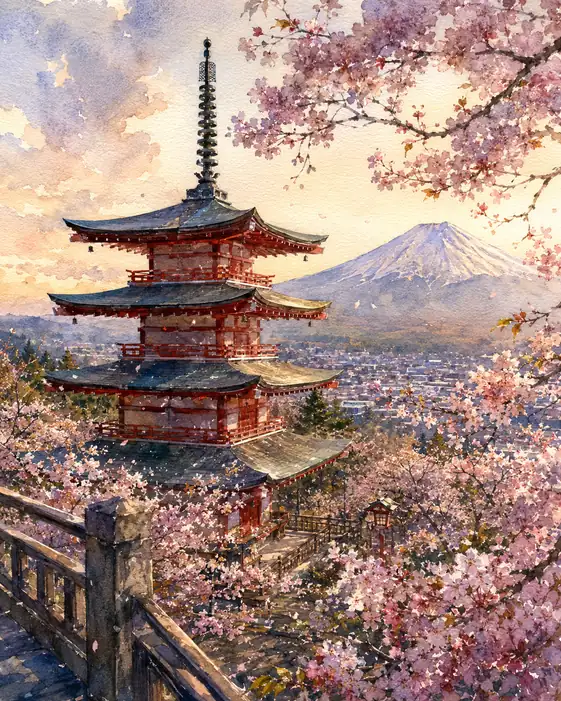 Echoes of the Gilded Spring
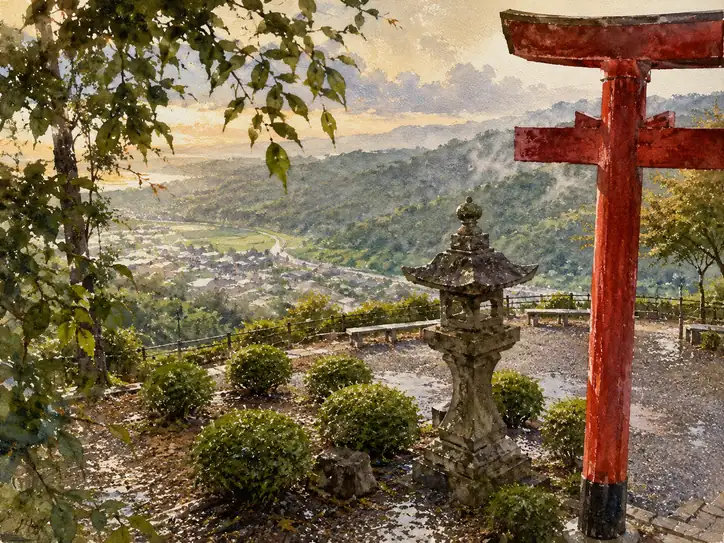 Eternal Peace in the Golden Glow
 Where the Twilight Lingers
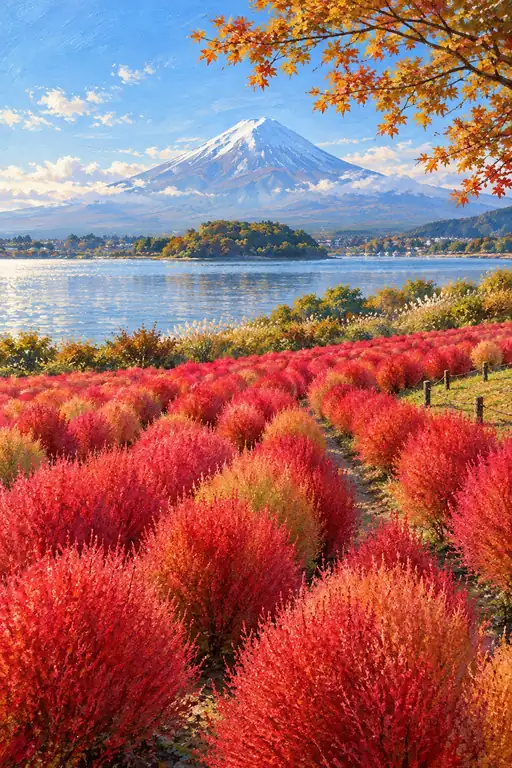 Scarlet Days Beneath Forever
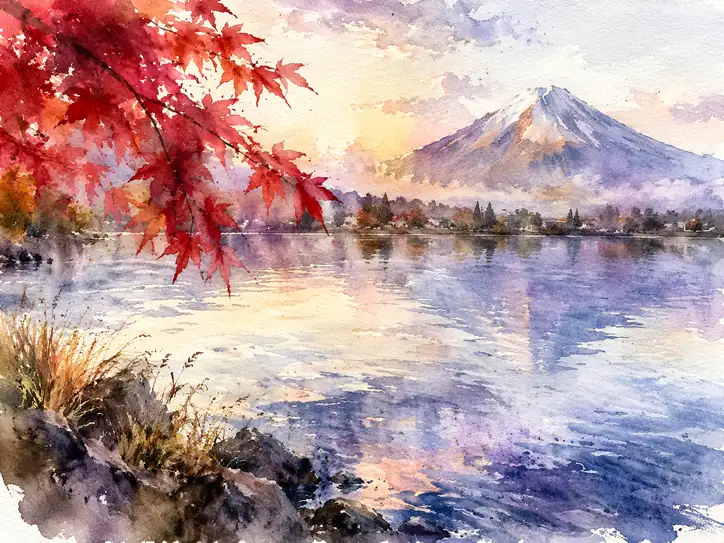 A Crimson Reverie at the Foot of Fuji
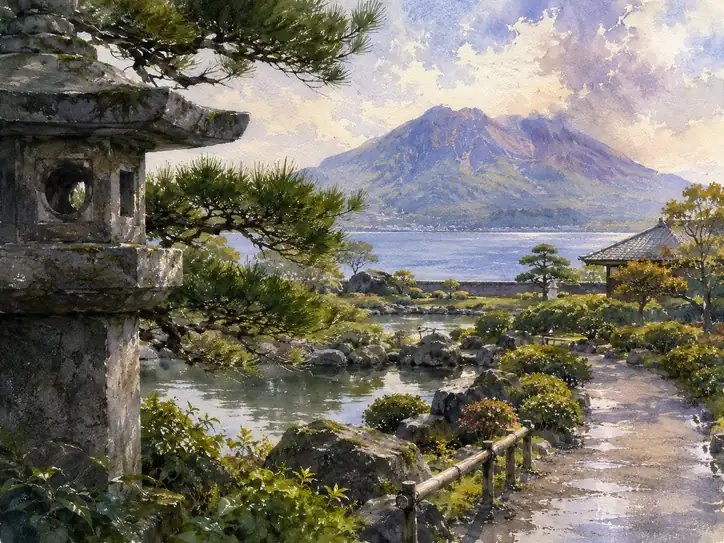 The Sleeping Giant across the Garden
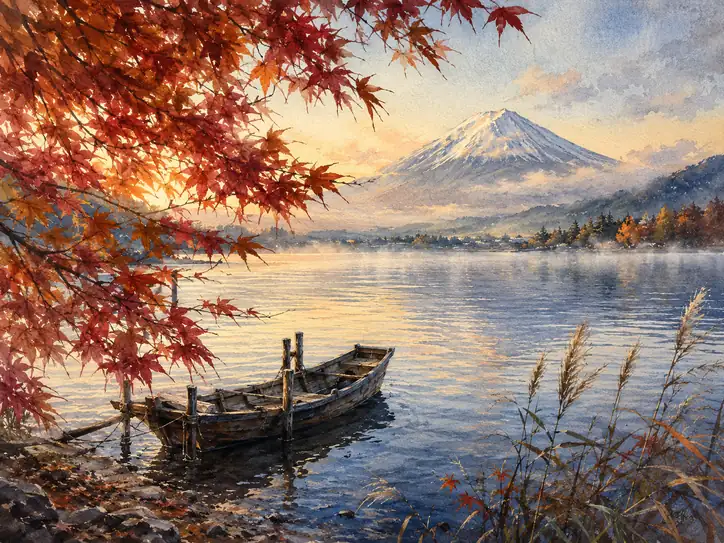 The Silent Journey of Autumn
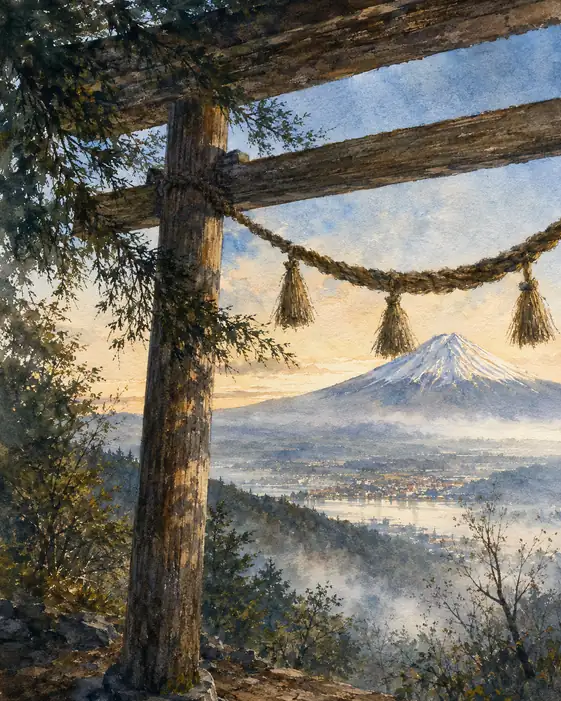 Threshold to the Divine Peak
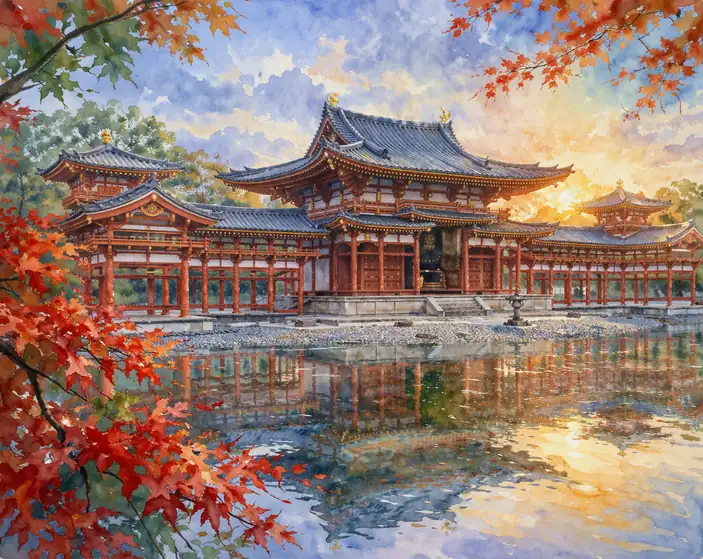 Crimson Reflections of an Ageless Hall
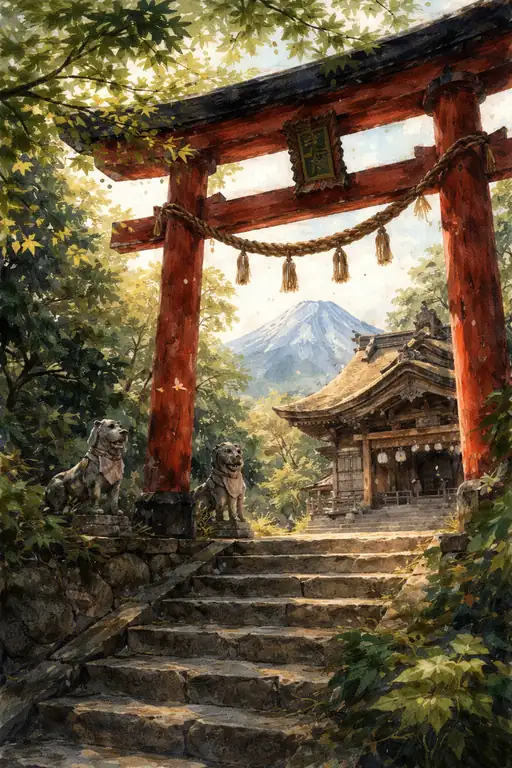 Sacred Portal to the Divine Peak