
The Heart's Mandala
Critique
1. Introduction This drawing presents a meticulously detailed colored pencil study of a classical guitar’s soundhole and rosette, capturing the intricate geometry and organic warmth of high-quality lutherie. The harmonious blend of complex mosaic patterns and the rich, fibrous texture of the spruce or cedar soundboard creates a scene that immediately evokes a sense of traditional craftsmanship, cultural heritage, and the resonant "soul" of the instrument. 2. Description The focal point of the composition is the circular soundhole, rendered as a profound, dark void that provides a stark structural contrast to the surrounding elements. Encircling the hole is the rosette, an exquisite mosaic of geometric shapes in muted reds, greens, and blacks, each tiny segment drawn with remarkable precision. The soundboard itself displays a fine, vertical grain pattern in warm ochre and sienna tones, suggesting a seasoned and well-maintained wooden body. Several nylon and steel strings stretch across the frame, their sharp, linear paths providing a dynamic counterpoint to the circular motifs of the rosette and soundhole. In the lower left, a textured, atmospheric wash adds a layer of rustic materiality to the overall composition. 3. Analysis The artist demonstrates a sophisticated mastery of the colored pencil medium, utilizing dense layering and precise linework to achieve a high degree of representational accuracy. This technique is particularly effective in capturing the repeating geometric patterns of the rosette and the subtle variations in value across the wooden surface. The color palette is masterfully centered on earth tones, relying on the deep black of the soundhole to create a powerful focal point and a sense of internal depth. The spatial structure is balanced, with the interplay between circular and linear forms creating a visual harmony that mirrors the acoustic properties of the instrument. The brushwork, or rather the execution of fine lines, is consistent and deliberate, showcasing an exceptional ability to manage value and texture. 4. Interpretation and Evaluation This work can be interpreted as a tribute to the synergy between nature and artifice, transforming a structural component of a musical instrument into a symbol of creative discipline and spiritual focus. The rosette acts as a visual mandala, centering the viewer’s attention and suggesting the meditative quality of musical performance. The technical execution is superb, demonstrating a high degree of patience and control over the medium. The artist’s ability to imbue a close-up study with such a profound sense of history and tactile reality marks this as a work of significant artistic merit and emotional resonance. 5. Conclusion Ultimately, the drawing is a masterful celebration of form, pattern, and material tradition. While it depicts a specific part of a musical instrument, the refined technique and thoughtful composition elevate it beyond a simple representational study. It successfully captures the enduring beauty and silent dignity of the classical guitar, preserving its essence within a framework of rigorous artistic integrity, leaving a lasting impression of the profound beauty found in the most fundamental structures of human expression.
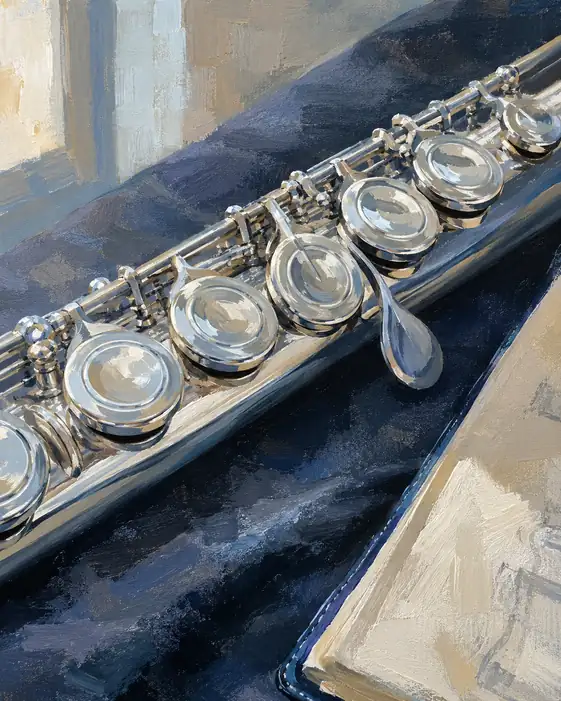 Reflections of a Silent Note
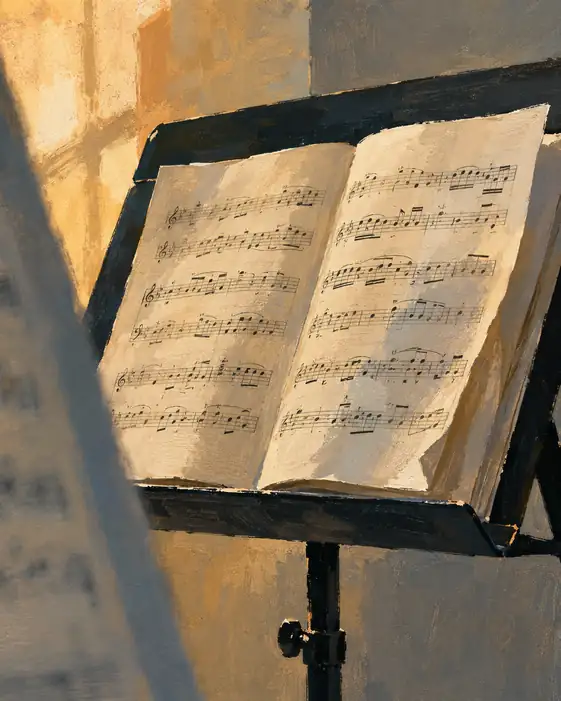 Golden Prelude
 Echoes of a Golden Melody
 Before the First Note
 Echoes of the Celestial Realm
 Resonant Silence
 Verse of the Antique Cello on Sheet Music
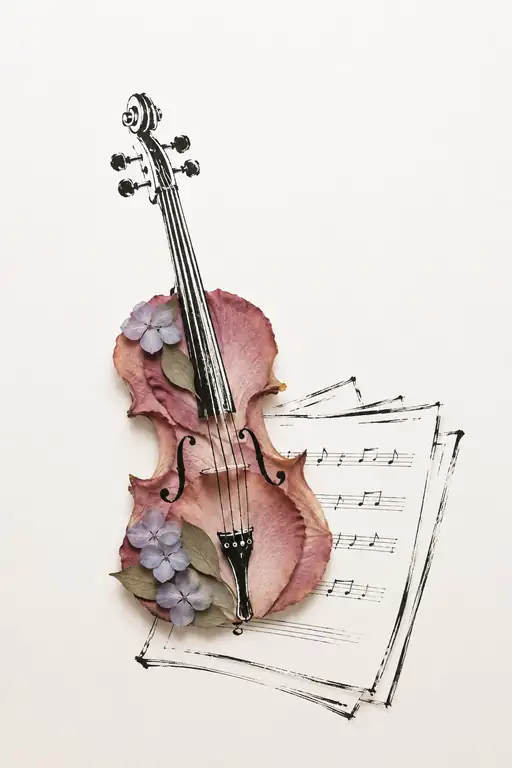 Silent Melody of the Rose Cello
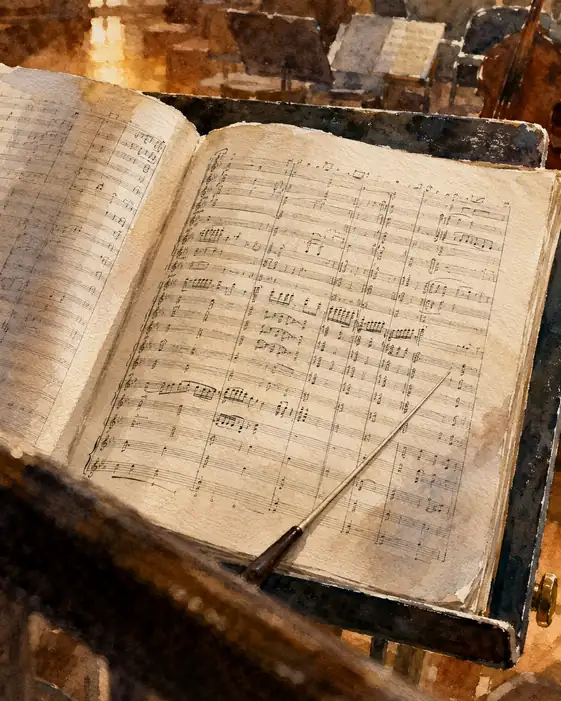 Prelude in Amber
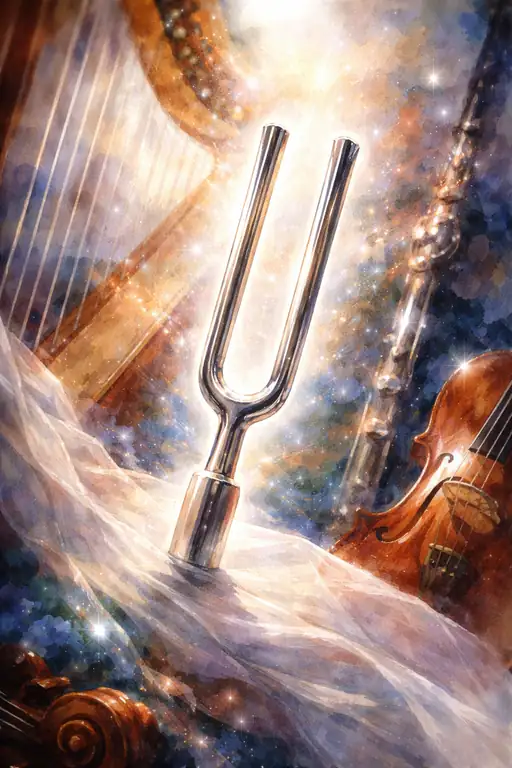 The Tuning of the Cosmos
 Vibrations of a Silent Heart