Reflections of a Silent Note
Critique
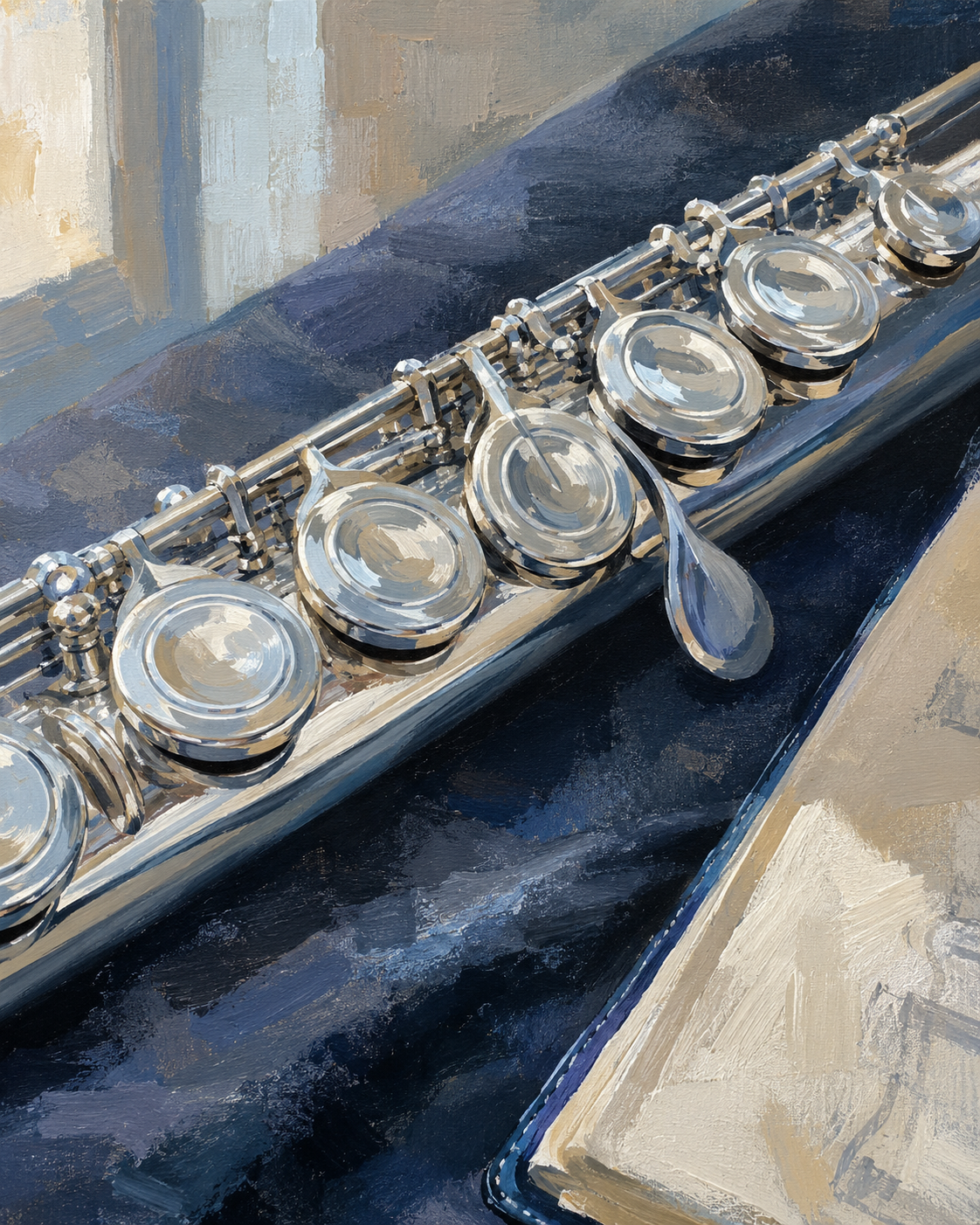
1. Introduction This painting presents a sophisticated oil study of a silver flute, capturing its industrial precision and the complex reflections of its polished surface. The harmonious interplay between the cool, metallic instrument, the deep textured fabric, and the corner of an open book creates a scene that immediately evokes a sense of musical discipline, intellectual depth, and the serene beauty of a dedicated practice space. 2. Description The focal point of the composition is a chrome or silver flute, positioned diagonally across the frame to suggest a dynamic sense of depth. Its highly reflective surface features sharp, brilliant highlights and subtle tonal shifts that mirror the surrounding environment with remarkable clarity. The instrument rests upon a dark indigo fabric, the heavy folds of which provide a soft, organic contrast to the flute’s rigid, mechanical structure. In the lower right corner, the aged pages of a book are visible, their warm beige tones offering a cooling visual rhythm to the overall composition. The background is a wash of soft, atmospheric light, rendered with expressive brushstrokes that suggest an indoor setting illuminated by a nearby window. Meticulous detail is visible in the rendering of the intricate keywork and the delicate shadows cast upon the fabric. 3. Analysis The artist utilizes a vigorous oil technique, employing both precise linework for the instrument and broader, impasto strokes for the surrounding elements. This contrast in application effectively emphasizes the material variety within the still life, differentiating the hard metal from the soft textile and porous paper. The color palette is masterfully structured, relying on the contrast between the primary silver and blue tones and the warm accents of the book to enhance the visual impact. The spatial structure is balanced, with the diagonal line of the flute providing a strong sense of direction that guides the viewer’s eye through the frame. The brushwork is confident and deliberate, showcasing an exceptional ability to capture the specific reflectivity of silver while maintaining a cohesive and rigorous artistic integrity. 4. Interpretation and Evaluation This work can be interpreted as a meditation on the concept of "refinement," symbolizing the harmony between the cold precision of the tool and the warm humanity of the artist’s study. The flute acts as a bridge between the physical and the auditory, transforming a utilitarian object into a symbol of creative potential and cultural heritage. The technical execution is superb, demonstrating a sophisticated mastery of light control and surface contrast. The artist’s ability to imbue a simple collection of objects with such a profound sense of atmosphere and quiet dignity marks this as a work of significant artistic merit and emotional resonance. 5. Conclusion Ultimately, the painting is a masterful celebration of form, light, and material texture. While it depicts a collection of still life objects, the refined technique and thoughtful composition elevate it to a narrative of dedication and permanence. It successfully captures the silent energy and serene brilliance of the flute, preserving a sense of hidden harmony within a framework of rigorous artistic integrity, leaving a lasting impression of the profound beauty found in the intersection of music and art.
 Echoes of the Celestial Realm
 The Heart's Mandala
 Golden Prelude
 Resonance of Truth
 Brilliance of the Gilded Brass
 Sonata of the Silver Soul
 Resonant Silence
 The Silent Potential of Strings
 Silent Echoes of the Journey
 Breath of the Woodwind
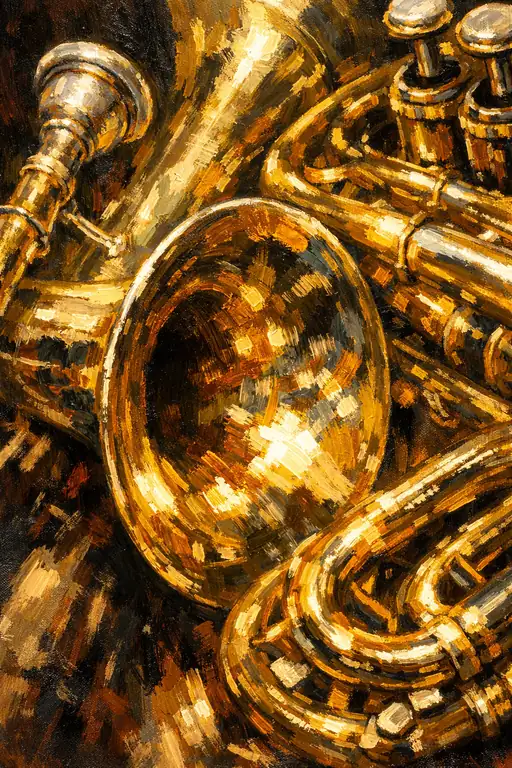 Resounding Symphony of Gold
 Before the First Note