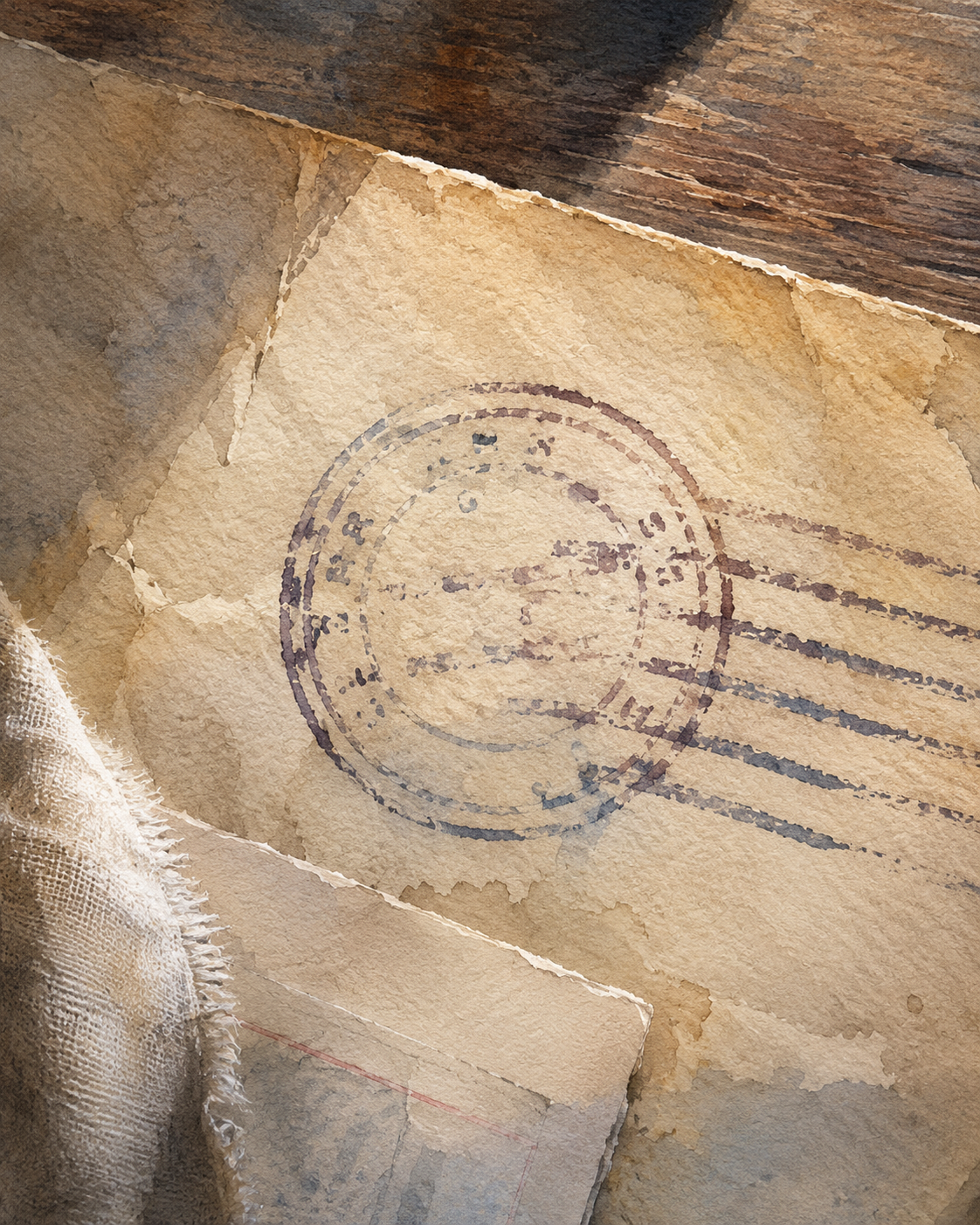
Echoes of a Forgotten Letter
Critique
1. Introduction This artwork is a profoundly textured still life focusing on the themes of time’s passage and silence. The central subject is an aged piece of paper, weathered by years of history, bearing a faint and faded postmark. A color palette dominated by beige and sepia tones evokes a deep sense of nostalgia, prompting the viewer to recall distant memories. The work is characterized by a poetic expression that reinterprets the degradation of material as a legitimate aesthetic object. 2. Description Positioned slightly to the left of the center is a yellowed sheet of paper featuring a circular stamp. To the right of this mark, several parallel lines, reminiscent of postal sorting tracks, are rendered with scratchy brushwork. In the lower-left corner, a coarse fabric with a visible weave is depicted, while a portion of a heavy wooden surface appears at the top. The edges of the paper are irregular and torn, and its surface is detailed with water stains and minute creases. 3. Analysis The composition, built on diagonal lines, creates a gentle sense of movement and spatial depth within the static scene. Three distinct textures—the rough fibers of the cloth, the supple layers of the paper, and the solid hardness of the wood—are arranged in a contrasting manner. Light enters softly from the upper right, casting precise shadows on the subtle bumps of the paper to emphasize a three-dimensional presence. The restrained saturation directs the viewer's focus toward the intricate details. 4. Interpretation and Evaluation The piece expresses how a document, having fulfilled its role in communication, transcends into a pure artistic object through the layers of time. The artist's descriptive power succeeds in portraying the historical and emotional weight of the material. Specifically, the obsessive attention to details such as ink bleeding and paper texture demonstrates high technical refinement. The creative perspective and composition that extract extraordinary beauty from mundane materials deserve high praise. 5. Conclusion At first glance, this might appear to be a mere study of old document fragments, but prolonged observation reveals a captivating richness in its material expression. The work possesses the power to evoke sensations of touch, appealing deeply to the viewer's sensibilities. Ultimately, this painting allows us to rediscover the dignity inherent in forgotten time. It concludes by presenting the artistic potential hidden within ordinary scenes.
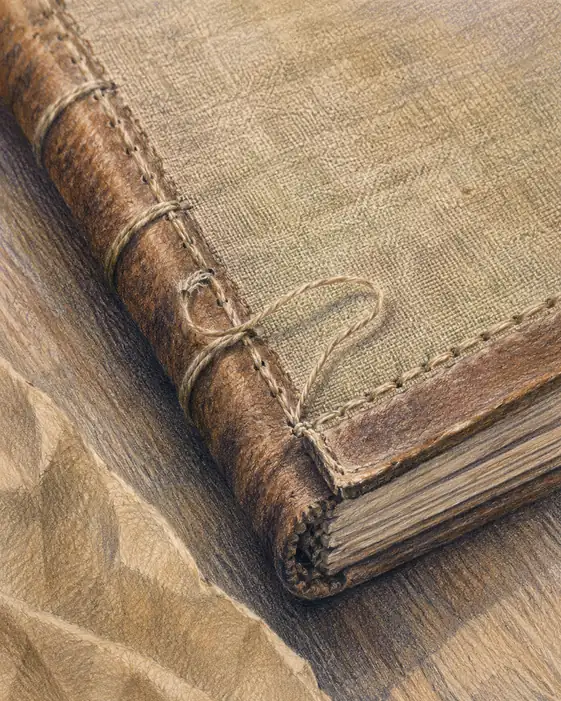 The Silent Weight of Knowledge
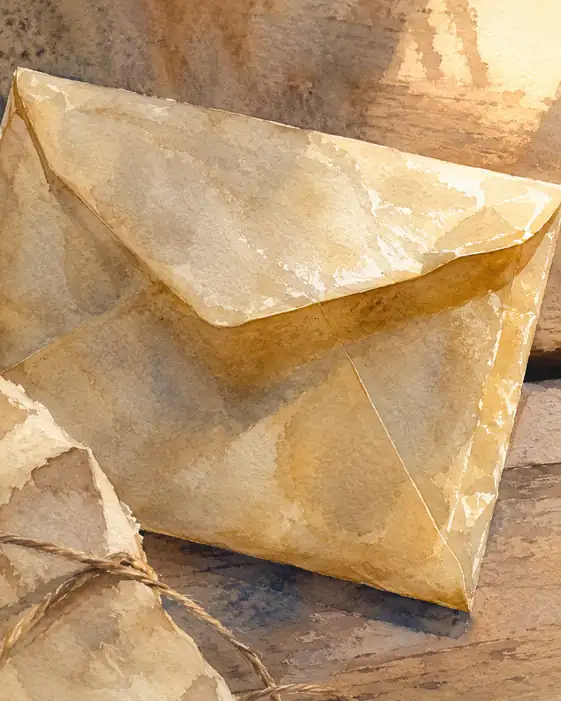 The Silence of Sealed Memories
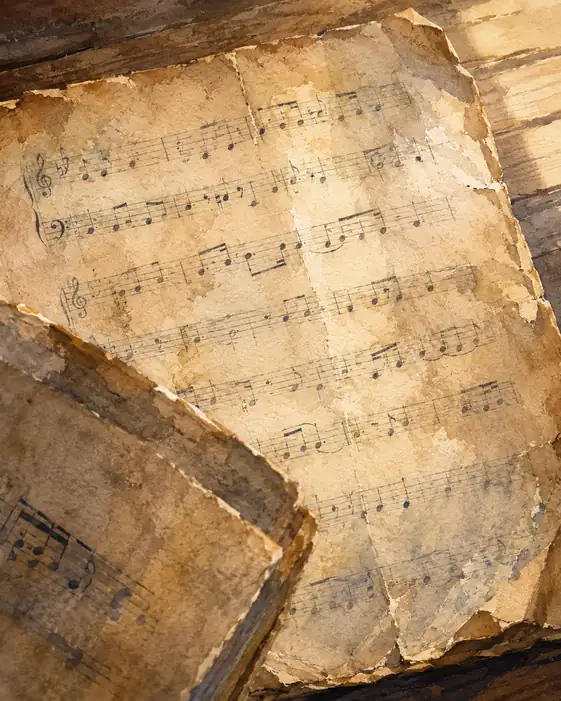 Echoes of a Lost Melody
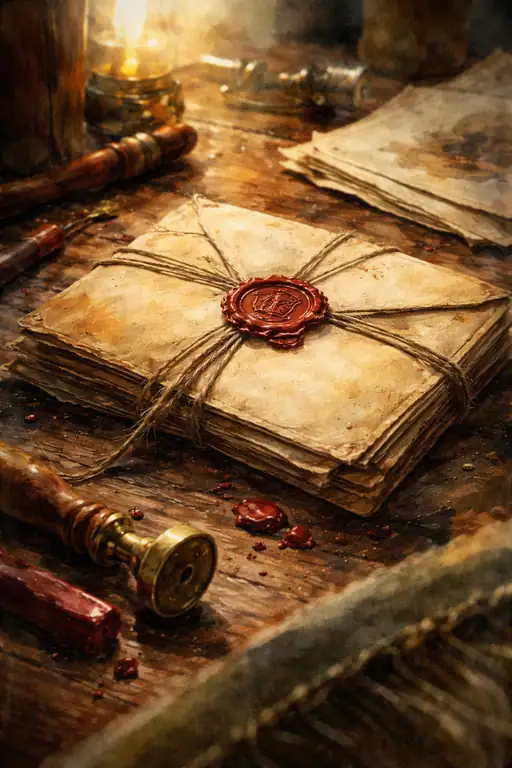 Secrets Bound in Time
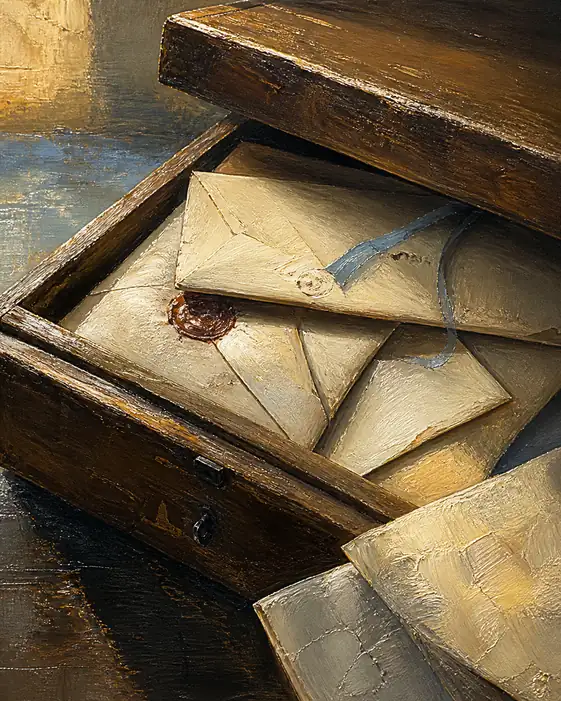 The Reliquary of Silent Echoes
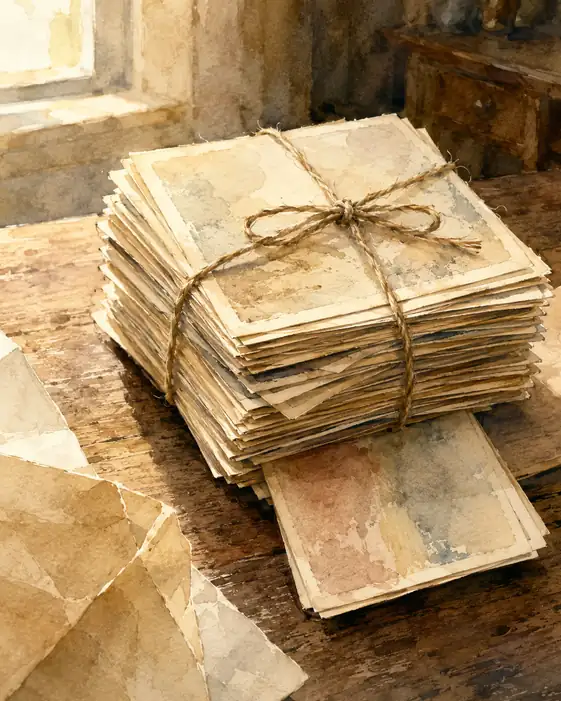 Bonds Tied in Faded Twine
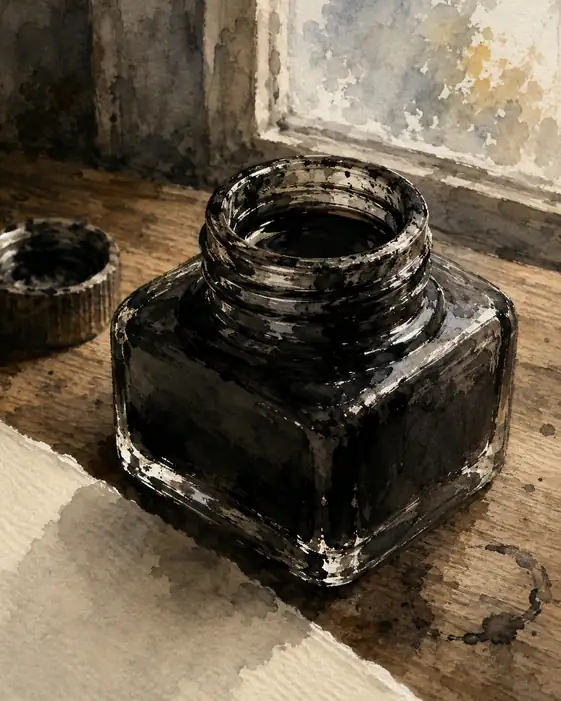 The Well of Unspoken Dreams
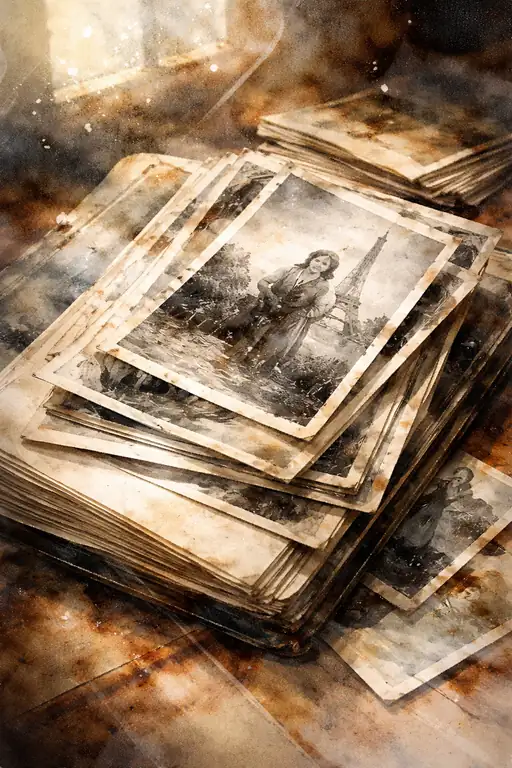 Echoes in Sepia and String
 The Weight of a Silent Memory
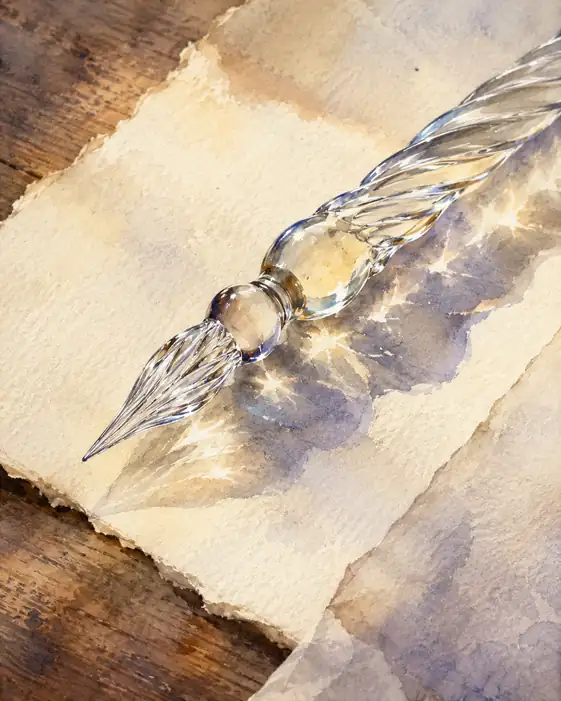 Transparency of a Fleeting Thought
 Unwritten Echoes of the Past