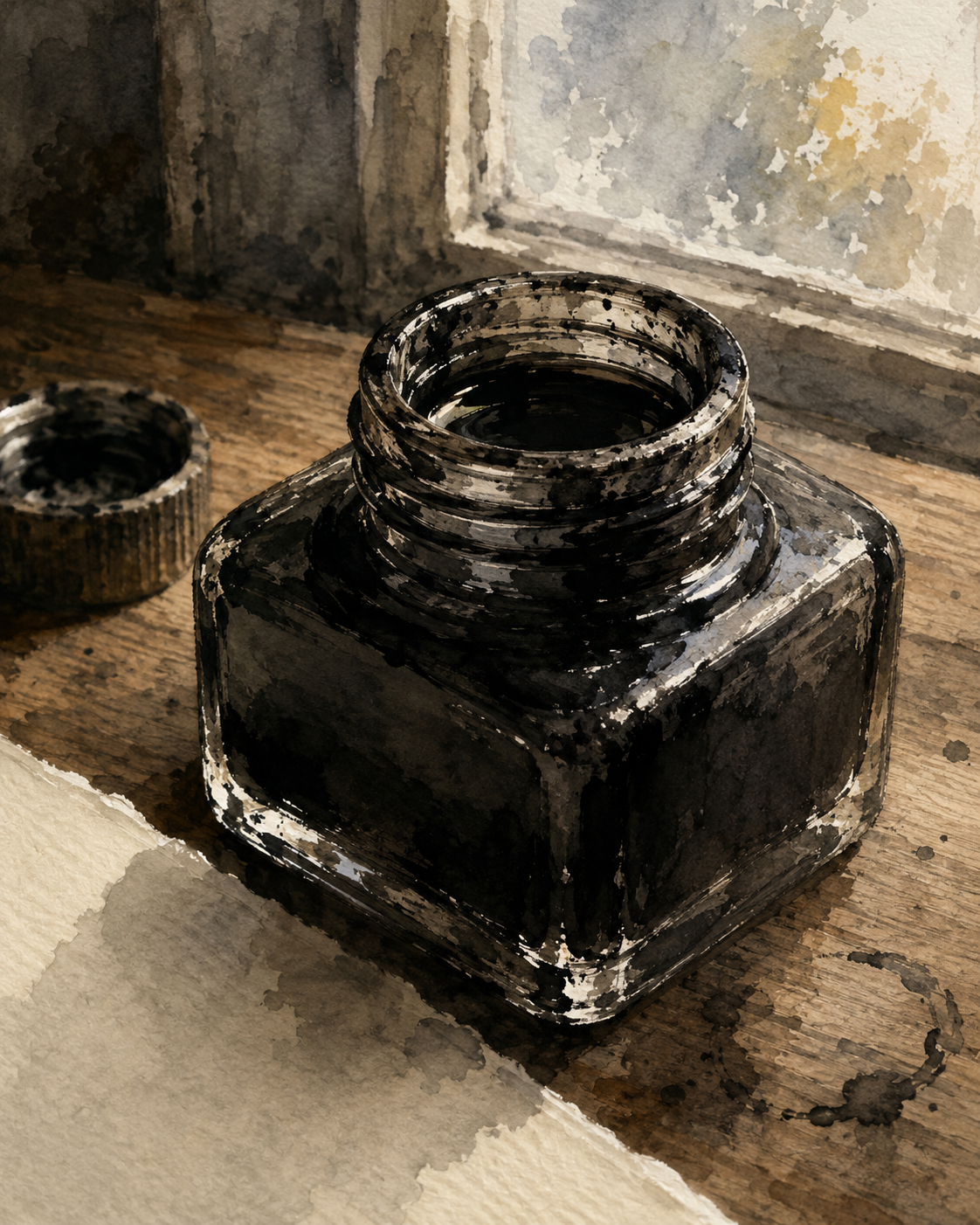
The Well of Unspoken Dreams
Critique
1. Introduction This still-life painting depicts a square inkwell placed on a rustic wooden desk by a window, capturing a scene of quiet contemplation. The interplay between the deep black of the ink and the soft, diffused light from the background creates an atmosphere conducive to reflection and literary labor. The artist masterfully combines realistic detail with painterly textures, resulting in a work that feels both grounded and poetic. 2. Description The central focus is a sturdy glass bottle filled with dark ink, its faceted surface reflecting the pale light of the window. To its left sits a discarded cap, while a corner of textured paper enters the frame from the bottom left. The wooden surface of the desk is rendered with rich grain and is marked by spontaneous ink splatters and circular stains. The background features a window with mottled glass, suggested through soft watercolor-like washes of gray and ochre. 3. Analysis The tonal composition is anchored by the profound darkness of the inkwell, which provides a stark contrast to the luminous upper half of the canvas. A muted color palette of sepia, charcoal, and warm wood tones enhances the vintage aesthetic and unifies the various elements. The geometric solidity of the bottle acts as a focal point, around which the organic shapes of the ink stains provide a dynamic and less structured visual counterpoint. 4. Interpretation and Evaluation By choosing an inkwell as the primary subject, the artist evokes the intellectual weight and permanence of the written word. The technical execution is particularly impressive in its handling of varied materialities, such as the translucent glass, the porous wood, and the viscous liquid. The inclusion of accidental ink stains adds a narrative layer of human presence and past activity, demonstrating a keen sense of artistic originality. 5. Conclusion While the subject matter is simple, the painting’s sophisticated treatment of light and texture elevates it beyond a mere academic study. It successfully transforms a corner of a workstation into a dramatic and evocative space, leaving a lasting impression of stillness and the potential for creativity.
Same Subcategory
Similar Artworks
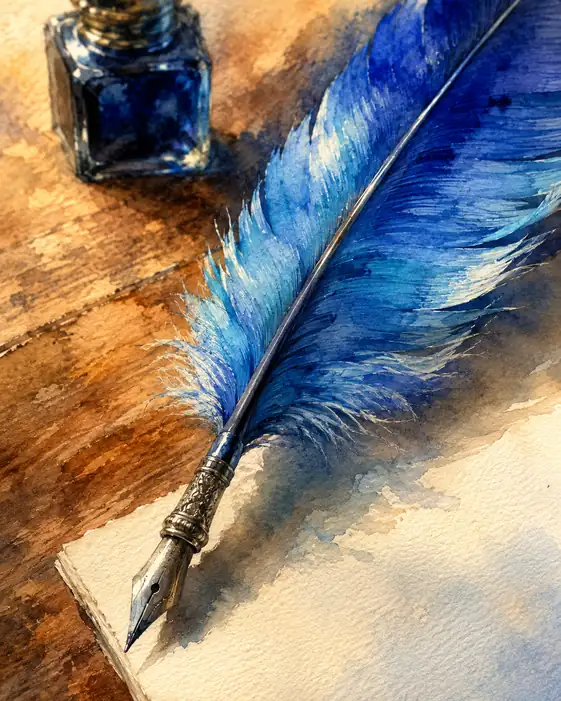 Whispers of the Cobalt Quill
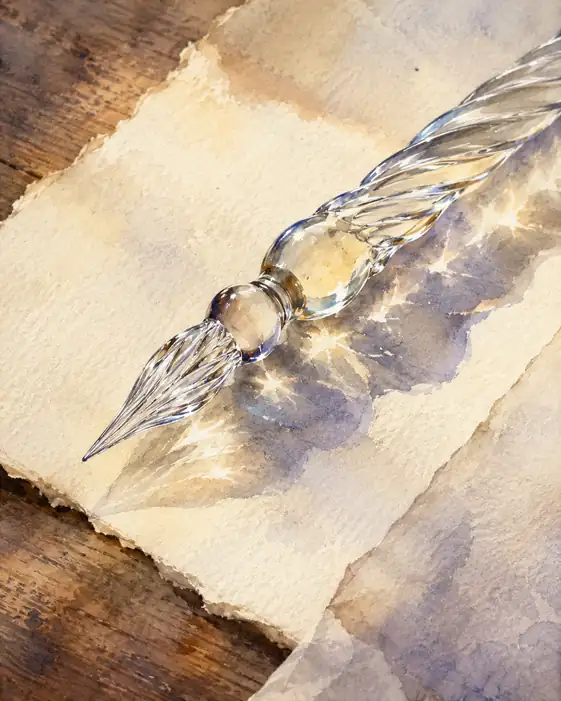 Transparency of a Fleeting Thought
 The Keeper of Timeless Tales
 Azure Ink: Memories in Glass
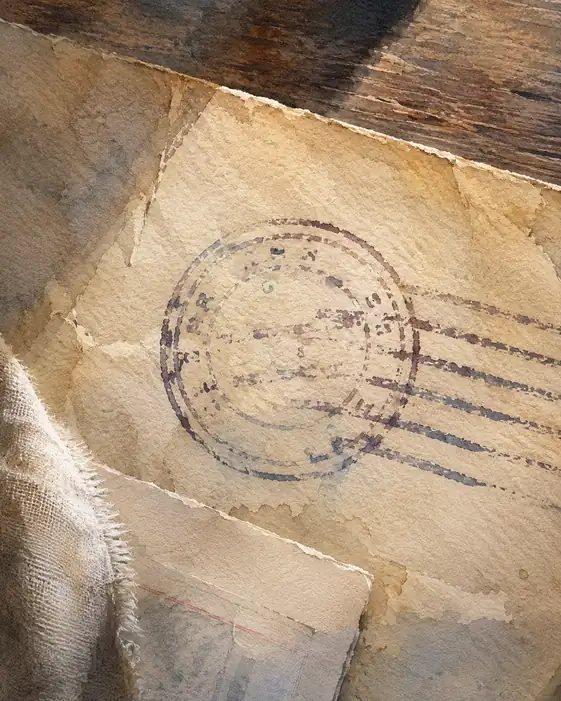 Echoes of a Forgotten Letter
 Overflow of Unspoken Words
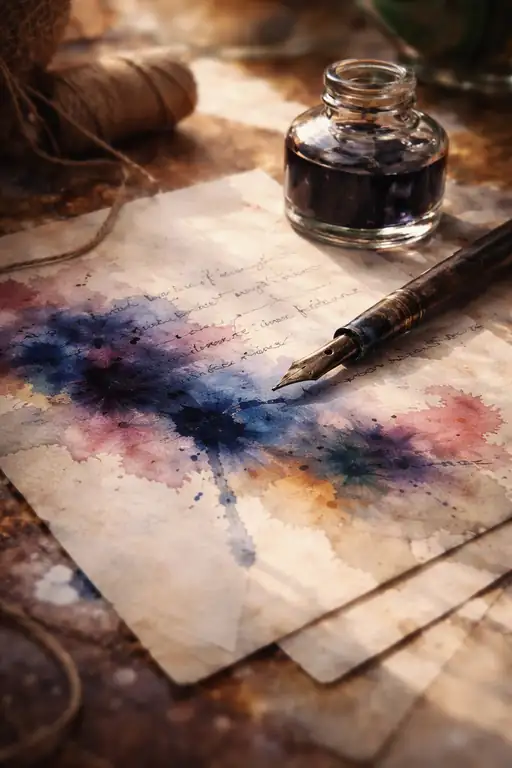 The Beautiful Mess of Creation
 The Elegant Legacy of Recorded Thoughts
 Words Unspoken in the Inkwell
 Manuscript of Memories