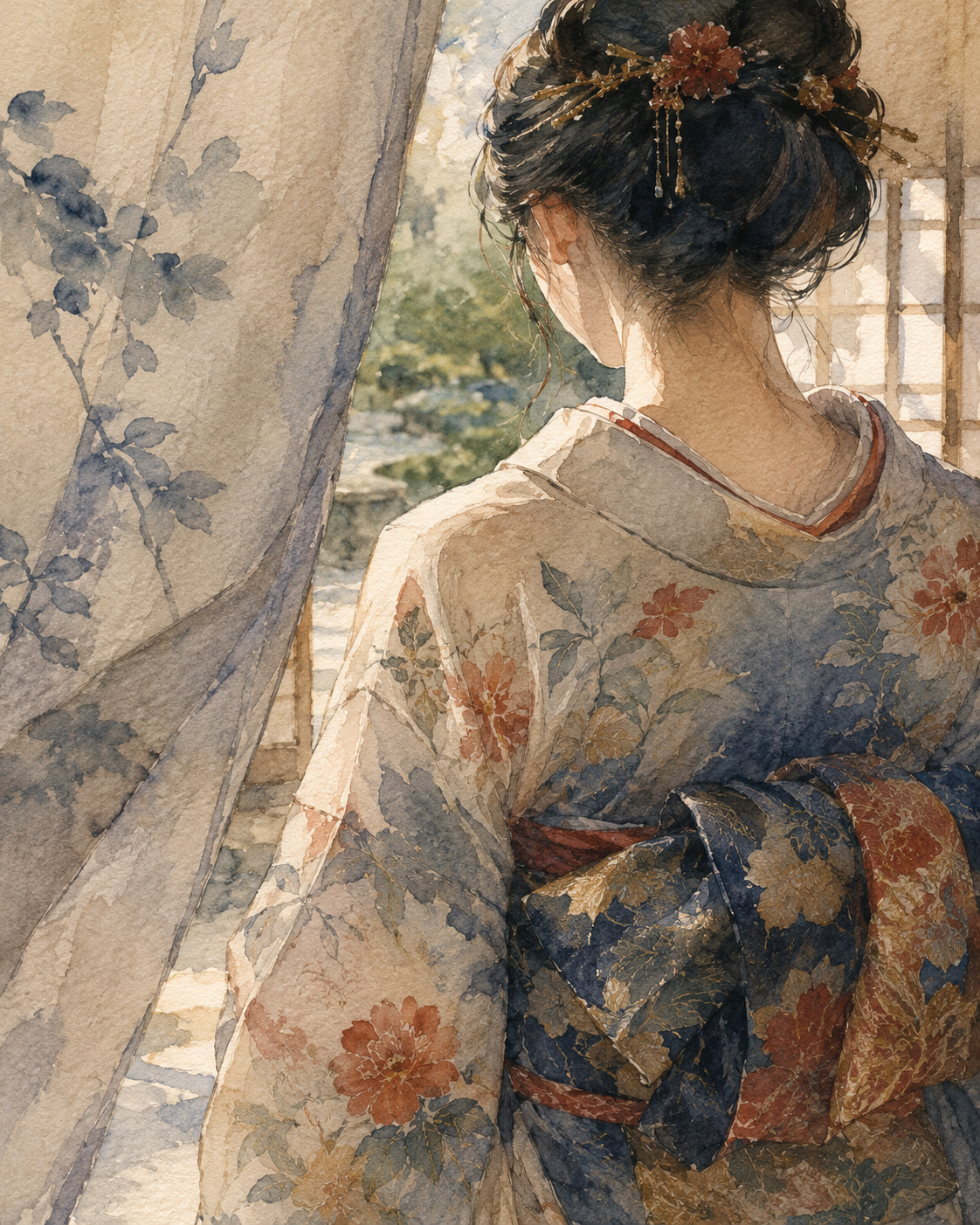
Echos of a Silent Garden
Critique
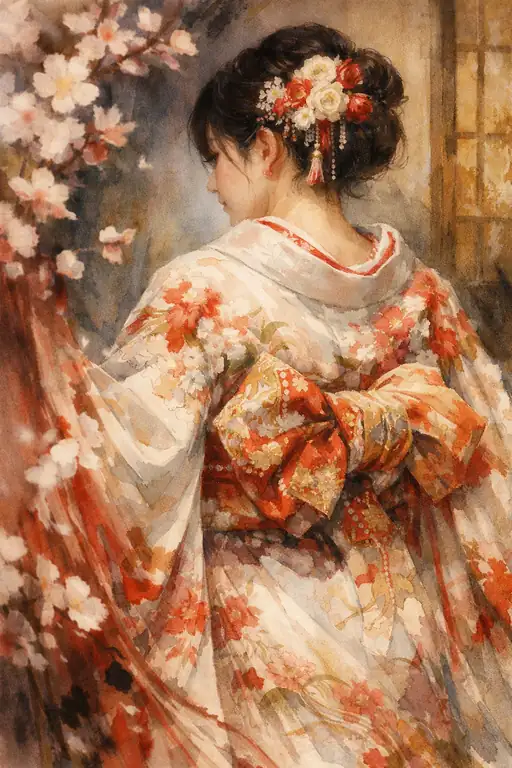
1. Introduction This delicate watercolor painting presents a serene and contemplative scene featuring a woman viewed from behind, elegantly dressed in a traditional Japanese kimono. The work captures a quiet moment of introspection as the figure gazes out toward an unseen garden, framed by the soft textures of a curtain and a shoji screen. Through its masterful use of transparency and subtle color gradations, the piece evokes a sense of stillness and timeless beauty. It serves as an excellent example of how the watercolor medium can be employed to convey both physical detail and a profound emotional atmosphere. 2. Description The central figure is positioned slightly to the right, her dark hair meticulously arranged with ornate floral ornaments that mirror the patterns on her garment. She wears a kimono adorned with large, stylized blossoms in shades of dusty red and blue, complemented by a complex obi belt with similar motifs. To her left, a sheer curtain with blue floral prints partially obscures the view, while a traditional wooden shoji frame occupies the right edge of the frame. The background reveals a blurred, sunlit landscape, suggesting a peaceful outdoor environment characterized by soft greens and earthy tones. 3. Analysis The artist utilizes a muted and harmonious color palette, dominated by earthy beiges, soft blues, and muted reds, which creates a unified and calming visual experience. The lighting is gentle and diffused, originating from the outdoor scene and casting soft highlights on the woman's neck and the folds of her kimono. Technical skill is evident in the controlled bleeding of the watercolor, particularly in the floral patterns where colors blend seamlessly into the paper's texture. The composition uses the vertical elements of the curtain and window frame to create a sense of depth and enclosure. 4. Interpretation and Evaluation This work beautifully encapsulates the Japanese aesthetic concept of "mono no aware," or a sensitivity to the transience of things, through its depiction of a fleeting, quiet moment. The choice of a rear perspective invites the viewer to share in the woman's silent contemplation rather than merely observing her appearance. The balance between the intricate details of the kimono and the loose, atmospheric rendering of the background demonstrates a sophisticated understanding of focus and visual hierarchy. Overall, the painting is highly successful in its ability to evoke a specific mood of tranquil melancholy and refined grace. 5. Conclusion While the painting initially appears as a simple portrait, a closer examination reveals a complex interplay of light, shadow, and symbolic meaning. The harmony achieved between the figure and her architectural surroundings reinforces a theme of human connection to a peaceful domestic environment. It is a work that rewards patient observation, revealing more layers of technical finesse and emotional depth over time. Ultimately, the piece stands as a poignant celebration of quietude and the enduring allure of traditional cultural aesthetics, leaving a lasting impression of peace upon the viewer.
Same Subcategory
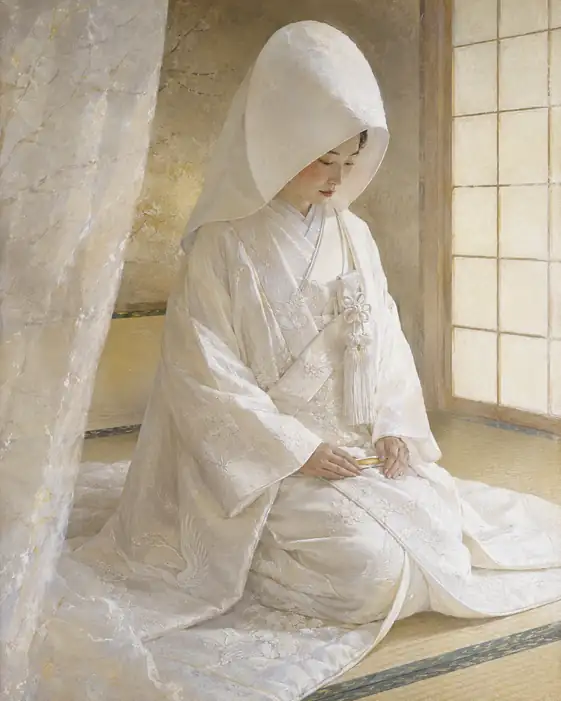 A Prayer Bound in White Silence
Similar Artworks
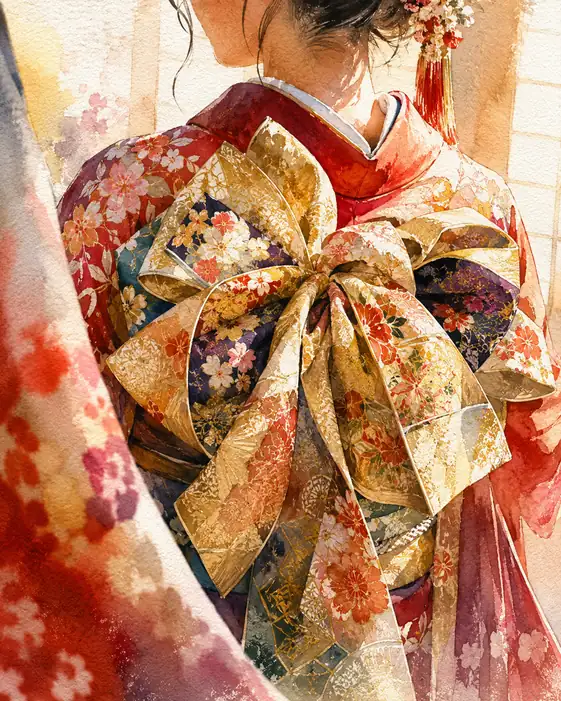 Whispers of the Golden Obi
 Grace Within the Ink Shadows
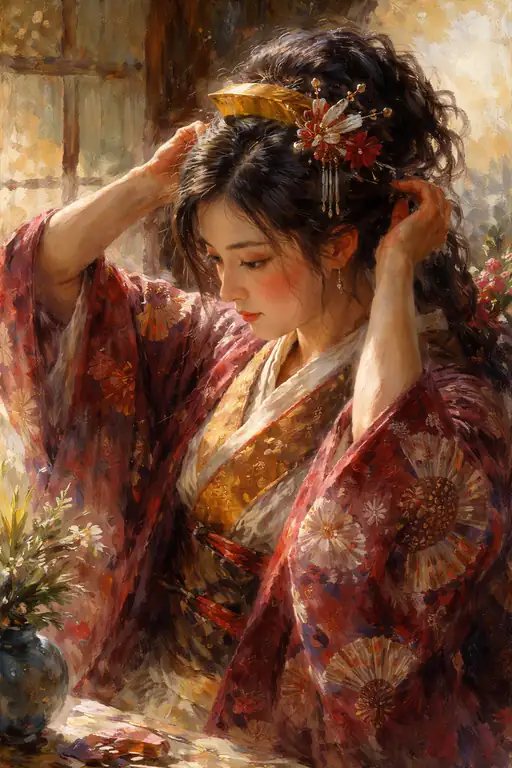 A Toss of Crimson and Gold
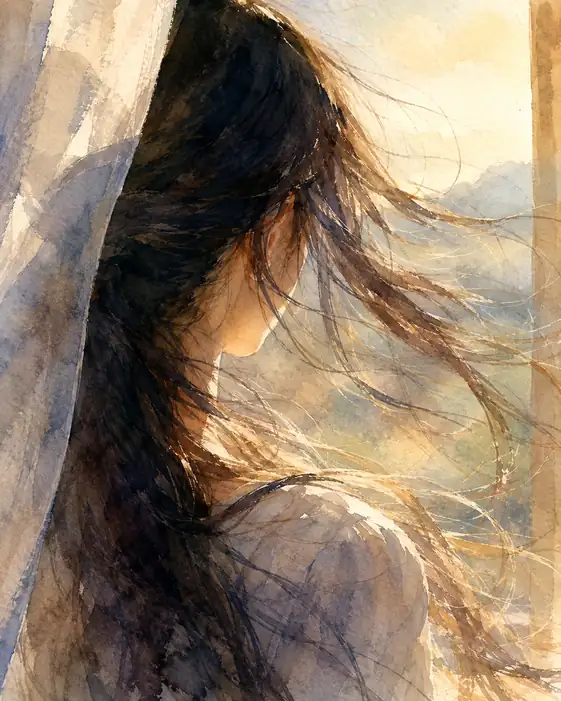 Whispers of the Unseen Wind
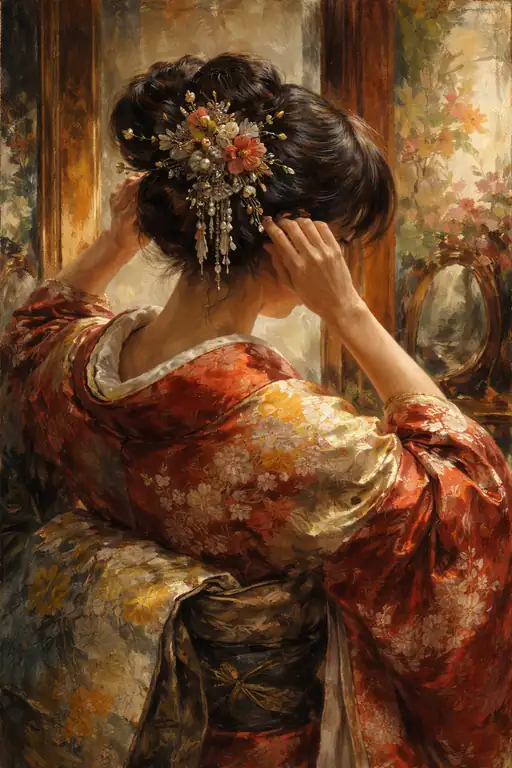 A Quiet Reflection Woven in Silk
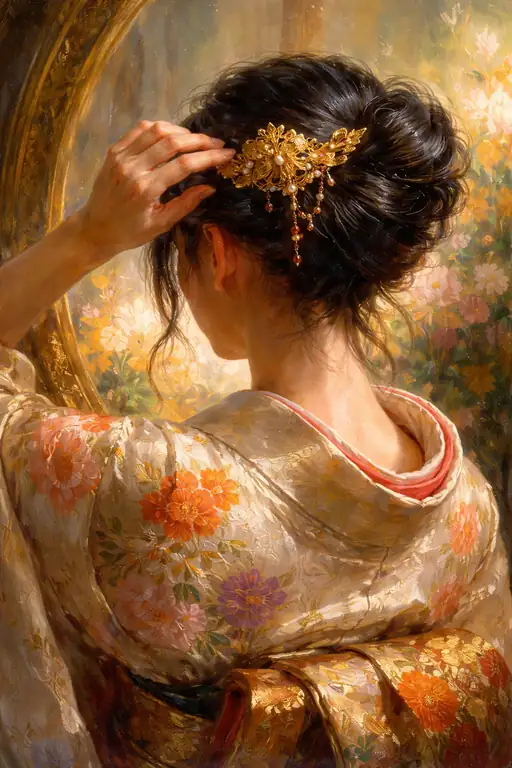 Golden Hairpin Glimmering in the Mirror
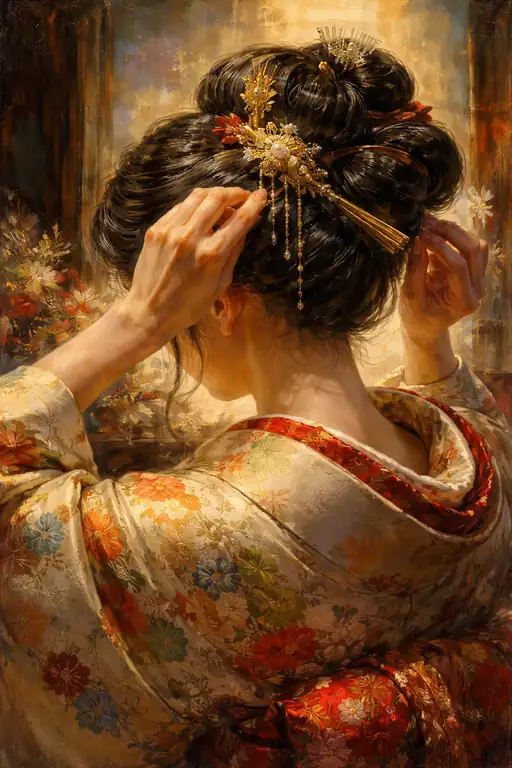 A Secret Adornment in the Mirror's Gaze
 Gilded Petals, Silent Grace
 Whispers of the Spring Breeze
 Silent Reverie in Golden Threads