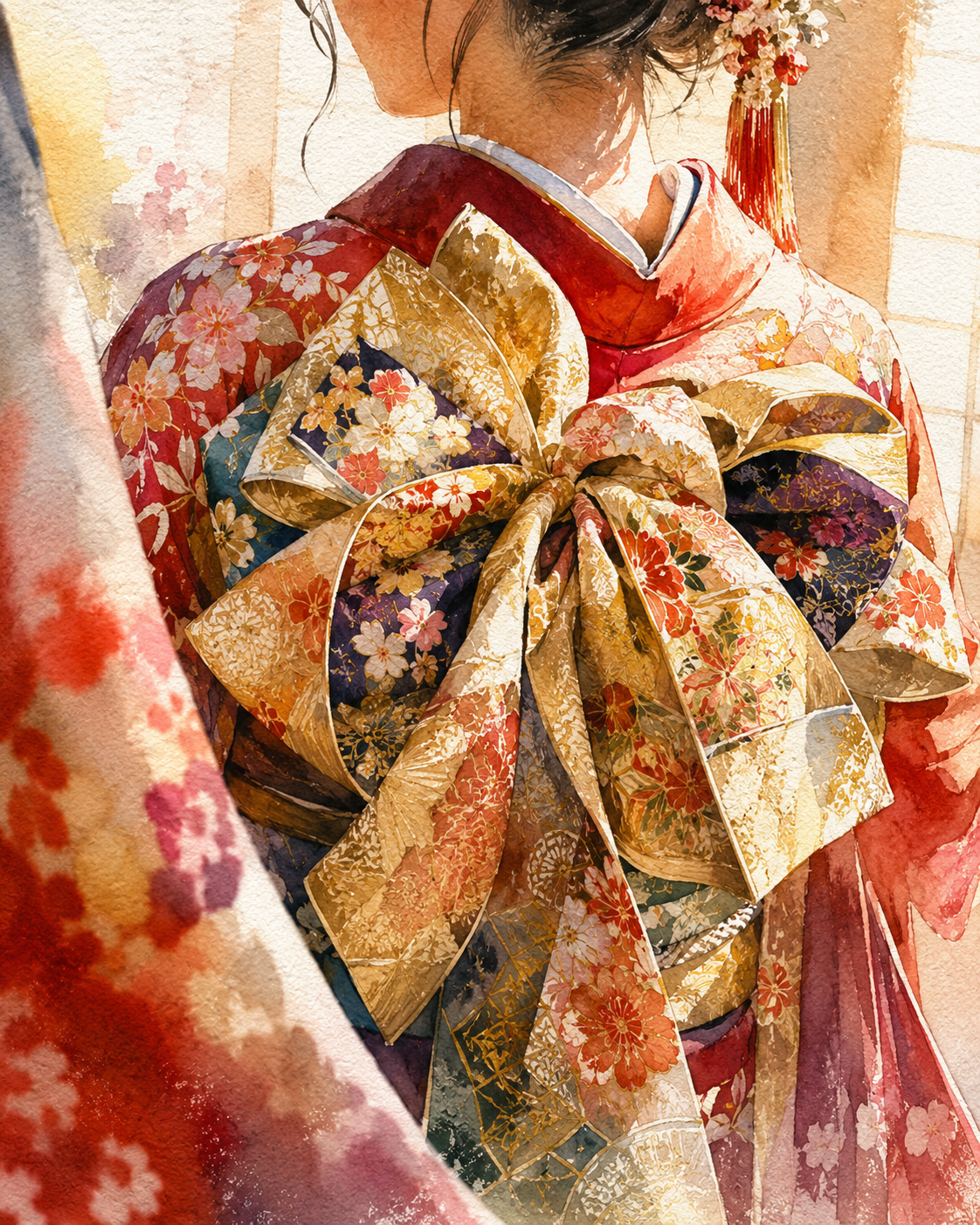
Whispers of the Golden Obi
Critique
1. Introduction This watercolor painting exquisitely captures the back view of a woman dressed in a vibrant furisode kimono. At the center of the composition is an elaborately tied obi, showcasing the intricate designs of traditional Japanese aesthetics. The fusion of bold colors and delicate brushwork creates an atmosphere of festive excitement and quiet elegance. The artist's exceptional sense of color breathes a rich vitality into the entire scene, making it feel remarkably alive and presence-filled. 2. Description The kimono features a base of deep red adorned with magnificent floral patterns, while the obi, woven with golden threads, radiates a dazzling brilliance. The multiple folds and layers of the obi knot are depicted with remarkable three-dimensionality, emphasizing its texture and weight. A single strand of hair escapes near the woman's neck, and a kanzashi hair ornament with tassels adds a refined touch to the details. The background suggests a shoji screen, while a blurred sleeve in the foreground adds depth. 3. Analysis The composition maintains vertical stability centered on the obi, while the diagonally placed foreground element introduces a visual rhythm. In terms of color, the contrast between the dominant reds and blues, accented by shimmering gold, provides the work with a powerful energy. The interplay between soft watercolor bleeds and the sharp, meticulous lines used for the patterns is a defining characteristic. Light enters from an angle, creating deep shadows in the folds of the fabric and highlighting its material presence. 4. Interpretation and Evaluation By utilizing traditional attire, the piece expresses themes of youth, splendor, and respect for heritage through a contemporary lens. The ability to harmonize complex overlapping patterns without losing clarity is truly impressive, representing a high-level integration of decorative and realistic styles. The color arrangement is carefully calculated, maintaining a sophisticated balance despite its outward opulence. This work is a testament to the artist's technical maturity and sincere pursuit of beauty through refined observation. 5. Conclusion The successful marriage of traditional motifs and modern watercolor techniques vividly reconstructs the timeless allure of Japanese dress. While the viewer is initially captivated by the torrent of color, closer inspection reveals the deliberate intent behind every stroke. This piece not only provides visual pleasure but also evokes a connection to Japanese aesthetic sensibilities. In its overall quality, it stands as a significant achievement in contemporary representational art, bridging the gap between past and present.
Same Subcategory
Similar Artworks
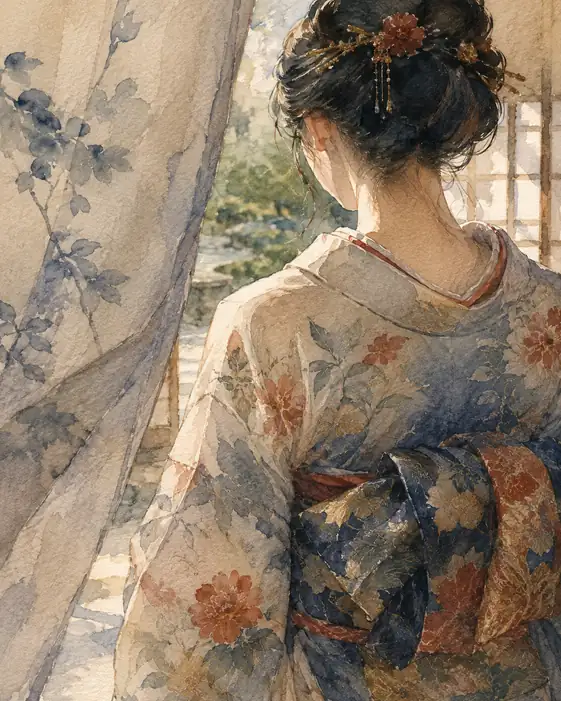 Echos of a Silent Garden
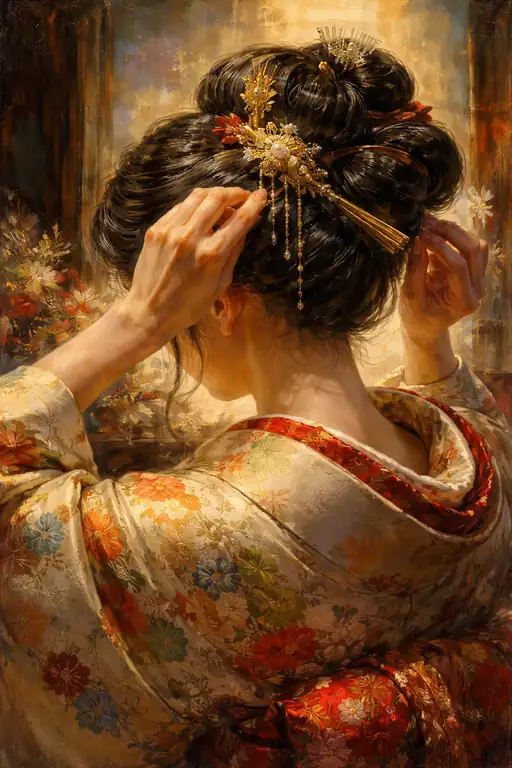 A Secret Adornment in the Mirror's Gaze
 Grace Within the Ink Shadows
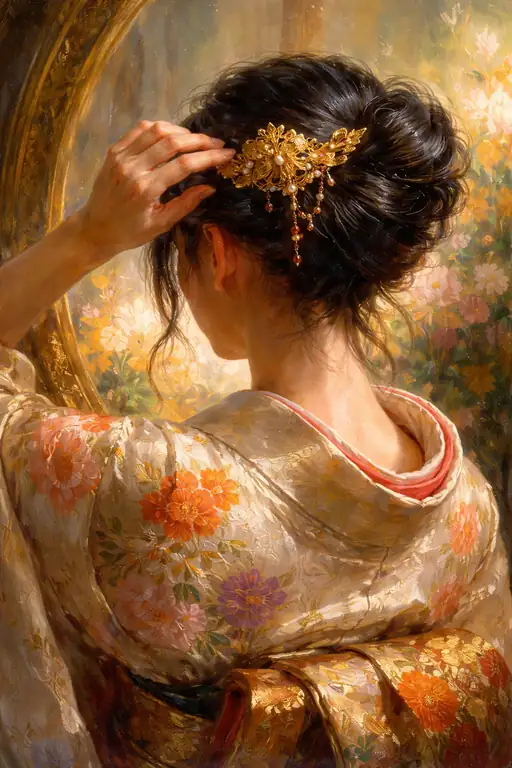 Golden Hairpin Glimmering in the Mirror
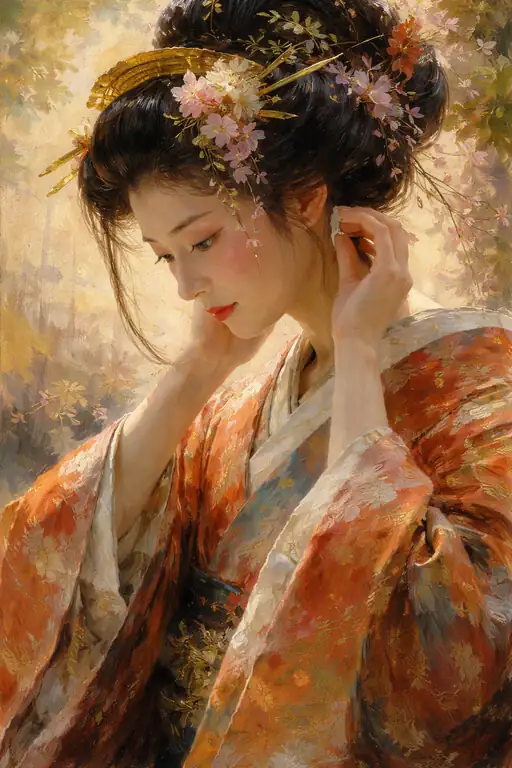 Gilded Petals, Silent Grace
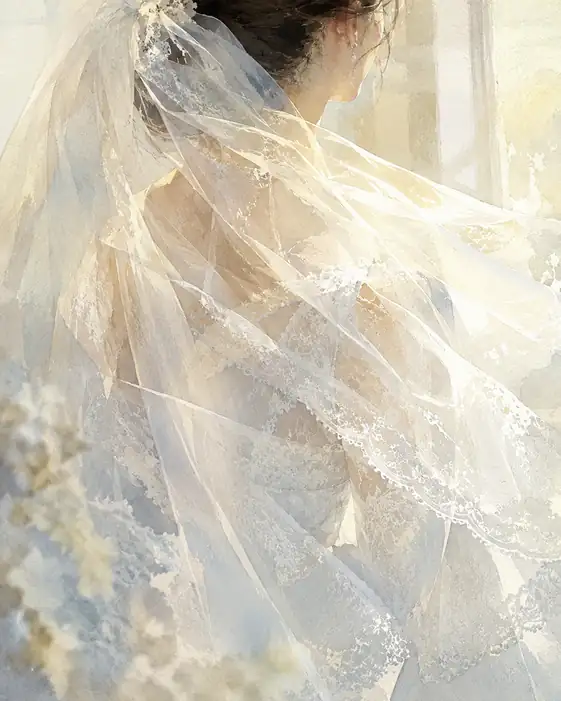 The Radiant Promise of White
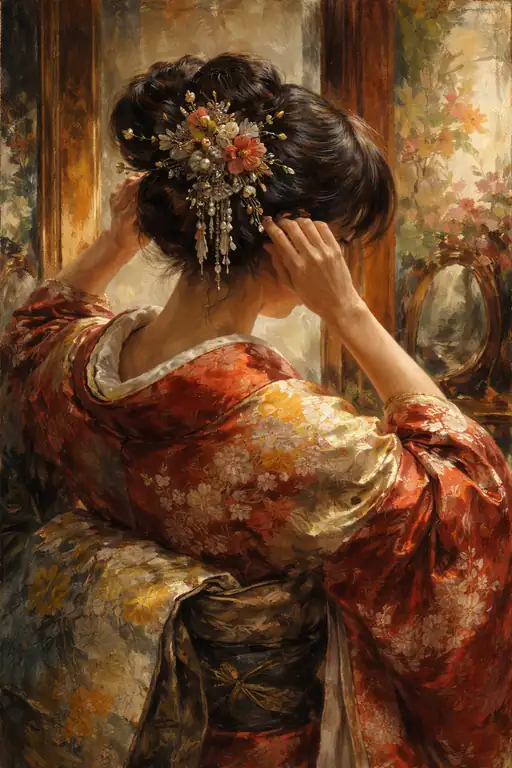 A Quiet Reflection Woven in Silk
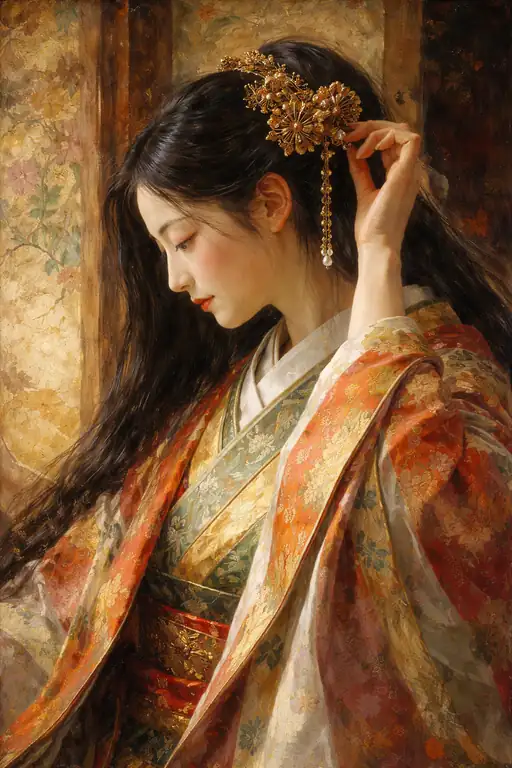 Silent Reverie in Golden Threads
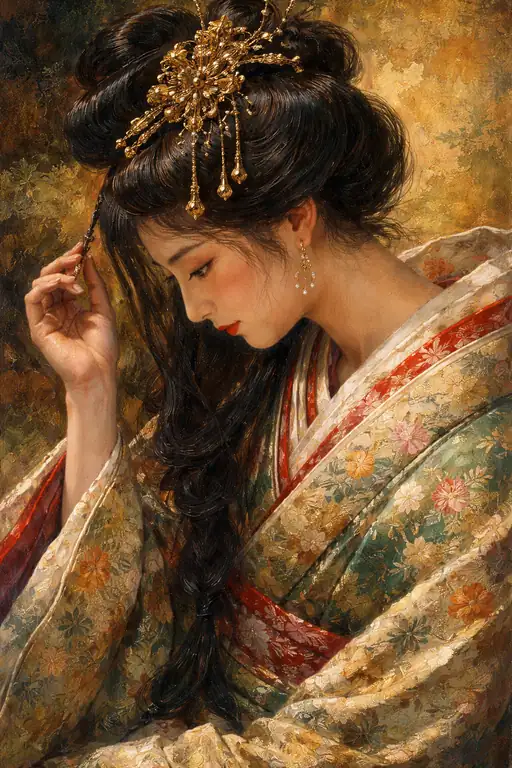 Golden Threads of Serenity
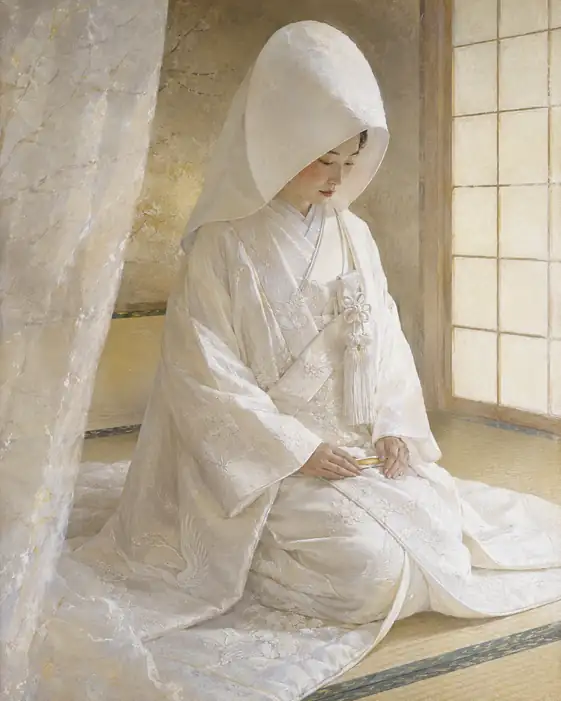 A Prayer Bound in White Silence