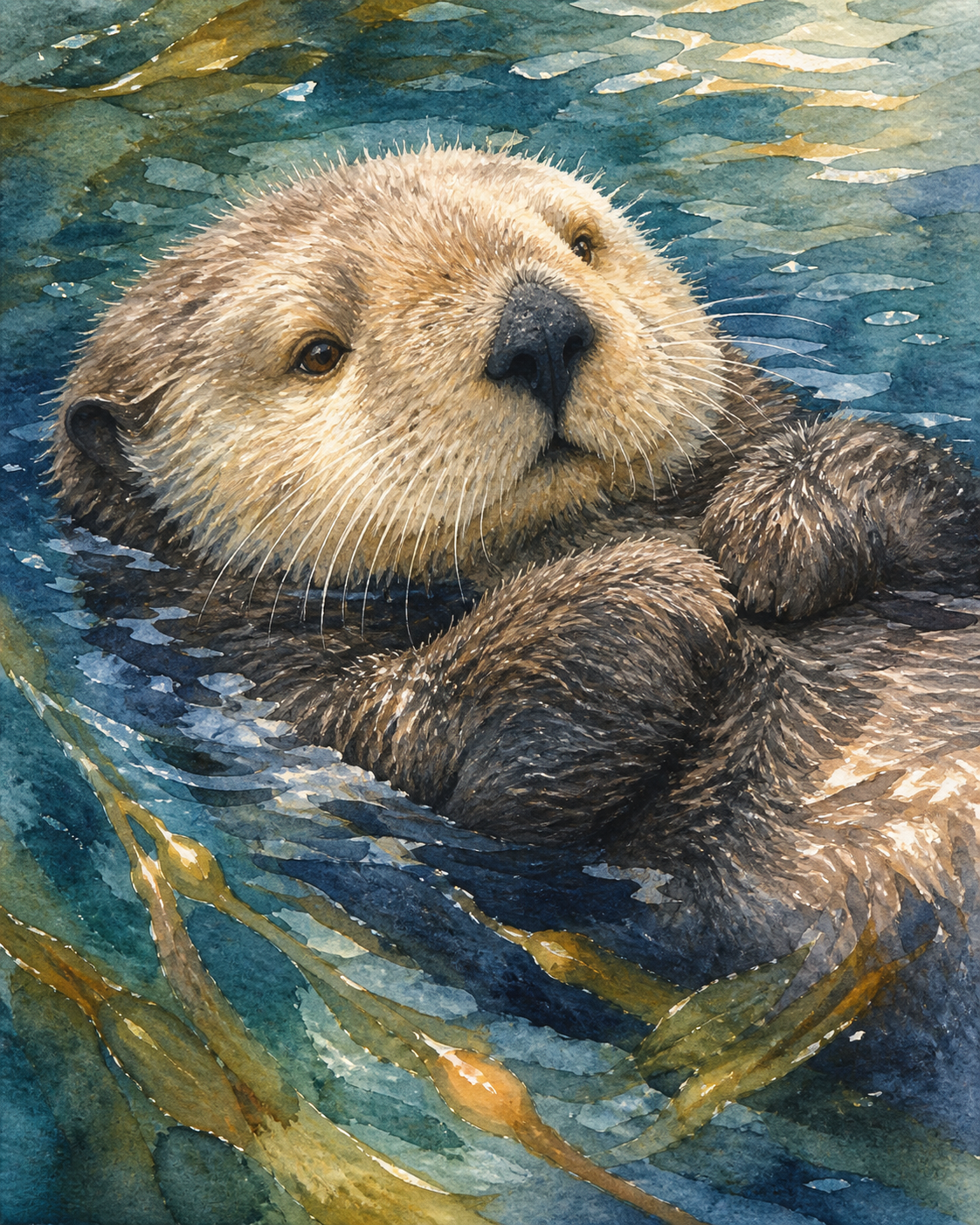
Rhythm of the Teal Tides
Critique
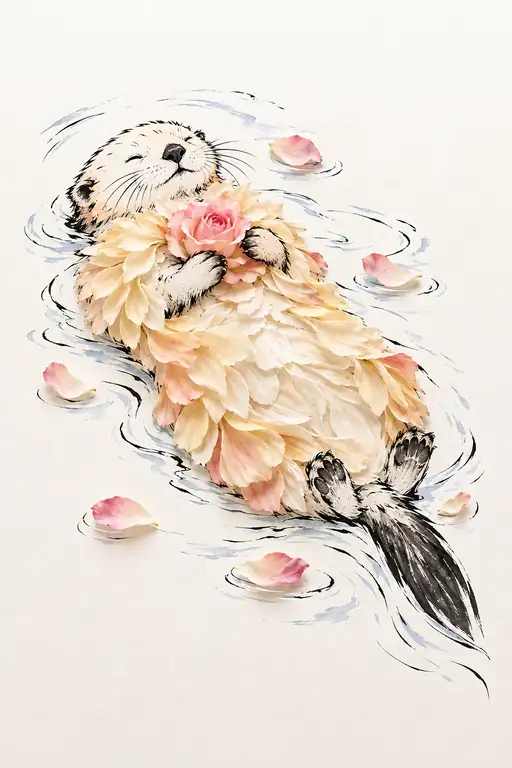
1. Introduction This watercolor painting presents a serene depiction of a sea otter floating on its back amidst gently rippling ocean waters. The composition focuses on a close-up perspective of the marine mammal, highlighting its characteristic posture and peaceful presence within its natural habitat. By utilizing the fluid qualities of the watercolor medium, the work establishes a tranquil atmosphere that invites the viewer to observe the subtle details of the wildlife subject and its aquatic surroundings. 2. Description The central subject is a sea otter, rendered with meticulous attention to the texture of its dense fur, which appears both soft and slightly matted by the water. Its head is tilted upward, revealing dark, soulful eyes and a prominent black nose, while its paws are tucked gently against its chest. The water is composed of varied strokes of teal, deep blue, and emerald green, interspersed with white highlights that suggest the movement of small waves. In the lower-left foreground, strands of kelp with translucent amber air bladders float near the surface, adding depth and environmental context to the scene. 3. Analysis Technically, the artist employs a combination of wet-on-wet and dry-brush techniques to achieve the contrasting textures of the fluid water and the detailed fur. The color palette is built upon a sophisticated interplay between the warm ochre and burnt sienna tones of the otter and the cool, multi-layered blues of the sea. The diagonal alignment of the otter's body creates a sense of dynamic balance, guiding the viewer's eye from the detailed facial features down toward the flowing kelp. Light appears to filter through the water's surface, creating rhythmic patterns of reflection and transparency. 4. Interpretation and Evaluation This work successfully captures a moment of profound quietude, interpreting the sea otter not merely as a biological subject but as a symbol of environmental harmony. The technical execution is exceptional, particularly in the rendering of the animal's whiskers and the subtle gradations of light on its wet pelt. While the piece adheres to a traditional naturalistic style, its strength lies in the delicate handling of the watercolor medium to convey weight and buoyancy. The inclusion of the kelp provides a necessary compositional anchor, balancing the visual weight of the otter's head and enhancing the overall narrative of the painting. 5. Conclusion The painting effectively bridges the gap between scientific observation and artistic expression through its refined use of color and texture. Upon closer inspection, the initial impression of a simple wildlife portrait evolves into an appreciation for the complex layering of pigment and the deliberate control of light. Ultimately, the work serves as a masterful demonstration of how watercolor can be used to evoke the tactile qualities of the natural world while maintaining a sense of ethereal beauty. It remains a compelling study of light, water, and life in perfect equilibrium.
 Echoes of the Savannah's Soul
 Echoes from the Edge of the World
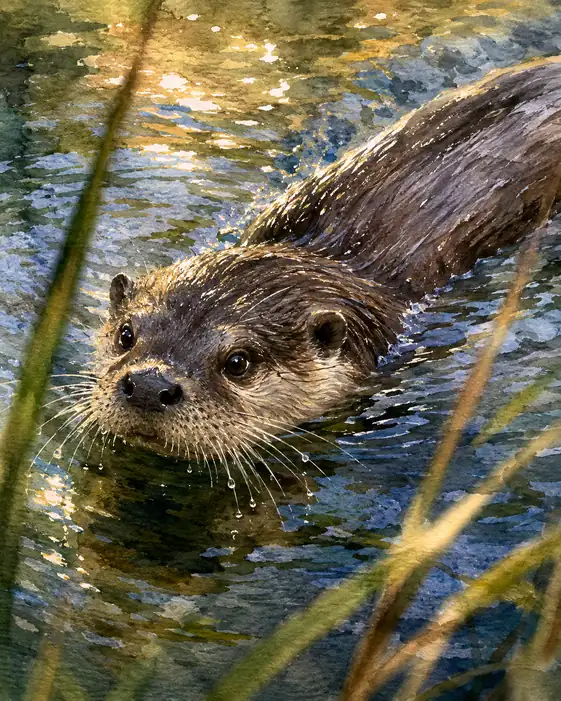 Shimmering Whiskers
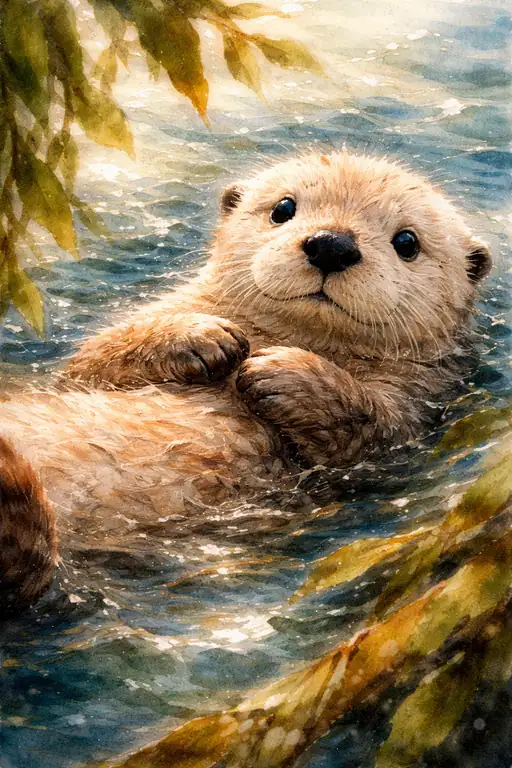 Serenade of the Shimmering Shallows
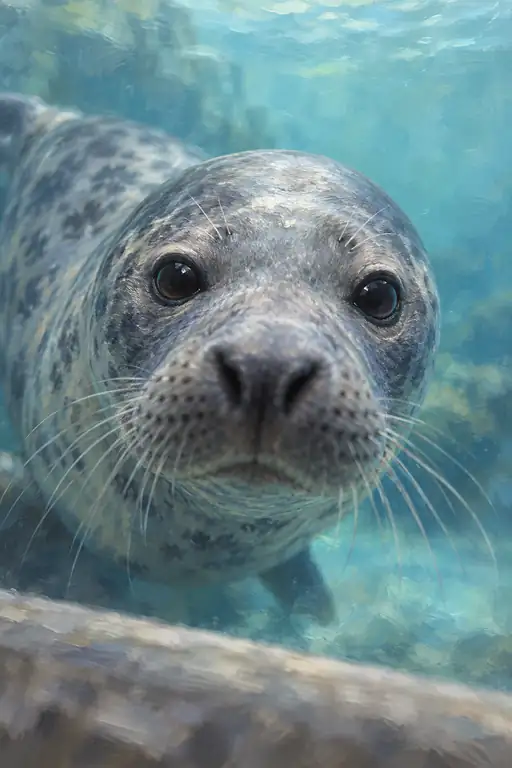 You Found Me in the Blue
 Gentle Visitor at the Pier
 Drifting in Gentle Hands
 Curious Eyes from the Turquoise Deep
 River Stone Kept in Little Paws
 Treasure of the Clear Shallows
 Bound by Drift and Light
 Let the Day Carry Me